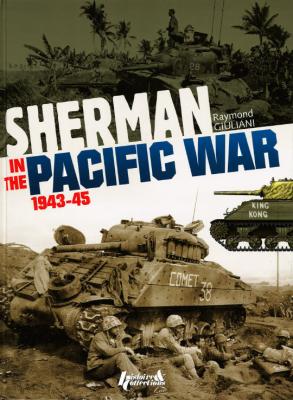
Raymond Giuliani covers a fairly rare subject, of the use of the Sherman tank in the Pacific. This book begins in 1943 as the Sherman began replacing the M3 Stuarts in the Pacific as the US island hopped towards Japan. The good news is that neither had to face any steel Tigers. Raymond Giuliani traces the trek across the Pacific island by island and also depicts the evolution of the flamethrower tank. The book includes over 350 photos, 25 color tank profiles, and 23 maps. There are spelling errors and interesting grammar choices due to the translation from French, but nothing that will hinder your understanding.
all 2015
History
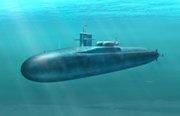
The USS Florida is an Ohio class Submarine. The keel was laid down on July 4, 1976 and was launched on November 14, 1981. Originally the Florida was designated as SSBN-728 and was converted to SSGN-728. This conversion started in July 2003 and the Florida was re-commissioned in July 2006 as SSGN-728. The USS Florida is still serving proudly today.
The Kit
The kit is molded in light gray plastic. Construction on this model is pretty straightforward with only seven steps. Now this doesn't mean that this is a shake and bake kit. This kit was originally released in 2003 as a SSBN. To convert to a SSGN requires some minor surgery. This is all called out in the instructions and the parts are provided.
Permit me to open this review with a personal story.
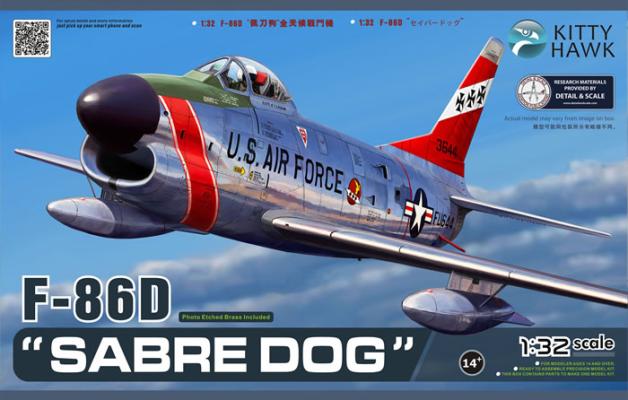
My childhood home town of Iowa City had a tiny little airport – the kind that sees maybe six Cessna's visiting in a week. However, even this tiny airport managed to have a gate guard, in this case an F-86D Sabre Dog donated from the Iowa Air National Guard, mounted on posts.
Unfortunately, it wasn’t in the best of shape. At some point in the past it had lost its canopy, which had been replaced by some artlessly shaped acrylic sheet. Even so, it seemed to a kid like a proud giant, reaching endlessly for a sky it would never touch again. Honestly, I loved that gate guardian.
Thanks to Eduard for providing more of their excellent aftermarket parts for IPMS USA review, and to IPMS leadership for sending it to me!
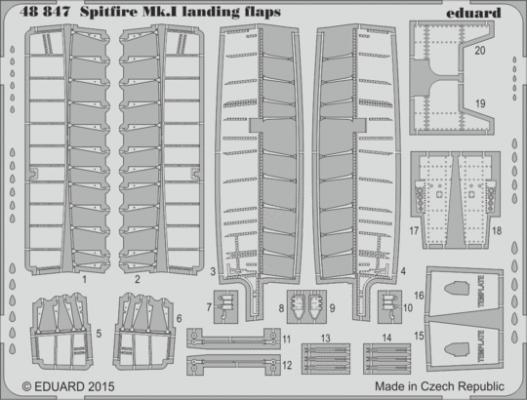
Here we go. According to the flight manual, the average Spitfire pilot will retract the flaps as soon as he/she is on the ground because the flap interferes with cooling air exhaust from the radiator, which leads to overheating on the ground. BUT, sometimes flaps must be down for maintenance, which is how Eduard approaches the situation.
This set is not for the faint of heart. it requires patience, dexterity, skill, and a lot of luck to pull off a successful installation. I get four of 10 on this one for my lack of the above.
HOWEVER, many will do just fine with it. Remember rule 1: Metal work hardens every time you bend it. Breakage is a way of life. if you try to bend things more than once, you MIGHT get a second chance.
SO, study your flaps, and develop a course of action!
If you have been involved in modeling for the past ten years there is a good chance that you are familiar with the name Mig Jimenez. If you are not familiar with Mig, he is a Spanish modeler that has really came to the forefront of modeling techniques. Along with the techniques MIg has created a system of washes, filters, pigments and now paints. He also has several great modeling books out as well.
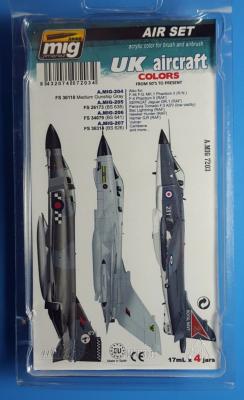
UK Aircraft colors from the 50's to present: This set is comprised of four 17ml bottles with dropper top. The four colors included in this set are as follows FS 36118 Medium Gunship Gray, FS 26173 (BS 638), FS 34079 (BS 641) and FS 36314 (BS 626). I used a single action siphon feed airbrush to apply them to an unprimed plastic card stock. I thinned the paint using the MIG Acrylic thinner at a ratio of about two parts paint to one thinner. Had no issues spraying through the airbrush and it sprayed out in a nice light coat. Took a few layers to build up a solid color.
Background
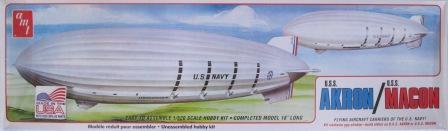
The USS Akron and Macon were lighter than air (LTA) aircraft carriers built for the US Navy in the 1930’s. Filled with Helium, ach rigid airship was designed to carry five single-seat Curtiss F9C Sparrowhawks for scouting or two-seat Fleet N2Y-1 biplanes for training. A gondola was also designed to be lowered through the cloud layer for aerial surveillance. Both rigid airships crashed within two years after becoming operational. There’s a good article on these craft at: https://www.airships.net/us-navy-rigid-airships/uss-akron-macon/ .
Welcome back! Last time we had just completed the internal framework, engine, lower front end and cockpit of the big 1/24th Scale Airfix Mk.Ib Typhoon. This second installment will bring the wings, fuselage, nose and wheel-wells together, leaving the final assembly and finish for the last segment of this three-part review. To recall: I chose to expose only the starboard wing’s gun bay and starboard engine detail, and to cover up the lower front end encompassing the oil cooler/air intake.
Work is going along very smoothly, with a single exception being the front end of the aircraft. Whether the problems I encountered were self-inflicted or due to some flaw in the kit remains to be determined. More on that later – for now, let’s get back to work!
Krisztine Bodi is a European figure sculptor of some renown who started his professional career producing masters for the likes of Alpine, Young Miniatures and Mantis. As so often happens, Mr. Bodi eventually decided that working for himself might be the smart thing to do, so he set up his own line of figures under the brand name “the bodi”. The range now numbers nearly 100 figures in various scales, most covering the period of the Second World War.
My approach to reviewing these two figures sets (3 figures total) this time around is to provide you with photos taken by myself of the unpainted resin pieces, together with photos borrowed from the producer’s web site. This is because these beautiful sculptures deserve better than my almost non-existent figure painting skills have to offer. I want folks to see the quality of the resin parts, but also see what a good figure painter can then do with them.
History
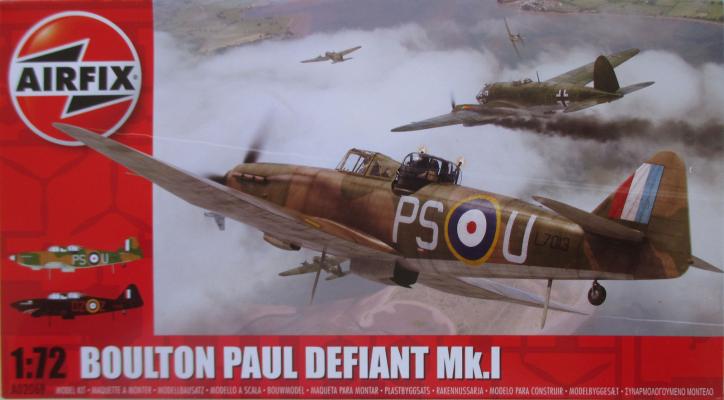
The “turret fighter” concept dates back to the early thirties, and contrary to some histories, the first Turret Fighter used by the Royal Air Force was actually the Hawker Turret Demon biplane, which was tested and operated by No. 23 Squadron from 1934. A hydraulically operated power turret was fitted to a standard Demon fighter, itself a development of the Hawker Hart light bomber, and a considerable number was produced by Hawker and Boulton Paul. The turret itself was a Frazer-Nash creation, and all of the Boulton-Paul produced Demons had them, and some were retrofitted to the Hawker produced models. By 1938, the Turret Demon was being operated by No. 23 and No.64 Squadrons, but the type was out of first line service by 1939, being replaced by Blenheim Mk. 1F’s.
The Products
This set provides the following:
- CX414 - Die Cut Flexible Mask for Airfix Defiant Mk. I kit.
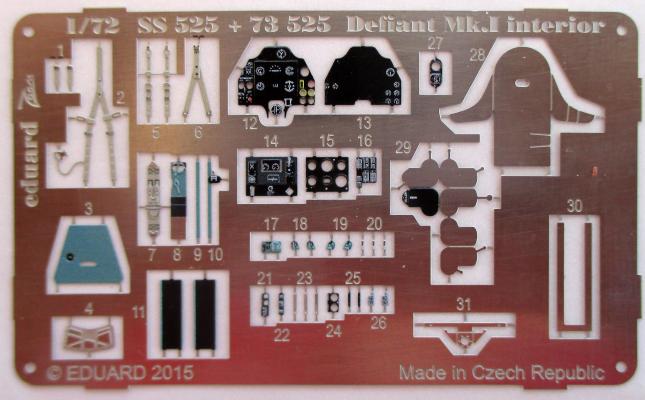
- 73525 - Self and Non-Adhesive Photo Etch Detail Set for Airfix Defiant Mk. I
- 72600 - Defiant Mk. I Landing Flaps
Flexible Masks Set (CX414)
This small yellow sheet of masking paper is die cut to provide masks for the window areas on the canopy and turret of the Airfix Defiant Mk. 1. This is worth getting on its own, as it is totally accurate and really cuts down on the tedious job of masking the clear areas on the model. Very clear instructions are given, so there’s no way of messing these up unless you really are a Neanderthal, and in that case, you should probably take up crocheting. I merely removed the little shapes with my pointy tweezers, and transferred them to their proper locations. Highly recommended.
Overview
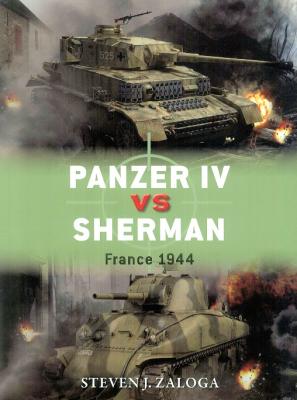
Osprey describes this newest Duel series book this way: “As the Allies attempted to break out of Normandy, it quickly became apparent that there would be no easy victory over the Germans, and that every scrap of territory on the way to Berlin would have to be earned through hard fighting. This study concentrates on, the ferocious battles between the German Panzer IV and US Sherman that were at the heart of this decisive phase of World War II. The two types were among the most-produced tanks in US and German service and were old enemies, having clashed repeatedly in the Mediterranean theater. Throughout their long service careers, both had seen a succession of technical developments and modifications, as well as an evolution in their intended roles - but both remained at the forefront of the fighting on the Western Front.
Thanks to Eduard for providing more of their excellent aftermarket parts for IPMS USA to review, and to IPMS leadership for sending it my way.
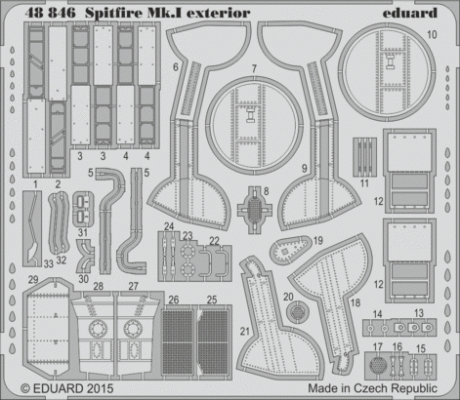
This set improves on the fine detail of several exterior areas: the radiator and oil cooler; the landing gear; the wheel wells; the gun doors; and the rudder actuator arm.
Begin with the Radiator and oil cooler. This modification requires you to sand off the detail on the intake and outlet bulkheads on the radiator and the oil cooler, and then you can attach the Eduard parts. These fit perfectly. Then you install a 1/32” wide mount plate and probe for the temperature sensor for the radiator. This change will try your patience, but I did it, so you should be able to as well. Then put the radiator and oil cooler fairings on the wing and you are done with them.
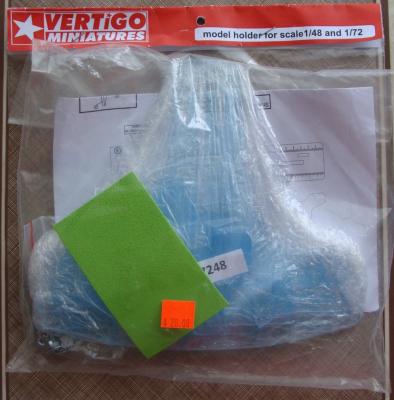
While this jig is sold by Vertigo-Miniatures on the web, the review item was supplied by Unique Model Miniatures, so a big shout-out to Jon of UMM!
Some Assembly Required
This Vertigo-Miniatures jig requires assembly, and that is just a bit ironic since it will be of considerable help to the hobbyist during the assembly process of one’s latest modeling project. Assembly is straight-forward requiring a little super glue and about 10 minutes of one’s time.
The instructions provide a parts list and a couple of diagrams which identify parts and illustrate how they are attached. Just follow the instructions and it’s a very simple process.
There are a few points about assembly that one should note.
Bottom Line
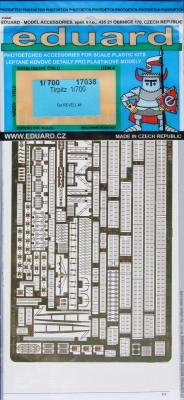
Eduard has produced a single fret of finely detailed, finely scaled brass photoetch parts specific to the 1/700 scale Revell 05099 DKM Tirpitz injection-molded, polystyrene model. Highly recommended for this kit.
What You Get
A single, medium-sized, brass photoetch fret of railings, C30 20mm single guns, some masts and spars, multipart cable reels, catapult, aircraft props, radars, searchlight covers, ladders, ladder rails, pulleys, cranes, funnel grate, air intake grates and other parts to super-detail Revell’s 1/700 Tirpitz. Separate detail parts are numbered, with 116 different parts numbered on the fret, and 147 overall counting duplicates. Metal is intermediate in thickness and strength compared to other photoetch companies, which I prefer for handling and folding (the Goldilocks Syndrome – just right).
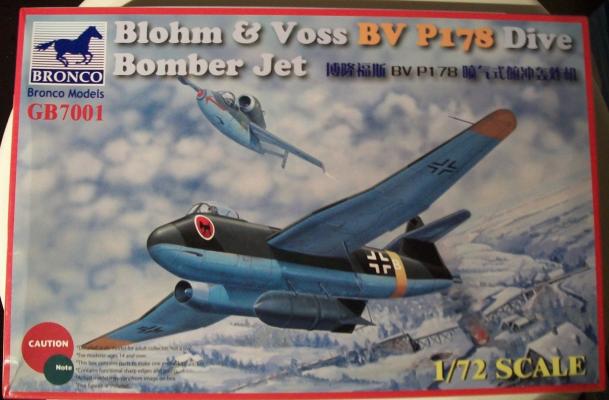
This is the first aircraft kit from Bronco Models kit and it’s a Luft 46 subject and it’s a strange but great subject of a design that never made it of the drawing board. The BV 178 is the usual Blohm and Voss asymmetrical design with one Jumo 004B under one wing. I personally love this type of aircraft configuration and makes for a great looking display model.
- 5 sprues molded in grey styrene
- 1 clear sprue
- 1 decal sheet
- 1 instruction booklet
Construction
The kit makes a great quick build and has a lot of great detail in its design and manufacture.
There are few options given in the build such as landing gear in raised or lowered positions, and cockpit open or closed.
Thanks to Eduard/Brassin for providing more of their excellent aftermarket parts for IPMS USA to review, and to IPMS leadership for sending it my way.
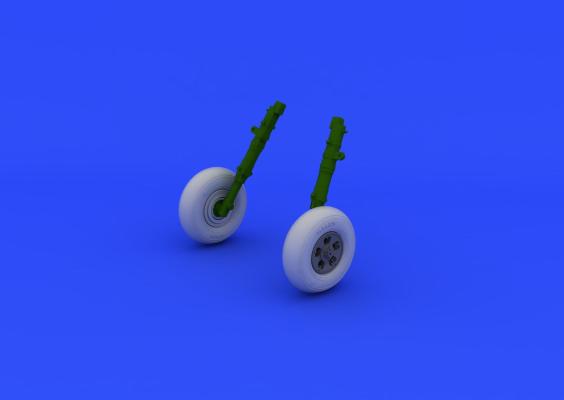
This is another simple upgrade to the Eduard “brassin” line… Wheels and tires for the Airfix new-mold spitfire Mk 1.
Why new wheels and tires? The wheels have deeper, more defined detail than the kit items, and the tires have the manufacturer’s name and the rib around the smooth treat circumference. On with the review..
First: Primer the parts. I use duplicolor flat black for this; (it’s a tire, huh?) once cured and dry, masked the back side of the tires with the excellent kabuki paper masks… and a bit of tape around the rest of the tire so I wouldn’t have to paint the whole thing over again. Leaving the brake assembly open for spray painting, I also placed the wheel fronts (spoked) next to the tires, and hit them all with Tamiya flat aluminum spray.
Thanks to Eduard/Brassin for providing more of their excellent aftermarket parts for IPMS USA to review, and to IPMS leadership for sending it my way.
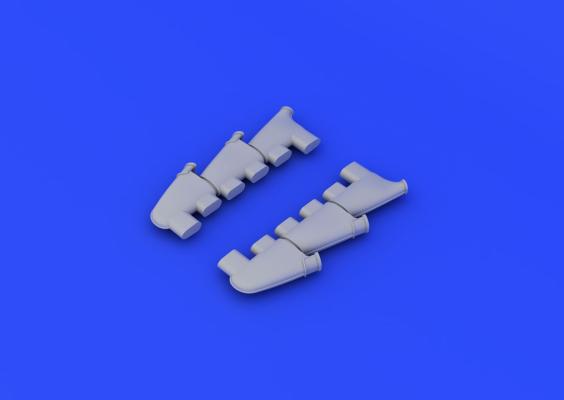
Not much to say on this one; a pair of early Spitfire Mk 1 “kidney”-shaped merlin exhausts with the straight tube exhaust port at the ends of them already hollow-cast. The pour stub is at the base of the exhausts, so these become convenient handles for painting and handling.
Designed for the Airfix new-mold Spitfire Mk 1, these are simple to use (as usual). Primer then paint while on the pour stub, carefully remove with a sharp knife, install with superglue. The kit items are acceptable, but these Eduard items are a real timesaver.
A fantastic-looking upgrade… Thanks to Eduard/Brassin for this set!
Thanks to Eduard for providing more of their excellent aftermarket parts sets for IPMS USA to review, and to IPMS leadership for the chance to review this item.
First: this is a basic upgrade to the kit items. It works very well, providing a serious improvement in kit fidelity with just a little work… read on!
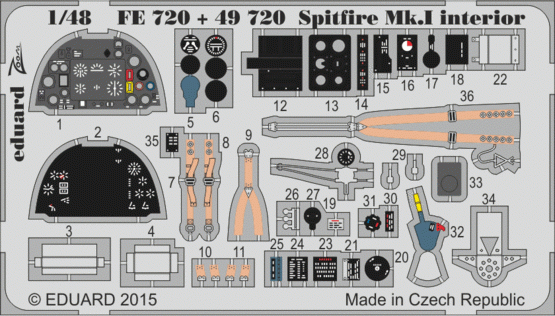
This kit contains everything you would expect in an Eduard PE upgrade; the instrument panel is the now-standard “sandwich” of several panels, which results in a high-fidelity instrument panel, to which you add details such as levers, switches, etc.
One important addition is the compass and mount, which are fitted at the lower portion of the panel behind the control column. Once folded and in place, it really adds to the visual effect.
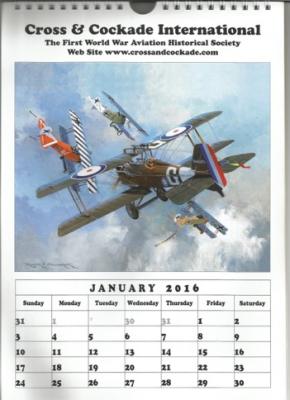
Cross & Cockade, International (CCI) is best known for its excellent assortment of books and publications covering “The Great War” in the air. The artwork in these publications is of the highest caliber and the writing is superb.
CCI also provides calendars and IPMS has just received the 2016 version of this annual calendar. Each page features artwork by a list of artists who produce inspiring views of a moment in time. Certainly, the artists should be identified, and WWI aficionados will most certainly recognize their names.
In alphabetical order:
Thanks to Eduard for providing more of their excellent aftermarket parts for IPMS USA to review, and to IPMS leadership for sending it my way.
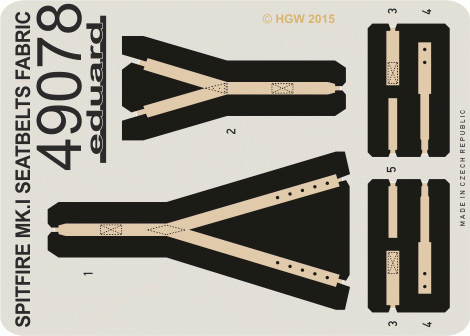
This harness set is takes advantage of one of the new technology opportunities provided by our ever-expanding aftermarket companies… micro fabric.
The harness appears to be laser cut on material with a white paper backing. Detail is there; in this scale, it was hard to see sometimes, but more on that anon…
I followed the instructions on the back of the sheet, which have you cut out the harness, ball them up and then remove the backing. I did this on the shoulder harness, and this is where I was challenged (and ultimately failed). The material took on a permanent curl and would not lay out so I could thread buckles. I used micro tweezers, and was extremely careful, but even then only succeeded in getting one buckle on one side of one belt… after 1 ½ hours of trying, with a couple of breaks in between.
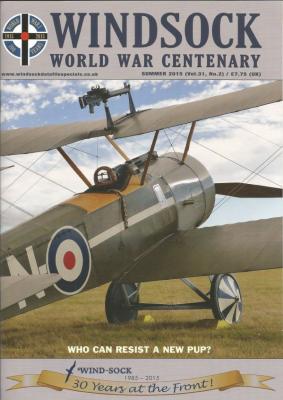
Windsock World War Centenary Summer 2015 is the second edition of Volume 31. This edition’s cove story features the Sopwith Pup. The main feature is a detailed build log for the Wingnut Wings Sopwith Pup. Rob Partridge is the builder and his article provides detailed descriptions and images of how to go about assembling the WNW kit. If you’ve never built a WNW kit then the Pup is an excellent starting point, and this issue will come in very handy. Later in the publication one will find a page featuring three color illustrations of some Pups. Interesting markings, to say the least. A few pages following, a Pup Portfolio is presented containing a number of images of N6205, a Pup flown by Flt Com J.S.T. Fall, No. 3 Naval RNAS. The images were taken by James Fahey of this airworthy Pup.
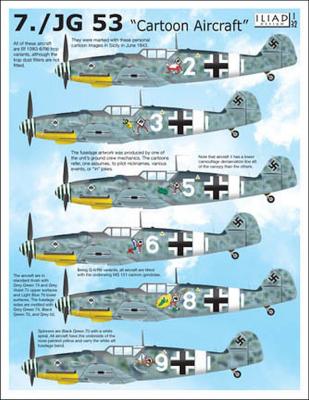
Illiad Design has started a 1/32 decal line and their first sheet is a secure bet: a Bf-109G. The recent Revell model is a good candidate for it, but not the only one, as the old Hasegawa kit could be a good recipient for these decals.
This decal sheet cover 6 airframes from 7./JG 53, the famous “Pik As” Jagdgeschwader. All the markings cover airframes located in Sicily during 1943 finished in RLM 74/75/76 with mottling on the sides and they have stripes on the propeller spiner. No decal is provided for the spinner, but instructions on how to mask it are provided.
The decal sheet is very glossy and the decals look thin. Register is perfect. Opacity is likely to be good too, but I have not tried them in a model. You might want to test that using a spare decal.
Background
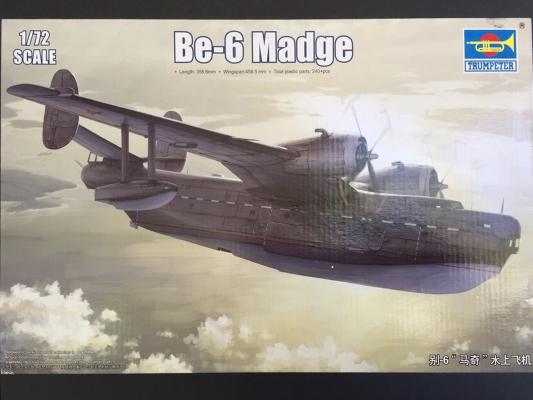
Developed from a prototype first flown in 1947, the Beriev Be-6, NATO code name “Madge”, was an amphibious, twin-engine, maritime patrol-aircraft. Its most prominent feature was the graceful gull wing design. Powered by two Shvetsov radials rated at 2,300 hp each, the Be-6 was capable of carrying a variety of weapons such as mines, depth charges, and torpedoes, in addition to its 5X23mm cannon armament in the tail, topside turret, and nose positions. The early version had a retractable radar pod behind the rear step. Later versions replaced the stinger guns with a magnetic anomaly detector (MAD) boom. The Be-6 served with both the Soviet and Chinese navies. A few soldiered on into the 1970s before the type was finally retired from service.
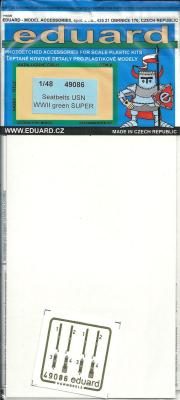
Eduard has released a series of WWII-era seatbelts in the “Superfabric” series. This review covers the following item:
The Superfabric seatbelts are made of some sort of “rubber-like” material. They have volume -i.e, they are not flat like decals- and they have a little bit of texture like if it they were made of ‘fabric’ (pun intended).
From what I read in the Eduard website you can either apply the seatbelts “dry” directly on the painted seatbelt or “wet” if the seatbelt has been coated in Future.
I almost always like to coat my cockpits with Future (in preparation for a wash), however in this review I choose to apply the seatbealts over a “flat surface” (i.e, just over enamel paint).
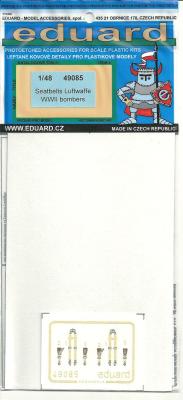
Eduard has released a series of WWII-era seatbelts in the “Superfabric” series. This review covers the following item:
- Seatbelts Luftwaffe WWII bombers SUPERFABRIC, Catalogue No: 49085, MSRP: $7.95
The Superfabric seatbelts are made of some sort of “rubber-like” material. They have volume -i.e, they are not flat like decals- and they have a little bit of texture like if it they were made of ‘fabric’ (pun intended).
From what I read in the Eduard website you can either apply the seatbelts “dry” directly on the painted seatbelt or “wet” if the seatbelt has been coated in Future.
I almost always like to coat my cockpits with Future (in preparation for a wash), however, in this review I choose to apply the seatbealts over a “flat surface” (i.e, just over enamel paint).
The Kit
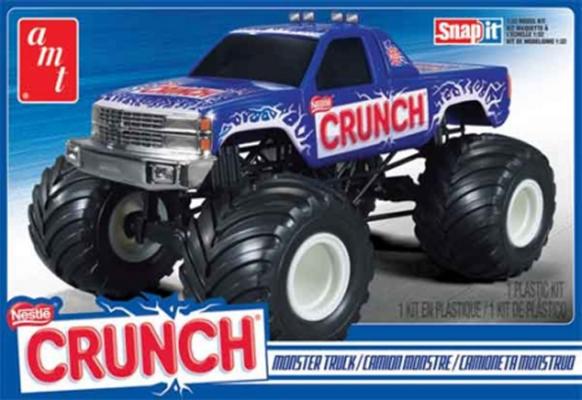
This review covers the Nestle Crunch Monster Truck 1:32 Scale AMT Model Kit #911. A 2015 release, this model is a repackaging of the popular USA-1 Monster Truck model. This kit is designed to be an easy-to-assemble kit with subject matter that appeals to youngsters. It is all about letting kids get into the hobby with minimal skills and come out with a great looking “monster truck” that has “eye candy” written all over it! A skill level 1 Snap It kit it is molded in color in 21 pieces that are (blue, white and chrome) with metal axles, monster style wheels and vinyl sticker graphics. The completed dimensions are Length: 7”, Width: 4-3/4”, Height: 4”. Assembly time is under an hour.
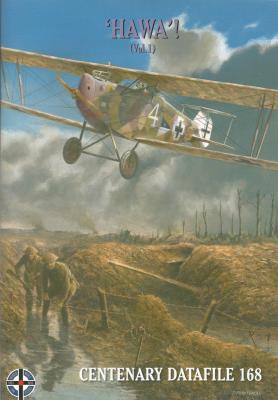
Centenary Datafile 168 is the first in a set of Datafiles that cover the Hannover CI.II/CI.IV/CI.IIIA series of aircraft. The history of the “Hawa” is presented in this issue, supplemented with 50+ period photos and six pages of technical drawings in 1/72nd and 1/48th by Mick Davis.
Included within is a discussion on the very unique and interesting geometry of the “Hawa” as well as some historical documentation in the form of the Aeronautical Engineering report on 13199/18 including notes and sketches. Modelers will find the entire publication filled with excellent detail resources, but the AE report includes some awesome sketches and drawing which can assist the modeler in adding detail to a model.
Some excellent full color artwork by Ronny Bar are presented on the back cover, both inside and out, and on the inside front cover.
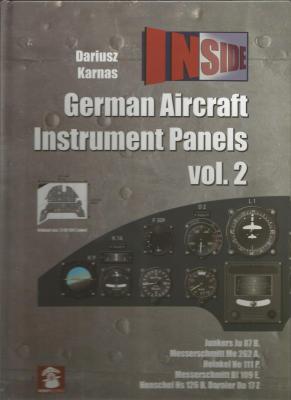
This is the second volume of the “Inside” series of books featuring the instrument panels of various German WWII aircraft. MMP Books previously released Vol 1 which covered the Bf-109F-4, Bf-110E, Fi-156 Storch, Fw-190A-3, Hs-123, and the Ju-88A-4.
This second volume covers the Bf-109E, Me-262A, Ju-87A, He-111, Hs-126 and the Do-17.
A special treat awaits the reader. The panel for the Bf-109E-4 is provided, full size, as a poster!
In North America, Casemate is the distributor for MMP.
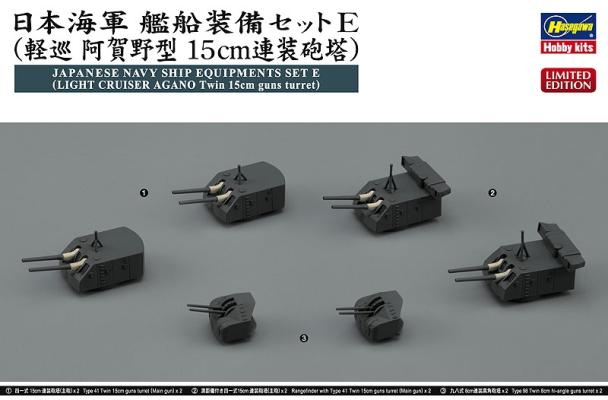
The Japanese Agano-class of light cruisers had a total of 4 ships on its class: Agano, Noshiro, Yahagi and Sakaw. These ships were lightly armored command vessels that operated for destroyer and submarine squadrons.
Hasegawa has released a detail set for its Agano Class in 1/350. This set includes
- Type-41 twin 15 cm guns (x2)
- Type-41 twin 15 cm guns with rangefinder (x2)
- Type-98 twin 8cm hi-angle turret
The Agano class boxing includes the standard Type-41 and Type-98, what is added is the rangefinder and some details parts for the standard turrets to model the Yahagi and Sakawa.
The overall surface detail is excellent –as you expect from Hasegawa- and the molds are completely free of flash. The cannon holes need to be drilled, but that is to be expected of plastic parts.
This detail set is a welcome addition as it allows the base Agano kit to be converted to other ships of the same class.
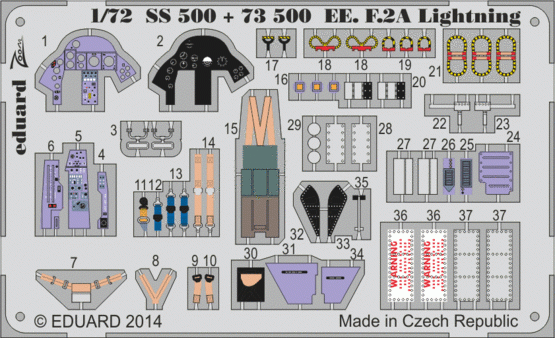
There can’t be a modeler on the planet who doesn’t know the brand name Eduard, from the Czech Republic. They launched into the business of providing Photo Etched brass detail parts decades ago, and have expanded into injection molded plastic kits, resin detail parts, cloth seat belt sets, and canopy masks, and I am sure a couple of other lines, and seem to cover every scale, and every model subject out there. This review covers two products designed to be used with the Airfix English Electric Lightning F.2A in 1/72nd scale, an extremely nice kit that has recently been released.
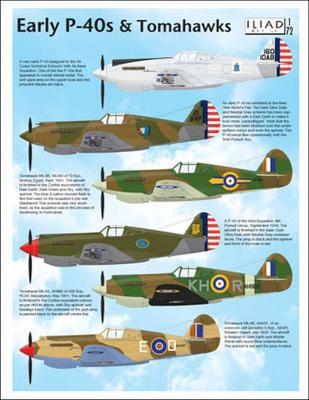
Iliad Design has released a new decal sheet in its 72nd scale line devoted to early P-40s and Tomahawks. This sheet provides you with 6 airframes, 3 in American markings and 3 in British markings.
The American options include a natural metal finish, an Olive Drab over Neutral Grey and a Olive Drab/Dark Earth over Neutral Grey. All of them sport red and white stripes in the rudder.
The British options include two Olive Drab/Dark Earth over Neutral Grey, and my personal favorite, Dark Earth/Middle Stone over Azure Blue in North African campaign markings.
The decal sheet instructions do not specify for which kit they are meant to fit (Academy, Airfix, AML, Hasegawa or HobbyBoss). That shouldn’t be an issue for most of the decals, with the exception of the red and white stripes for the rudder which might need to be trimmed to fit depending on which kit you are using.
The Kit
This review covers the Time Machine Mark IV (Back To The Future III) 1:25 Scale Polar Lights Model Kit #POL932. A 2015 release, this model is a continuation of the previous Time Machine version offerings. This skill level 2 kit is molded in color in about 60 pieces in gray, clear, chrome, updated brushed steel, metal axles with waterslide and sticker license plate graphics. While the kit is fairly easy to assemble the details are small and difficult to paint. You may also need to find some online sources to supplement the build with homemade decals to really make the model stand out. The completed dimensions are Length: 7”, Width: 3”, Height: 2-1/4” and it comes with a set of rail tracks for display.
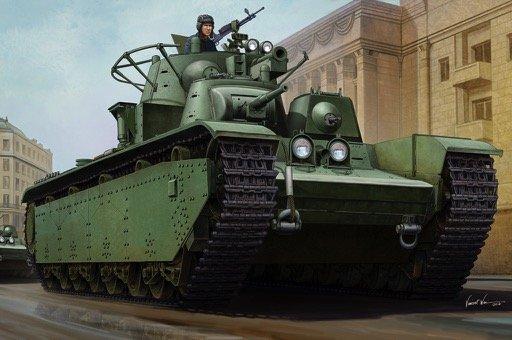
The T-35 heavy tank is perhaps the ultimate expression of the land battleship concept originally explored by the British in their Vickers A1E1 “Independent” prototype. Designed to work in conjunction with the T-28, another multi-turreted vehicle, the T-35 was intended to serve as a breakthrough tank, pushing through enemy fortifications while suppressing return fire with its antitank and antipersonnel turrets. Of course, history has proven this concept obsolete at best, and virtually all of the operational versions of this massive vehicle were crippled by their poor transmissions long before encountering any opponents on the battlefield. In total, 61 of these behemoths were manufactured, only the final six in the configuration displayed in this kit. Most of these were lost during the defense of Moscow. Only one example still exists in a museum.
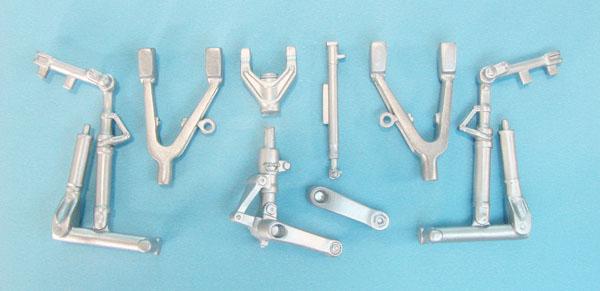
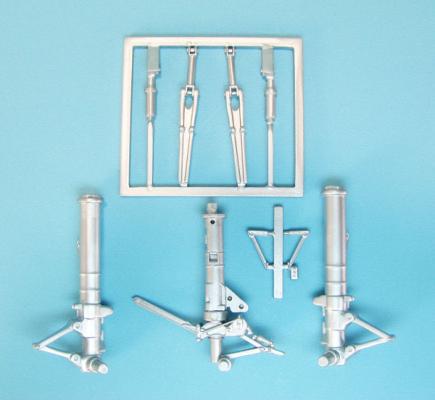
SAC has recently issued a replacement cast white metal gear set for the new beautiful and enormous Kitty Hawk OV-10D in 1/32nd scale. Kitty Hawk will also be issuing this kit in an OV-10A/C version soon and this gear should work well for that kit as well.
Big Note Here: This is not an issue with the SAC gear but with the Kitty Hawk OV-10D. Kitty Hawk calls for the numbers on their instructions that don’t exist on the sprue runners. There is no “G” sprue. These parts actually exist on runner “J”. For me I found it easiest to just mark runner “J” to “G”. Disaster averted. I will be using the Kitty Hawk instruction parts numbers to identify the corresponding SAC parts.
The B-47 has long been one of my favorite aircraft. I remember the first aircraft history book I got as a kid had a picture of the B-47 taking off with RATO packs in full thrust. A very impressive picture indeed.
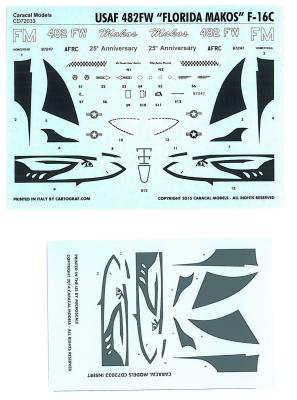
In 2014, the 482 Fighter Wing painted up one of its F-16C’s to commemorate its 25th anniversary. The jet was decorated with a mako shark motif including a shark mouth on the intake, a shark head on the forward fuselage and a shark fin on the vertical tail. The motif was created by modifying the standard F-16 scheme to incorporate the shark design.
DeLorean DMC-12
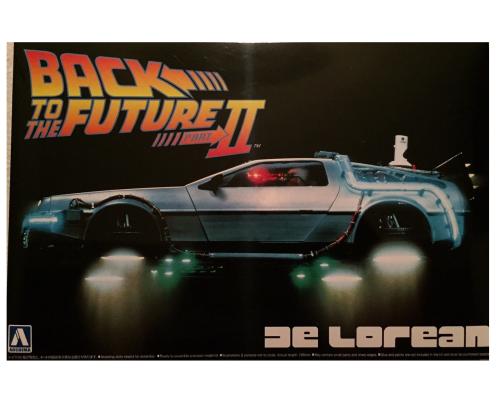
The DeLorean DMC-12 (commonly referred to simply as "the DeLorean", as it was the only model ever produced by the DeLorean company) is a sports car manufactured by John DeLorean's DeLorean Motor Company for the American market from 1981–83. The car features gull-wing doors and an innovative fiberglass chassis and underbody structure, along with a brushed stainless steel body. The car became widely known and iconic for its appearance, modified as a time machine, in the Back to the Future film trilogy.
Kit Contents
The kit has 2 dark-gray and 1 black sprues, a body, a chassis, one clear parts tree, a chrome-finished tree for the 4 wheels, 4 soft plastic tires, and a grease tube for the wheel mechanism that transforms the Time Machine from a regular car to a flying car in the movie.
SAC has recently issued a replacement cast white metal gear set for the new third in a series Kitty Hawk F-35s in 1/48thnd scale. Following the issue of the Kitty Hawk’s F-35A and F-35B, the F-35C is the U.S. Navy version with larger wing surfaces and heavier landing gear suitable for carrier landings.
I will be using the Kitty Hawk instruction parts numbers to identify the corresponding SAC parts.
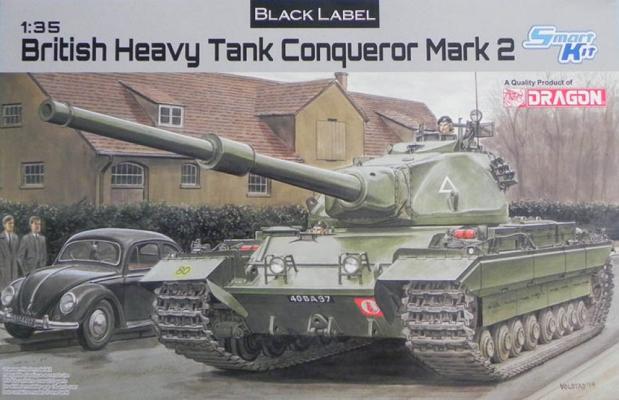
This is the British Heavy Tank Conqueror Mark 2, heavy tank design featuring a 120mm main gun. Developed specifically as a response to the Soviet IS-3 tank, it was envisaged as a partner for the British Army’s mainstream and contemporary Centurion (armed with a smaller 20-pdr gun) tank so it could give a long-range anti-tank reach. A total of 20 Conqueror Mk.I and 165 Conqueror Mk.II tanks were produced from 1955-59, and they were allocated to tank regiments stationed in Germany.
- 6 sprues molded in tan styrene
- 1 separate lower hull
- 1 separate upper hull
- 1 slide molded turret
- 1 Clear sprue
- 1 rubber gun mantlet cover
- 4 rubber track sections
- 2 tow cables
- 1 decal sheet
- 1 instruction booklet.
Construction
The kit is not too complex and assembles in 19 stages which are not too complex.
Cleanup on aisle six. That's what I kept thinking as I peeled away layer after layer of flash and mold seams from this kit. Michelangelo once said something like every block of stone has a masterpiece inside. It’s up to the sculptor to discover it. That's the way it is with this kit. Somewhere buried beneath all that flash is a nice kit.
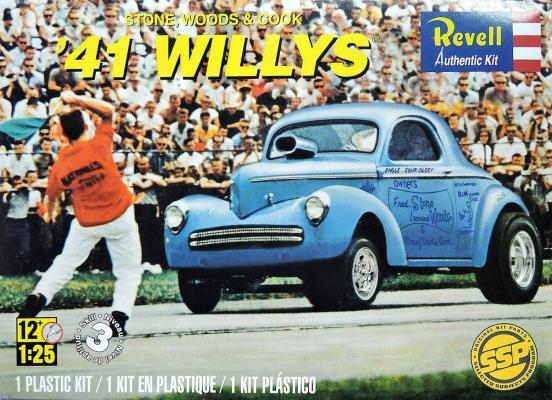
This is a great Revell kit that once was a classic model that every car modeler needs to build. Dates on the sprues suggest this kit was first issued in 1982, and there have been several re-releases since then. The years have not been nice though, as the flash and worn moldings continue to grow, requiring lots of cleanup.
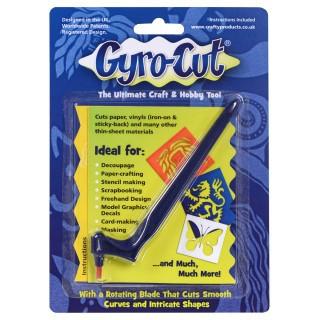
Matt Greenburg was at the Columbus IPMS Nationals with a new product. They were selling like hotcakes, and after seeing the demonstration, I bought one. As a Convention Special, Matt threw in a pair of extra blades.
The knife is special because the blade rotates to follow the movement of your hand as it changes direction while cutting. This allows very good control of the curves and angles of the cut. The business card below was cut by Matt with one sweep of the Gyro-Cut.
The trick is that you start the cut and move your hand along the line to be cut, and the blade follows. Because it is angled, the tip drags the blade into cutting position, even if the line cut is not straight. So it is possible to cut a curved or wavy line just by drawing the knife along the line, just like using a pencil to draw. Acute angles (less than 90 degrees) require a little finesse, but the knife can do it. You just stop at the angle and let the blade swivel before you go very far.
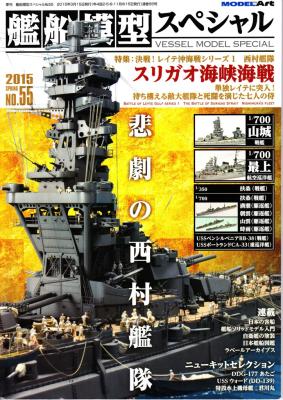
This is Model Art Magazine’s special quarterly issue that focuses on naval subjects. As with the regular Model Art Magazine this is printed in Japanese with some English subtitles.
The feature article in the Spring 2015 Vessel Model Special covers the battle of Leyte Gulf / battle of Surigao Strait / Nishimura's fleet. The article is comprised of models of the vessels that were involved. Some the models are shown as full build features and others are static color photos. Included are line drawings of some of these vessels.There are several period black and white photos included along with maps of the battle area.
History Brief
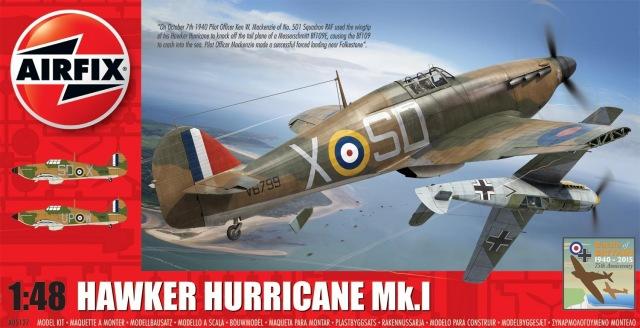
The Hurricane ranks with the most important aircraft designs in military aviation history. Developed by Sydney Camm, Hawker's Chief Designer in the late 1930s, the Hurricane was the first British monoplane fighter and the first British fighter to exceed 300 miles per hour in level flight. It was a single seat fighter with an enclosed cockpit. It featured a stressed skin aluminum wing with fabric covered aluminum control surfaces. The fuselage was a mix of steel tube, aircraft spruce forms, and fabric.
1700 Hurricanes fought in the Battle of Britain. That’s more than all other British fighters combined and those historic fights were seen as the Hurricane's finest hour. It fought over southern England and the English Channel during the summer of 1940 and fixed a place in history accounting for 60% of the RAF's air victories in the battle. After the Battle of Britain ended the Hurricanes were used across the world until the end of World War II.
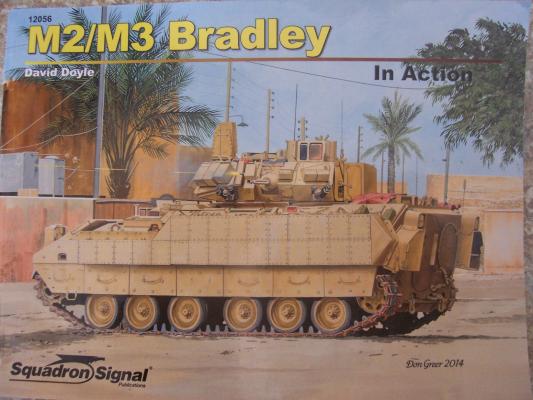
Squadron Signal Publication, In Action series has come out with a new book authored by David Doyle on the M2/M3 Bradley. The book starts out with an interdiction on how and why the Bradley came about. From the US Army’s open top M3 halftrack in WWII to the M113 APC the US Army needed a vehicle that could keep pace on the modern battle field with the latest tanks. The new vehicle would need to posses excellent firepower, speed and protection to transport troops. After a long development period the M2 Bradley joined the US Army. The book covers this development period well with good photos and text. The book continues with excellent photo references and text that follows the different upgrades and deployments that the Bradley has seen from the 1980’s, peace time Germany, Kosovo, the two Gulf wars and current training and uses. There are good photos that show how the crews stored there gear on these vehicles in peace time and war and how the crews lived & worked in these vehicles.
History Brief
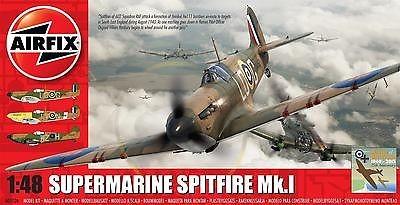
The Supermarine Spitfire Mk.I fixed its place in history during the Battle of Britain. The RAF pilots known as 'The Few' proved the Spitfire’s ability. Fighting alongside the Hurricane they overcame the struggles of the Battle of Britain over southern England and the English Channel during the summer of 1940. Powered by the Rolls-Royce Merlin V12, the Supermarine Spitfire was capable of speeds of over 360mph. Noted for remarkable maneuverability that allowed it to turn inside an opponent, the spitfire made it an excellent dog-fighter and it was the interceptor of choice for Fighter Command. Accordingly, RJ Mitchell's design is a time-tested aviation masterpiece, famous and beautiful too, first flying in 1936 and by 1940 it had become the envy of the world's air arms.
Thank you to Mushroom Publications for bringing a tremendous digital resource for the modeler. Thank you to the IPMS Reviewer Corps for allowing me to test out this new and exciting method of researching model subjects. This digital publication is nearly identical in content to the paperback version [suggestion to editor: here is the link for the paperback review on the IPMS Review site.
Overview
I am very pleased with the increasing availability of research material in the tablet world. Interactive Panels allows an interesting reference experience for the WWII German aircraft modeler. Cockpit views of six different aircraft instrument panels are included, as listed:
With the release of the Revell-Germany Bf-109G-6 and G-10 Erla it is just natural to want to put markings on them that aren’t included in the box.
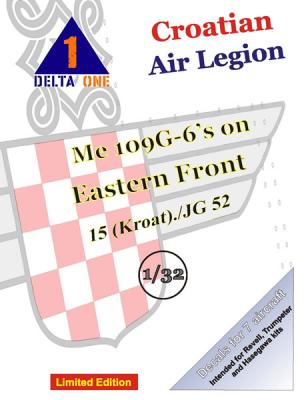
Delta One has been providing some unique looking 109s on their decal sheets and this one is no different. The Croatians had a staffel similar to the Spanish staffel in JG-52. They were proud and carried the This decal sheet provides markings for seven aircraft, six G-6s and one G-5. Most of the aircraft sported the “Flying or Winged chessboard” on both sides of the fuselage.
The Kit
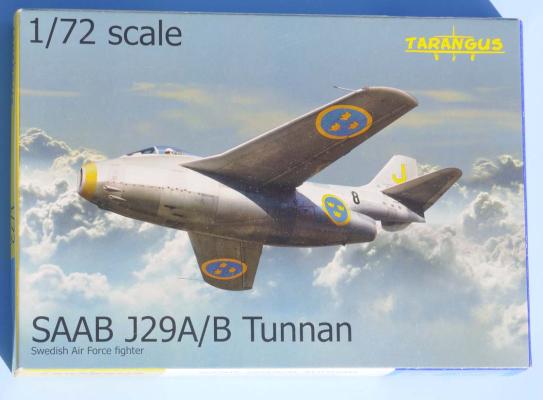
This is the first 1/72 kit by Tarangus, and follows their 1/48 SAAB Lansen A-32A and J-32B kits. Despite being a limited run kit, this is a major upgrade over the previously available Tunnan kits (Matchbox, Heller) and obviously the first as a J-29A or B. Of course the increase in accuracy does not correspond to an increase in buildability. I sincerely hope that Tarangus will expand this kit to do the later Tunnan versions. Hopefully the kit does well and we will soon see the reconnaissance version, S-29C, along with the later J-29E and J-29F with their distinctive dogtooth wings.
I hate masking canopies. It always takes so long and it is not as much fun as the rest of the build. That is the primary reason to buy canopy masks.
The latest offering from Eduard is for the Kitty Hawk AH-1Z. Accurately cut from Kabuki tape, which I think is the best masking material out there, this set provides outlining for the side canopy sections. Each individual panel is constructed from two pieces of masking material which are then filled in with masking fluid. The overhead panels are actually single piece masks which is nice. The other parts that you are provided are for the turret clear parts.
These will fit and make the whole process of canopy masking a non-event. They will save you time and give you accurate crisp outlines with minimal work.
Highly recommended
The Aircraft
The Bristol Blenheim was a fast day bomber designed for the RAF in the early to mid thirties. In its day, it was a fast, excellent aircraft. Unfortunately, its day was past when WWIl broke out. It was hopelessly outclassed by most modern fighters and was shot down in droves when un-escorted. It was quickly relegated to night intruder and naval strike missions and usage in less threatening environments. Despite attempts to upgrade it with new engines and other changes, it's performance remained sub-par and it was phased out as soon as was practicable.
The Set
This is one of Eduard's "Big Ed" sets that bundle all their PE sets and masks for a given kit in one package. In this case it consists of their exterior, interior, landing flaps and bomb bay PE sets as well as the mask set for the clear parts. If you bought them separately, they would cost a total of around $90, so you do save $25 buying them this way.