all 2015

Review Author
Phil Peterson
Published on
Company
Quickboost
Scale
1/72
MSRP
$4.99

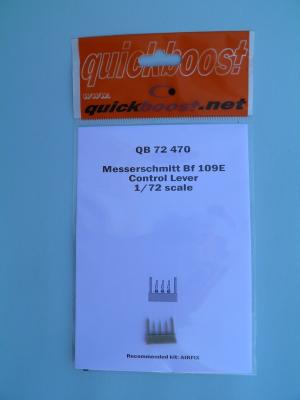
This new item from Quickboost is a direct replacement for the control stick for Bf 109E models. They recommend it as a replacement for the new Airfix kits but I am sure it would work in any 72nd scale Emil. One nice aspect is they give you 3 new sticks and as I have two of the Airfix kits and a Tamiya one, I am sure all 3 will get used. The detail is a bit finer than the Airfix version and it includes the boot at the bottom of the stick.

No instructions are provided as all you need to do is cut them off the runner and use as a direct replacement for the kit part.

Another simple and quick update for your modeling pleasure.

Thanks to Aires and IPMS/USA for the review kit.
Review Author
Phil Peterson
Published on
Company
Quickboost
Scale
1/72
MSRP
$4.99

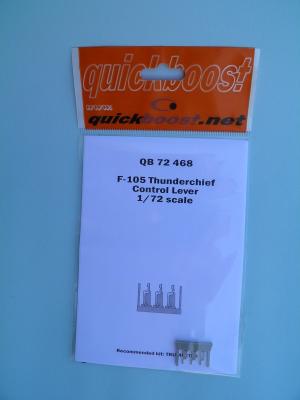
This item from Quickboost is a direct replacement for the control stick for Trumpeter F-105 kits and should be compatible for their D and G models. They should also be useable on the Hasagawa or Monogram/Revell kits. Three new sticks are provided in the package. The detail is a bit finer than the Trumpeter version but they are a bit fragile. As you can see in the pics, I broke off one of the grips just while handling it for the pictures. So use some care when you are removing the sticks from the runner and the flash from the stick itself.

No instructions are provided as they are a direct replacement for the kit part.

So, just be a little careful and you will have a nicely detailed stick for the pit.

Thanks to Aires and IPMS/USA for the review kit.
Review Author
Chad Richmond
Published on
Company
LPS Hobby
Scale
1/72
MSRP
$15.00

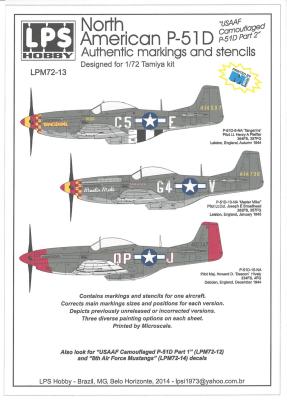
LPS Hobby has been producing many decal sheets of previously unavailable markings, previously incorrect markings and some unusual markings. This particular sheet is no exception. This sheet provides markings for three camouflaged P-51’s which were over-painted with what is believed to be RAF Dark Green and Medium Sea Gray. The decal sheet is printed by Microscale and is in perfect register.

The first aircraft is P-51D-5-NA, “Tangerine”, piloted by LT Henry A. Pfeiffer, 364FS, 357FG, Leiston, England, Autumn 1944. The second is P-51D-10-NA, “Master Mike”, piloted by Lt. Col Joseph E. Broadhead, 362 FS, 357 FG, Leiston, England, January 1945. The last aircraft, and the one I chose is P-51D-15-NA piloted by Major Howard D. “Deacon” Hively, 334 FS, 4FG, Debdon, England, December 1944.

Review Author
James Binder
Published on
Company
Aires Hobby Models
Scale
1/72
MSRP
$37.50

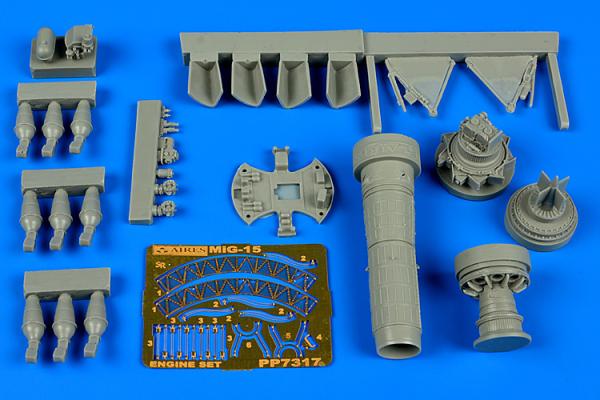
The AIRES Mig-15bis engine replacement is a model kit in and of itself. It replaces the 3 part “engine” of the Eduard 1/72 kit. The AIRES kit is made up of 30 resin and 19 photo etch parts. The kit gives you a complete Klimov K-1 engine! The resin is fantastic with great detail and is very easy to remove from the pour plugs. The photo etch is very fine but has strength, so it doesn’t feel flimsy at all.

Build-wise this engine goes together very well and the instructions are pretty easy to follow. The only thing they don’t provide is a list of colors to paint the parts. There are many photos though on the web of Klimov K-1s, so it isn’t too hard to find the color scheme, but it would be nice if they told you what colors each part needed. I used Alclad aluminum, burnt iron, steel and, dark aluminum along with Model Master flat black.

Review Author
Brian R. Baker
Published on
Company
Eduard
Scale
1/72
MSRP
$24.95

History

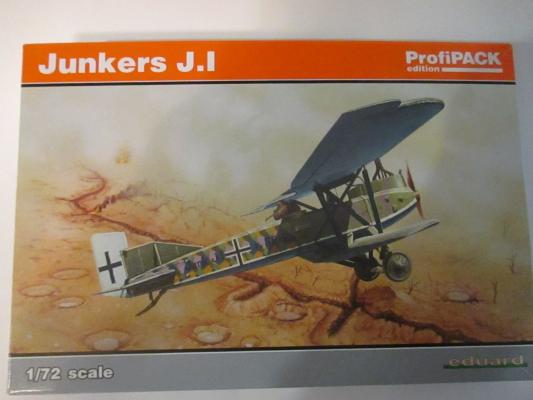
The Junkers J.1 (Company Model J.4) was one of the most advanced airplanes produced during World War I. When most other plane were of wooden construction with wire braced wings, the J.1 was all metal, with cantilever wings and tailplane, and featured a .20 inch armored shell structure which served as the forward fuselage, protecting the engine, fuel tanks, and crew. The structure was covered mainly by corrugated aluminum, which was to become a Junkers trademark later copied by Henry Ford for his Tri-Motor. Powered by a 200 hp. Benz Bz IV 6 cylinder in-line water cooled engine, the aircraft had an empty weight of 3,885 lbs. and a gross weight of 4,787 lbs. This resulted in a very heavy and underpowered aircraft, but given the role of the aircraft and the state of the art at the time, it was still an impressive airplane. Comparing the type with modern lightplanes, a 65 hp.

Review Author
Paul R. Brown
Published on
Company
Hasegawa
MSRP
$38.00

This is the first kit of what I expect will be a number of F-35 kits from Hasagawa and represents the U.S. Air Force version of the Joint Strike Fighter. The Marine F-35B and Navy F-35C are sure to follow.

Review Author
Paul R. Brown
Published on
Company
Eduard
Scale
1/72
MSRP
$9.95

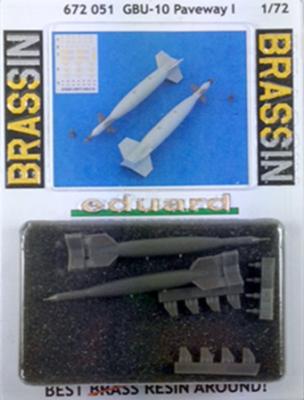
The GBU-10 Paveway I is one of the United States first precision guided weapons put into service. The GBU-10 is actually the combination of a standard Mk. 84 2,000lb bomb with the Paveway I guidance system. Developed in the late 60’s and early 70’s it was used extensively in Vietnam. While the MK. 84 bomb is still around, the Paveway I guidance package has been replaced by improved versions offering more guidance options and better range.

Review Author
James Binder
Published on
Company
Aires Hobby Models
Scale
1/72
MSRP
$13.50

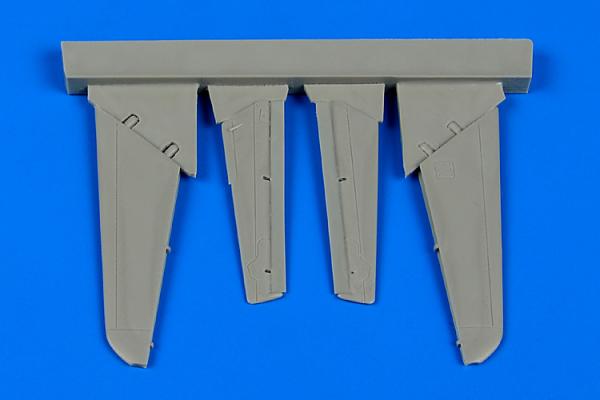
The AIRES 1/72 Mig-15 control surfaces aftermarket set gives you elevators and horizontal stabilizers for the Eduard 1/72 Mig-15 kit. The four piece set replaces the two single piece horizontal stabilizers and elevators. The difference is that with the AIRES parts you get separate elevators so you can position them. When I compared the kit parts to the aftermarket parts the resin parts were a bit finer in size and shape and the detail was slightly more refined. The biggest gain of the AIRES set is the positional elevators.
Review Author
Pablo Bauleo
Published on
Company
Eduard
Scale
1/48
MSRP
$15.00

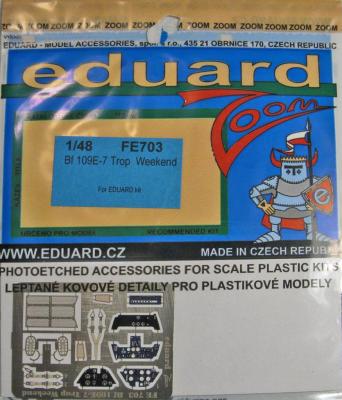
Eduard has released a “Weekend” PE fret for their Bf-109E-7/Trop. This is a simple photoetch fret (13 parts) which will quickly enhance the look of your model.

The fret includes 4 pre-painted pieces to create a realistically looking instrument panel, a right side console (electric panel I believe), a nicely detailed seatbelt (5 pieces, prepainted too) and only one external piece, but an important one in the /Trop, as it is part of the air filter.

As you can see from the pictures, even with a low part number, this is a simple and effective way to enhance the interior and exterior of your model. It took me about 10 minutes to setup the interior pieces and less than one minute for the air filter. As all the interior pieces are pre-painted it is very straightforward to detail and complete the cockpit.
Highly recommended.

I would like to thank Eduard and IPMS/USA for the review sample.

Review Author
Andrew Birkbeck
Published on
Company
Tamiya
Scale
1/35
MSRP
$68.00

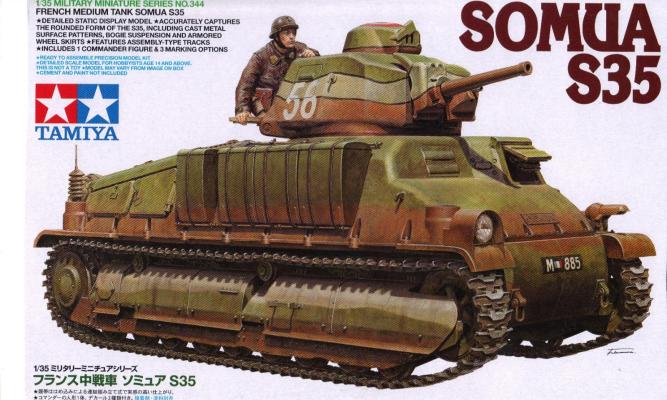
Those who have studied the collapse of the mighty French military machine in May 1940 at the hands of Germany’s armed forces know that it wasn’t a lack of quality fighting equipment as much as an inability to utilize it effectively that sunk the French cause. In a number of large and small battles between the two sides, effective French leadership together with the proper tactical use of the equipment at hand had the French blunting if not outright defeating their German counterparts. And when it came to tanks in particular, the French had some pretty formidable weaponry. One of the finest tanks of the day was the French Somua S35, weighing in at 20 tons, and carrying a 47mm main gun plus a coaxial machinegun. With frontal armor at 40mm, this was equal to anything the Germans had on hand at the time. It also had mobility, able to reach speeds of 29 mph on improved roads.

Review Author
Keith Gervasi
Published on
Company
Tamiya
Scale
1/35
MSRP
$61.00

History

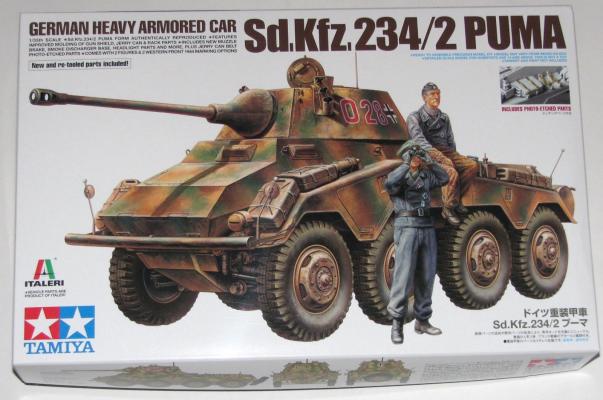
Among the variety of wheeled armored vehicles which saw action in WWII, the Sd.Kfz.234/2 – armed with a 5cm gun – boasted the strongest firepower. The Sd.Kfz. 234 series, which was developed as successor the 8 wheeled Sd.Kfz. 231, had an important role in reconnaissance missions for Blitzkreig tactics. Four variations from 234/1-4 were deployed with differing armament and the 234/2 was the first in this series. Unlike the 231, armored with plate bolted onto the frame, the 234 adopted a monocoque structure to improve productivity and strength. Controls were located in both ends and the front armor plate was 30mm thick. The Tatra-made Type 103 air-cooled V12 diesel yielded 210hp, a maximum speed of 80kn/h, and a range of 1000km. The chassis had sophisticated 8-wheel drive and 8 wheel steering mechanism. The turret was armed with the 5cm Kwk39/1 gun which was able to penetrate 37mm thick armor plate from a distance of 1500m with armor piercing ammunition.

Review Author
Eric Christianson
Published on
Company
Airscale Model Aircraft Enhancements
Scale
1/24
MSRP
$16.75

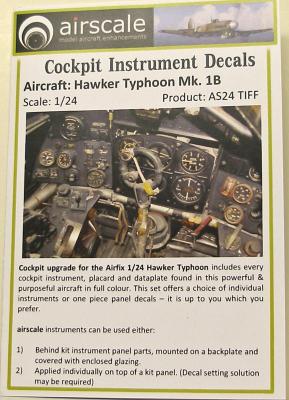
The new website for Airscale (Model Aircraft Enhancements), out of the UK, describe the company as providing ‘High resolution cockpit detailing for aircraft modellers’. This is my first exposure to this company’s impressive products, which range from 1/48th through 1/24th scales and include highly detailed cockpit decals placards, and etched brass. The decals are offered as individual images as well as full panels, and products are offered for WWI, WWII and post-war, for RAF, USAF, USN and Luftwaffe, and for prop aircraft and jets. Their website is well designed, easy to navigate, and they take PayPal. ‘Comprehensive’ is the word that comes to mind, and I will be returning to their site often.

Review Author
Jim Pearsall
Published on
Company
Eduard
Scale
1/144
MSRP
$23.00

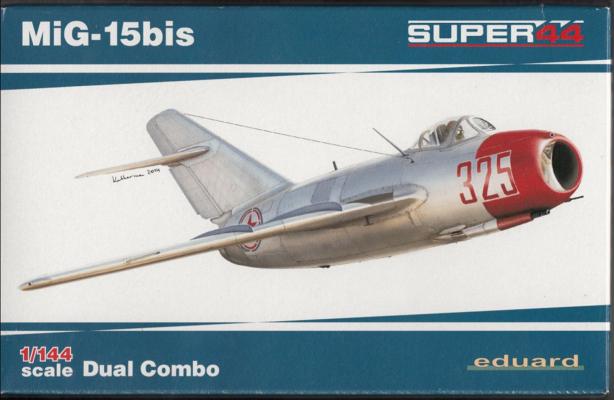
This spiffy little kit comes two to a box. There are 5 markings choices. This is the “out of the box” version review. I did the other half of the kit using the Brengun PE.

Major Assembly

Since this is the second of these, I gained a little experience with the first, and I learned something. Well, I actually knew this from before, and that’s the MiG-15 model is a tail-sitter, and you need to add weight to the front. On my Airfix 1/72 MiG-15, I had to put about 6 finish nails in the intake before it would sit on the nose wheel. For this kit, the amount of lead needed just fills the top of the intake splitter.
Review Author
Jim Pearsall
Published on
Company
Eduard
Scale
1/144
MSRP
$10.00

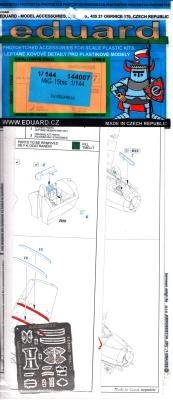
Eduard recently released two very good 1/144 MiG-15 kits. This is the PE detail set designed to make the kit even better.

What you get is a fairly small PE fret with color cockpit components and aluminum colored parts. This is pretty good, since most of the exterior parts are will be natural aluminum when finished. There are only enough parts to upgrade one aircraft per PE set.

The Cockpit

This utilizes the Eduard cockpit tub. I painted the interior medium gray (36320) and the seat black. Then the PE instrument panel goes in, and the PE seat belts. The seat belts are absolutely super. There are also two side consoles and two handles which go in the cockpit. I used Gator Glue to put these parts in.

Following the instructions, I put the cockpit into the fuselage along with the intake splitter, and glued the fuselage halves (top & bottom) together. Back to the PE.

Review Author
Pablo Bauleo
Published on
Company
Eduard
Scale
1/48
MSRP
$24.95

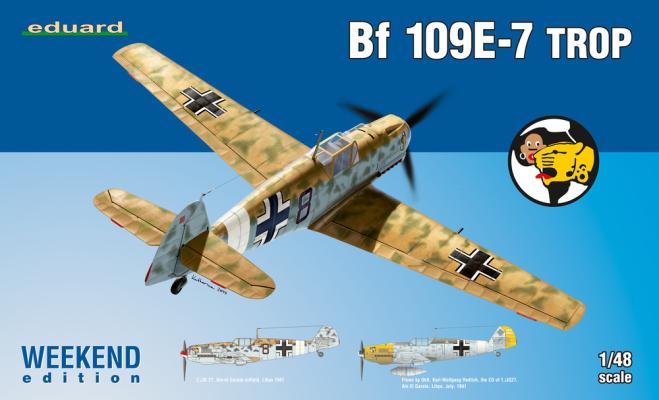
Eduard continues to expand its Bf 109E line, this time with a Weekend Edition of their E-7/Trop. The kit comes in 5 sprues (one clear), a “superfabric” seatbelt and two marking options. Recently Eduard has started to offer two markings options in their Weekend editions and I appreciate that.

Construction starts, as usual, with the cockpit. A simple affair to assemble it delivers a realistic representation of the “front office” of the 109 E-7. Decals are provided for the instrument panel or you can paint and drybrush it. Please note that I built this model using a photoetch fret (reviewed elsewhere in the IPMS/USA website), so the seatbelt shown in the image does not represent the “superfabric” one.

Review Author
Tom Moon
Published on
Company
Italeri
Scale
1/12
MSRP
$193.00

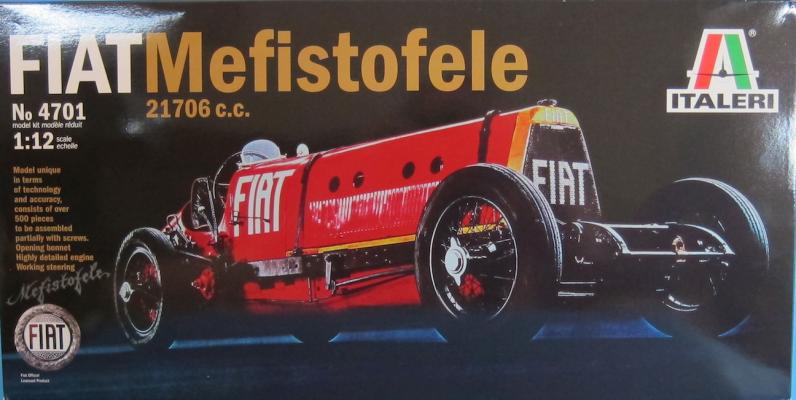
The one-off racing car “Eldridge", derived from the old Fiat SB4 chassis, became known as Mephistofele for the infernal noise emitted by its powerful aircraft 6-cylinder in-line engine, giving a capacity over 20,000 cm3, not attenuated by exhaust mufflers kept “free” to provide the most significant performance. On 12th July 1924 in Arpajon, the Mefistofele was able to reach, driven by its pilot and designer Ernest Eldrige, the amazing speed, for the time, of 146.01 miles per hour (over 230 Km/h) and broke the World Land Speed Record achieving an impressive result. The Mefistofele, was characterized by the high back bodywork able to contain the powerful Fiat A-12 liquid-cooled engine and for its structure especially made to achieve the speed record.

Review Author
Joe Staudt
Published on
Company
Round 2 Models
Scale
1/25
MSRP
$29.99

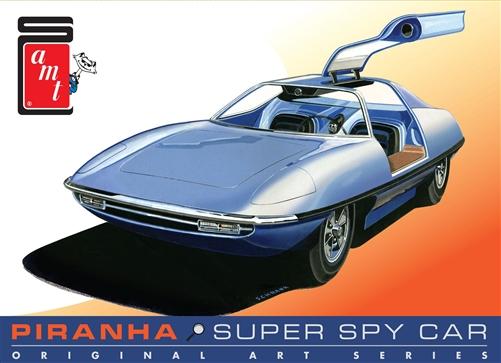
In the early 1960’s, plastics were the wave of the future. The Marbon Chemical Company believed that plastic could be used for the structural parts of automobiles, and to demonstrate this they decided to build an entire car out of ABS plastic. The folks at AMT were so taken by this concept that they not only released kits of the car, but also committed to build a quantity of the full-scale vehicles. The most famous of these was used on the TV show “The Man from U.N.C.L.E.”, where it served as the car driven by the main character and his sidekick, a pair of international spies.

The full-size cars never caught on, but the kits were popular, and Round 2 has recently re-released them. The first one out is the “Original Art Series” version of the “Man from U.N.C.L.E.” car, with original box art and a booklet full of color photos of the original vehicles, including the recently restored car from the TV series.

Review Author
Jim Pearsall
Published on
Company
Eduard
Scale
1/144
MSRP
$24.95

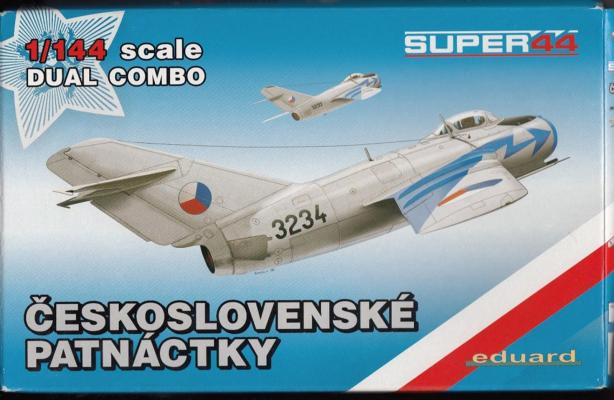
Eduard has come out with two double kits of the MiG-15. This one is the Czechoslovakian MiGs. There are two differences between the kits. First is markings. This one is for Eduard’s “home team”, with 7 different Czech MiGs. The second difference is that one of the MiGs in this kit has three guns in the nose instead of two. This is the build with three guns.

Since this is a double kit, you get two of everything. I used the other kit to do the Eduard PE upgrade. I was also gratified to see that there are two slightly different sets of main wheels per kit. There’s also the usual canopy mask and wheel masks, which are top quality.

Review Author
Greg Wise
Published on
Company
Hasegawa
Scale
1/48
MSRP
$42.99

History Brief

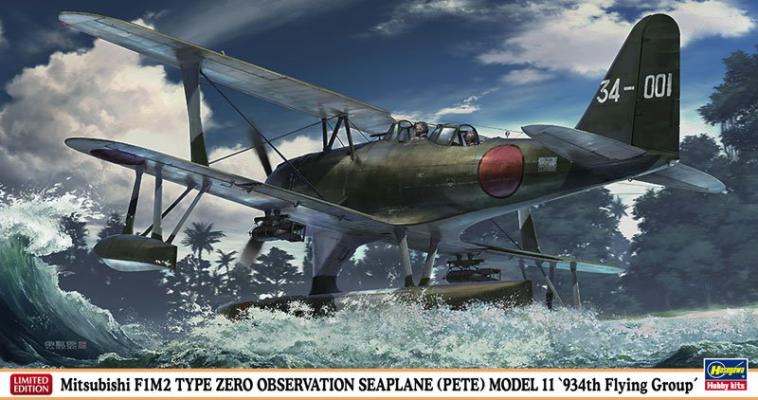
Code named ‘Pete’ by the Allied Forces the Mitsubishi F1M2 Type 0 Observation Seaplane Model 11 was originally built as a catapult-launched reconnaissance seaplane. In essence, the Pete was a two man crew, single-engine biplane with a main central float and two auxiliary outrigger floats.

Review Author
Clarence Wentzel
Published on
Company
Pavla Models
Scale
1/72
MSRP
$21.75

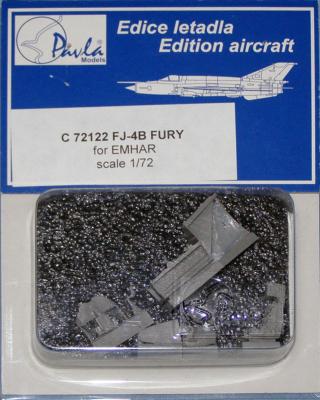
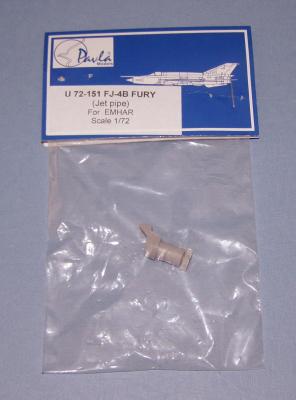
The Navy FJ-4 was, to many people, the culmination of the basic North American Sabre Jet. This final naval variant featured a more powerful engine which required a larger intake, a shorter, deeper fuselage, a larger tail, larger wing area and a longer nose gear. Its front line service was short, however. Although the FJ-4B was loved by its pilots, by the late ‘50’s the Fury was being phased out by newer, less expensive fighter and attack aircraft. They referred to it as the “Cadillac”, while its counterpart and eventual replacement, the A4D, was referred to as the “Tinkertoy”.

Emhar issued the FJ-4B in 1/72nd scale in 1990 and is a great kit. There are really only two shortfalls of the kit; the first being a rather basic cockpit and the second being a crude, short exhaust/jet pipe. Pavla has recently released resin detail parts for the cockpit and the exhaust.

Book Author(s)
Yefrim Gordon, Sergey Komissarov, and Dmitriy Komissarov
Review Author
Hub Plott
Published on
Company
Hikoki Publications
MSRP
$56.95

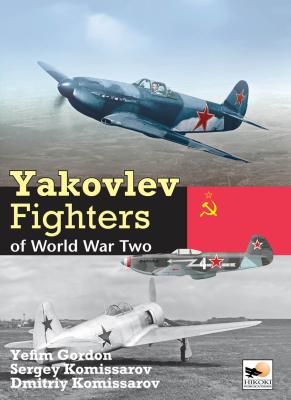
This book is the comprehensive history of the fighters produced by the Yakolev Design Bureau during World War Two. The Yak-1 first flew in 1940 under the designation I-26, changing to the now familiar Yak-1 when production began at the end of that year. The authors trace the development of these designs and offer the reader a comprehensive history from drawing board to final use. Ever wonder why the Yak-3 was actually produced after the Yak-9? It is all here.

The book is divided into 9 chapters. Chapter one is comprised of 58 pages and deals with the design, development and use of the Yak1. This begins with the I-26 initial variant and the loss and death of Yakolev’s chief test pilot Yulian Piontkovsky. Each variant and weapons system is covered.

Chapter two covers the I-28, I-30 and heavy fighter projects. These 14 pages deal with some prototypes and dead-end Yakolev developments

Book Author(s)
Paolo Varriale; Illustrators: Roberto Zanella, Ronny Bar, Martin Digmayer
Review Author
Roger Rasor
Published on
Company
Albatros Productions, Ltd.
MSRP
$22.00

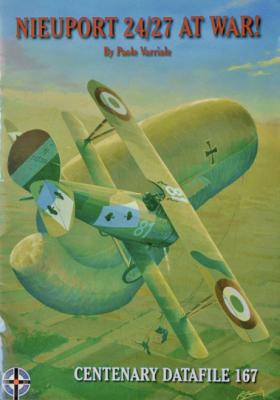
By 1916, the little Nieuport 11, also known to the French Militaire by its initials BB (which the French pronounced bébé), had succeeded in putting an end to the Fokker Scourge and therefore gaining the respect of ally and foe alike. A higher horsepower version, known as the Nieuport 17 followed and built on that legacy, becoming the preferred mount for many of the Allies’ first generation Aces. But subsequent efforts to continually improve upon Nieuport’s basic Vee-strutter design fell short of expectations with the introduction of the 24, 24bis and later the 27. Failing to match the performance of a new generation of fighters, these Nieuport designs generated little enthusiasm among French pilots who instead looked forward to flying the much-desired new SPAD. Unfortunately, SPAD production could not match demand and there was a war to fight so the new Nieuport fighters began arriving at the front in early 1917.

Review Author
Rod Lees
Published on
Company
Master Model
Scale
1/48
MSRP
$3.30

Thanks to Piotr at Master models for providing one more great pitot tube to improve our models, and thanks to IPMS Reviewer Corps leaders for sending this my way!

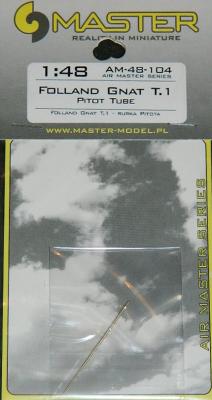
This pitot tube/air probe is a simple upgrade to Airfix’ most recent 1/48 Jet model, the Folland Gnat T1. Previously reviewed as a build kit, I figured it would only be a matter of time before Master released this for the Gnat…

On side-by-side comparison, it is evident Master Model’s pitot is an improvement on the kit item. Finesse, is, as usual, the key word to describe what Master model products provide over kit injection molded pitot tubes. There is just no way plastic, (or frankly resin replacements), can compete with metal. Cleanup of the plastic version’s injection port is “dicy” at best, particularly on the side of the tube… I rarely have success with this, so I have, in the past, opted for needles. Not optimal, but acceptable.

Review Author
Roger Rasor
Published on
Company
Eduard
Scale
1/32
MSRP
$23.00

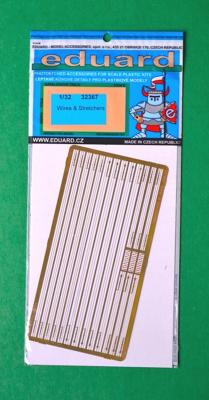
With the ever growing number of 1/32 scale rigged aircraft kits on the market, Eduard now offers a generic photo-etched set of 1/32 scale flying wires and stretchers (AKA Turnbuckles). Metal flying wires are a logical and much desired aftermarket detail set for model builders wishing to accurately replicate the metal wires used on most Allied aircraft built after 1915/16. Unlike the majority of other p/e sets cataloged by Eduard, a specific aircraft type (or kit) is not specified. Instead, the fret includes 33 anchoring rings, wires of differing lengths with a stretcher near one end and others including stretchers with tabs that may be used as attachment points to fit a variety of aircraft (see the photo of the fret below). Model builders will need to determine if this set fits their needs. I say ‘fits’ because the wires themselves are provided in only two lengths…2 1/14” and 5 1/8”.

Review Author
John Noack
Published on
Company
Gallery Models
Scale
1/48
MSRP
$55.98

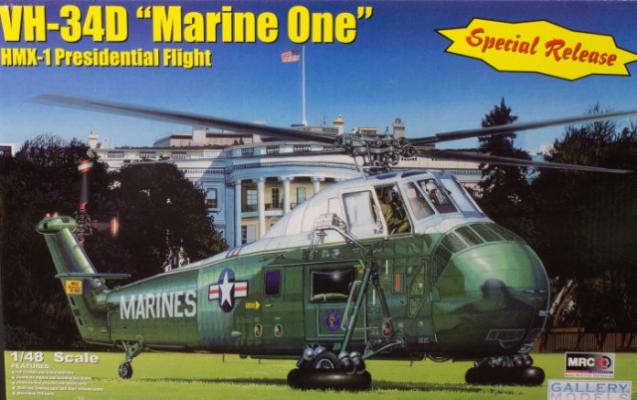
I've had a hankering to build an H-34 Choctaw for some time now. When the Gallery Models kit was released, I debated which version to build, but I've always had an eye for that distinctive Marine Green under White scheme on the VH-34 variant. When Dave offered up the 1/48 VH-34D Marine One kit, I jumped at it.

Review Author
Scott Hollingshead
Published on
Company
Eduard
Scale
1/72
MSRP
$9.95

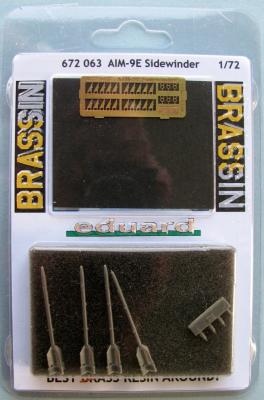
Developed as a Sidewinder for the U.S. Air Force, the AIM-9E was based on the U.S. Navy AIM-9B, but with some enhancements, based on early combat challenges of the B- model. The cooling for the detector used Peltier thermoelectric cooling, and the forward canards were changed. Ford produced 5000 of the missiles from re-purposed AIM-9B missiles. The AIM-9E measured 9 feet, 10 inches long, 22 inches across the rear fins, had a diameter of 5 inches, and weighed in at 164 pounds. The AIM-9E is credited with aerial victories over six MiG-21 aircraft during the Vietnam War being launched from F-4D and E Phantom II’s of the US Air force.

Book Author(s)
Martyn Chorlton
Review Author
Roger Rasor
Published on
Company
Crecy Publishing, Ltd.
MSRP
$39.95

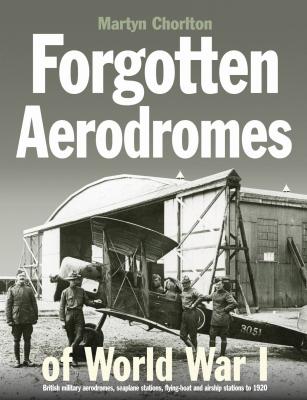
The growing interest in World War I aircraft among model builders and aviation history buffs has fostered an increase in the variety of publications offering information about the subject. Among them is a well-researched hard cover book recently published by Crecy Publishing (and distributed in the US by Specialty Press) about the military airfields that populated the British landscape during and after WWI. The Brits referred to these facilities as Aerodromes, and they were numerous. In FORGOTTEN AERODROMES OF WORLD WAR I, author Martyn Chorlton documents a total of 502 RFC and RNAS sites by country and county. Many began as nothing more than a grassy field with a simple structure or two. Most have been lost to other uses in the nearly 100 years since they were constructed, but some still serve. Remnants of others can be found, but many of their names are etched in history.

Review Author
Rod Lees
Published on
Company
Master Model
Scale
1/48
MSRP
$10.00

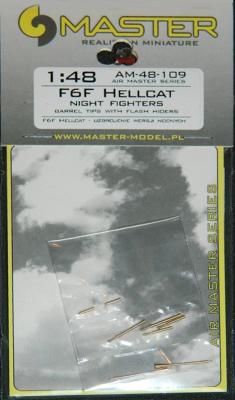
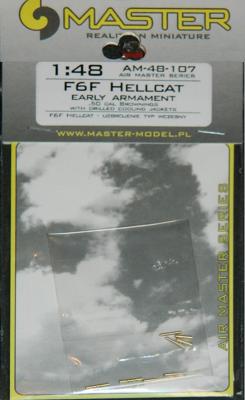
Thanks to Piotr at Master-models for providing these fantastic metal flash hiders to improve our Nocturnal Hellcats, and thanks to our IPMS leaders for sending these my way!

The Eduard Hellcats are still the best out there in my opinion, and Master details provide late-model covered .50 caliber gun barrel tips with flash hiders, which directly replace the kit plastic parts…

As you can see on the “before” picture, the kit-provided gun barrels are a bit lacking in the flash-hider department. Adequate but not quite there…

Review Author
Rod Lees
Published on
Company
Master Model
Scale
1/48
MSRP
$10.00

Thanks to Piotr at Master-models for providing these metal gun barrels to improve our Hellcats, and thanks to our IPMS leaders for sending these my way!

The Eduard Hellcats have been around for a while now, and are great kits in their own right. Master details provide six astoundingly detailed 1/48 gun barrels to replace the kit plastic parts… read on!

Side-by-side comparison, Master Model’s gun barrels provide improvement on the kit items by providing depth and three-dimensional appearance over the kit parts. The kit guns are sufficient, but these bring the kit up that little bit…

Book Author(s)
Chris Gibson
Review Author
Frank Landrus
Published on
Company
Hikoki Publications
MSRP
$49.95

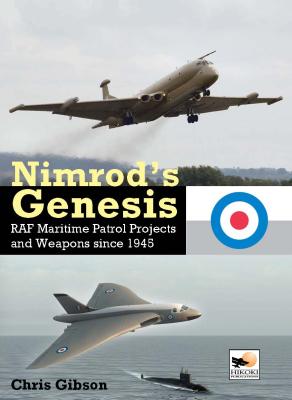
Chris Gibson’s latest book on British aviation projects examines the post-war genesis of the RAF's maritime patrol aircraft. Starting with the British affection for its flying boats of 1945, Chris Gibson chronicles the switchback path that led to the Shackleton and ultimately the Nimrod. As a bonus for underwater target fans, Chris Gibson provides intrepid commentary on the aerial systems developed to counter the threat from Soviet submarines.

To seek and destroy Soviet submarines, Shackletons and Nimrods carried many advanced weapons and sensors, but also played a role in saving lives at sea. Then, after forty years' service, the Nimrods were withdrawn without replacement after one of the most expensive procurement disasters.

Following in the path of Chris Gibson’s previous books, this tome presents hundreds of illustrations, photographs, and artwork. Chris must have really enjoyed the research as there are many projects depicted I was previously unaware of.

Book Author(s)
Philip S. Jowett; Illustrated by: Stephen Walsh
Review Author
Steve Zajac
Published on
Company
Osprey Publishing
MSRP
$17.97

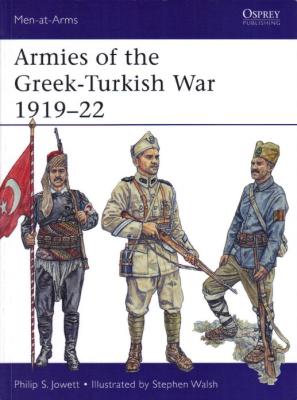
Osprey Publishing’s latest Men-at-Arms monograph focuses on the fighting men, weapons and equipment used during the war between the Greeks and Turks, in the aftermath of World War I. This from the website: "This is a comprehensive guide to the armies that fought a devastating and decisive conflict in the Eastern Mediterranean between the two World Wars of the 20th century. From the initial Greek invasion, designed to "liberate" the 100,000 ethnic Greeks that lived in Western Turkey and had done for centuries, to Mustafa Kemal Atatürk's incredibly efficient formation of a national government and a regular army, this was a war that shaped the geopolitical landscape of the Mediterranean to this day. It gave birth to the modern Turkish state, displacing millions and creating bitter memories of atrocities committed by both sides.

Review Author
Eric Christianson
Published on
Company
Twobobs Aviation Graphics
Scale
1/48
MSRP
$16.00

TwoBobs Aviation Graphics have been around for years, and have built a solid reputation for producing some of the finest after-market decal sets in the industry. Chances are, if you’ve been around aircraft modeling for a while you’ve used some of their products already. Their recent release of a set of 1/48th Viggen decals was meant to coincide with the recent Tarangus release of a JA-37 Viggen in the same quarter scale.

The decal set under review comes in a sealed plastic envelope that contains two sheets of individual markings covering the following nine different aircraft:

Review Author
Rod Lees
Published on
Company
Master Model
Scale
1/48
MSRP
$7.50

Thanks to Piotr at Master-models for providing these metal gun barrels to improve our Hellcats, and thanks to our IPMS leaders for sending these my way!

The Eduard Hellcats have been around for a while now, and are great kits in their own right. Master details provide late-model covered .50 caliber Browning barrels to replace the kit items; these directly replace the kit plastic parts…

In side-by-side comparison, Master Model’s gun barrels provide improvement on the kit items by providing depth and three-dimensional appearance over the kit parts, and improve the appearance by having finer detail than can be provided with injection molding processes. These are exactly the same as the version with the cooling jackets having holes drilled in them, without a separate barrel assembly for the guns. They are just machined tubes, with fine detail… See the middle gun barrel on this wing for an example.

Review Author
Ron Bell
Published on
Company
Revell
Scale
1/32
MSRP
$28.95

The Vehicle

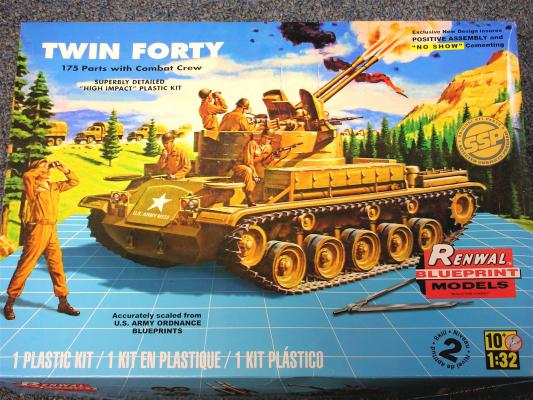
Developed from the M-41 Light Tank with which it shared many parts and features, the M42 40 mm Self-Propelled Anti-Aircraft Gun, or "Duster," was an armored light air-defense gun built for the U.S. Army by the tank division of the General Motors Corp. from 1952 until 1959.

The vehicle had a crew of six, weighed 25 tons fully loaded, and was armed with two fully automatic 40mm Bofors guns with a combined rate of fire of 240 rounds per minute (rpm). For close in defense, it also carried either a .30 caliber or 7.62mm pintle mounted machine gun. The 500 hp, six-cylinder, Continental, air-cooled, gasoline engine was located in the rear of the vehicle and via a cross-drive, 2-speed Allison transmission, could attain a top speed of 45 mph with a range of 100 miles. A total of 3,700 M42s were built.

Review Author
Dave Koukol
Published on
Company
Revell
Scale
1/48
MSRP
$23.95

Background

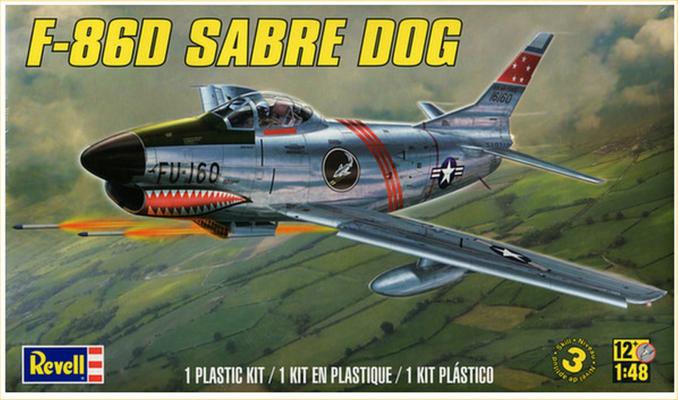
Originally designated as the F-95, the North American F-86D “Sabre Dog” was the initial all-weather and night capable extension of the superb F-86 day fighter. Only 25% common to the day-version F-86’s the “Dog” sported a larger fuselage, engine, and tail surfaces, with a distinctive radome to house an advanced air intercept radar. The D-model also traded its guns for 2.75-inch folding fin aerial rockets, which were mounted in a retractable launcher in the nose of the aircraft. First prototyped in 1949, over 2500 F-86D’s were produced, serving in the air arms of no fewer than 17 nations.

Review Author
Camden Koukol
Dave Koukol
Published on
Company
Dragon Models
Scale
1/72
MSRP
$29.99

Background

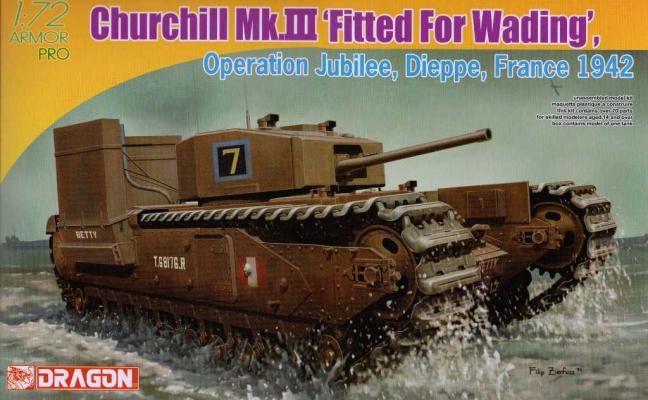
Conceived and initially developed on the eve of World War II, the Churchill infantry tank was designed to provide infantry support in European conflicts, including trench warfare as seen in World War I. Although rushed into production early in the war to counter an anticipated German invasion of England, the Churchill matured through a number of marks to become a versatile and effective element of Allied armored forces.

Some Mk III Churchills were fitted with special wading gear for amphibious landings. Most notable of such landings was the ill-fated Operation Jubilee, in which Canadian forces tested the feasibility of opposed amphibious landings on the European mainland in 1942.

The Model

This variant of Dragon’s Mk III Churchill features additional parts to outfit the kit with wading trunks, exhausts, braces, and other details to replicate the Churchills landed during Operation Jubilee.

Review Author
Mike Hinderliter
Published on
Company
Pavla Models
Scale
1/72
MSRP
$19.75

Pavla Models has been putting out a lot of very nice cockpit sets for older kits that really don’t have more than an oversized seat and a shape for a control panel. One example is the older Matchbox kits that came out in the 70s and 80s. This set was designed to fit into the Matchbox kit and talk about an upgrade; it gives you the control panels for 2 configurations. I’m one of those people that are hooked on the model kits of my childhood because of the fond memories that they bring back. My dad was a postman and he would always seem to bring me some model kit from the Saturday garage sales on his route.

I like these old kits but it is a blessing to be able to add some detail to them.

Review Author
Paul R. Brown
Published on
Company
Eduard
Scale
1/72
MSRP
$9.95

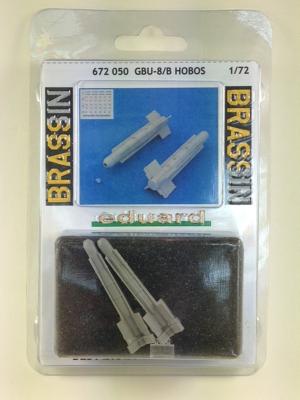
The GBU-8/B HOBOS (Homing Bomb System) was developed in the late 60’s by the U.S. Air Force in an effort to improve the accuracy of its bombs. ; The HOBOS consisted of an electro-optical guidance system fitted to a MK 84 2,000 lb. bomb and was intended as an alternative to the then new laser guided bombs. ; The advantage of the HOBOS was that once the seeker was aligned with the target and locked on, the weapon could be released as a fire and forget weapon. ; Disadvantages were that the seeker needed an area of high contrast to lock on to and the system was more expensive than the laser guided bombing systems.

Review Author
Clarence Wentzel
Published on
Company
Pavla Models
Scale
1/72
MSRP
$3.69

The Navy FJ-4 was, to many people, the culmination of the basic North American Sabre Jet. This final naval variant featured a more powerful engine which required a larger intake, a shorter, deeper fuselage, a larger tail, larger wing area and a longer nose gear. Its front line service was short, however. By the late ‘50’s, the Fury was being phased out by newer, less expensive fighter and attack aircraft but the FJ-4B was loved by its pilots. They referred to it as the “Cadillac” while its counterpart and eventual replacement, the A4D was referred to as the “Tinkertoy”.

Emhar issued the FJ-4B in 1/72nd scale in 1990 and is a great kit. There are really only two shortfalls of the kit; the first being a rather basic cockpit and the second being a crude, short exhaust/jet pipe. Pavla has recently released resin detail parts for the cockpit and the jet pipe.

Review Author
Roger Rasor
Published on
Company
Eduard
Scale
1/32
MSRP
$7.95

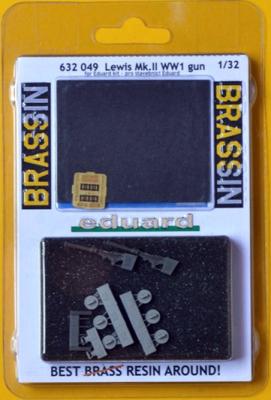
In this BRASSIN detail set, Eduard provides modelers with everything needed to build a pair of highly realistic Lewis Mk.II machine gun that will add detail to any 1:32 scale model of a WWI Allied aircraft that carried one or two of these iconic weapons. The set consists of 14 resin and 4 photo-etched brass parts. Each gun is made up of five resin parts and one photo-etched part. The additional resin parts provide a pair of spare ammunition magazines and the additional photo etch parts are extras of the little one that folds up into the gun barrel site (because Eduard expects some of these very small parts will find a way to disappear in the carpet monster…as mine did). The level of detail in each component is impressive.

Review Author
Perry Downen
Published on
Company
Eduard
Scale
1/72
MSRP
$32.95

My thanks to Eduard for furnishing this photo-etch set for review and IPMS for allowing me to do it.

The Avro Lancaster was arguably the RAF’s most famous bomber of the Second World War. Most of its fame was gained as a night bomber. Of the 7,377 Lancasters built, 3,039 were B.Mk.III bombers with Packard built Merlin engines. Nineteen of the Mk.IIIs were specially modified to use the Barnes Wallis-designed "bouncing bomb" and assigned to No. 617 Squadron. That squadron with its modified Lancaster bombers conducted one of the war’s most famous raids – the night attack on four Ruhr Valley dams trying to cripple Germany’s industry in the region.

Review Author
Jim Stepanek
Published on
Company
Round 2 Models
Scale
1/25
MSRP
$23.99

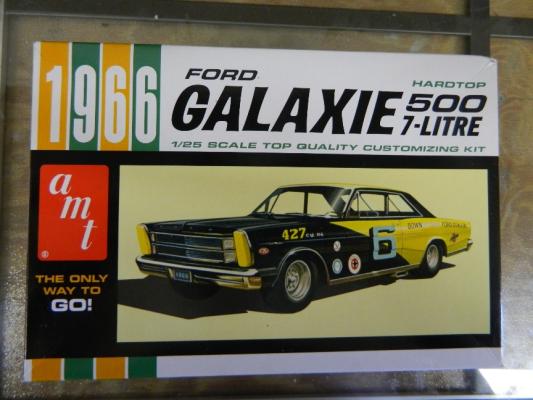
Round 2 hit a nice spot with the AMT 1966 Ford Galaxie 500. Build it stock, custom, or racing. The box contains all the parts to build it your way and some extra pieces for the parts box.

Engine

The kit provides enough parts to build either the stock engine or a SOHC engine. Either version does not fit together very well.

Chassis

The chassis is engraved fairly well but the suspension parts leave much to be desired. The front suspension is much too thick for scale.

Interior

It’s just a tub and the engraving is almost non-existent on the side panels. In fact, the only redeeming parts are the seats.

Review Author
Dan Brown
Published on
Company
Aoshima
Scale
1/72
MSRP
$54.99

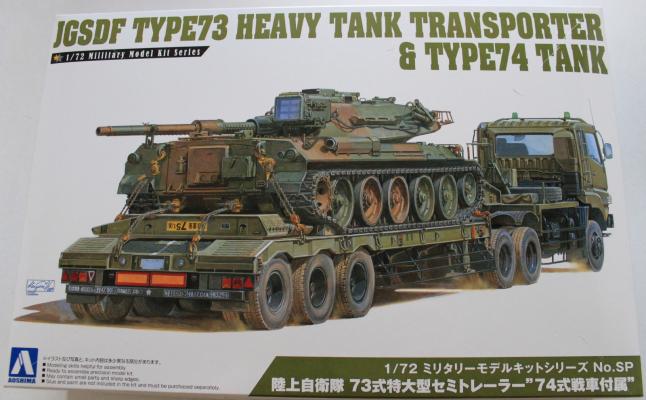
The Isuzu Type 73 Heavy Truck, is a Japanese work horse tactical truck. It serves in a multitude of rolls throughout the Japanese Armed Services. This kit includes an Isuzu Type 73 Heavy Truck, a Tank Transporter flatbed trailer and a Type 74 Tank. There are a couple of options for displaying the model: you can display the ramps down with the tank driving up and the feet down or with the tank on the trailer and the ramps stowed. There are also two boxings of this kit, with and without the Type 74 tank.

Review Author
Gordon Miller
Published on
Company
Revell
Scale
1/25
MSRP
$23.95

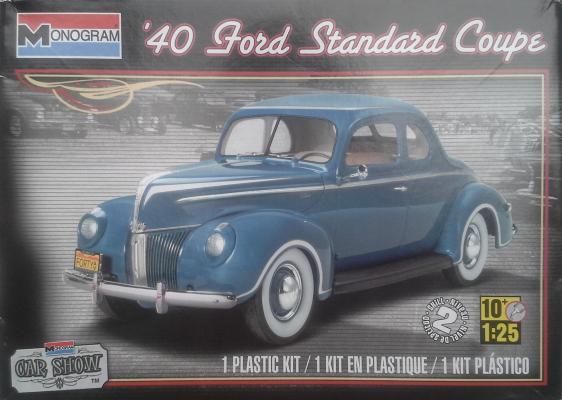
The kit I assembled here is the 1/25th scale version of the 1940 Ford Standard Coupe. This car in real life was available in two designs ,the standard ( built here) and the Deluxe. This version was the least expensive but more popular in it's day. Building this kit was a unique experience for me . I had a lot of fun building it .The vintage engine among other things was a great chance for me to work with parts that I'd never built with before. As far as the engine goes it is a Ford Flathead V8 with 60 Horsepower. It's a very nicely detailed vintage engine. I seen that these engine had blocks painted different colors. I chose to go with Ford Engine Blue.

Review Author
Roger Rasor
Published on
Company
Wingnut Wings, Ltd
Scale
1/32
MSRP
$79.00

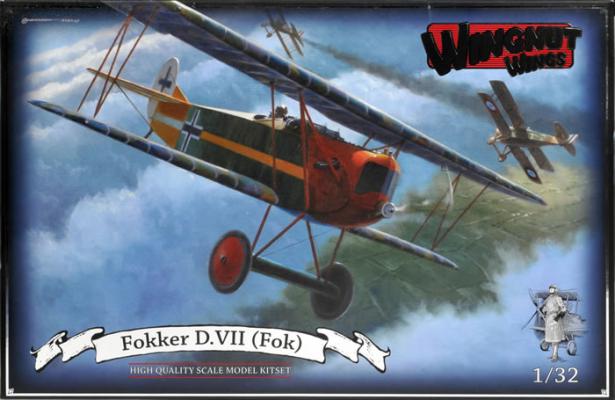
I had decided in the beginning to finish the model I was building in the markings of Fritz Oppenhorst’s Fokker D.VII 4301/18 (Option D in the kit’s painting guide), so I carefully followed the steps in the instructions to confirm which parts should be used in this build. WNW provides comprehensive information to guide the builder, but there are subtle differences between some of the parts, so it is important to double-check most steps to make certain the correct ones are clipped off the sprues. I found it helpful to remove only those parts I would need from the trees, clean up the attachment points (tagging parts if necessary with a piece of numbered masking tape) and bag everything in a zip-lock bag to avoid using any wrong parts down the road.

Review Author
Rob Benson
Published on
Company
HK Models Co.
Scale
1/32
MSRP
$169.95

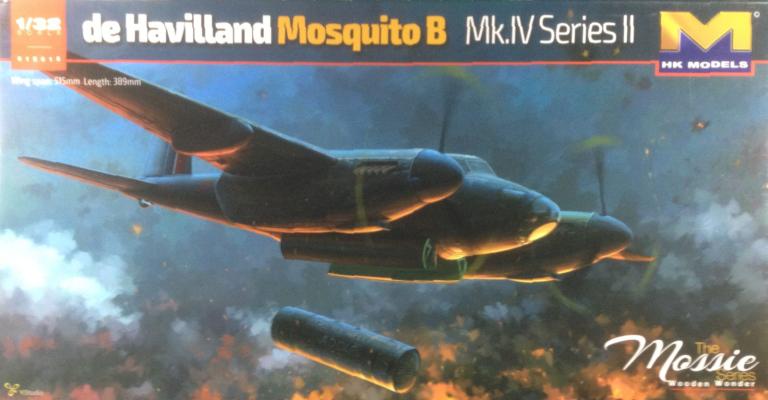
Thank you to Hong Kong Models for providing an innovative and exceptional kit representing a legendary Royal Air Force aircraft, the first kit in a “Mossie, The Wooden Wonder” series. Thank you also to the IPMS Reviewer Corps staff members who do the hard work behind the scenes, getting us kits to review and publishing our work.

The following review is a compilation of the planning, preparation, and subsequent anticipation of a very enjoyable build of a de Havilland Mosquito B Mk.IV Series II aircraft. Please look for a build review soon, where I will report on how well the new molding techniques worked in a large scale kit project.

Book Author(s)
Neil Short
Review Author
Tom Moon
Published on
Company
Osprey Publishing
MSRP
$18.95

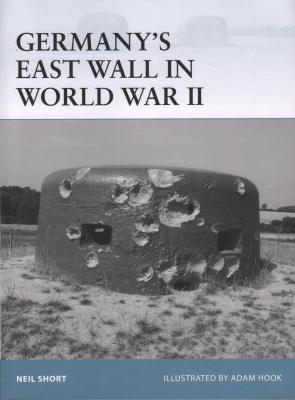
The book is divided into 8 chapters with an introduction, index, a Bibliography and Glossary & Abbreviations:

  • Chronology
  • Design and Development
  • The Principles of Defense
  • Tour of the Sites
  • The Living Site
  • Operational History
  • Aftermath
  • The Sites Today

This illustrated volume analyses the different defensive elements of the East Wall, the phases of their construction, the shifting strategic focus, and what life was like for those manning the defenses in the final days of the war.

Conclusion

The book is a quick read and is well researched and documented. From the modelers perspective this will not give you many ideas for dioramas, but as a quick review of the East Wall German fortifications it does the job.

Thanks to Osprey Publishing for the review copy and to IPMS/USA for the review space.

Review Author
Ron Bell
Published on
Company
Round 2 Models
Scale
1/1200
MSRP
$24.99

The Ships

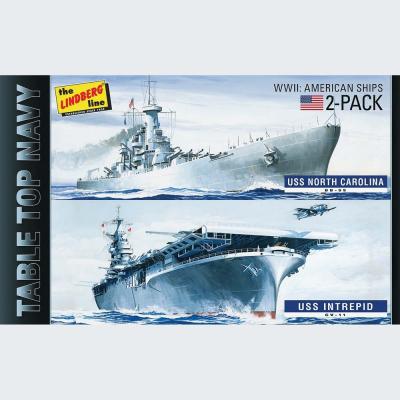
U.S.S. Intrepid

Also known as The Fighting "I", the U.S.S. Intrepid is one of 24 Essex class aircraft carriers built during World War II. She participated in several campaigns in the Pacific, including The Battle of Leyte Gulf and participated in the Vietnam War. Modernized in the early 1950s, she became an antisubmarine carrier and served as the recovery ship for both a Project Mercury and Project Gemini space mission. Decommissioned in 1974, in 1982 Intrepid became the cornerstone of the Intrepid Sea, Air and Space Museum in New York City.

Review Author
Bill Kluge
Published on
Company
Round 2 Models
Scale
1/25
MSRP
$25.99

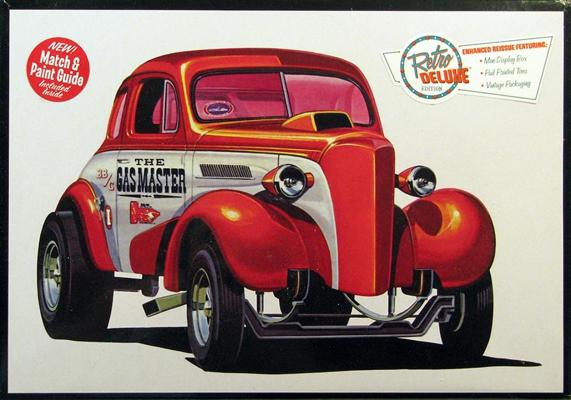
It’s hard to believe that after more than fifty years of modeling, I’ve never built a car before now. But somewhere between “you’re never too old to learn” and “you can’t teach an old dog new tricks”, I found myself with my first car model. I’ve always liked the aesthetics of the 1930s, particularly where technology was applied. Vehicle designers were just starting to appreciate the value of aerodynamics, and automobiles of the mid-to-late 30s were showing that influence, with teardrop shapes replacing flat surfaces and hard angles. Compared to cars of just half a generation earlier, especially two-seater coupes, cars of the late 30s looked fast just sitting still. The ‘37 Chevy was a prime example.

Book Author(s)
Wojtek Matusiak
Review Author
Pablo Bauleo
Published on
Company
Osprey Publishing
MSRP
$22.95

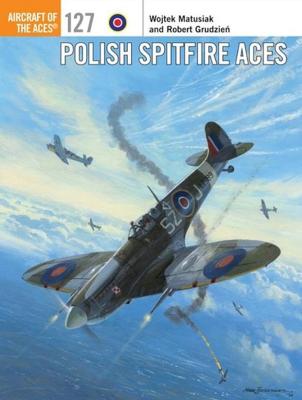
Osprey Publishing continues to expand the Aircraft of the Aces series with the installment of Polish Spitfire Aces.

This book is well researched and has plenty of black and white pictures, including several images of aircrafts and their pilots.

The book is divided in the following sections