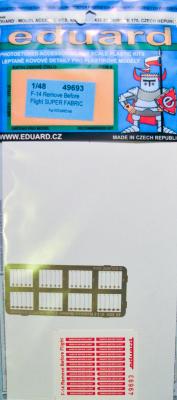
In case you missed the IPMS/USA Nationals this past summer, Eduard released a 1/48 scale F-14A Tomcat as part of a special Danger Zone boxing that included a slew of photoetch and resin detail parts along with the plane. I mention this as some of the detail items, such as this set, are now being released to further spruce up the limited edition release. I have never seen anything like this fabric set, so I would consider this a warning shot across the bow of other detail part manufacturers.
all 2015
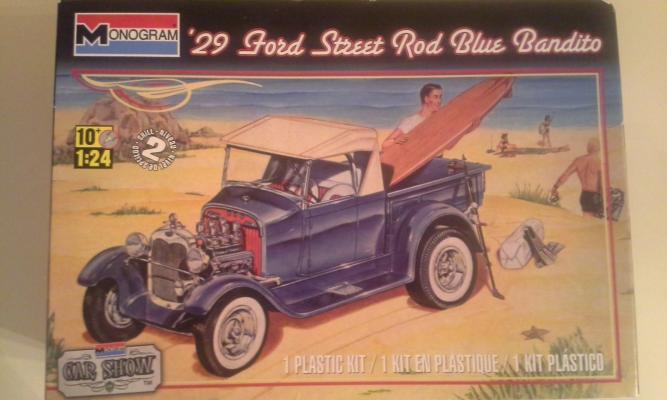
The Revell/Monogram 1/24th scale kit is a rerelease of a previously available kit known as “The Blue Beetle“. I am not sure of the exact offerings provided in that earlier release of this model but the version that I’m reviewing here was quite impressive . The box art only shows the build up on the side and the drawn box art on the front of the box outfitted in “The Blue Beetle” version. The only way I’ve seen this release come in. So, I was thrilled to open the kit up and see parts for both the pictured version as well as the roadster adaptation listed for these separate parts throughout the very well detailed instruction sheet which includes descriptions of all pieces by their part number and the name of the part. The majority of the parts come molded in a light blue with one white sprig of pieces molded in white which includes snap in white walls and a convertible top.
History Brief
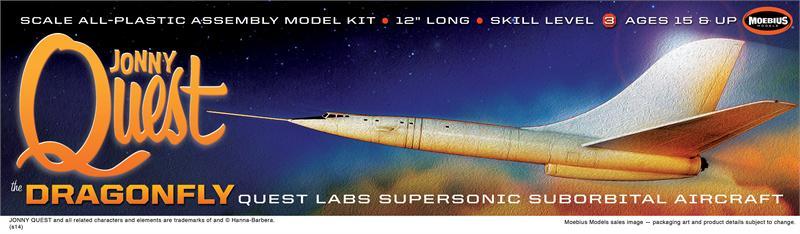
The Adventures of Jonny Quest was produced by Hanna-Barbera Productions for Screen Gems. An animated television series, it ran on ABC in prime time on Friday nights for one season from 1964 to 1965. A true original for the 1960s, it was created and designed by comic-book artist Doug Wildey and was inspired by American radio serials, American action-adventure comics and American science fiction genre. Ground breaking for it’s time it featured unmatched realistic art, interesting characters, and a better story line than any previous cartoon seen on television.
The Quest Labs Supersonic Suborbital Aircraft known as The Dragonfly is the iconic Jonny Quest aircraft featured in the episode introductions. It was also featured in some of the best episodes.
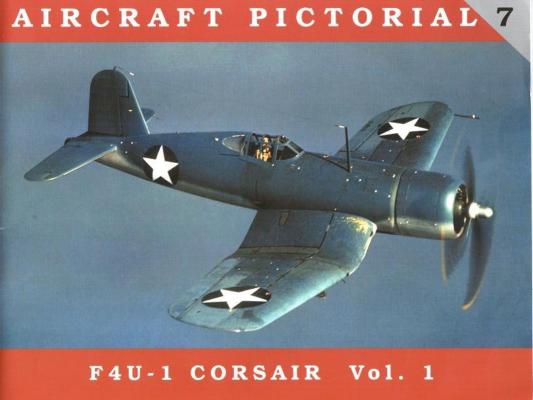
Thank you to Classic Warships Publishing for providing another exciting volume in the excellent Aircraft Pictorial series. I am also very appreciative of the IPMS Reviewer Corps for allowing me the chance to examine this volume and report my opinions.
History
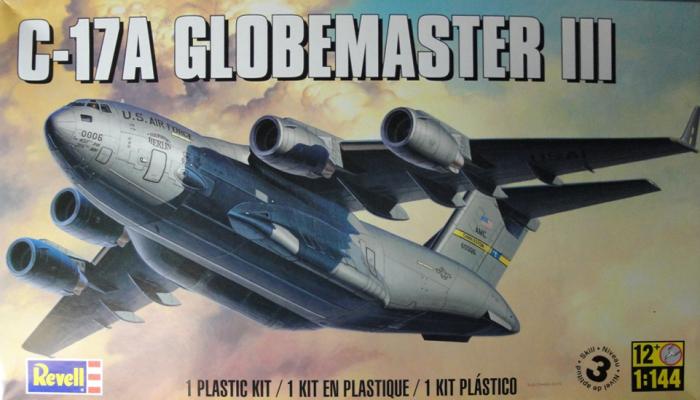
The C-17 was funded for development in 1984 and the first one was delivered in 1991 to the USAF for testing. The C-17 was originally designed to replace the C-130 and augment the C-5 and C-141. As we all know the C-130 and the C-5 are still going and the C-141 has been removed from service and has been sent to the boneyard for scrapping. The initial order was for 120 units and that was bumped up in 2002 following the attacks of September 11th to 180. Although the USAF is the main user there are many other countries that utilize the C-17.
The Kit
The kit is molded in light gray plastic. Several of the parts had a grainy texture to them and several of the sprue attachment points were thick and difficult to remove. The construction is fairly straight forward.
History
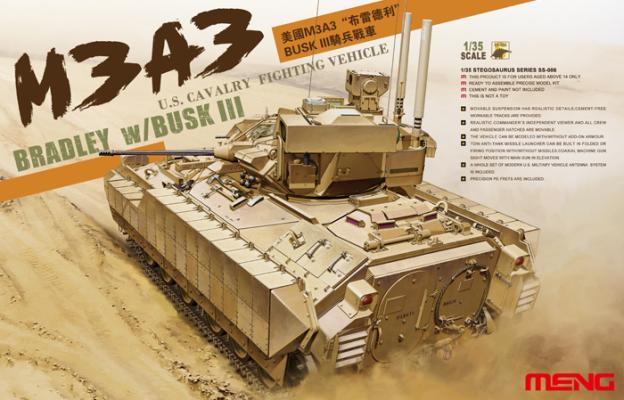
In 1980 the US Army formally took delivery of the new M2 Bradley IFV (Infantry Fighting Vehicle) and M3 Bradley CFV (Cavalry Fighting Vehicle). The M3 CFV had a wielded aluminum hull. It was powered by a 500hp Cummins VTA-903 diesel engine with an HMDT-500 automatic transmission at that time. Its two-man turret had positions for the commander and gunner. The turret consisted of a 25mm M242 Bushmaster chain gun, a 7.62mm M240C coaxial machine gun and a two-tube TOW anti-tank missile launcher. Firing ports and periscopes on each side of the hull, and the two firing ports on the rear ramp were eliminated on the M3 CFV.
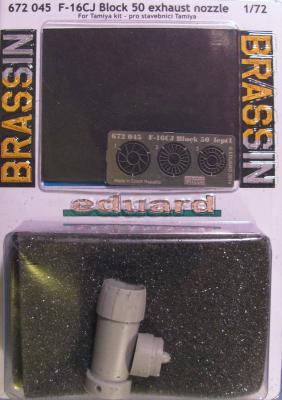
One of the latest releases from Eduard in their Brassin line is an exhaust nozzle meant to replace the kit provided one in the Tamiya 1/72 scale F-16CJ Fighting Falcon. The set consists of two resin parts and a photoetch fret that can be used to dress up the appearance of the Tamiya kit. The F-16CJ Block 50 release by Tamiya follows their impressive renditions first rolled out in 1/32 scale, and later in 1/48.
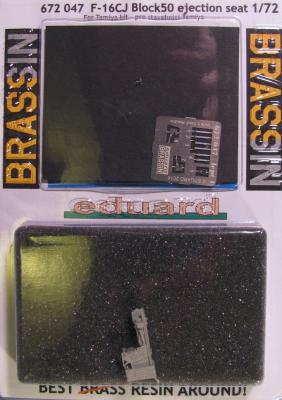
One of the latest releases from Eduard in their Brassin line is this ejection seat meant to replace the kit part in the Tamiya 1/72 scale F-16CJ Fighting Falcon. The Eduard set consists of one resin part and a photoetch fret with eight items that can be used to dress up the appearance of the cockpit of the Tamiya kit. The F-16CJ Block 50 release by Tamiya follows their impressive renditions first rolled out in 1/32 scale, and later in 1/48.
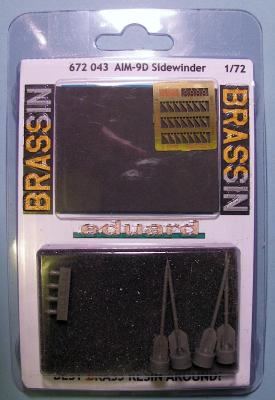
Developed as a follow up to the B and C models of the Sidewinder, the AIM-9D featured a Nitrogen cooled Infrared (IR) seeker and utilized the Hercules MK 36 solid-fuel rocket motor. Philco-Ford and Raytheon produced about 1000 of the missiles between 1965 and 1969. The missile was 9 feet, 5 inches long; 24.8 inches across the rear fins, and had a diameter of 5 inches. Weighing in at 195 pounds (25 pounds belonging to the warhead), the missile could travel at over Mach 2.5 with a range of 9.7 nautical miles. The AIM-9D is credited with aerial victories over twenty-two aircraft during the Vietnam War (8 MiG-21 and 14 MiG-17’s) being launched from F-8E/C/H Crusaders and F-4B and J Phantom II’s of the US Navy.
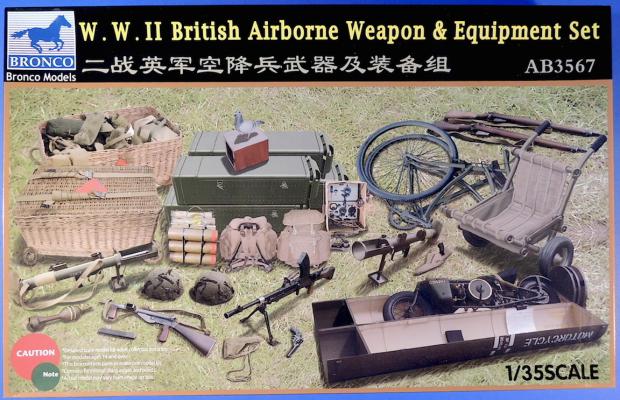
This is a very comprehensive accessory set for British WWII Airborne vehicles or dioramas. The parts are well molded, and have very good detail. There are many very small parts that will require care to assemble, but will result in nice accessories.
The kit includes a Welbike that can be assembled unfolded or folded for transport, a Welbike container that can be either open or closed, a collapsible trolley cart, BSA military bicycle that can be assembled either unfolded or folded, No. 18 Wireless Radio, various weapons, pigeon container, PIAT, several PIAT ammo containers, wicker pannier, airborne helmets, airborne rucksack, and type B airborne container.
The weapons include Sten MK IVs, PIAT gun and ammo, Webley revolvers, Lee Enfield rifles, and Bren guns.
History
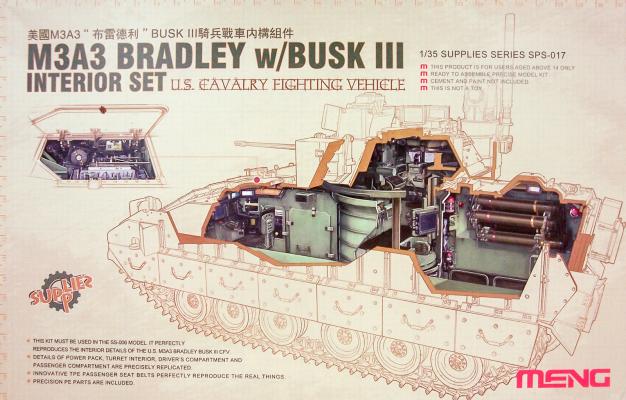
The M3A3 Bradley w/BUSK III CFV is the very latest model fielded by the US Army. The Cavalry Fighting Vehicle’s (CFV) primary duties are reconnaissance and scouting. The CFV Bradleys are normally assigned to Tank Battalions or Cavalry Divisions. The Infantry Fighting Vehicles (IFV) Bradleys are used to transport troops into battle and out.
MENG has followed their kit of the successful M2A3 Bradley (IFV) w/BUSK III with the new M3A3 Bradley (CFV) w/BUSK III. They have separated the main vehicle and the interior into two kits and packaged both separately. This gives modelers the option to build the vehicle kit without the interior at a cost savings.
This review covers MENG’s M3A3 Bradley w/BUSK III Interior Set. The vehicle itself is reviewed separately at: M3A3 Bradley w/BUSK III
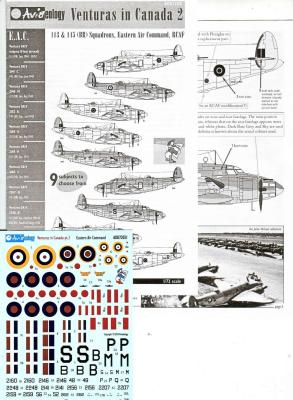
For any who have missed it, Aviaeology out of Canada produces decals specific to many Canadian themed subjects. The first thing that hits you when you purchase one of their sets is the detail provided to replicate specific aircraft. The research going into these decals is second to none. This set includes markings for nine different aircraft in a variety of schemes. Here’s a quick list:
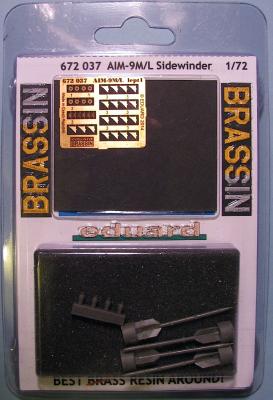
Developed jointly by the US Air Force and US Navy starting in 1971, the AIM-9L was a vastly improved Sidewinder that was based on the H-model. The missile used All-Aspect Capability against maneuvering targets, as well as high-speed targets. The forward canards were longer in span, and of a double-delta design. Production began in 1978 with over 16,000 missiles being built by Philco-Ford, Raytheon, BGT (Germany), and Mitsubishi.
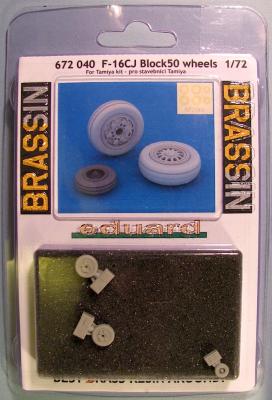
One of the latest releases from Eduard in their Brassin line are a set of wheels meant to replace the kit provided ones in the Tamiya 1/72 scale F-16CJ Fighting Falcon. Consisting of three resin parts and a set of masks to aid in airbrushing the wheels and tires, the set can be used to dress up the appearance of the Tamiya kit. The F-16CJ Block 50 release by Tamiya follows their impressive renditions first rolled out in 1/32 scale, and later in 1/48.
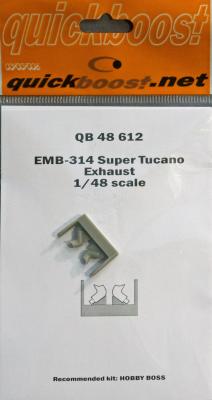
Normally, I don’t build outside of my pre-1945 comfort zone, but I’ve always liked the shape and look of the Tucano and Super Tucano aircraft. When HobbyBoss released their 1/48 scale kit of the Super Tucano recently, I couldn’t pass on making the purchase. As with any decent kit, there is always room for a little improvement. To that end, Quickboost has released three new resin details for the HobbyBoss Super Tucano kit.
|
Part # |
Part Name |
Cost |
|---|---|---|
|
$6.50 |
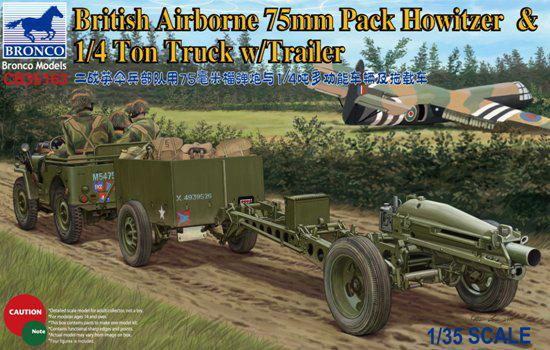
Over time, I find myself becoming fonder and fonder of Bronco Models and their products. They consistently seem to offer fascinating subjects done with a real flair, and this set is no exception. It consists of a 75mm Pack Howitzer along with a jeep, trailer, four riding paratroopers, and a wealth of personal equipment. The box is packed with good, firm plastic which takes fine detail well, and it also includes three sheets of photo-etch and two decal sheets: one for the equipment and one for the soldiers. As this is a variant of the regular jeep offered by Bronco, you wind up with a host of useful extras, including wheels/tires, windshields, and steering wheels. The instructions are actually a 27-page full-color manual, and they are extremely well laid out and informative. In addition, for the most part, parts are logically laid out on the sprues. This helps in piecing together this complicated set and saves an immense amount of time searching for some elusive bit.
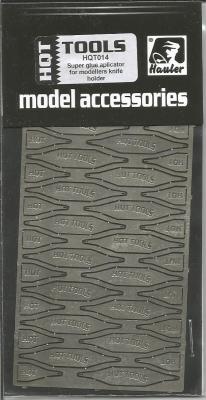
Hauler’s glue applicator will definitely get you into tight spaces with just the right amount of glue for tiny jobs. Handle this product just as you would any photo etched piece, removing the tips from the carrier sheet in the same manner as a photo etched part would be removed.
Hauler provides 17 single tips and 16 double tips in the product package.
To use the product, simply remove the tip from the carrier sheet and insert it in an Xacto Knife handle (the type that has a threaded collar that loosens and tightens down on the Xacto blade or, in this case the photo etch Hauler Glue tip.
The business end of the tip narrows down into two arms that have a slot in between which, when dipped into super glue, will hold a very small quantity of the adhesive in that slot. Simply touch the tip to the part(s) being glued and you’re done!
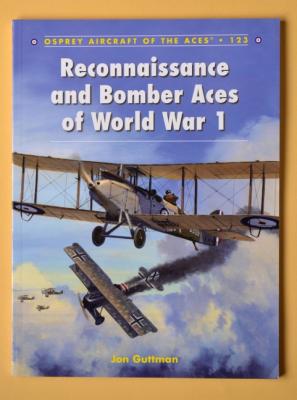
I don’t know about you, but I had never considered using the word “Aces” in a discussion of WWI Reconnaissance aircraft…or WWI bombers either for that matter. Then, I had the opportunity to read Osprey’s Aircraft of the Aces – 123, and learn much about WWI airmen other than fighter pilots who earned that title while flying in what many would consider slow and rather awkward aircraft. According to the book’s appendices, at least 134 reconnaissance and bomber pilots managed to do exactly that. And, their story is a compelling one that is long overdue.
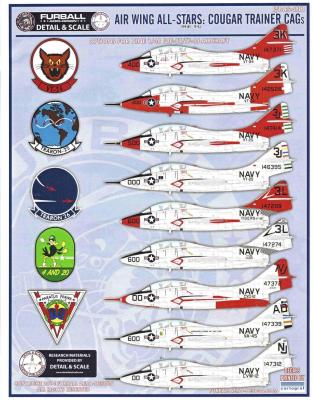
In their first collaboration, Geoff Martin of Furball Decals and Bert Kinzey of Detail and Scale have come up with three comprehensive decal sheets for the Kittyhawk TF-9J Cougar with no less than nine subject covered in great detail and with superb markings. The set comes with six color pages on instructions which also include instructions for the stencils, paint call outs in FS numbers and complete profile shots of each plane with decal locations. There are two perfectly printed decal sheets- one full size and one quarter size which contains stencils for two aircraft plus the needed markings for all nine. There are no wing walk decals included so they need masked and painted. The declas are printed by Cartograf and look great.
Here's the list of planes represented:
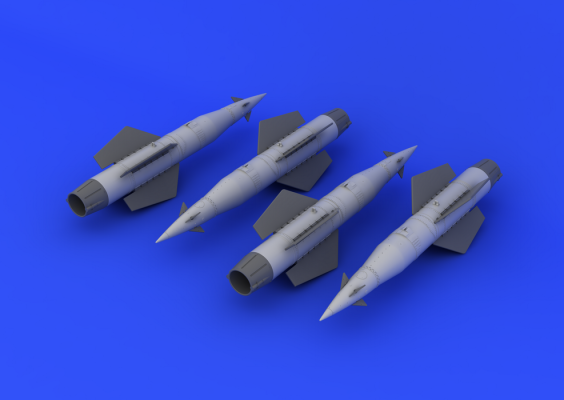
Eduard continues its releases of highly detailed missiles with an AGM-12C Bullpup. The Bullpup was the first mass produced air-to-surface guided missile and entered production in 1965. The missile was carried by F-4’s and F-105’s and, unfortunately, it was not particularly effective. Also note that the “C” version would not necessarily be appropriate to earlier aircraft. In any case, check your references.
The set comes with part to produce four complete missiles. This includes forty resin parts and a set of decals. 32 of the parts are perfectly cast fins- four main fins and four small fins. The main body and engine are two separate parts. Casting is prefect and very well defined.
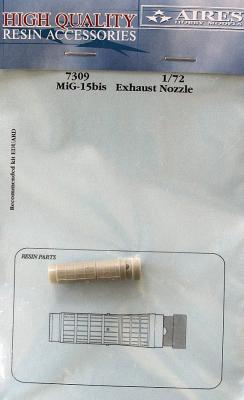
Eduard's kit of the Mig-15 is a hit and has very nice detail and builds into a beautiful replica. One of the areas all models have issues with is the exhaust. It is virtually impossible to make it in one piece and it is hard to get seams out if it is multiple pieces and the detail is not as crisp due to molding limitations.
Aires to the rescue with a quick replacement resin exhaust. The part is molded seamlessly as a single piece. Cut off the pour stub and use the kit fan blades and you can paint and glue in place with no issues. Detail is excellent on the entire piece and it is definitely a worthy addition to an already excellent kit.
Definitely recommended. My thanks to Aires and IPMS USA for the review sample.
One of the differences between the MiG-15 and the MiG-15bis, in addition to a newer and more powerful engine, is the gun configuration in the nose. It is not readily noticeable, but there are differences in the 23mm cannons and their fairings.
The MiG-15 was equipped with one N-37 37mm cannon and two NS-23 23mm cannons in a drop down tray on the bottom of the nose fairing. This was the standard configuration until improvements were made in the MiG-15bis. The MiG-15bis received two NR-23 cannons, which had a higher rate of fire and an improved ammunition system. The cowling also changed with bulged ejection chutes. The fairings on the newer guns were also shorter than their predecessors.
One of the differences between the MiG-15 and the MiG-15bis is the gun configuration in the nose. It is not readily noticeable, but there are differences in the 23mm cannons and their fairings.
The MiG-15 was equipped with one N-37 37mm cannon and two NS-23 23mm cannons in a drop down tray on the bottom of the nose fairing. This was the standard configuration until improvements were made in the MiG-15bis.
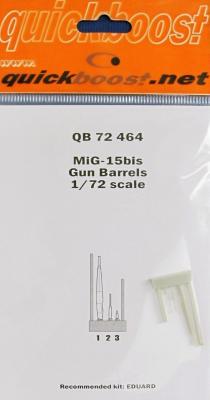
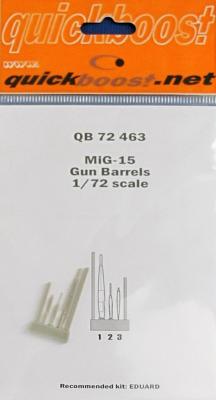
Eduard’s new MiG-15 and MiG-15bis kits in 1/72nd scale are great little kits and are very accurate. Even though the kit gun barrels, parts C3, C12 and C32 are very well done, Quickboost has provided us with some exquisite resin replacements with no mold seam to clean up and the end of the 37mm cannon barrel drilled out. These barrels are direct replacements for the previously mentioned kit parts.
My thanks to Aires and IPMS for the review sample.
The McDonnell Douglas F-4 Phantom II was developed for the US Navy as a two-seat, twin-engine, supersonic jet fighter, entering service in 1960. It was eventually adopted for use by the US Marine Corps and the US Air Force. Capable of speeds over Mach 2, the Phantom could be armed with air-to-air missiles, air-to-ground missiles, a variety of bombs, and eventually an M61 Vulcan rotary cannon. Setting records for performance from the beginning, it held both the absolute speed record and the absolute altitude record for a time. Used extensively during the Vietnam War, the F-4 became the primary air superiority fighter for both the Navy and Air Force. The Phantom served in the Gulf War in 1991 in reconnaissance and Wild Weasel roles, and was eventually retired in 1996.
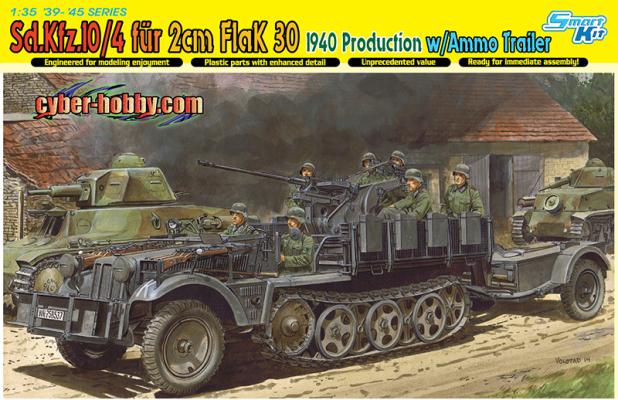
Dragon has expanded their family of Sd.Kfz.10/4 utility halftracks to include a new version towing a standard ammunition trailer. This fully detailed kit sports an engine and gearbox, with an open passenger compartment and pose-able hood panels to expose these beauties. Upgraded road wheels and Magic Tracks have resulted in a spectacular halftrack/trailer combination. The kit comes with an array of new parts, like the loading ramps which can be either assembled for dismounting the gun in the rear or attached to the front of the vehicle.
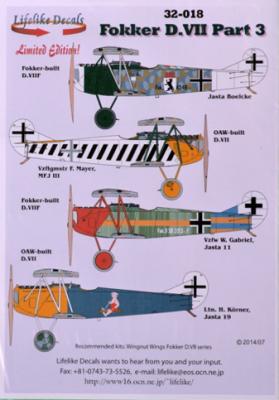
Lifelike Decals continues to release aftermarket sets of decals for 1/32 scale Fokker D.VIIs. Each set provides national insignia and personal markings for four colorful aircraft. The latest two sets were released at the same time a few months ago and offer marking options for aircraft built by various manufacturers. Set number 32-018, Fokker D.VII Part 3, includes markings for the following aircraft:
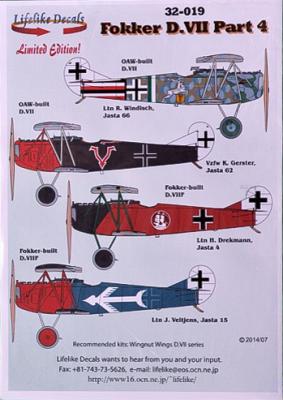
Lifelike Decals continues to release aftermarket sets of decals for 1/32 scale Fokker D.VIIs. Each set provides full national insignia and personal markings for four colorful aircraft. The latest two sets were released at the same time and offer marking options for aircraft built by various manufacturers. Set number 32019, Fokker D.VII Part 4, includes markings for the following aircraft:
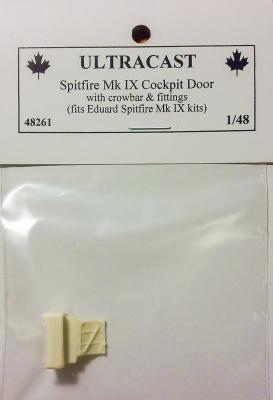
Ultracast from Canada has released several detail sets for the Eduard Spitfire MkIX in 1/48 scale.
This particular set is a drop-in replacement for the Spitfire Cockpit door. It has been casted in a pale cream-colored resin with a delicate pour stub that will make removal an easy task.
As you can see, the finish is very smooth and the surface detail is delicate and petite. It includes the crowbar, a small handle, and the forming ribs of the door. A note of caution, I believe the crowbar was painted silver during WWII, and it was only after the war that they got painted red. Check your references.
I recommend this replacement part for modelers of all levels, except novices.
I would like to thank Ultracast and IPMS/USA for the review sample.
Ultracast from Canada has released several detail sets for the Eduard Spitfire MkIX in 1/48 scale.
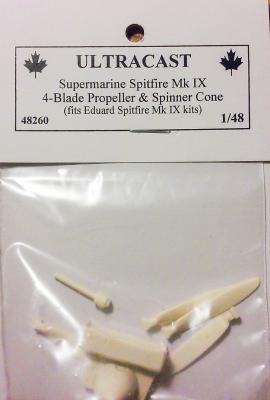
This particular set is a drop-in replacement for the Spitfire propeller. It has been casted in a pale cream-colored resin with a delicate pour stub that will make removal an easy task. There are no bubbles or surface defects anywhere.
The only difference I can see between the kit’s propeller and the Ultracast version is the propeller’s blade chord being a bit wider in the resin parts. Moving on to the spinner, the resin version has rivet detail that the plastic part is missing.
From an assembly point of view, the replacement propeller differs from the plastic part in that each blade comes as a separate piece, meaning you have to set the proper pitch to each blade. However, the resin pour tab includes a small cube-shape piece that will take care of that. Nice touch Ultracast!
Ultracast from Canada has released several detail sets for the Eduard Spitfire MkIX in 1/48 scale.
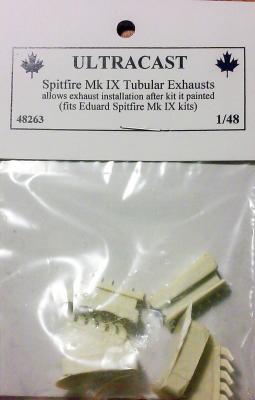
This particular set is a drop-in replacement for the Spitfire tubular exhaust. It has been casted in a pale cream-colored resin with a delicate pour stub that will make removal an easy task.
As you can see, the surface is very smooth and the detail is delicate with thin, hollow exhausts. While the plastic parts are also hollow, this resin set allows for insertion after painting.
To use the resin exhausts, you only need to add the provided exhaust supports to the model’s nose in the step where you would add the original kit exhaust pieces. The rest of the assembly can continue as usual, and once painting and finishing is complete, you simply add the resin exhaust by gluing it to the exhaust support added during construction.
It is a simple detail that makes painting and masking a much easier task, and it is highly recommended.
3D Model Parts is a new U.S. based company that uses 3D printing technology to produce resin ship, automobile, aircraft, and armor detailing accessories. 3D states their printing process produces details with greater precision than either injection molding or resin casting.
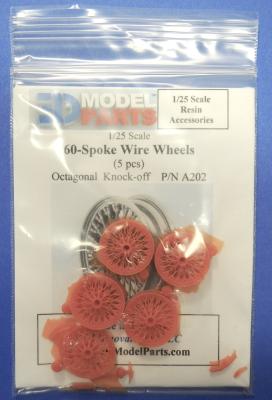
This set of 1/25 scale wheels certainly lives up to that claim! The spokes have amazingly fine detail, and the wheel rims are extremely thin. The interlacing of the spokes makes the wheels very realistic at this small size. I compared the 3D wheels to wire wheels from a Revell kit and there is no comparison. 3D accurately reproduces the opening between spokes, where many of the openings on the Revell wheels are filled with flash.
The Mil Mi-2 is a light helicopter, produced in Poland, used for transport and close air support. Powered by two GTD-350 turbine engines, the aircraft would be armed for a variety of uses. Several specialized variants carried a 23 mm autocannon, machine guns, 57mm rocket pods, four 9K11 Malyutka anti-tank missiles or Strela-2 AA missiles. The Mi-2URP Gunship and anti-tank variant was one of these, and the Hobby Boss kit of this version is used for comparison. The Hobby Boss Mi-2 is the most common and most recent kit and is available in several different variants, although there are a few others like the Smer kit which was released in 2000.
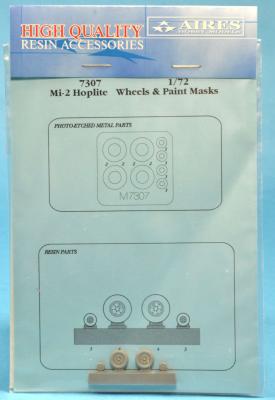
The Aires Wheels and Mask Set includes cast resin replacement wheels, two for the main landing gear and two for the nose gear, as well as a set of pre-cut vinyl paint masks and illustrated instructions.
Background
Manufactured in Korea and marketed as a “premium sport sedan,” Hyundai’s Azera shares the marketplace with Toyota’s Avalon, Ford’s Taurus, and Lexus’ LS 350.
The Kit
Engineered to be built without paint or glue, Academy’s Azera seems targeted for the casual builder, beginning modeler, and the full-size Azera owner. Although targeted for less-experienced modelers, Academy has provided ample detail for the more serious or advanced modeler as well.
Review
I want to start this review with a disclaimer: I am not an “armor guy”. I built mainly airplanes and the occasional soft skin. But armor has been calling me recently and the release of an all new-tooling Tamiya Jagdpanzer was too tempting as to not trying it.
This kit has a total of 252 pieces. It comes with plastic tracks, includes the torso of two figures and it has a small decal sheet with markings for 3 different tank hunters (one Eastern Front, two Western Front examples).
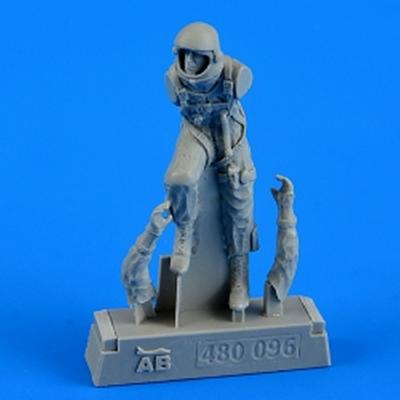
A perfect addition to your diorama or display base is this Aires Aerobonus figure. This figure is designed to be ascending a ladder to a 1960-1975 USAF Fighter. Aires Aerobonus provides you with a resin figure with separate arms on one pour stub with side bars to protect the figure. Of note is the re-sealable packaging that Quickboost uses that makes the parts easy to review and then stuff back into the package securely. The supplied instructions provide color drawings for painting.
Aires Aerobonus has molded the figure in light grey resin with no bubbles that I could find. There are no mold seams to sand off and the resin plug is easily removed from the bottom with a razor saw or Dremel. Clean up was quite easy and the arms attached with superglue. I added a just a bit of putty to refined the transition on the shoulders to the arms. The sculpting is great with the proportions of the figure perfect. The pressure suit is well executed with appropriate wrinkles and folds.
The Product
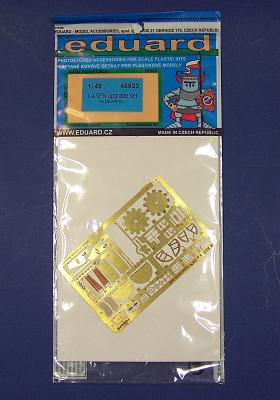
This set comes on a single photo-etch fret and offers several worthwhile enhancements. The list of items include: brake lines, a complete set of landing gear doors, radiator faces, radiator exit door, engine shutters, cowling flaps, canopy lever, canopy mirror, ring & bead gun sight, throttle, several cockpit levers and trim wheels. A great feature about this brass fret is the delicate attach points. The instructions are clearly printed with Eduard’s easy to understand pictorials.
History Brief
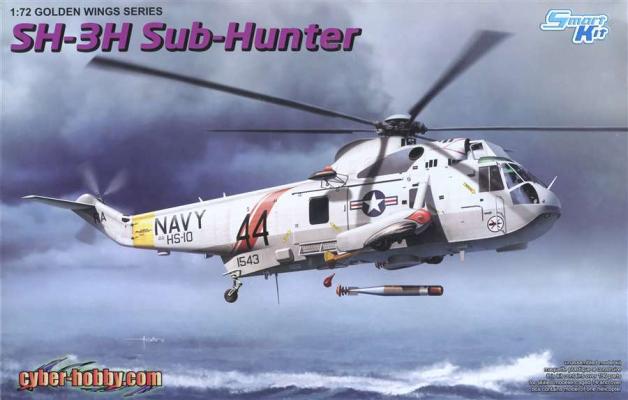
The Sikorsky Sea King became operational with the United States Navy in June 1961. When introduced, the Sea King was a considerable advancement over previous helicopters. It was used primarily for anti-submarine warfare: detecting and tracking Soviet submarines. During the Cold War, the Soviet Navy built a submarine fleet that at one point included more than 200 operational submarines. Luckily for the Soviets the highly capable Sea King never had to kill one of their subs.
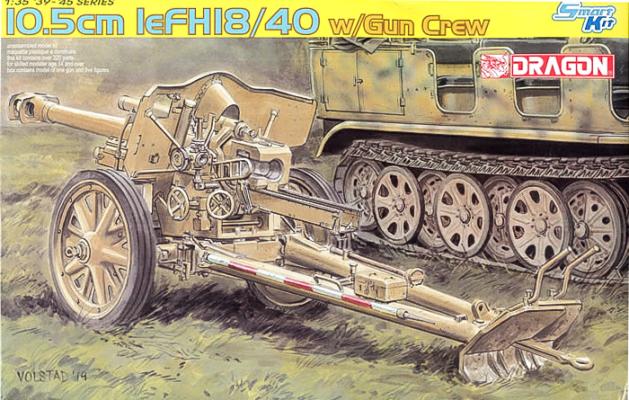
Later in World War 2, the Germans made an effort to upgrade older guns by mounting them on newer, lighter carriages. Sometimes this was successful, sometimes not. The old 10.5 cm leFH 18/40 light field howitzer was just such a conversion. It was updated by mounting it on the tried and true carriage used for the 75 mm Pak 40. The carriage proved to be too light to support the gun well, and there were constant problems with the combination. Nonetheless, it was used from about 1943 until the end of the war.
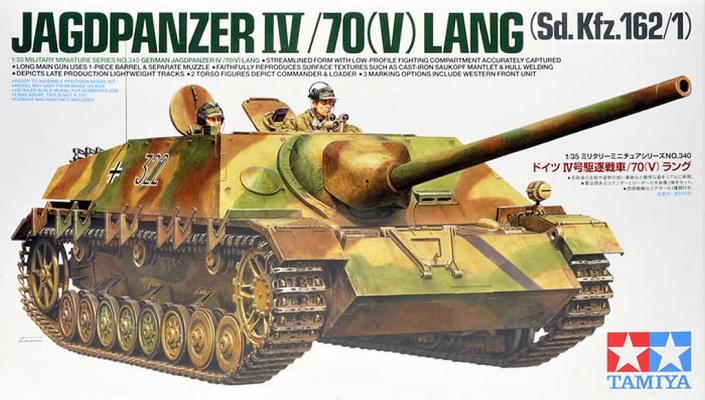
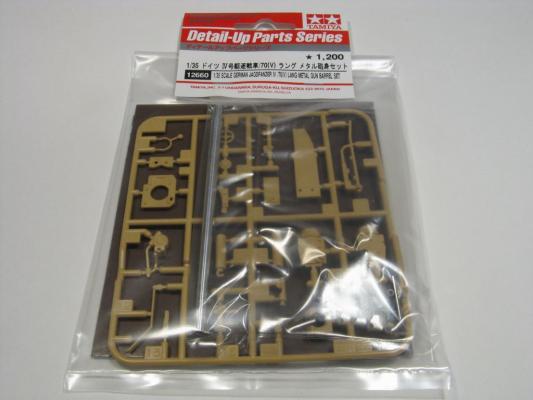
Tamiya has recently released a great kit of the Jagdpanzer IV/70(V) (Stock 35340). This detail set is designed to enhance an excellent kit.
This whole detail set is meant to improve the gun, and only the gun. It provides an extra sprue to build the gun breech –in plastic, and provides an aluminum turned replacement gun.
The breech/loading mechanism builds together beautifully and without any fuss, as can be seen in the pictures. The metal barrel is flawless and incredibly smooth. So smooth that actually the paint peeled off the first time I painted it. Make sure to use a primer.
If you add this detail set, you are instructed to not install the torsos of the crew or they will interfere with the gun. The kit itself is designed in such a way that you can remove the upper hull after the kit is finished, I guess to be able to see the cannon detail. Or you can keep the hatches open and admire the detail if you have a flashlight.
Britain had the V Bombers, Valiant, Victor and Vulcan, from the 1950s through the 1980s. They were large bombers designed to carry the large nuclear weapons of the 50s, and they served the RAF well, with the Victor and Vulcan serving as aerial tankers and the last Vulcan tanker retiring in 1984.
This model is of the Victor B.2 bomber version of the aircraft. The bomber was never used in combat; the Valiant bombed Suez in 1956 and the Vulcan bombed the Falklands in 1982. Victor tankers participated in the “Black Buck” missions in the Falklands, with 11 Victor K.2s needed to get one Vulcan to the target, Ascension Island, and return, a round trip of 6,800 miles.
The Victors were designed to carry a stand-off nuclear missile called Blue Steel. This was to be replaced by the US designed Skybolt missile, but that program was cancelled.
A Thank You goes to Aires for this item to review and to IMPS/USA for allowing me to do the review.
Nicknamed the Flying Wheelbarrow by some, the de Havilland DH.100 Vampire was designed and developed during World War II. It entered service with the RAF in 1945, a little later than the Gloster Meteor. The Vampire was in front line service until 1953 and was finally retired in 1966. During that time it served with the RAF, the Royal Navy and numerous other countries around the world. In total, almost 3,300 Vampires were built.
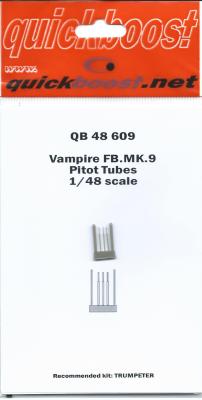
A couple of years ago Trumpeter released a 1/48 FB Mk.9 version of the Vampire. See Pablo Bauleo’s excellent review of this kit. As Pablo mentions there is no pitot tube supplied with this kit.
This is a very nice kit. Simple enough to be the first ‘glued’ kit for someone moving up from snap-kits, but also a well-made kit that more experienced modelers can build into a great scale model. The kit’s one-piece body and one-piece frame are both very nicely molded parts.
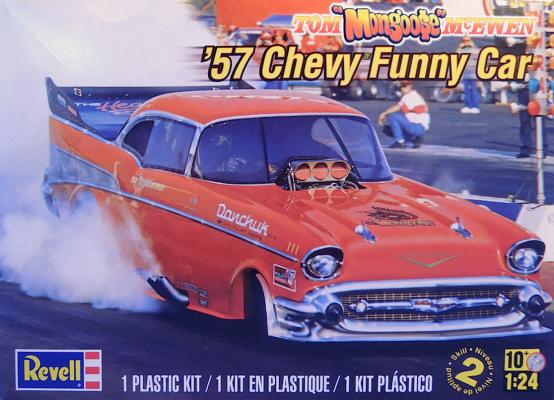
Tom “Mongoose” McEwen is a drag racer best known for is legendary races against Don “The Snake” Prudhomme. McEwen’s “Mongoose” moniker even was a reference to Prudhomme’s “The Snake”. In 1968 McEwen introduced a new funny car based on the iconic ’57 Chevy. With runs of less than 6 seconds, this car laid claim to being the fastest ’57 Chevy in the world.
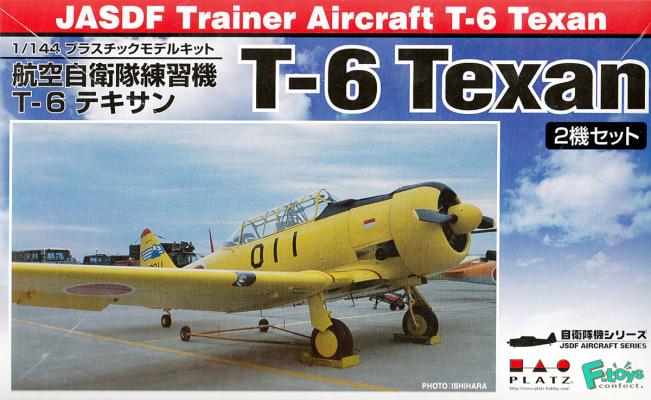
The North American T-6 Texan was the premier advanced trainer through World War II and later. It was also used as a FAC (Forward Air Control) aircraft in Korea and Vietnam. The AT-6 was also known as the SNJ by the US Navy and the Harvard by the RAF. 61 countries have used some variant of the Texan. If you can’t find markings that interest you, just keep looking.
My personal attachment to the T-6 comes from my friend Tom Kelly, who gave me a ride in his T-6G. We went to Oshkosh for the Air Rendezvouz in 1986. You get a really respectful greeting when you arrive in a warbird, even if you’re only in the back seat.
Background
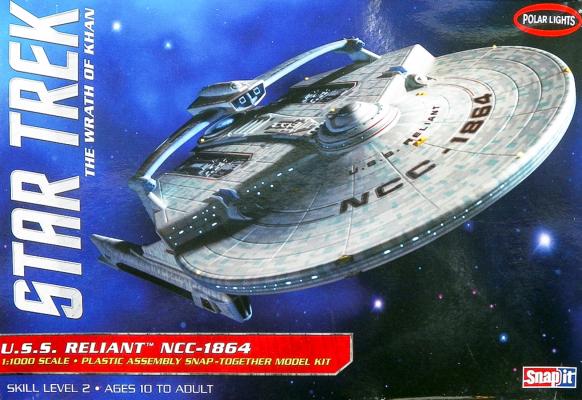
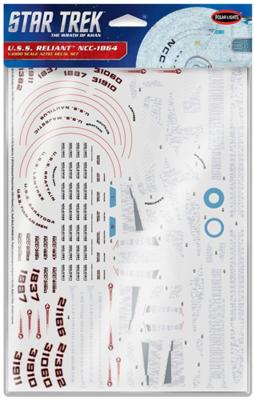
As featured in the movie Star Trek II: The Wrath of Khan, Federation starship USS Reliant was the vessel commandeered by the despotic Khan Noonien Singh, a late 20th century superhuman product of genetic engineering. Khan first appeared in an episode of the original Star Trek TV series, “Space Seed,” where he and his crew were discovered in cryogenic stasis while drifting through space aboard the SS Botany Bay. Revived by USS Enterprise’s crew, Khan and his followers were permanently exiled on a remote planet by Captain James T. Kirk after a failed attempt to seize Enterprise.
Background
As featured in the movie Star Trek II: The Wrath of Khan, Federation starship USS Reliant was the vessel commandeered by the despotic Khan Noonien Singh, a late 20th century superhuman product of genetic engineering. Khan first appeared in an episode of the original Star Trek TV series, “Space Seed,” where he and his crew were discovered in cryogenic stasis while drifting through space aboard the SS Botany Bay. Revived by USS Enterprise’s crew, Khan and his followers were permanently exiled on a remote planet by Captain James T. Kirk after a failed attempt to seize Enterprise.
About the Company
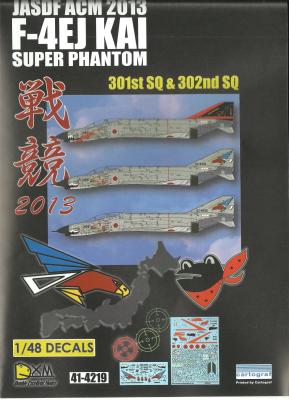
DXM which stands for Double Excellent Models was started by a group of modelers in Taipei, Taiwan. The group started manufacturing decals in 2010 covering a broad range of aircraft including an extensive list of Japanese air command meets.
What’s on the Sheet?
This sheet covers another set of aircraft from the JASDF participation in the air combat meet for 2013 with the Aircraft Belonging to the 301st SQ and 302nd squadron which are based out of Nyutabaru Airbase and Hyakuri Airbase.
The aircraft covered are as followed:
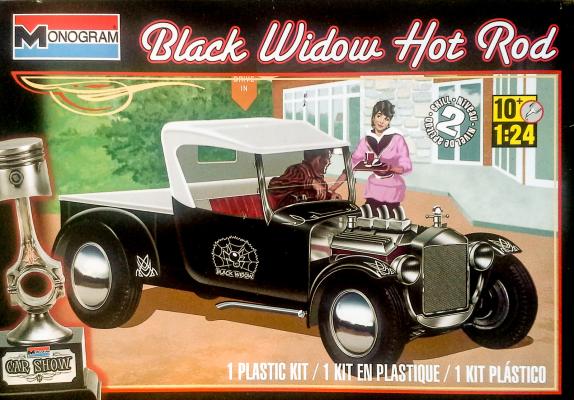
The Revell/Monogram 1/24 scale ’27 Ford Black Widow Hot Rod is a great kit with not a whole lot of flash to deal with. Everything fits together very cleanly. With only 55 parts in the entire kit and only one way to build it, there are no spare parts left over. The engine comes with a triple-carb setup and shows plenty of chrome on top. The interior is a bench seat with an elongated shifter handle.
As far as the body goes, it is a two-piece setup with the cab and the bed. There is a nice cover for the bed as well. I love the grille work, as well, with its chrome parts well represented. I proceeded to paint the roadster in Purple-Licious Metallic Lacquer by Testors. It came out extremely shiny and colorful. I painted the afore mentioned bench seat the same Purple-Licious purple with a semi-gloss white for the center ribbing of the seats to give the purple color a kick.
About the Company
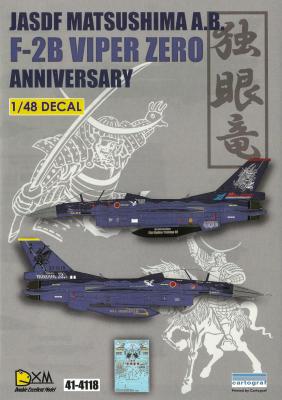
DXM Decals, which stands for Double Excellent Models, was started by a group of modelers in Taipei, Taiwan. The group started manufacturing decals in 2010. They cover a broad range of aircraft, including an extensive list of schemes from Japanese air combat meets.
What’s on the Sheet?
This sheet covers the 30th anniversary of the 21st Training Fighter Squadron and another F-2B specially marked to commemorate the 50th anniversary of Matsushima Airbase located in Matsushima, Japan. The aircraft covered are:

- F-2B Viper Zero, 21st Training Squadron, Matsushima Airbase.
The decals are extremely vivid with crisp colors and dark blacks. I could see very little carrier film, if not none. The decals are printed by Cartograf on a single large sheet.
About the Company
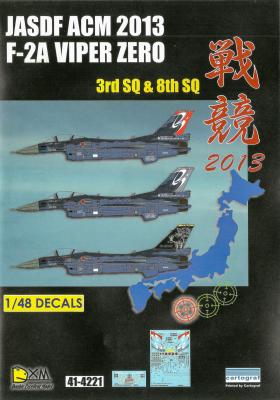
DXM Decals, which stands for Double Excellent Models, was started by a group of modelers in Taipei, Taiwan. The group started manufacturing decals in 2010. They cover a broad range of aircraft, including an extensive list of schemes from Japanese air combat meets.
What’s on the Sheet?
DXM Decals have produced several decal sets covering the JASDF’s participation in Air Combat Meet 2013. This sheet provides decal options for three F-2A Viper Zeros belonging to the 3rd and 8th squadrons which are based out of Joint Airbase Misawa in Towada, Aomori, Japan.
The aircraft covered are:
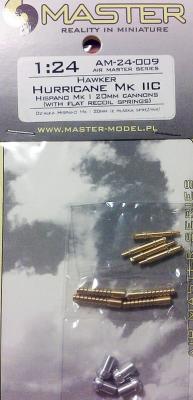
Master Model from Poland specializes in metal turned parts for aftermarket kits. In my personal opinion, they are among the best in the market. I really like their products, and this set in particular is really nice.
This set is devoted to the weapons of the Hawker Hurricane Mk IIC in 1/24 scale. As far as I know, the only 1/24 scale kit of a Hurricane Mk IIC is made by Trumpeter, but there might be others. I’m sure this kit would fit any 1/24 scale Hurricane Mk IIC with minor modifications, if needed.
The instruction indicates that you’ll need to modify the wing fairings to accommodate the metal version, after which you can then add the turned-metal parts, as shown below in the rendering from the manufacturer.
This is a simple “drop-in” replacement set that only uses three replacement parts per cannon, and it will enhance the looks of your finished model. I’d recommend this set to the average to experienced modeler.