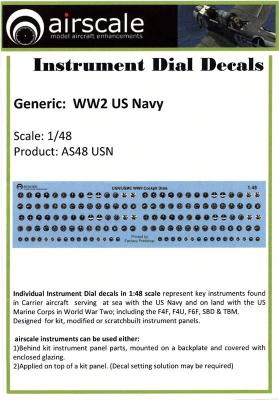
I don’t know how many times I’ve scoured through page after page of my aircraft decal sheets looking one or more dial decals to use on a particular instrument panel. Now, Airscale has saved me a whole lot of looking. They have produced a multi-national series of instrument dial decals in 1/48, 1/32 and 1/24 scale. This set, for US Navy aircraft, has scores of different instrument dials printed in two sizes. According to the list on the instructions, there are over a dozen different instruments represented on this sheet. Unfortunately, they aren’t individually identified or separated on the decal sheet itself. On the other hand, for that information to be useful you’d have to either be a pilot, have a better than average knowledge of the instrument panel being modeled, or have a diagram of the specific panel available to you to know what instrument decal goes where.
all 2011
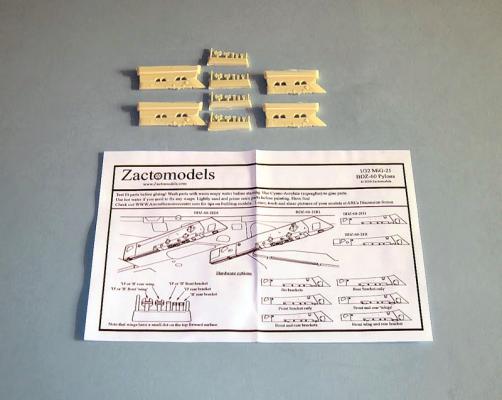
While Trumpeter has come out with a lot of large scale Soviet kits, there are usually some things that could stand improvement with these. Their 1/32nd scale Mig-21 is a solid kit and I have seen it built up into a nice finished kit many times. That being said, one of the deficiencies of the kit is its weapons pylons. They have minimal detail and like a lot of injection molded pylons, no detail whatsoever on the bottom.
Zactomodels has two varieties of these to select from, early and late, and there are differences between the two. The modeler needs to research the particular aircraft to determine which one is needed. The pylons for the Mig are designated BD3-60-21, early or late.
Let's look at what's in the box. The set comes with 4 pylons- two inner and two outer that are perfectly cast. Also contained is a complete sprue of hardware for each pylon including complete sway braces options.
Bottom line
A good kit which will require a knowledge of using and working with resin parts, doing conversions, and a higher level of air brush skills.
History
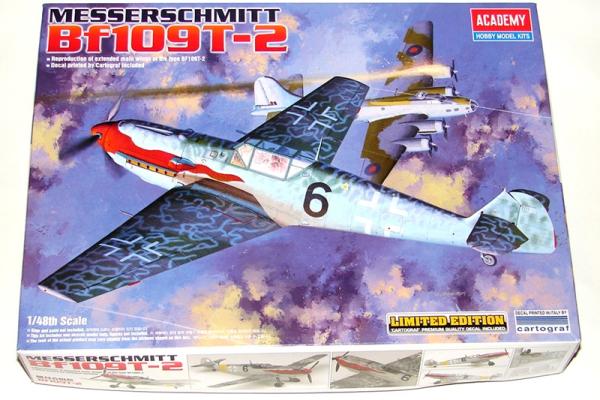
The Messerschmitt BF-109T was the projected carrier version of the Bf-109E model. About 70 planes of this version were built by Fiesler. Several modifications had to be made to adapt these single seat fighters for use on aircraft carriers:
Thanks to Ray Rimmel of Albatros Productions and to IPMS/USA for giving me the opportunity to review these two wonderful volumes!
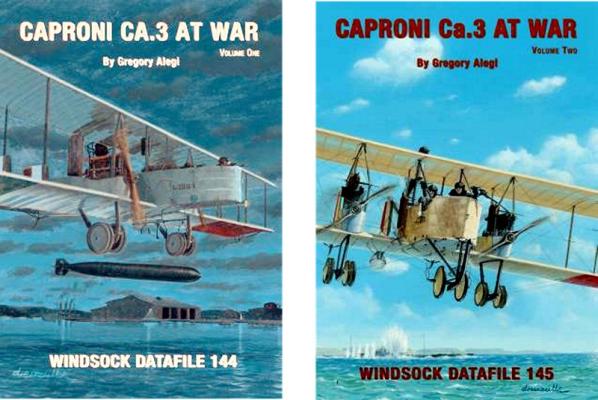
These wonderful publications by Gregory Alegi address a little known aspect of early WW1 aviation, the development of early heavy bombers. The volumes are actually the 3rd and 4th Caproni volumes authored by Mr. Alegi, but recent access to privately held papers in the Caproni family collection allowed updated and improved description of this unique aircraft.
The Caproni Ca.3 had an impressive (for the time) 22.2 m wingspan, 11m length, an empty weight of 2300 kg, and could stay aloft for 4 hours. The bomber’s ceiling was 4500 m, but it would take 48 minutes to reach that altitude! The aircraft was a twin-boom design with two engines in-line with the tail booms and a third engine in pusher configurations was mounted directly behind the cockpit
Thanks to David Lajer of Aires, and to IPMS/USA for giving me the opportunity to review this sweet little detail! I recommend it highly.
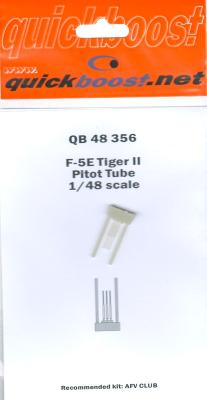
These pitot tubes are cast in pale tannish gray resin, with three tubes protected by casting sprue on three sides. This arrangement will provide the modeler with enough nose tubes for three planes, or in my case, enough for one plane and two mistakes. The shipping package is reseal-able, so you can keep the extra tubes secured.
There is little to say about these elegant little tubes, after all they are pretty small. But I micrometered them and they are well with scale tolerances. There is a little bit of variability in the length of the real thing anyway, so this is a minor consideration. More importantly, having this small detail greatly enhances a very prominent place on the model.
The domestic animals set is a welcome addition to the 1/35 scale diorama, adding some more every-day objects (or animals) to the traditionally military-focus aspects of dioramas.
Master Box has released a single sprue of 26 parts containing two cows and one goat. The box shows two goats, but it is just two suggested painting options. The sprue attachment points are medium sized and some part preparation and cleaning is needed. Care is needed when removing parts from the sprue as to avoid damaging detail. Overall detail is good, with clearly detailed faces, eyes and ears. You can even see the ribs in the cow sides. The goat hair might be a bit overdone but that makes painting and washing easier.
Kit Review
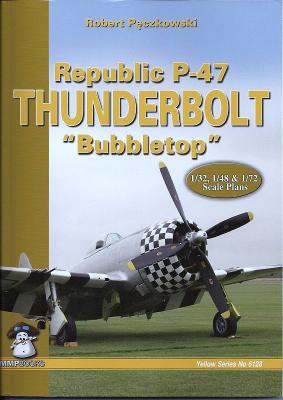
The P-47 “Thunderbolt” went through a major design upgrade in 1943, when its canopy and back fuselage was modified to be a “bubbletop”. Based on the information in the book the ‘inspiration’ for this modification was the RAF Hawker Typhoon.
This book covers all the “bubbletop” production variants from P-47D-25 to the final version, the P-47N, including all the related prototypes.
The first section of the book is dedicated to technical details on each prototype and production variants. There are plenty of historical pictures for each variant including foreign operators and post war operators and even a few historical color pictures too.
The second part of the book is a “walk around” of different P-47 preserved in museums. The walk around is neatly organized by “fuselage”, “tails”, “landing gear”, “engine”, etc.
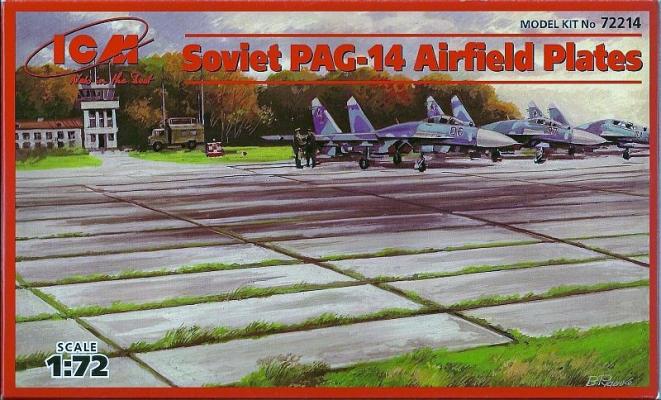
ICM has a growing line of 1/72 soviet jets and now it is providing modelers with a simple and cost effective way to enhance how to display our models: PAG-14 Airfield plates. I must confess, I don’t know anything about those plates nor I was able to find any online reference so I cannot speak as to their accuracy.
You get 32 individual plates, each one with dimensions of 82 by 27 mm. The plates have some nice texture which gets highlighted with either a wash or drybrushing. The parts have medium size attachment points to the sprue (typical of ICM) and some sanding is required to clean up the parts.
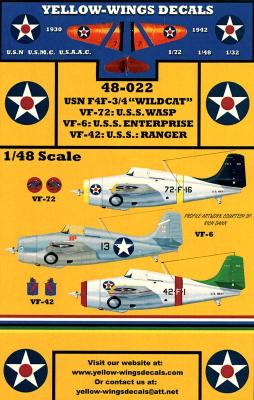
This decal sheet represents another of the Yellow-Wings “complete aircraft packages”, this time concentrating on pre-WWII and early war Wildcats. Covered are F4F-3s from two Atlantic Fleet carriers from early 1941, USS Ranger’s VF 41 and USS Wasp’s VF 72, and an early war F4F-4 from USS Enterprise VF-6 based on Guadalcanal and flown by ace Donald Runyon, complete with “tombstone” kill tally tail markings. The set contains all the details that we’ve come to expect from Yellow Wings, including squadron badges, propeller tip markings, walkways and fine pin stripes to outline the painted cowl colors. There are minimal stencils, as was the case on Wildcats of the era. As always, the printing (by Microscale) is sharp and in perfect register, and there is a bare minimum of carrier film. Yellow-Wings recommends the Hobby Boss F4F-3 or the Tamiya F4F-4 (suitably backdated for the Atlantic based aircraft).
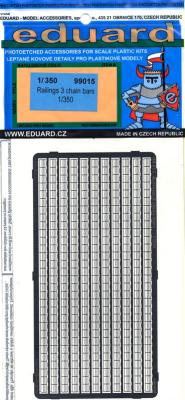
Adding to its expanding line of ship detail sets, Eduard has released photoetch ship railings in the popular ship modeling scales. This unpainted stainless steel set represents drooping chain railings founds on the main decks on most all types of vessels (metal bar railings tend to be found more often on the upper superstructure deck levels). This is generic railing, not geared to any specific navy or class of ship.
Description
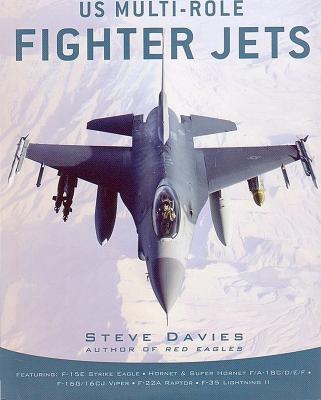
This is a 7 ½ by 9 ½ inches hard-cover book with 240 pages. All photos are in color and the paper quality is exceptional. Every time I turned the page, I thought that I was turning 2 pages due to the thickness of the individual pages.
Book Theme
The title of the book is “US MULTI-ROLE FIGHTER JETS” and prior to reading this book I only had a vague idea as to what “Multi-Role” meant. In this book Davies describes these jets as having the flexibility to change their mission capabilities (air-to-air, air-to-ground, jamming, protection, missile and AAA suppression, refueling, etc.). Some of the changes are done prior to missions and others are called upon depending on mission discoveries or opportunities.
I am a Rolls Royce Armored Car mega-fan, so I pleaded for this book when it showed on the review list. Also, my real name is Sean O'Ratzenberger ….
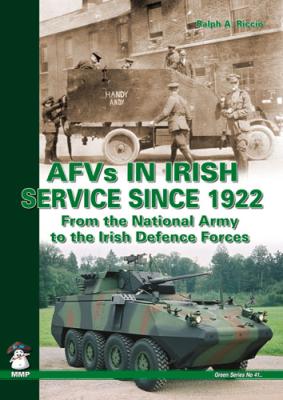
The book covers wheeled and tracked armored fighting vehicles used by the armed forces of the Republic of Ireland from independence to the present day. It, of necessity, starts before then, in 1916, and works forward through the civil war as much of the armor was first used by the British and then acquired by the Free State (National Army) or captured by the Republican Army. This story is told in some detail. From there, the book covers the Irish forces during The Emergency (WW2, in which Ireland was neutral) through various UN peace-keeping operations.
Following the general and organizational history, there is a lengthy section which goes one-by-one through all vehicles used, having history, data, pictures, etc., for each. Some of this information duplicates that already told in the historical sections.
Thanks once again to Quickboost for providing IPMS/USA me these review items; these little things make a big difference, and we appreciate it!
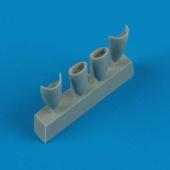
OK, this is about as simple a review as you can get. These four vents are replacements for the kit items; the new QB vents are already hollowed out, and make a big difference in the appearance of the final product. These vents face backwards, and dump heat overboard. See the scan of the instruction sheet for Items 7F, 8F, 39A and 40A on the upper back of the aircraft.
Most of us old school guys use #11 Exacto blades and twirl away, occasionally stabbing ourselves in the fingers, to get hollow intake/exhaust vents.
Enter Quickboost! As we have come to expect, a fast one-for-one replacement for the kit items (See the photos!). The gray ones are the Quickboost; the white blob is one of the kit items.
These items are true “Even a monkey could… “ replacements. Worth the cash and acquisition time.
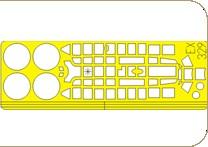
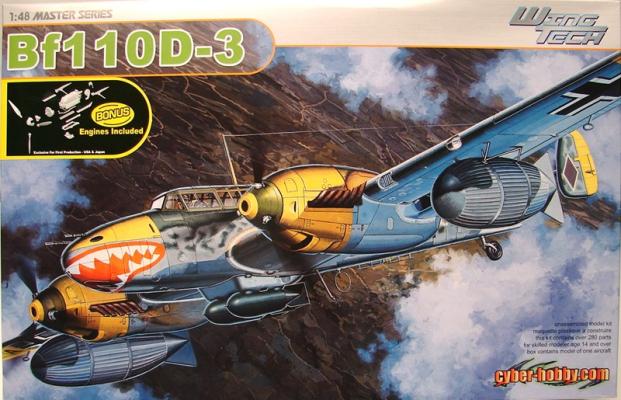
Packaged in a oversized poly zip lock bag you find sandwiched between two sheets of cardstock one 2 X 5 ¼ inch yellow precut mask set along with a folded one sided placement sheet. The set covers the canopy and wheels, or should I say canopies when you consider the greenhouse that is the Bf 110G-2. Simple is the word that comes to mind when using these Eduard mask sets; however this set could be a little confusing if you do not carefully reference the placement guide. I always do a light pencil rubbing to reveal the cuts. Remember patients will be your reward. Eduard has a knack for doing these things very well and this one is no different.
The price my be a little had to swallow for the budget minded modeler while others won’t mind a bit shelling out 13 bucks to do the Bf 110 canopy nightmare. I highly recommend this set to anyone building the Eduard Bf110G-2. My thanks go to Eduard and IPMS/USA.
Construction
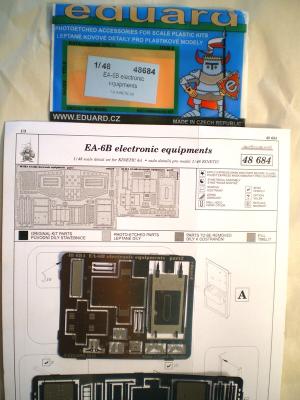
This kit contains two photo etched sheets with 33 parts. The photo etched parts were in perfect condition. The details were used in the aft electronics bay. The unit folds down and is called the birdcage. This unit will be placed in the down position. The assembly is straight forward and fairly simple to assemble. I did not use the bend brake for this project.
Comments
This kit can be assembled by any good modeler. Skill level is medium in my opinion. There are several miniature parts.
Conclusion
I wish to thank Eduard and IPMS/USA for allowing me to review this aftermarket kit.
Construction
This kit contains 56 photo etched parts. There were 3 extra parts, namely an extra hold down shackle.
The photo etched parts were in perfect condition. These details were used in the 3 wheel well areas. They all fit well except one area. A notch was made in one corner item -- as shown in the photo. The area modified was in the main landing gear tie into the deck. The instructions were good, except for where the extra hold down was located. A bend brake tool would be helpful.
Comments
This kit is recommended for the experienced modeler, due to the numerous tiny parts.
Conclusion
I wish to thank Eduard & IPMS for allowing me to review this aftermarket kit.
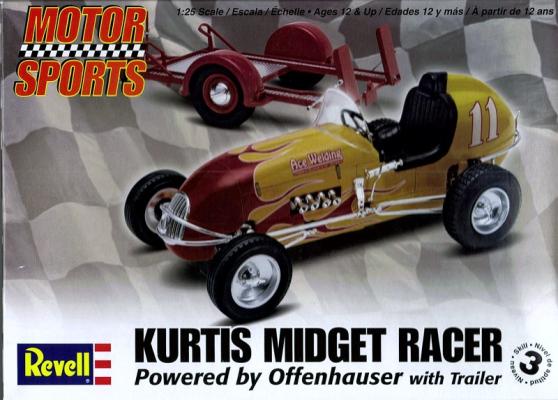
In this review, we have the sister kit to Revell’s other Kurtis Kraft Midget racer, the V8-60. The Ford V8-60 Kurtis Kraft model and trailer is reviewed by Jim Stratton elsewhere on the IPMS website. This subject review is the same Kurtis Kraft race car fitted with an Offenhauser 4 slug motor. Jim did a great job telling the history of Frank Kurtis and the racing success of his Kurtis Kraft cars. I will give you a little background on the Offenhauser engine part of the story.
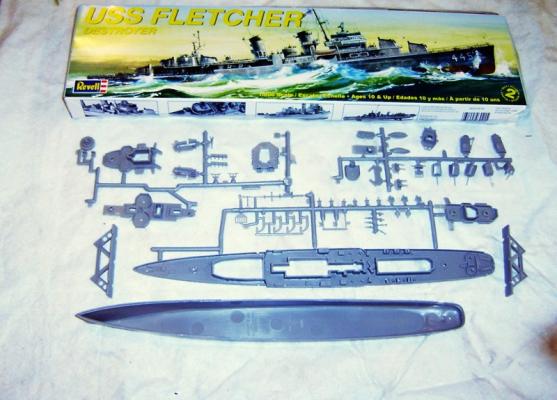
This is Revell's original Fletcher-class destroyer in “box scale” of 1/306. The first Fletcher to enter service, USS Nicholas, was commissioned on June 4, 1942, and was the first of 175 of the class to be built by war’s end.
Revell's kit features the square bridge version, but gives the modeler the parts to update it with rocket launchers for a later version. The kit instructions are simple and easy to understand, and best of all---each part has a number and an identifying name as well. As a kid, this was how I learned a great deal about the ships and airplanes which I built. In fact, I built many of these kits in my youth, which was the inspiration to do this review.
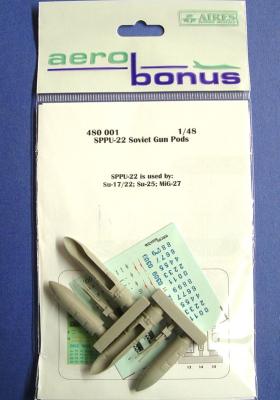
One of the more impressive Soviet/Russian weapon systems is the SPPU-22 gun pod. With two twin 23mm cannons it is used to strafe ground targets and can be adjusted from the cockpit to fire horizontal or up to 30 degrees down angle. Typically two are carried on an aircraft. A tactic peculiar to the Russian way of war is to mount the pods so that one faces forward and one aft. The aircraft can then fly down a line hitting targets coming and going – it has to be demoralizing to the recipients.;
Up to now the only source for these gun pods was the KOPRO (ex-OEZ) Su-25. The kit supplied pods are actually pretty detailed, but the gun system itself is very weak and would need to be scratchbuilt. Aires in their new Aerobonus line has released a new series of Soviet/Russian aftermarket weapons/weapon systems. First in line is the SPPU-22.
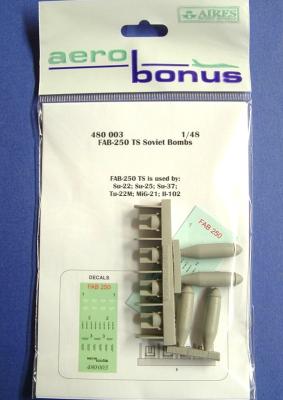
The FAB-250 is a general purpose dumb bomb with is widely manufactured and exported, similar to the US 500lb bomb. The have been widely used in the conflicts along the Russian (Soviet) border in Afghanistan, Chechnya, Nagarno-Kharabak and Georgia. You frequently see them carried on Russian multiple ejector racks. While they are available in numerous kits, Aires had release their version in an aftermarket package.
This set is crisply patterned and cast with very this fin detail in durable resin. The bombs have a nice shape, but lack some lug detail found on injection molded bombs included by OEZ/KOPRO in their kits. Since I don’t know the purpose of these lugs I can’t comment on their presence, but I have seen them in photos. The fit of the bomb to the fin is perfect, but some care will be needed to endure the fins are straight upon attachment. The set also includes a comprehensive decal set of stencils.
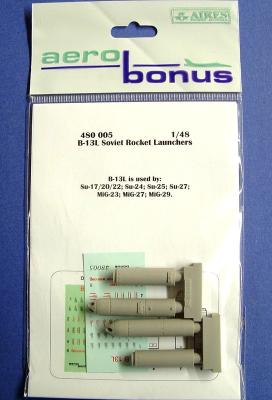
The B-13L rocket launcher was developed out of the Soviet experience in Afghanistan because the existing rocket systems lacked the punch to take-down stone houses, rock walls or cave openings. The ubiquitous 122mm rocket had the requisite explosive weight to do the job. So necessity being the mother of invention, the B-13L was developed to air launch to the 122mm rocket. The system was fielded in 1988, the final year of the conflict and it remains in the inventories of Russia and its current and former patron states.
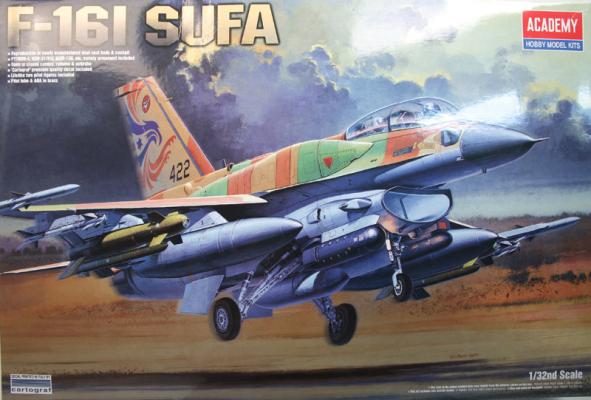
This has been a long time coming and that fault lies with me. First, like a lot of modelers, I couldn't leave well enough alone and decided to add Aires 1/32nd scale wheel well to the kit and also the Wolfpack 1/32nd scale F-16I Exterior Set (Part 32031) which includes two corrected pylons and the front fairings. I elected to use the wheel well set as the kit part has lots of ejector pin marks and the Aires set has even more detail. I placed the part in and had to do a little spacing with strip but it fit well and looks great. The exterior set is much less necessary but does have some slight shape corrections to the pylons. I also elected to add intake and exhaust covers to the kit. There is nothing wrong with the intake trunk (it is fully complete) or the exhaust- I just liked the way it looked.
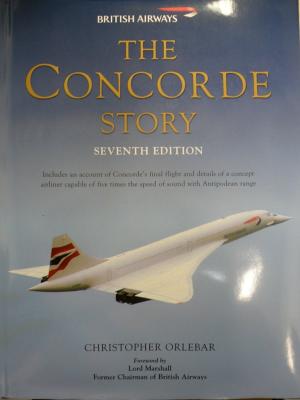
Let me begin this book review by giving a little background. When I saw that IPMS received this book from Osprey Publishing, I jumped at the chance to review it. The reason for my excitement to doing this review is that back in 1995 I was working part time as a courier, this entailed traveling all over the world delivering different packages that needed hand delivery and were time sensitive. One day I got a call at my office to go to Dublin, Ireland via Atlanta. That evening I flew to Atlanta to meet another courier and accept the shipment for Dublin. The other courier did not meet me on time to make my connecting flight to Dublin and the courier office told me to bring the package back to NY and that I would take the 9:00am British Airways Concorde flight the next day.
Contents
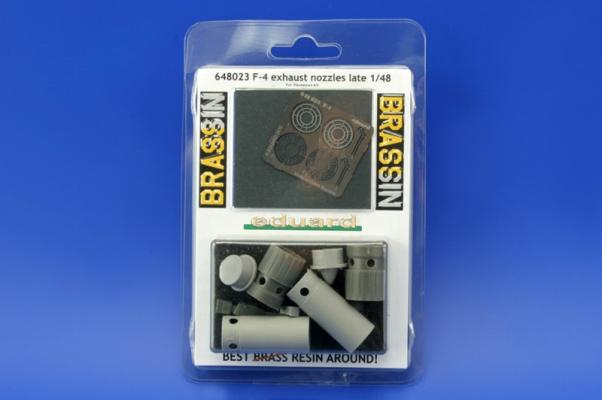
Detail set of F-4 exhaust nozzles for the Hasegawa F-4E/F/G/J/S Phantoms powered by J79-GE-10/17.
- 8 highly detailed resin parts
- 1 Photo etch fret.
- Instruction Sheet.
The Product
Packaged in the standard clear double blister pack you find secured by a small black foam block the delicate resin pieces, found intact and without flaws of any type. In the shallow upper blister section resting on a black back paper is the photo etch fret. The folded instruction sheet features well illustrated detailed instructions in color, on the reverse side also in color they feature other products offered by Brassin for the Hasegawa 1/48 Phantom phamily along with the standard contact and safety information.
Short History
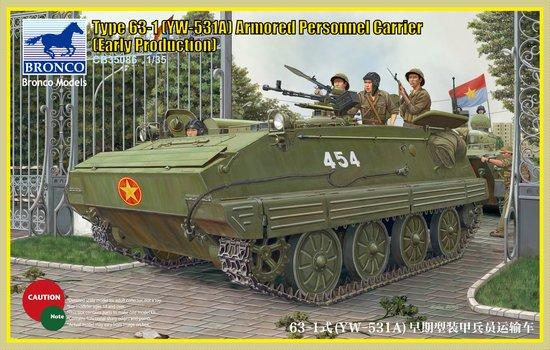
The YW-531a was the first APC manufactured by Norinco for the PLA. It was designed in the early 1960’s and first appeared in 1964. It can carry a crew of 4 to 10 troops. The YW-531 was first used in the Vietnam War by the North Vietnamese Army (PAVN) and was in action again in the Iran-Iraq War.
APCs are usually armed with only a machine gun although variants carry recoilless rifles, anti-tank guided missiles (ATGMs), or mortars. They are not usually designed to take part in a direct-fire battle, but to carry troops to the battlefield safe from shrapnel and ambush. Amor on APCs is usually composed of simple steel or aluminum, sufficient for protection against small fire arms and most shell fragments. Just about any type of anti-tank weapon can defeat the armor of an APC. Some APCs also come with NBC protection, which would protect its crew from radioactive fallout or the like.
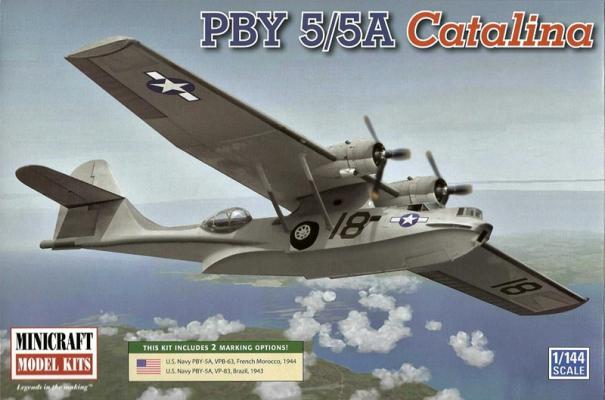
The PBY-5A Catalina is a well-known piece of US Naval aviation. The modeler has Catalina options in 1/48th, 1/72nd, and 1/144th. For the 1/144th modelers out there or those that do not have the shelf space for the 48th Monogram kit, the Minicraft kit will fit the bill nicely. This is Minicraft’s third boxing of the PBY-5. The box contains the same plastic but contains two decal options.
Upon opening the box, two light gray sprues, one clear sprue, decal sheet printed by Cartograf of Italy, and instructions greet the modeler. There is some flash on some of the parts but nothing too bad. The engraving on the parts is nicely done with the exception of the main wing. The engraving of the main wing is a little soft, especially compared to the rest of the kit. However, after painting, it does not look bad at all. The clear parts look well molded and clear.
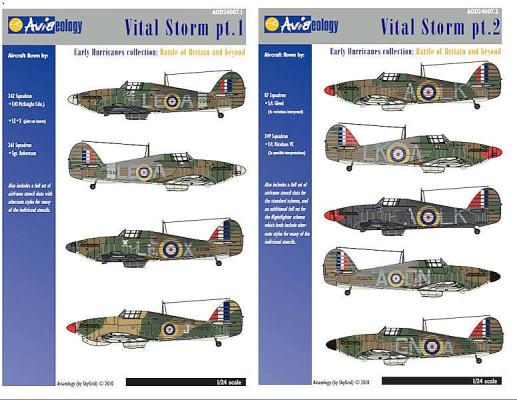
Aviaeology did a series of 1/32 decals for Zotz -- they released under their own name the 1/24, 1/48, and 1/72 versions. Of the 16 total aircraft in the original super set for Zotz, 7 have been released in 1/24 scale in these two sets. More may be coming, depending on how these sell.
The “Parts”
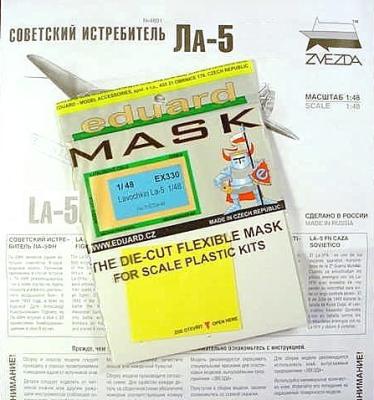
Eduard is known for supplying kits and hobby supplies of superior quality and excellent engineering and the EX330 Canopy Mask for the La-5 is no exception. The mask is a 2x2 inch square, with the mask components pre-cut to fit the canopy of the Zvezda La-5, kit # 4803.
Assembly
The instructions that accompany the mask are easy to use and clearly identify the location where each of the individual masks will be used. The masks are easy to remove from the backing sheet. Simply insert the tip of a blade under each mask piece, gently pull it up and off the backing sheet, and then attach it as per the mask instructions. Once the mask piece is in the correct location applying gentle pressure will ensure a good seal between the mask and the kit part. Send a little extra time burnishing the mask edges down to prevent any paint-creep under the masking material.
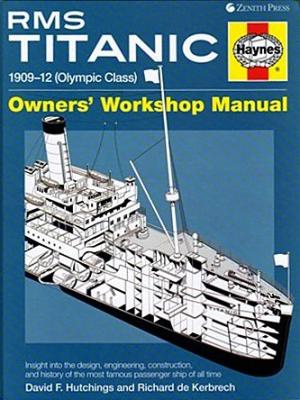
The story of Titanic is well known. Most are familiar with how the world’s most luxurious passenger liner struck an iceberg on her maiden voyage and sank taking over 1500 of her passengers and crew with her to the bottom of the Atlantic. Less has been detailed about how she was built, fitted out and operated!
Haynes is a company well known the world over for their quality and in-depth automotive repair manuals. Lately; they have branched out to include manuals on the Spitfire, Hurricane and Lancaster. Now they turn their attention to Titanic!
The book begins with a brief history of the ship, her maiden voyage and the tragedy that befell her. Included herein are many well known pictures of the ship and her passengers.
History
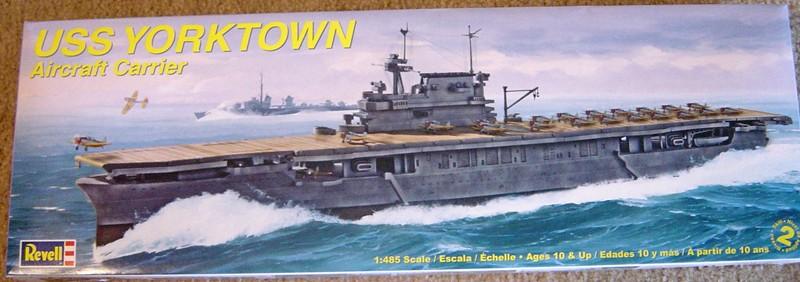
USS Yorktown, a 19,800 ton aircraft carrier built at Newport News, Virginia, was commissioned on 30 September 1937. Operating in the Atlantic and Caribbean areas until April 1939.
The U.S.S. Yorktown was among the first "true" aircraft carriers ever built. During the Battle of Midway, the Yorktown scored a decisive victory against the Japanese, with the help of the U.S.S. Enterprise and the U.S.S. Hornet. For the heroic sacrifices made by her soldiers in this battle, the Yorktown earned three battle stars. Kit features highly detailed hangar and flight decks with optional-position deck elevators and cranes, twenty Douglas SBD dive bombers, a display stand and official U.S. Navy marking decals.
Background
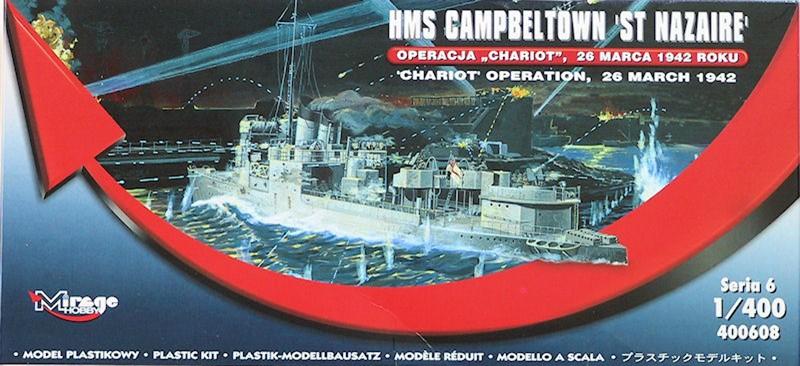
I don't know why we need fictional action movies -- there are more than enough tales of derring-do in the real world and in my book Operation CHARIOT, the raid on St Nazaire, is right up there near the top.
The British were ever concerned about the various German battleships, battle-cruisers, etc., and numerous air raids were flown to sink or cripple them in port, damage the ports facilities, etc. One such target was to render the graving, or Normandie, dock at St Nazaire incapable of handling Tirpitz and thus forcing her off the western coast of France -- from this was born OPERATION CHARIOT. The basic plan was to disguise a ship to look like a German patrol boat, load it with explosives, and ram it into the Normandie Dock, rendering it useless. The secondary objective was to destroy port facilities and smaller docks such that the port was rendered tidal and thus severely restrict use by U-boats and other vessels.
I would like to thank Osprey Publishing for submitting this book for review and thank IPMS/USA for allowing me to do the review.
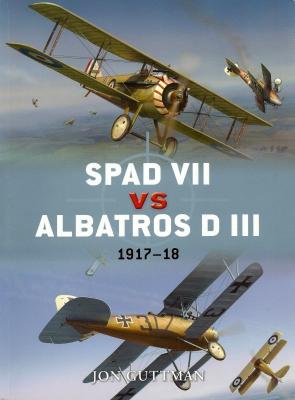
In the latter half of 1916 the French SPAD VII and the German Albatros D III were introduced into the Great War. At the time, each represented major improvements in aircraft design and would change aerial warfare. Soon these two machines met in the skies over France and Germany. The SPAD VII was smaller, lighter and a little more maneuverable but the Albatros D III was equipped with two machine guns. In the hands of legendary pilots such as Manfred von Richthofen, Heinrich Kroll, Georges Guynemer, Rene Fonck, Raoul Lufbery each aircraft proved to be very successful.
Back in 1994, modeler Mike Reccia started editing a Science Fiction modeling magazine called Sci-Fi & Fantasy Models. I found these in my local Comics Shop and grabbed them whenever I could. The magazine started out bi-monthly, converted into Sci-Fi & Fantasy Models International and ending up as a monthly release. Unfortunately this ended in 2001 with Issue 53.
About 5 years ago Mike resurrected the idea as a quarterly, larger format magazine under the new name Sci-fi & Fantasy Modeller. The issues are now 100 pages (counting covers) with a sturdier card cover and full color photos. The stories are still well done with a combination of modeling stories and behind the scenes articles. Let's take a look and see what is in the latest.
Volume 21 contains 12 articles, 10 on modeling and 2 others.
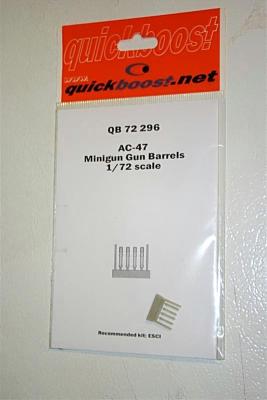
Quickboost just keeps adding to their line of resin aircraft accessories. The latest addition is for the ESCI/Italeri AC-47 Gunship. It is up to their usual standards; molded in grey resin, smooth, seamless and bubble free. One thing of note is that they are really easy to remove from the mold block because of a nice perforation. It only took me a couple of swipes with my saw blade to remove them.
The barrels on the ESCI kit part look alright and would make an acceptable model but the Quickboost replacements are superior because of the high level of detail. All that is needed is to cut the kit parts barrel off and glue the Quickboost piece into place.
I highly recommend this product if you want a really superior looking model. Usually replacement parts need some work to get them installed properly but these parts go into place nicely. Thanks to Quickboost and IPMS USA for the chance to do this review.
Bottom Line
The kit was well engineered, but I thought it had a few too many parts. Short shots with the canopy frame and propellers were an unwelcomed surprise. It had great detail on the whole aircraft, including panel lines. Engines and gun bay were probably overdone as when complete, you can not see all the work you put into them. But it was a great kit to build and very enjoyable because of superb engineering.
The Helicopter
The Mi-24 has been in service with the Soviet/Russian air forces since 1972. The design is interesting in that it has three engines; another tri-motor to add to the list. The 24 has undergone a number of redesigns, and the early versions had a much different cockpit setup. The Russian Air Force has announced that it will replace its 250 Mi-24s with newer more capable helicopters, starting in 2015.
The Mi-24 is nicknamed “crocodile” by the troops. The Mujahedeen in Afghanistan called it "Shaitan-Arba" (Satan's Chariot)". The Hind is unique in that it can carry 8 troops and weapons at the same time. Huey gunships had to have the seats removed to allow for ammunition and extra fuel storage. The crews didn’t think much of carrying the passengers, as they became a liability if the pilot had to do extreme maneuvers and return fire.
I was just getting to the paint job on my review of the Zvezda Mi-24V. I had already painted the sand color when the postman delivered a package which saved me hours of work and possibly saved my sanity also. The Eduard mask set is a really great time and labor saving addition to the project.
If you look at the mask layout, it becomes evident that there are only a couple of straight lines anywhere on the mask. The Hind’s canopies have a number of compound curves and squiggles, and masking these, even with Tamiya tape cut into ½ mm slices would be a difficult job.
The masks went on very nicely. I used tape instead of the liquid mask Eduard suggests, but the masks followed every curve in the canopy lines nicely. A quick shot with the airbrush, and the canopy was painted.
The wheel masks were also quite good, although I had to make a small cut in the main wheel outer mask as the Hind’s wheel is not perfectly flat.
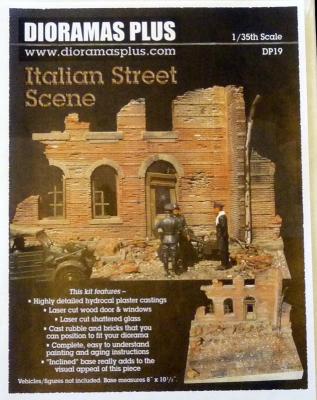
Dioramas Plus was founded in 2008 and has been producing 1/35 bases and buildings for the diorama builder. These products are plaster cast and quite robust. When the box arrived I could tell that just walking it up my driveway tired the mailman out it was so heavy (OK, so maybe I exaggerate). Upon opening the box I found the content wrapped carefully in bubble wrap and an examination of the parts revealed no broken bits. You get 4 main cast pieces consisting of the walls and the street base; a thin wood laser cut sheet with window frames and a door, a clear sheet with holes and jagged edges for the window glass and a bag of loose bricks as well as some large debris piles cast as one piece. I was extremely impressed with the quality of the castings – the relief and detail is excellent and the damage convincing.
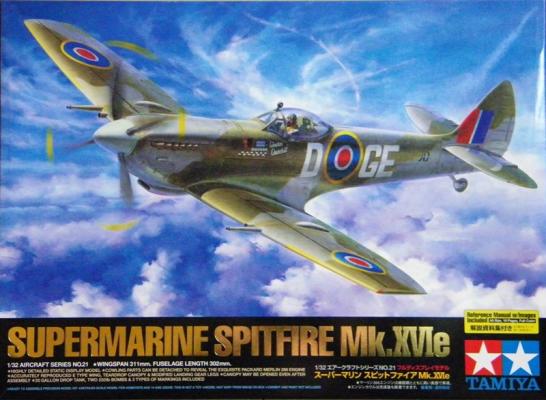
Introduced in the latter half of 1944, the Mk. XVIe variant of Supermarine’s legendary design was optimized for low-altitude operations, featuring a Packard-built Merlin 266 powerplant, clipped wings, teardrop canopy, packing a pair each of 20mm cannon and 12.7mm machine guns, and toting either a pair of 250-lb bombs or a single 500-pounder. The Mk. XVI was the last Merlin-powered Spitfire variant to roll off the assembly line, and saw service with the RAF and a number of other nations into the 1950’s.
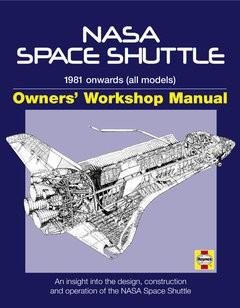
Possibly one of the world’s most recognizable flying machines, the NASA Space Shuttle was the first reusable piloted spacecraft, and to this day remains unrivaled in versatility and success in that role. Having its genesis in waning years of the Apollo Program, the Shuttle evolved throughout the early 70’s, dodging the lethal pens of budget-cutters, and matured into what now is the icon of American manned spaceflight. Now, 30 years after the maiden flight, the program draws to a close in 2011.
Dr. Baker skillfully and intimately captures the history and underlying technology of the Shuttle program and its family of 6 craft in this beautiful 196-page hard-backed edition. The volume is well-written by a man with first-hand experience in the program, and packed with over 250 photos and technical illustrations – a modeler’s dream!
History Brief:
The GermanWehrmacht and Luftwaffe grew into a powerful military machine during the last half of the1930s under Nazi control. They were very well equipped with all the latest and greatest weapons the world had ever seen. When the early weapons and training were tested in Spain confidence grew and then they seemed unstoppable blitzing through Europe at will.
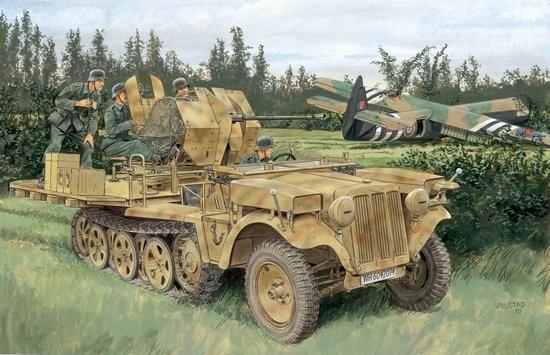
As the war progressed so did the inventory of halftracksthe Wehrmacht and Luftwaffe operated, listing several types and sizes of halftracks each with a specific purpose. Our subject the Sd.Kfz.10 was one of the lighter types. Initially conceived as a utility tow for small towed guns, several different specialist vehicles were based on this halftrack design including Sd.Kfz.10/5, its rear hull was refitted with a purpose-built anti-aircraft platform carrying a 2cm FlaK38 platform. Around 14,000 Sd.Kfz.10 halftracks were built from 1938-45.
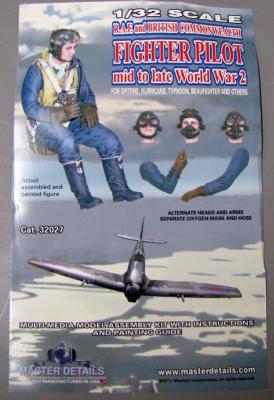
I don’t normally go for installing figures in my models; however, after this one, I may change my stripes and do so more frequently.
First
Thanks to master Details for providing this excellent product to us. It was quite a pleasant diversion from just slappin’ together plastic… and an excellent addition to most WWII British kits!
What You Get
A torso, four different arms, and two legs in resin. And four different heads in white metal, along with an oxygen mask and hose for separate parts. One head with goggles down and no mask, one with goggles up and mask in place, one with mask and goggles in place, and one with mask in place, goggles up. The flight gear is for non-tropical situations, i.e. standard European issue. This is a mid-to-late war flight kit project; not appropriate warmer theaters of operation.
History
Established in 1949 by the FIM (Fédération Internationale de Motocyclisme) the Road Racing World Championship Grand Prix is the premier championship of motorcycle road racing. Currently it consists of an eighteen-race series visiting fourteen countries, and four continents. Eight nationalities of the world's most skilled riders are mounted on purebred racing bikes. These purpose-built, high tech prototypes are fielded by four manufacturers; Ducati, Yamaha, Honda and Suzuki. They are not available for purchase by the general public and cannot be legally ridden on public roads.
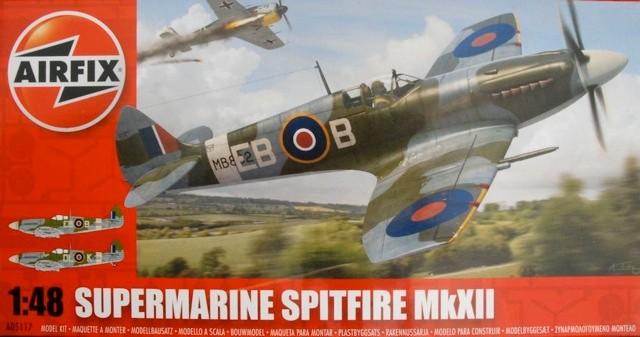
The Spitfire certainly needs no introduction; it’s quite simply one of the most versatile and beautiful propeller driven fighters of all time. Because of that fact there has been no shortage of kit manufactures willing to produce any number of variations of this venerable design. Enter Airfix a name long associated with British aircraft models. This time we get a new release of the Spitfire Mk XII in 1/48 scale. In brief, the Mk XII was powered by the Rolls Royce Griffin engine and as a result sports some cowling bumps and a big prop spinner not seen on other variants. Couple the Griffith engine with clipped wings and you get a Spit designed to fly fast at low altitudes to counter low flying Luftwaffe fight bombers and later, V-1 buzz bombs, but enough of the history, lets have a look.
The Kit
The F-16 Fighting Falcon began life as part of the U.S. Air Force Lightweight Fighter Program (LFP) in January of 1972 as the General Dynamics entry in the competition. The evaluation YF-16 first took to the air on 8 February 1974. Sharing an engine with the F-15 Eagle gained the favor of the plane with the Air Force. The Falcon has a unique ejection seat that is reclined in the cockpit, and utilizes a fly-by-wire system to aid in flight. Due in part to a multi-stage improvement program or MSIP, the F-16 was upgraded to the C and D variants, which began replacing the A and B variants in 1983.
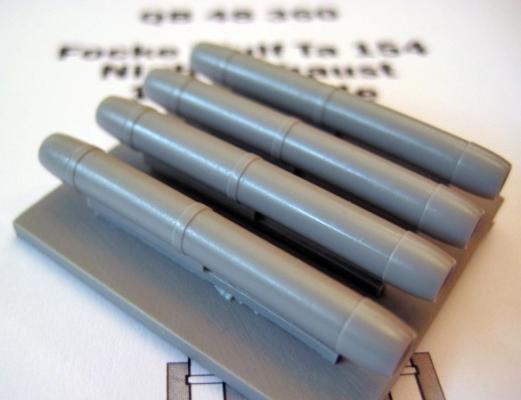
This little gem of a set contains four resin stubs. I know you’re thinking what is so special about them. The stubs are not straight pipes. They have a bulge middle and tapered end. The jewel in the crown is the flame dampeners inside the realistically thin end pieces. Designed for the Dragon Ta-154 kit I’m sure these could be fitted to the Promodeler one as well. Simply remove the pour block leaving the attachment stub and paint then add to the model.
Highly recommended
Thanks to Quickboost, Aires Hobby Models and IPMS/USA for the review copy.
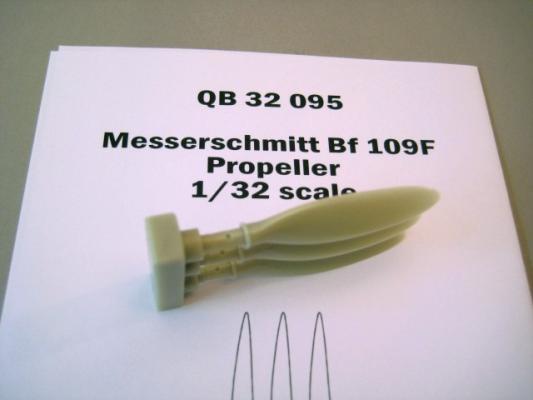
Trumpeter’s lastest 109 is the Bf-109F-4, it is nice but has some issues besides depicting a G-2 more than an F-4 version. One of those things that really needs to be addressed is the propeller. Quickboost offers three perfectly formed light grey resin propellers that are perfectly formed and blemish free. Replacement of the kit part is quite easy just remove these blades and substitute the kit ones.
Highly recommended
Thanks to Quickboost, Aires Hoddy Models and IPMS/USA for the review copy.
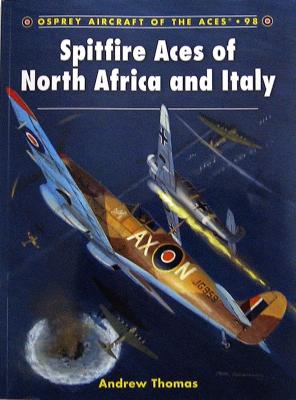
This is the 98thtitle in Osprey’s Aircraft of the Aces Series. The softcover book has 98 pages, including nine pages of color side profiles, a bibliography, index and appendices. The appendices include detailed information on each of the 36 color profiles. There is also a comprehensive listing of the aces that flew Spitfires in the theater that includes the units they flew with, their theater claims and their total claims. The front cover has a dramatic painting of Spitfires attacking Me-323 transports over the Mediterranean Sea. The encounter is described in detail on the page facing the table of contents and makes for some very interesting reading.
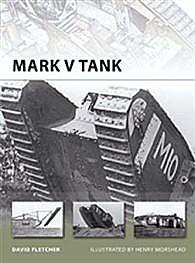
The British developed and employed the first full-tracked armored fighting vehicle and continued to improve the design throughout the First World War. The result was the Mark V tank in 1918.
This book, number 178 in the New Vanguard series published by Osprey Publishing, describes the development of the Mark V and Mark V* tanks from the earlier Mark IV, crew duties, combat deployment, and further improvements at the Christchurch development center. The text provides a pretty inclusive discussion of the development of the Mark V and its larger siblings the Mark V* and V**. The discussion of combat operations is basic but does give an idea of the improvement of the faster Mark V over earlier models.
Introduction
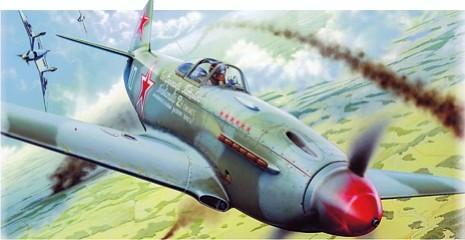
Soviet aircraft manufacturers, like all the other allied nations during World War II, quickly realized Germany had produced some very potent fighter planes. In response the Soviets produced some classic designs like the Lavochkhin La-7 and the subject of this review, the Yak 3. Resulting from refinements of its predecessors the Yak 7 and 9 series the Yak 3 was lightened and mated with a 1240 hp Klimov engine. The resulting aircraft out climbed and out turned its German opponents at the lower altitudes where most engagements took place in this theater. With a structure built largely of wood, the Yak 3 was a simple, rugged design typical of the Russian approach to military aircraft construction. Over 4000 were built during what Russians called the Great Patriotic War or GPW.