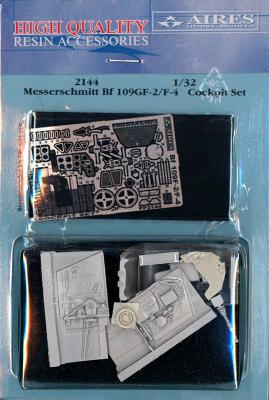
Aires continues to add to its line of resin detail sets for 1/32 aircraft kits. One of the latest is a resin and P/E detail set for detailing the cockpit of Trumpeter’s new Bf109F kits. Aires’ product name, Bf109GF-2/F-4 indicates that some of the parts also can be used to detail the cockpit of a Trumpeter Bf109G. The detail in the resin components is crisp, delicate and busy enough to make the cockpit quite convincing. No clean up is required and, as usual, with Aires resin there are no pinholes to worry about. The resin is not brittle, but reasonable care should be exercised when removing the small parts from the casting block. A #11 blade or razor saw can be used to remove most parts, and a swipe with a sanding stick will work to smooth the cut edges.
all 2011
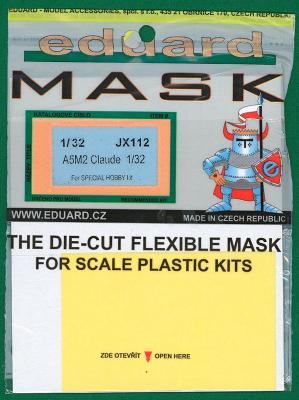
Eduard continues to provide model builders with an ever-growing list of convenient pre-cut paint masks. JX 112 is designed to make life easier for those building either of Special Hobby’s two A5M2 kits. Like other Eduard mask sets, this one is made of Kabuki tape (similar to Tamiya’s masking tape) and contains precut masks for the kit’s windscreen and wheels. The masks will adhere well to any flat or curved surface, so masking is a breeze and they and can easily be removed after paining is completed. A simple instruction sheet is included to guide the masking process.
In the 1950’s the American trend saw greater use of the pickup trucks as second vehicles, Due to good marketing Chevrolet set records in the production of trucks with a market share of almost 37%. The 1950 3100 had a 6 cylinder Thriftmaster motor that utilized a GM Model ‘B’ downdraft carburetor with a concentric fuel bowl and a centrally located discharge nozzle. This carb had an improved fast-idle/choke mechanism that helped cold weather starts. The deluxe cab had optional Nu-Vue windows with chrome trim, a wooden floor in the cargo box and optional chrome grille and bumpers. This AMT kit comes with optional parts to make a stock 3100 pickup or a road service vehicle for a Texaco service station truck. The kit also comes with a color pre cut placard with the box top art work suitable for framing.
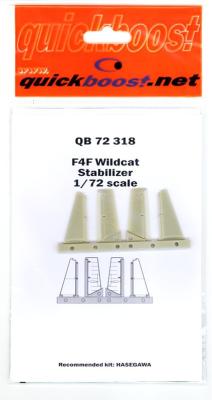
Quickboost.net just keeps adding to their great line of quality resin aircraft accessories. The latest addition is for the Hasegawa F4F Wildcat. It is up to their usual standards; molded in grayish cream colored resin, smooth, seamless and bubble free. One thing of note is that they are really easy to remove from the mold block with just a few passes from a hobby saw.
The stabilizers that come in the Hasegawa kit are okay and are molded as one piece but the Quickboost.net parts are molded as two pieces so that they can be modeled in the down position. The Quickboost stabilizers are superior and add just that much more realism to the finished kit. The resin parts are very easy to install and fit in place perfectly.
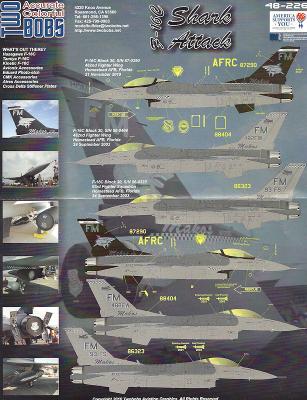
First let me start off by saying if you have never bought/used a set of TwoBobs decals, you are missing out! Twobobs Aviation Graphics are the makers of some of the best, and arguably most interesting, decals sets. They like to tackle the rarer paint schemes and the new Florida Makos set is no exception.
The set includes marking/choices for 4 aircraft of the 482nd Fighter Wing out of Homestead, Florida [otherwise known as the Florida Makos]. Not only do you get three standard aircraft, but they have also included the Commanding Officer’s plane. The set allows you to mark up two full aircraft, so you can easily do the CO plane and one other. The markings are beautifully done, with very little film around the edges, and bright colorful printing. The artwork features the signature Mako sharks in some of the best printing I’ve seen in decals. TwoBobs has also gone the extra mile to include weapons decals and alternate decals for the different F-16 kits available.
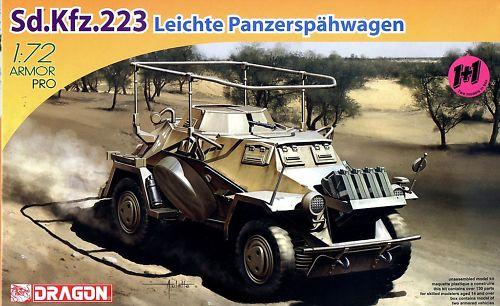
Dragon Models is fast becoming the standard for 1/72 armor. Recently I had the opportunity to review their new Sd.Kfz. 222 set for IPMS. That review can be found in the archives.
Dragon has now released a new set for the Sd.Kfz. 223. The set is very much like the 222, featuring a detailed chassis, separately molded hull doors, intricate detail, and PE grenade screens for the turret. The new 223 kit comes with two complete models [like the 222 kit] and features the large “bed frame” radio antenna. The 223 kit also features and accurately shaped hull with the turret mounted off-center to the rear of the vehicle. Unlike the 222, the 223 features the 7.92 MG42 in the turret, with a flat grenade screen. Both are nicely represented on the model.
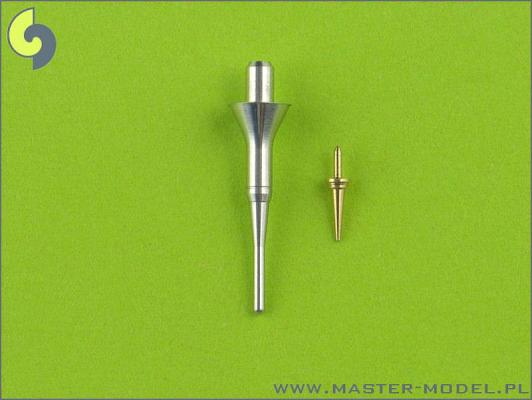
I don't know how many models I have snapped pitot tubes off of – dozens? They seem to always be in the way. Put them on early to make sure they fit and risk breaking them completely, or put them on late and they don't seem to blend in well.
One trend lately is for manufacturers and the aftermarket companies to make these fragile parts out of metal – either turned brass or aluminum. For this set, the pitot tube is aluminum and the AOA probe is brass. Both are exquisite in their detail when compared to the kit parts.
Once installed, they will resist breaking for a long period of time.
For those of us with growing collections or having moved several times, parts like this are a godsend as they prevent breaking.
The parts are accurate, well made, very reasonably priced, and a snap to use. Recommended with no reservations!
My thanks to IPMS/USA and the fine people at Master-Models.
Ah nostalgia... one of the big benefits of modeling is bringing back memories. Pegasus Hobbies new release of the ship and Martian from My Favorite Martian will certainly do that. For those of you who don't know the show, it ran between 1963 and 1966 for 107 episodes and chronicled the exploits of a crashed Martian anthropologist and the newspaper reporter who found him crashed. The showed starred Bill Bixby as the reporter and Ray Walston as Uncle Martin. Of course most people remember him as Mr. Hand from Fast Times at Ridgemont High and many other things. Bill Bixby played the Incredible Hulk way back when. Both were excellent actors and the show was very funny, at least to me.
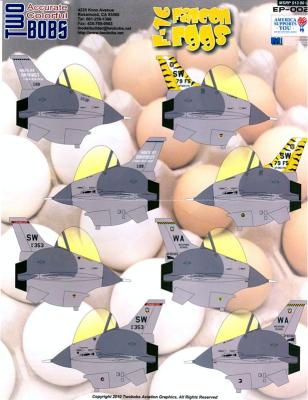
This is the third Hasegawa Egg Plane I’ve built, and Twobobs is certainly right in their decal description. Everyone probably has one of these in their stash, and finally someone has come out with interesting aftermarket markings for the Lawn Dart. They also describe the kit as whimsical (yep) and one to be built just for the fun of it, as no one has a good photo of the original aircraft.
I built the RNethAF F-16 for that review because I worked with them in Italy. So the markings I chose for this review were one of Aviano’s Falcons. This was probably not the most interesting choice, as there are so many good sets of markings on the sheet. The instruction sheet is 4 pages long, so here are half of them.
The kit is really simple, so after a quick paint job and a coat of Future, it’s ready to decal.
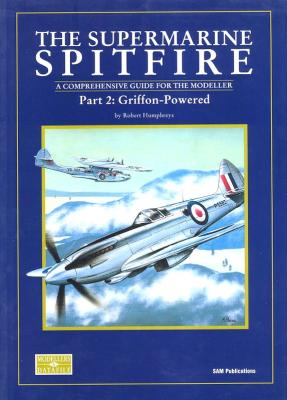
This book answered a question that has nagged me for many years, since Frog first came out with their Spitfire 14 kit back in 1968. Why would Supermarine want to go away from the fabulous Merlin engine and try something new? Well, this book answered that question early on. The answer is 1700 hp for the Griffon vs 1030 hp for the Merlin.
The contents are:
History
- Enter the Griffon
- Super Spitfire
- The Spitfire in Belgium
- High Flying Spy
- Last of the Spitfires
- The First Griffon Seafires
- The F Mk 21 at Sea
- Spiteful and Seafang, the Last of the Line Modeling
- Colour Side Views
- Colour Interior Artwork
- The Basics
- Understanding the Subject
- Detailing
- Building the Spitfire and Seafire
- Camouflage and Markings
Appendices
Also reviewed are:
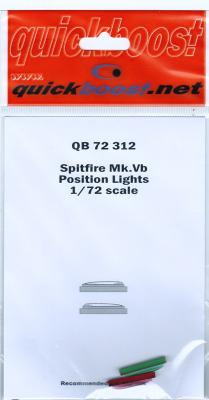
So, I had this 1/72 Tamiya Spitfire Mk.Vb sitting in the closet, and I was given the chance to review this new product from Quickboost for the Tamiya Spitfire Mk.Vb, so I decided, hey what could go wrong?
As an armor builder I wanted to review this kit partly as a challenge to see how well I could build a car. Mainly I wanted to review this kit because I love Ferrari’s. The kit is molded mostly in white, with a sprue of chrome parts and some rubber tires. The decals are nicely done, but a few items required an aftermarket set to enhance the model. At first glance the kit looks very nice except for a few minor details that are an easy fix.
The Ferrari 458 comes in several colors, and I found pictures on the internet of one I liked that is white with black rims and an all black interior.
You begin by building the engine, which is cool, except for the fact that the majority of this work is hidden by the engine bay and cover. I painted the engine even though on my curbside edition you really won’t see much detail once the body is on.
Eduard extends it Brassin range of excellent resin parts with a replacement exhaust for their Mig21MF and SMT kits. This resin and photoetch set is comprised of seven perfectly cast resin parts and one photoetch piece.
There are some minor casting blocks to remove which may take up to 3 minutes to get done. Detail is excellent on all the parts. There are two resin parts which are installed inside the actual exhaust. These fit together and one has a series of 10 arms that stick out from the center hub. This was very difficult to get loose without breaking the resin. In the end I did break three and have to replace with styrene scrap. This part then aligns on top of the other which takes a little patience.
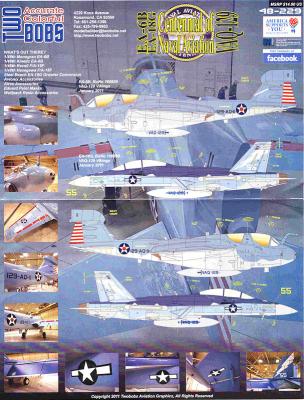
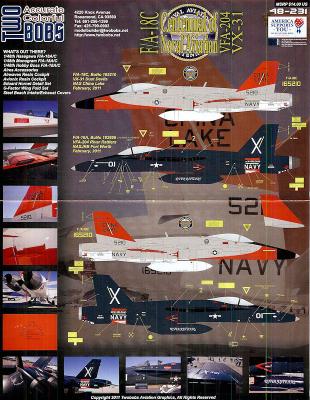
As almost everyone is aware, this year is the 100th anniversary of Naval Aviation. Bob Sanchez and TwoBobs have set out to give the modeler everything he would need to replicate all the retro schemes for all the planes that are in service this year. That would be five different sets of decals, a high rez CD of over 800 pictures, and a CONA sticker. You can get all of this in TwoBobs’ excellent platinum set for a 20% savings or, if one the schemes is your fancy you can get them individually for $14.00.
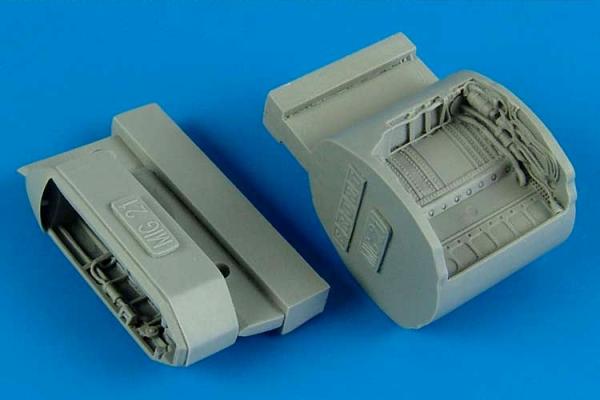
Hot on the heels of Eduard's excellent MiG-21 releases, Aires has produced a set of wheel wells for the kit. The set comprises two parts, the main wheel wells and the front wheel well. Parts are cast perfectly with only some small casting blocks to remove. The detail improvement is obvious in the pictures.
Installing the main well is simplicity itself. After removal of the casting block, the part slides into the space for the kit part and the fit is excellent. Some of the kit parts are added to finish it with only one cut needed.
Short History
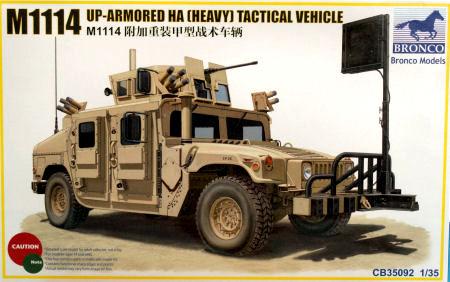
The HMMWV was designed primarily for personnel and light cargo transport behind front lines, not as a front line fighting vehicle. Like the previous Jeep, the basic HMMWV has no armor or protection against nuclear, biological, and chemical threats. Nevertheless, losses were relatively low in conventional operations, such as the Gulf War. Vehicles and crews suffered considerable damage and losses during the Battle of Mogadishu due to the nature of the urban engagement; however, the chassis survivability allowed the majority of those crews to return to safety, though the HMMWV was never designed to offer protection against intense small arms fire, much less machine guns and rocket-propelled grenades. However, with the rise of asymmetric warfare and low intensity conflicts, the HMMWV has been pressed into service in urban combat roles for which it was not originally intended.
- 73339 E-2C Interior S.A - $12.95 Eduard product page
- 72498 E-2C Undercarriage - $22.95 Eduard product page
Well on first look both Eduard kits look really good. One thing about these two detail sets is they give you great opportunities to really detail the 72ndscale Hasegawa Hawkeye. Kit 73 339 has 69 parts and 72 498 has 37 parts.
The Centennial celebration of Naval Aviation has brought about some really colorful modern aircraft, emanating their predecessors from the yellow wing days, and, in particular, the distinctive unit markings of World War Two aircraft. They have made for some truly one-of-a-kind aircraft, and Bob Sanchez has managed to capture them for we enthusiasts. Even if you don’t have the five separate decal sheets that go along with this CD, you will always have a superb reference on hand for F/A-18, and EA-6’s. On the CD label it says there are over 800 photos. I didn’t add up that many, but who cares? These are, however some of the crispest, clear photos that I have ever seen. They are also taken from some places that most of us will never be able to go and without thousands of people around. Now if we only had some cockpit shots, too.
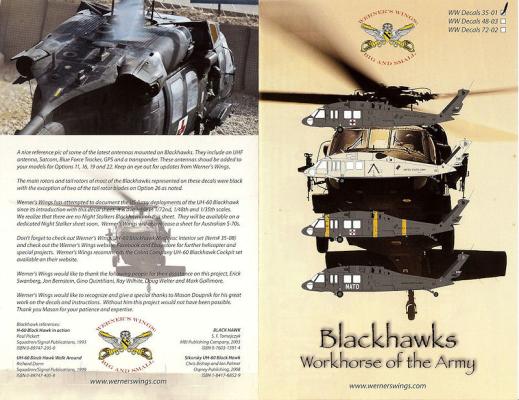
For nearly fifty years, the Bell UH-1 Iroquois was the workhorse of the Army, especially during the Vietnam War. It has also served in countless countries, in countless colors and configurations, doing everything imaginable. Now we have Sikorsky’s UH-60 Blackhawk taking over that role in even more configurations and colors worldwide, and performing even more varied missions.
The Centennial celebration of Naval Aviation has brought about some really colorful modern aircraft, emulating their predecessors from the yellow wing days, and, in particular, the distinctive unit markings of World War Two aircraft. They have made for some truly one-of-a-kind aircraft, and Bob Sanchez has managed to capture them for us enthusiasts. This particular sheet takes us back to the early days of aircraft experimentation and weaponry tests. When you first look at the colorful instruction sheet, you see a red, grey and white F/A-18C of VX-31 at China Lake. This aircraft hauls around a lot of weapons and weapon sensors under its wings, doing a lot of experiments. The second is an F/A-18A of VFA-204 out of NAS JRB New Orleans as it was painted during an air show tour at Ft. Worth in February, 2011. This one is Navy blue with orange ID bands. What a neat-looking airplane. When you unfold the sheet and look to see what’s inside, there’s the teaser.
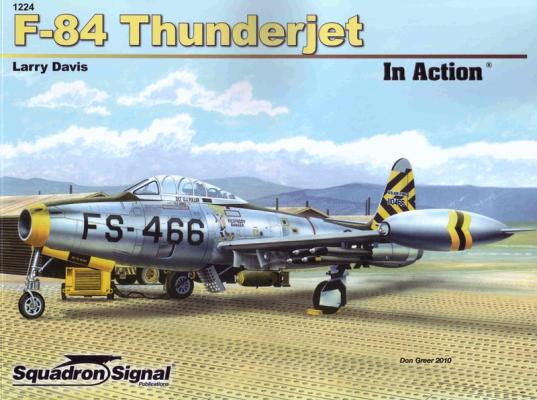
Let me begin by saying that this latest “In Action” series publication is (in my humble opinion) the finest to have gone to press to date. Further, I have had the pleasure of knowing Larry Davis for more than 40 years and I will not hesitate to tell him that this is his best effort yet.
A full 72 pages of black and white, color photos and profiles as well as line detail drawings make this one of the most desirable I’ve seen on the subject. Artwork for the cover is by Dan Greer and line drawings are by Matheu Spragains and are exceptionally well done.
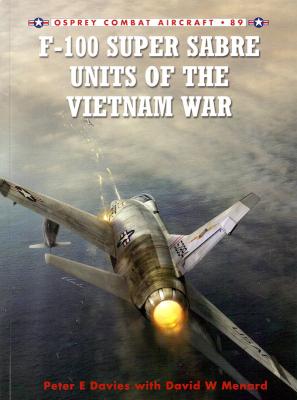
All new from Osprey comes number 89 in their Combat Aircraft Series, authored jointly by Peter E. Davies and well known “Hun” expert Dave Menard. As in the past, this book comes in soft cover with 96 pages, including a plethora of color photos, black and white shots and several pages that include 27 profiles in full color of a collection of F-100s. In all, very nicely presented.
The text begins with “Hun” development, goes on to describe the aircraft as a warhorse, and continues with mission identification. It also covers not only the Wild Weasel Huns but also the Misty FACs as well. I found this to be a most interesting read and a welcome addition to my aviation library. Many thanks to Sara Batkie for the review sample. For more information, contact her by phone at 718-433-4402 or email sara.batkie@ospreypublishing.com.
Recommendation – Most High
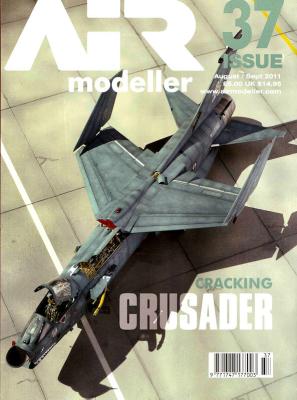
And yet another issue (Aug/Sept 2011) is here and, as it states at the top of their cover page, “Showcasing the very best in Scale Aircraft Modeling”. In my opinion, this is most likely the finest collection of some of the finest models built by some of the finest modelers…oh well, I’m sure you’re getting the picture by now.
This issues’ cover sports the Academy 1/72nd French Navy F-8 Crusader by Francois Regis-Binder, and to say that it’s spectacular just doesn’t get it! In addition to the article, there are several pages of 1:1 Crusader detail photos that will be a welcome addition to your research stash. Also in this issue are the following:
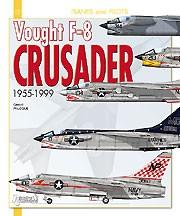
Format
This publication is offered in an 8” by 9 ½” size soft cover, with full color images on almost all pages, with a few black-and-white images interspersed. All of the images are of fine, clear quality. There are 84 pages in all, each filled with informational narrative or images of the Crusader. The text has been translated from French which has resulted In a few interesting misspellings.
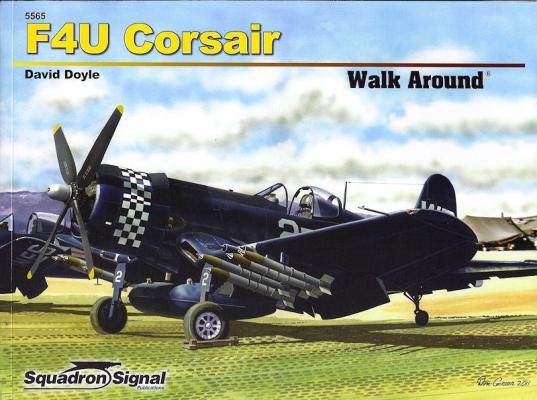
Since the F4U is one of many of my favorite World War II aircraft, I had to add this one to my collection. I recently purchased one of the latest publications that Squadron Signal did on the F4U Corsair, In Action series number SS1220. Both books complement each other extremely well. The Walk Around series number SS5565 of this aircraft isn’t disappointing in the least bit. It’s perfect for the modeler who wants to detail the Corsair to the utmost. It’s filled with color pictures of every nook and cranny that the photographer can see, eighty pages worth, and no black and white pictures. The only two quarter-page illustrations found are of the three canopy designs and two cowling designs that the Corsair went through.
This newly offered Special Product just goes to prove the age old adage “you can never have too much information”.
This 30 page monograph clearly shows the reader everything they ever wanted to know about these weapons and I must admit, it was a most interesting read. It comes in an 8.5x11 format with a stiff cover and contains a plethora of detail information in the form of black and white line drawings and text on several of these weapons.
It is well done and worth having if you have an interest in the subject. You might wish to take advantage of the member price and join IPMS/Canada when you order. Also, please check out the other Special Products on their website. Many thanks to Randy Lutz for the review sample.
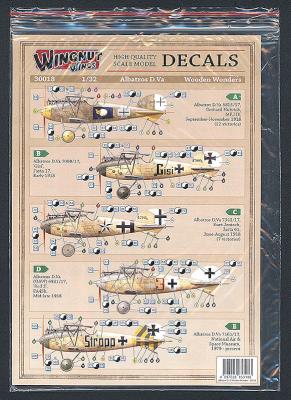
Wingnut Wings has released yet another decal set with multiple marking options for their Albatros D.Va kit. Oh…so many Albatros schemes…so little time!
There are two sheets in this set. These decals, like all of the others from Wingnut Wings, are packaged in zip-lock sleeves along with a comprehensive full-color 4-page instruction booklet that includes application instructions, aircraft profiles, top and bottom wing plan views, historical information, and a number of period photos of each of the aircraft covered by the decal sheets. This set exhibits the same high level of quality as all of the other products marketed by Wingnut Wings.
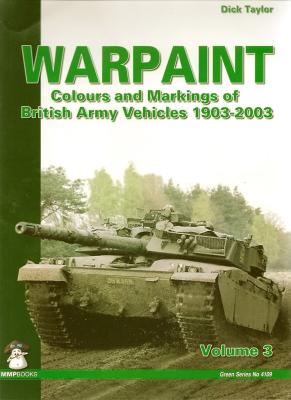
This is the third of four volumes of perhaps the most exhaustive and comprehensive study of British amour color and markings of the 20thCentury ever published. It’s been researched and compiled by Dick Taylor, a serving British officer who knows his subject up close and personal, who is also a modeler of the highest standing on the other side of the pond (the Atlantic). This volume is heavily illustrated with drawings of insignia, color side views and photos throughout. The three major sections are:
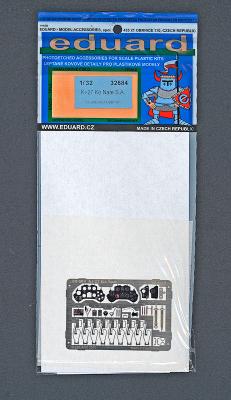
Eduard offers modelers a single fret photo etch detail set for the Special Hobby 1/32 Ki-27 kit. Set #32 864 provides parts for adding detail to the engine and the cockpit. The set includes a total of 42 pre-painted parts either to add something not in the kit, to replace some kit parts, and/or to enhance the ones that will be used. This set features Eduard’s self-adhesive backing to make installation easier.
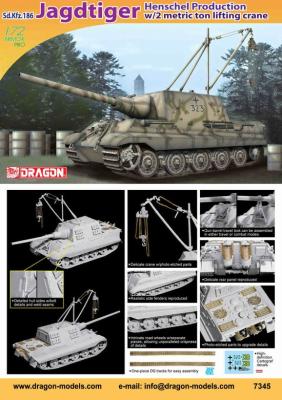
The actual box art image does not do the kit justice - it is a great little diorama accessory. There are 186 plastic parts, 54 of which are extra. There are also 25 photo-etched parts and two vinyl tracks. I’ve built 6 or 8 of these little Dragon 1/72nd armored kits and have accumulated a massive spare parts box.
I’ve built one of these Jagdpanzer VI’s before, though without the crane, and basic construction is very simple. The suspension (Picture 1) goes together in about 15 minutes, and another 10 can be spent on adding the parts for the rear armor plate. I added everything to it prior to painting. I found the photo-etched shields difficult to bend in this scale, and not a good fit. They are optional depending upon the vehicle you wish to depict, and although I got them to go on, I left them off the final product.
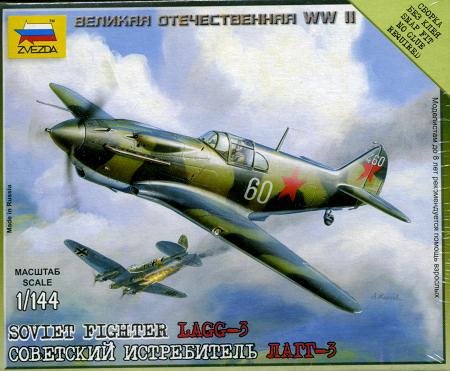
The Lavochkin-Gorbunov-Gudkov LAGG-3 was an important fighter aircraft for the Soviet Air Force at the time of the German "Barbarossa" invasion in 1941, and a technological parallel to the British Hawker Hurricane, French Dewoitine D.520, and the American Curtiss P-40 Tomahawk of the time. With a mostly wooden construction and a relatively powerful engine and adequate firepower, it held the line while giving the Russians time to develop more advanced combat machines to fight the Luftwaffe.
This model kit is part of Zvezda's "Art of Tactic" wargame model series, which also includes ground vehicles and figures as game pieces. In that role, this kit is engineered more for ease of assembly and sturdiness than surface detail, although it does quite well in that regard for the size and scale.
The Author
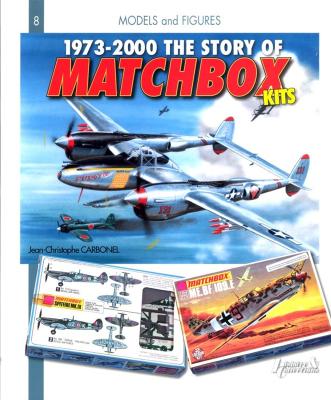
This book is the English translation from the French by Jennifer Meyniel and the author. I have to say that it is a very good translation, as the text is very readable. I finished this book in one evening, during the commercial breaks in a couple of favorite Tuesday evening TV shows.
Mr. Carbonel has taken the time and trouble to track down many of the players in the Matchbox plastic model division, done interviews and has done pretty extensive research on this subject. I had never heard of him, but apparently he is a respected author and aviation authority in France.
The Book
There are four sections:
- 1973 – The Range
- The AMT-Matchbox Era
- The Twilight Period
- Under German Control
Each section is divided into chapters covering one year, although some years are skipped late in the book, as not much happened after 1997.
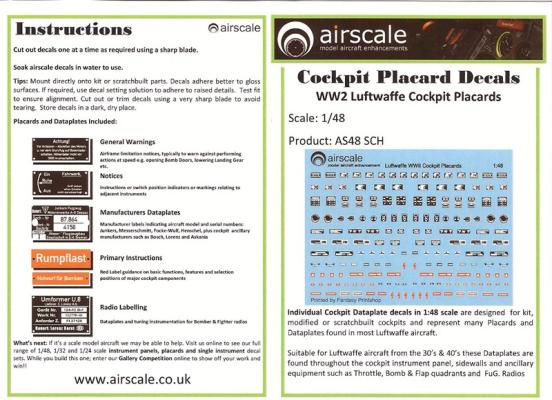
The latest release from Airscale is a sheet of decals to replicate 1/48thscale Luftwaffe cockpit placards. The cockpit placards are on a single sheet of film. These are typical of the rest of Airscale’s releases. High quality decals printed by Fantasy Workshop.
Included on this set are General Warnings, Notices, Manufacturers Data Plates, Primary Instructions and Radio Labeling. You get plenty of placards to do numerous aircraft. If there was a downside, it is that there aren’t any instructions as to where these placards go. A little bit of research will take care of that though.
These decals are the same as any other water slide decals. This will be a nice addition to your model. I know I can’t paint this detail.
Highly recommended
You can obtain yours by contacting them at www.airscale.co.uk. Let them know IPMS/USA sent you.
Thanks to Airscale and IPMS/USA for the review copy.
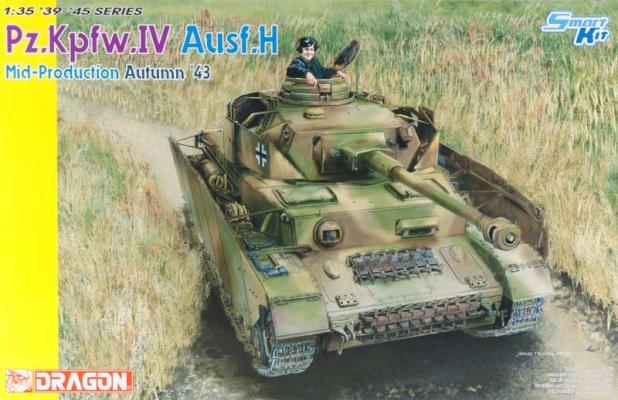
OK, what does an airplane guy know about tanks? Well, let’s see – they make great targets and make a mess of a training area. Truth be told, I did win a trophy at the Nats for a tank. Surprised? So was I. As an airplane guy I always wanted to build some tanks, in particular German tanks, but for the longest time it was the zimmerit that prevented me from buying them. Then it was all the aftermarket stuff to make the kit “correct.” Thankfully, Dragon has started retooling their kits to make them more accurate, and they contain aftermarket stuff right in the box. On top of that, they priced their new kits, with all the aftermarket, at the same price as their previous releases. Then they added zimmerit on the appropriate kits. I couldn’t think of any more reasons to not buy these kits. Of the last 20 kits I’ve bought, no less than 12 have been Dragon tanks. I feel so dirty.
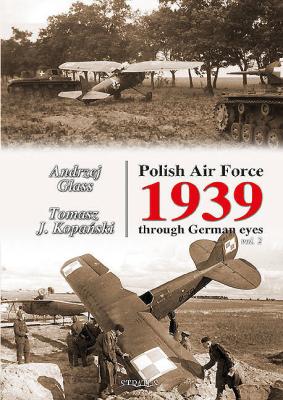
This is the second volume that deals with the Polish Air Force after the German invasion in 1939. Pictures of Polish aircraft are very rare, especially before the pre-war period. This was a security protocol implemented by the Polish government. Because of the success of this protocol, there are very few photos of the aircraft used by the Polish Air Force. The conquering Germans are therefore the best reference for the airplanes. Needless to say, most of these pictures are previously unpublished.
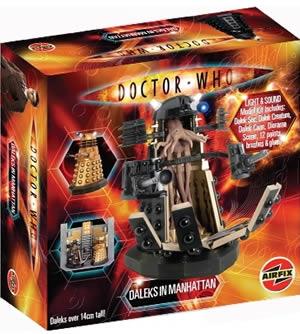
When this model set became available in the Reviewer Corps back in March 2009, I got all excited, and I thought I had reason to be. This seemed to be a project made for me, as a long time ago I was a Doctor Who fan and knew the Daleks probably better than your average IPMS/USA dude. But now, I look back at this project and wish I had never taken it. Frankly, I was going to get cute and throw in all sorts of in-jokes and trivia in this review, sort of like I did with the Lamborghini Jota review I did a few years back. This kit does NOT deserve it.
Nor does it deserve a "slam job".
First, let me thank Squadron Products for these review samples an IPMS/USA for allowing me to review them.
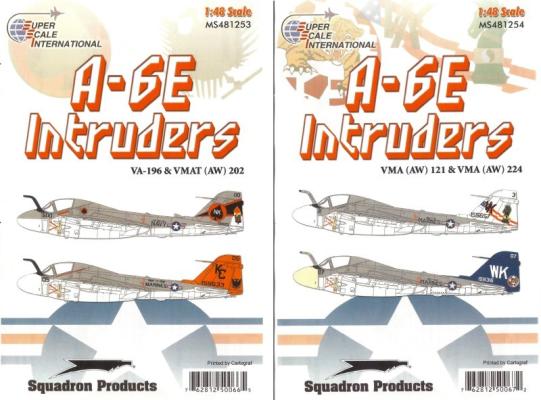
The recommended model for these two sets of decals is the Revell 1/48 A-6E Intruder. Revell first released their A-6E 23 years ago in 1988 (kit # 4578). They have re-released it in 2011 (kit # 85-5626). The new kit includes decals for VA-85, the Black Falcons on the U.S.S. Forrestal and VA-35, the Panthers on the U.S.S. Nimitz. The old kit contained decals for VA-196, CAG, on the USS Coral Sea and VA-85 on the USS Saratoga.
Squadron Products has issued two new decal sheets for this old, but popular war bird. Decal set MS481254 contains markings and tail art for Marine squadrons VMA-121 and VMA-224. Decal set MS481253 contains markings and tail art for VA-196 and VMAT-202. You may have noticed a repeat, VA-196, with the old Revell kit. The decals for VA-196 were added after the release of the movie, Flight of the Intruder in 1991.
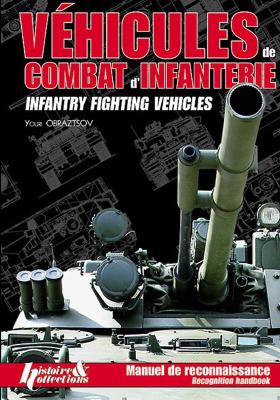
With a title like this and John writing that the text was in French, I assumed this book was going to be all about French Infantry Fighting Vehicles. Yep, I was wrong! As I started thumbing through the book and scanning over the included vehicles, I realized that this was a nice collection book about Infantry Fighting Vehicles all over the world. This is very neat “recognition handbook”. A slight word of warning….This is not a definitive collection of infantry Fighting vehicles by any means. Though a great book, it needs to be more defined by the title.
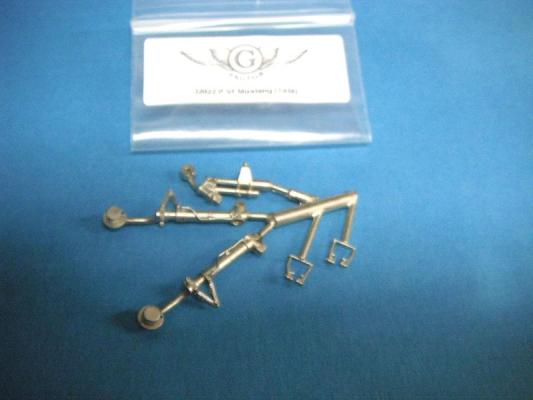
While meandering through the vendors rooms at the Omaha Nationals, I bumped into Ernie Gee while visiting with Gordon Kwan of Sprue Brothers. For those of you who don’t know, I consider Ernie to be the living GrandMaster of lost brass castings such as landing gear, boat propellers, and a multitude of other stuff. He handed these to me and asked if I might review them. Well…here is the review. EXQUISITE! There really isn’t much more to say about the absolutely beautiful work this guy does. (The last Fisher kit I reviewed, the RB-51 Red Baron Racer, had Ernie’s landing gear included, as does the F7U Cutlass I’m currently knee deep into). There can’t be enough good said about the quality of these products. If you haven’t tried any G Factor products, it’s past time. These can be ordered in the U.S. at https://spruebrothers.com and in the United Kingdom at https://www.hannants.co.uk.
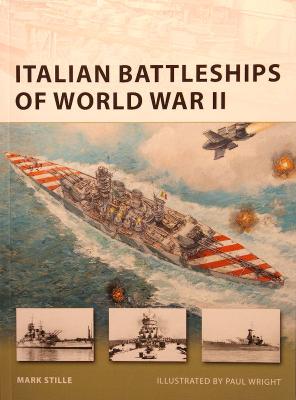
Mark Stille is a retired Commander of the US Navy and has written a succession of books for Osprey Publishing on naval topics. He continues as an intelligence analyst at the Pentagon. New Vanguard 182 covers Italian battleships of World War Two, an obscure topic. Like other Osprey books, an in-depth treatment is not given, but an excellent synopsis of design, characteristics and history of each ship is presented.
Introduction
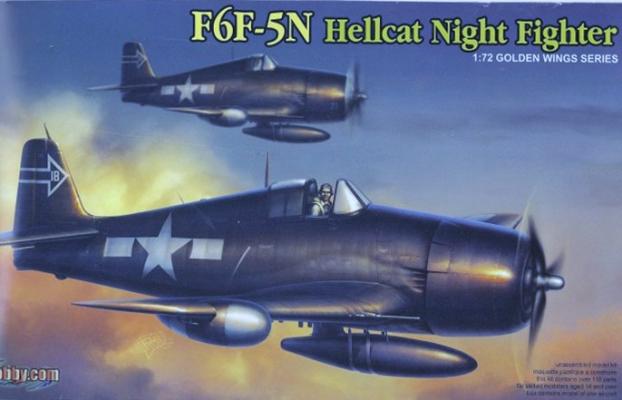
The Grumman F6F Hellcat series was one of the most important U.S. Navy carrier fighters of World War II, with the first F6F-3 production models appearing in late 1942. Powered by a P.W. R-2800-10 radial engine of 2000 hp., the fighter was powerful, heavily armed with six .50 cal. machine guns, well protected with armor and self-sealing fuel tanks, and fast, 335 mph. at sea level and 376 mph. at 17,300 ft. Although it could be out-turned by the Zero, its main adversary, it held virtually every other advantage, especially since by the time the Hellcat came into service in 1943, many of the highly experienced Japanese pilots had been lost in combat, and their replacements were poorly trained compared to the American pilots, who entered combat with roughly four times the flying time of their Japanese counterparts.
“Speed is Armor”
Beechcraft has built many multi-engined airplanes over its long and successful history, but when anybody in aviation mentions a "Twin Beech", they don't mean a Baron, a Duke, or even a Super King Air – they mean a Model 18. Designed at the end of the 1930s as a competitor to Lockheed's Electra 10, it soon eclipsed that type in production with demand for light transports and aircrew trainers during WW2 (with Lockheed busy with building P-38 Lightning fighters, Hudson bombers, and bigger transport planes, Beech was in the perfect position for the business!). Thousands built, they served second-line military roles all over the world with all the Allied nations, and Beech kept the type in production afterwards for the growth of postwar air travel. Many are still in flying condition today and they are often seen at warbird airshows.
Moebius Models continues their run of hits with the brand-spanking new Elvira, Mistress of the Dark. For those of you not around for the last 20 years, Elvira is a character played by Cassandra Peterson who is a valley girl-talking, smart-mouthed movie host for those awful yet loveable horror movies. I love her style and panache and when the kit came out, who could not want to review it?
The kit was sculpted by Adam Dougherty. Actually, kit is an understatement, as it is a complete diorama. The kit consists of over 60 parts, including a carpet (with the carpet monster peaking out from underneath the corner), a full sofa, Elvira herself, and her dog Gonk, along with a rat, skull, and skeletal hand. I built the kit in parts and will cover the review the same way.
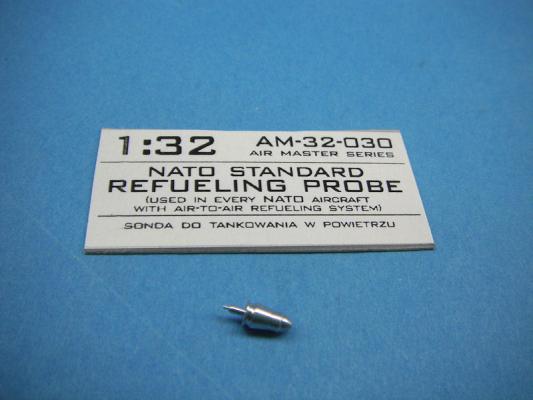
Master Models continues its excellent string of releases in all scales with turned aluminum refueling probes in 1/32 and 1/48 scale. The parts are perfectly made and, like many Master Model parts, simple to use. You build the refueling probe, paint as required, and the cut the tip off. Drill a hole for the part and glue it on and it leaves you with a perfect part with a realistic metal finish because it is metal.
Items are:
- 1/32 32030 $4.95
- 1/48 48033 4.95
Highly recommended to add a perfect finishing touch to any kit using a NATO refueling probe. My thanks to Master Models and IPMS/USA for the chance to review these excellent parts.
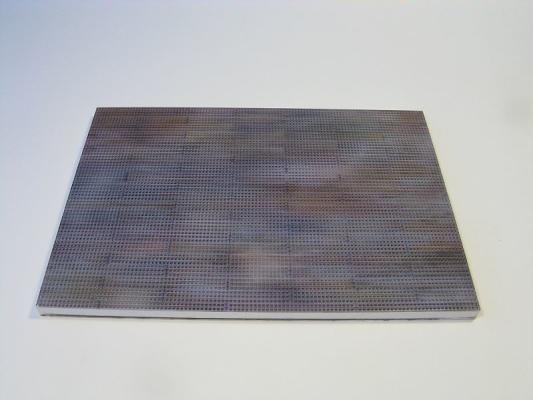
Eduard is planning to release a pre-painted injected plastic PSP base. The base has a copyright of 1999 in the back, so I think it is the “old” PSP base which now gets a pre-painted treatment.
What about the pre-painting? It is great. Deep browns and grey shades, with a touch of lighter spots and rusty shades. This is not just pre-painted, it is weathered, too!! Now, be aware that the sides of the base are left in bare plastic (white). You might want to consider painting the sides to match the colors of the top and maybe to apply a wash to the overall base to bring out detail.
What is the quality and detail of the plastic? It is outstanding as we became used from Eduard. No flash or molding flaws. Clean and crisp details. The dimensions are 164 mm x 234 mm. It will fit a P-51 just fine, but it might be a bit tight for a P-47, as it is shown in the pictures.
I would like to thank Osprey Publishing for submitting this book and thank IPMS/USA for allowing me to review it.
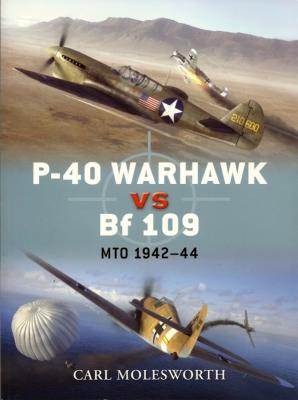
When we hear the name P-40 we almost invariably think of the shark mouth P-40s of The Flying Tigers doing battle with Japanese Nates and Zeroes over Southeast Asia. Nevertheless, the P-40s also spent considerable time in the air over North Africa and the Mediterranean area engaging the Luftwaffe’s Bf 109. It is the latter struggle that author Carl Molesworth captures in his book P-40 Warhawk vs Bf 109, MTO 1942-44.
Background
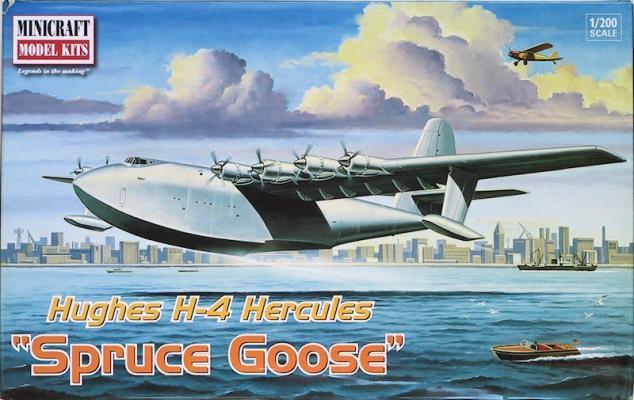
I'll not spend much time here. Google for "Jane Russell", when you're done reading that, click any link to "Howard Hughes", and when done with that click the link to the "Hughes H-4 Hercules" to find out all you need to know about this aircraft.
I will add that SWMBO and I had a trip planned that would allow her to go to a big quilt show in Sisters, OR, and allow me to stop off in McMinnville and see the 'Spruce Goose' -- it didn't happen but is still in the back of our minds. Unfortunately, we'll never hear the sound of 8 R-4360's cranking over and running -- that's 224 cylinders generating 28,000 h.p. …. and 448 spark plugs to change ….
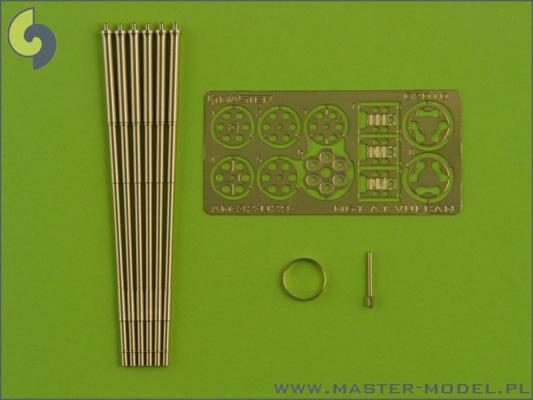
Master Models has created a superb replacement for the venerable M61 Vulcan cannon found in so many planes. The set consists of 6 perfectly turned brass barrels with hollowed out ends, a machined brass ring a machined center barrel and a set of photetched pieces to bring it all together.