all 2013

Book Author(s)
Waldemar Goralski & Miroslaw Skwiot
Review Author
Luke R. Bucci, PhD
Published on
Company
Kagero Publishing
MSRP
$22.95

Bottom Line

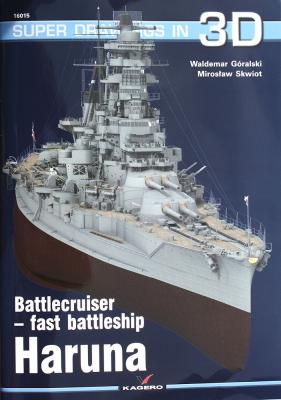
An ultimate and highly detailed modeler’s guide to building IJN Haruna in late 1944 fit. Targeted to 1/350 scale, but suitable for all other scales.

Kagero has produced over a dozen books on WW2 warships that use computer graphics in 3D to provide superb detail. This latest book on the Imperial Japanese Navy (IJN) battlecruiser/fast battleship Haruna is once again an ultimate resource for knowing what the ship looked like in late 1944. Other time periods are not depicted. This book is an ideal companion to 1/350 kits of the Haruna (Fujimi), but is also an ultimate guide to other scales.
Review Author
J.R. Sharp
Published on
Company
MiniArt
Scale
1/72
MSRP
$72.00

The Kit

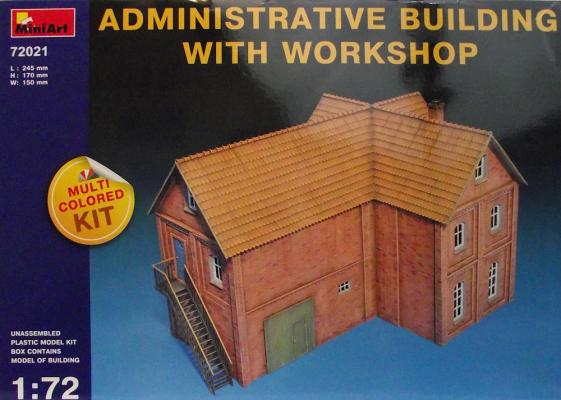
This kit is pretty similar to my last review of the MiniArt buildings; most of the parts are the same injection molded plastics. However, the parts in this kit are molded in brick red, black, white, blaze orange, and gray. All parts are mostly free of flash, with the small exception of a minor piece of flash next to every one of the connecting blocks, which, if left untrimmed, will skew the walls during assembly. I approached this one with some trepidation, as it is much larger (233 parts). However, in the end it was not nearly as bad as I thought it would be.

Book Author(s)
Adrian K. Wood
Review Author
Perry Downen
Published on
Company
Osprey Publishing
MSRP
$17.95

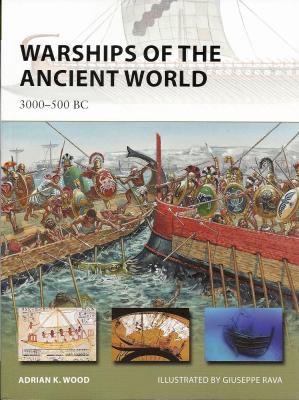
First off, I’d like to thank Osprey Publishing for offering this book up for review and to IPMS/USA for allowing me to do the review.

Many, many books have been written about the great warships of the two World Wars. The library shelves are full of stories about the great sailing ships as they traded and fought their way across the world’s oceans. However, not much has been written about the warships of the ancient world. That's simply because there's not much remaining in the way of artifacts to tell the story and very little remains of the written word of those times.

Adrian K. Wood, in his newly released book Warships of the Ancient World, tries to shed some light on this subject. He acknowledges the scarcity of verifiable resources and the confusion caused by sources that are thousands of years old. However, using what’s available, he makes an excellent case for the information he presents in his book.

Book Author(s)
Stanislaw Jablonski & Jacek Pasieczny
Review Author
Roger Rasor
Published on
Company
Kagero Publishing
MSRP
$16.95

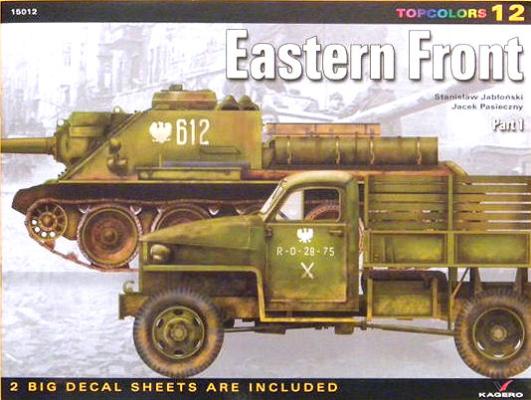
Model builders of military vehicles and aircraft have come to rely on Kagero Publications for well-researched reference books. Their Topcolors series provides builders with a pairing of detailed color profiles of specific military vehicles or aircraft in a softcover book packaged with decals needed to reproduce the subjects covered within the publication. Topcolors 12 Eastern Front (Part 1) focuses on the camouflage and markings of (drum roll please…) forty-four different military vehicles that the Polish People’s Army used on the Eastern Front from 1943 to 1945. This 26-page all color book is presented in a larger (landscape) format than most previous Topcolors books and, because of the number of subjects that are covered, it comes with a clear sleeve containing two large-size decal sheets.

Review Author
Tracy Palmer
Published on
Company
Eduard
Scale
1/48
MSRP
$24.95

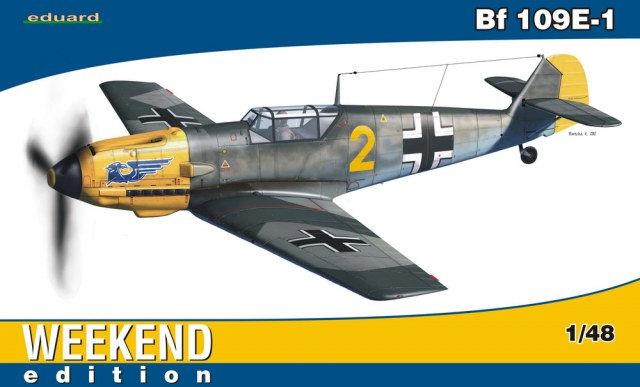
This aircraft need little introduction, being one of the two major fighters of the German air force in World War 2. The Bf-109E-1 was the first of the Emil versions and lead to the F through K versions. The Emil was also the basis for the ill-fated carrier fighter for the Graf Zeppelin.

Review Author
Greg Wise
Published on
Company
Hobby Boss
Scale
1/35
MSRP
$46.99

History Brief

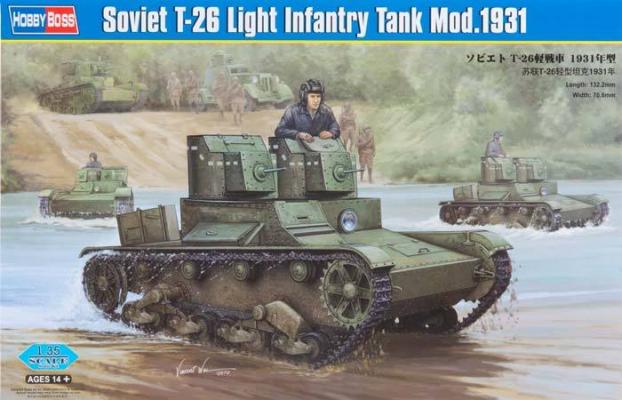
The T-26 tank was a Soviet light infantry tank, and was a development of the British Vickers 6-ton tank. Many consider it to be one of the most successful tank designs of the 1930’s. With more than 11,000 made, it was the most produced tank of its period.

The T-26 Served in many conflicts of the 1930’s and was used during World War 2. The tank served with the armies of Turkey, China, and Spain. In addition, the Finnish, German, Romanian, and Hungarian armies used captured T-26s.

Book Author(s)
David R. Higgins
Review Author
Howie Belkin
Published on
Company
Osprey Publishing
MSRP
$18.95

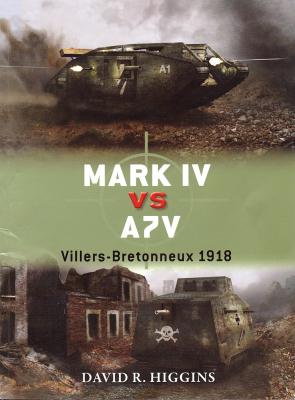
This volume of the Osprey Duel series follows the series format, comparing two combatant tanks against each other, and in this case focusing on the occasion of the first tank vs. tank battle in history that occurred on April 24, 1918. True to the format, rather than simply describe that historic battle, the author describes and compares both vehicles and the events that both led up to and followed the battle. In drawing perspective, Mr. Higgins reminds us that the Industrial Revolution had already altered warfare into an unimagined horror only writers of a new, ever popular genre, Science Fiction, dared dream. The Gatling gun already had decades of warfare by the time the Great War began in 1914, and had become obsolete then by the improvements of several other manufacturers including Maxim, Vickers, and Lewis. Machine guns turned the war into a grinding stalemate of attrition that baffled commanders on both sides.

Review Author
Ron Bell
Published on
Company
Master Model
Scale
1/700
MSRP
$4.50
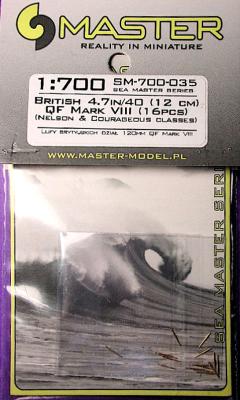
  • 16" - SM-700-033, $7.00 (9 barrels)
  • 6" - SM-700-034, $5.00 (12 barrels)
  • 4.7" - SM-700-035, $4.50 (16 barrels)

Master Models is a company in Poland that must employ elves, incredibly small tool and die makers, and/or people with exceptional eyesight. They make replacement gun barrels for aircraft and ship models out of brass, and some of these are incredibly small and all are exquisitely detailed. The subjects of this review were selected because they would enable a modeler to replace all the main weapon gun barrels on either a 1/700 HMS Nelson or Rodney. The 16" were only used on these ships, but the 6" and 4.7" could also be used on other Royal Navy ships with these weapons. For example, since 16 4.7" barrels come in a packet, you could replace all the main guns on up to 4 destroyers, depending on the class of the ships. Let me be clear, each caliber barrel packet is a separate item and is priced as such.

Review Author
Floyd S. Werner Jr.
Published on
Company
Zvezda
Scale
1/48
MSRP
$31.00

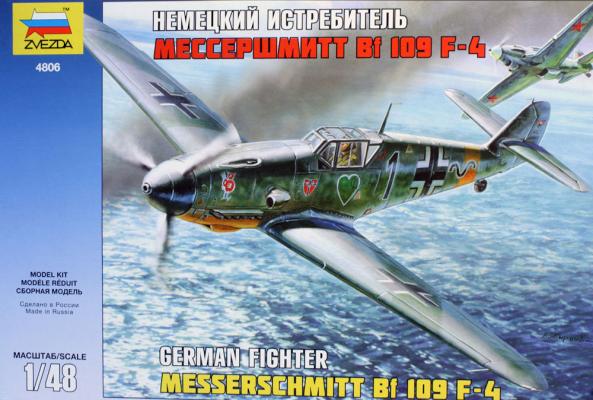
The arrival of the Zvezda Bf-109F-4 has been highly anticipated by this modeler. Having built the Bf-109F-2, I was excited about the possibilities. Packaged in an extremely sturdy cardboard locking-lid box, the kit features a beautiful painting of a JG54 aircraft in combat. This is just an exciting beginning to the model.

Inside the cardboard box, you are treated to three large light grey sprues, two smaller light grey ones, and a sprue of clear parts. There are over 200 parts and they are beautifully rendered, although my lower wings were slightly warped. This would be no big deal, as the upper wings would take care of the warp. The detail is gorgeous and perfectly rendered with no flash anywhere. You get parts for the F-4 and F-4/Trop. A relatively complete engine is included, and you’ll have to use most of it regardless if you have the engine cowlings open or not.

Book Author(s)
Lou Drendel
Review Author
Bart Cusumano
Published on
Company
Squadron Signal Publications
MSRP
$18.95

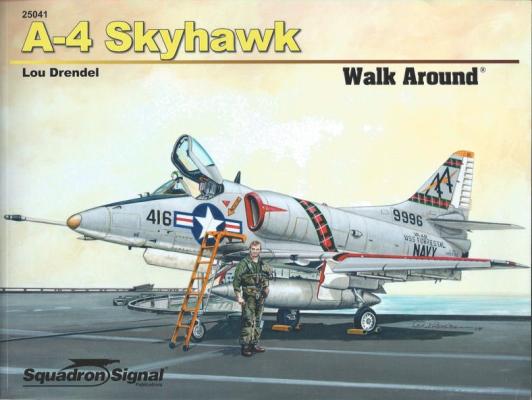
Squadron Signal’s latest Walk Around title deals with the Douglas A-4 Skyhawk. The book is presented in its typical 80-page softcover landscape format. You can also get the book in hardcover format for an additional $10. It is chock full of clear and well presented color and black & white photos which provide not only overall long-shots, but the typical Walk Around up-close detail shots. All photos are accompanied by descriptive captions, although I did find an error to the caption of a photo on page 58 which describes the photo as a Marine loading an Mk-82 Snakeye, when in fact, he is loading ammo for the 20mm gun. Otherwise, all seems in order.

Review Author
Brian R. Baker
Published on
Company
Aoshima
Scale
1/72
MSRP
$24.00

History

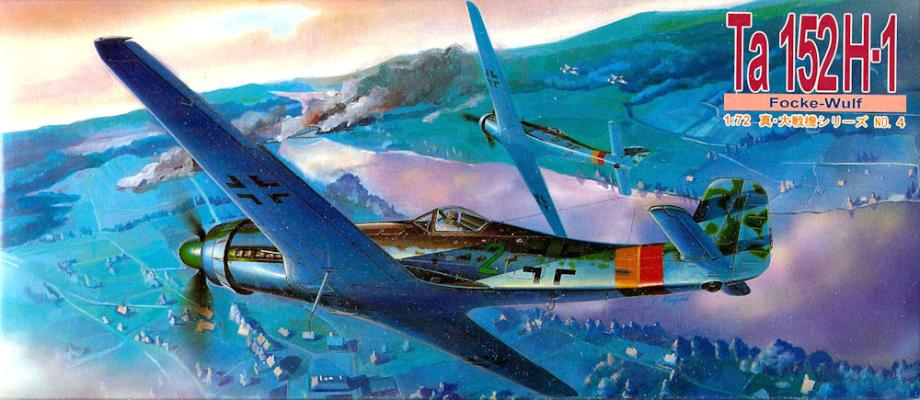
The Focke Wulf Ta-152H series was the ultimate development of the FW-190 design, and appeared in small numbers right at the close of World War II in Europe. Most of our readers are probably familiar with the history of the type, so I won’t go into many details. Needless to say, the Ta-152H series, which was powered by a Junkers Jumo 213E-1 engine of over 1,700 hp., was as good as any of the piston engine fighters that were operational at the end of the war.

Book Author(s)
Maciej Goralczyk & Akadiusz Wrobel
Review Author
Brian R. Baker
Published on
Company
Kagero Publishing
MSRP
$17.00

History

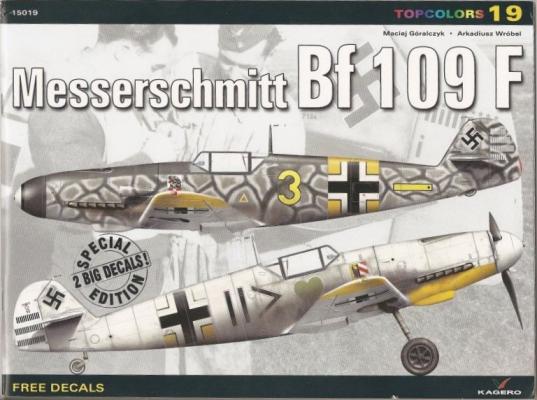
This paperback provides specific information on 16 different Messerschmitt Bf-109F’s, mainly those operating on the Russian Front, including views from either side, a top view, and drawings of the undersurfaces of the wings. A short account describing the airplane, its pilot, and any other particulars that might be of interest to modelers is also provided, in both English and Polish.

Decals

There are two decal sheets providing markings for the aircraft in 1/32, 1/48, and 1/72 scales. These are produced by Cartograf and so are of the highest quality. The finish is glossy, so the use of some Dullcote is probably in order. In addition, these sheets have individual markings only, but no maintenance markings, crosses, or tail swastikas, so these will have to be obtained from other decal sheets. Fortunately, these types of decals are readily available from many sources, so you can use these sheets to do all 16 aircraft if you like.

Review Author
Roger Rasor
Published on
Company
Kagero Publishing
MSRP
$15.99

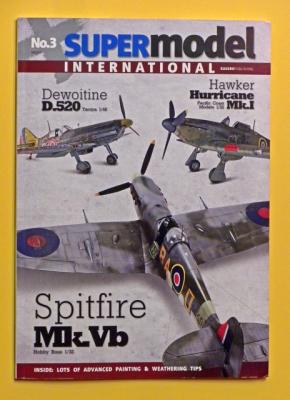
Model builders who have plans to build Tamiya’s 1/48 Dewoitine D.520, Pacific Coast Models’ 1/32 Hawker Hurricane Mk.1 or Hobby Boss’ 1/32 Spitfire Mk. Vb should obtain a copy of Kagero’s SUPER MODEL INTERNATIONAL, No.3. before they remove many parts from the sprues. That’s because number 3 in this series devotes the whole issue to building and finishing these three models. Expert model builders Tomasz Chacewicz, Michał Rosiak and Tomek Wajnkaim combine their rather impressive skills to show what can be achieved with these three kits.

The 80 pages (including cover) of this all-color issue are divided into three sections in which each of these builders share how they created their respective masterpieces from these three kits in a modicum of text and a lot of photos…each one a high quality image that adds much to the value of each builder’s instructive chapter.

Review Author
Keith Gervasi
Published on
Company
Eduard
Scale
1/48
MSRP
$24.95

What’s Inside

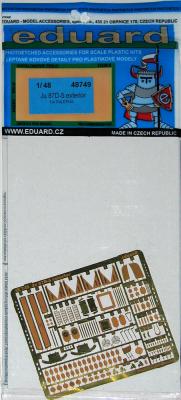
You get 1 large fret and a 5-page instruction sheet. The instructions take you in order from the front of the aircraft to the back. Starting with the oil cooler intake, supercharger intake, bomb rack fittings and, if you use it, the flame dampener. Next up are the underwing radiators, and there is some minor surgery required. Be careful not to take too much off, but also make sure you take enough off or the pieces will not fit right (It really is a fine line and one that I crossed on one section). There are 5 pieces for the forward part and 3 for the rear and it is VERY delicate. Of the 8 folds I had to make, 6 of them broke off. I recommend that the screens be placed on before adding the flaps. Trust me, it will be easier.

Review Author
Keith Gervasi
Published on
Company
Eduard
Scale
1/48
MSRP
$24.95

What’s Inside

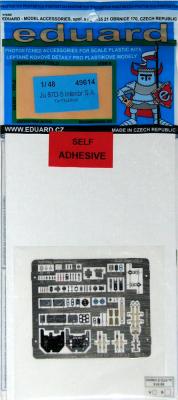
The interior set is comprised of 2 PE frets (one is pre-painted and has some self-adhesive parts), a small clear film, and a 5-page instruction sheet. There are just over 80 pieces to this set, and it is pretty nice if I say so myself! The instructions are broken down into manageable sections, starting with the cockpit floor. The radio operator’s seat support is replaced, along with the rudder pedals. They also give you the observation window between the rudder pedals (not sure why Italeri didn’t have this). Next are the side walls of the cockpit with 28 pieces. There is not a lot of cutting so far, which was nice, but, you should sand some of the raised detail off to help the self-adhesive parts stick better (notably the fuse panel and trim wheels). Not having used an Eduard set in a while, I was surprised there was no throttle quadrant, just some very small tabs to put on the levers.

Review Author
Brian R. Baker
Published on
Company
Hasegawa
Scale
1/72
MSRP
$45.00

History

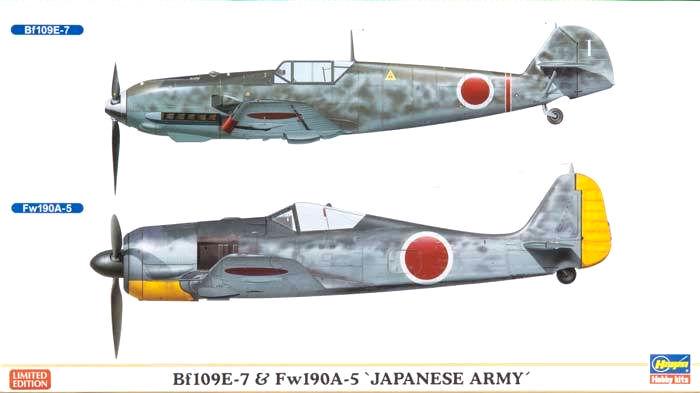
There was considerable industrial collaboration between Germany and Japan before and during World War II, and the fact that the Germans were able to send complete aircraft to Japan after Pearl Harbor was surprising, especially since they almost had to be sent by submarine. During 1941, the Japanese Army received 5 Bf-109E-7’s, and these were thoroughly tested by the Army, who did not select the type for production, but they did use the DB-601 engine in its Kawasaki Ki-61 “Hein” (Tony) fighter of 1942. These aircraft were delivered in standard Luftwaffe camouflage, were marked with standard Japanese Hinomarus, and lacked at least wing armament and pilot armor. From available photos, it is not possible to tell whether the aircraft retained their fuselage-mounted machine guns. However, the spinners were the type which equipped engine-mounted cannon-armed fighters, so the question of cowl machine guns is not possible to determine.

Review Author
Dave Koukol
Published on
Company
Wingnut Wings, Ltd
Scale
1/32
MSRP
$79.99

Background

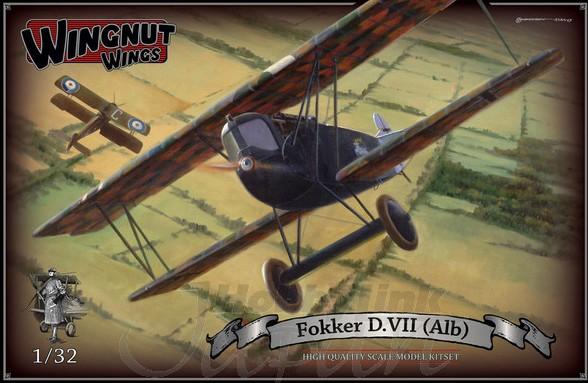
Arguably Germany’s premier fighter of World War I, the Fokker D.VII quickly won acceptance by its adoptive aircrews as it began to enter service in the summer of 1918. A well-balanced and stable gun platform with exceptional maneuverability and reliability, the D.VII demonstrated significant performance improvement over prior German types, including its famed older brother, the Fokker Dr.1 triplane.

In order to meet wartime demand, Fokker licensed production of the D.VII to Albatross. Albatross cranked out the D.VII at its Johannisthal (Alb) and Schneidemühl Ostdeutsche Albatros Werke (OAW) facilities. Multiple models were manufactured, incorporating running changes and three distinct powerplants – two of Mercedes origin and one from BMW.

By war’s end 2,800 D.VII’s had rolled off of the production lines.

Review Author
Pablo Bauleo
Published on
Company
Meng Model
Scale
1/48
MSRP
$89.95

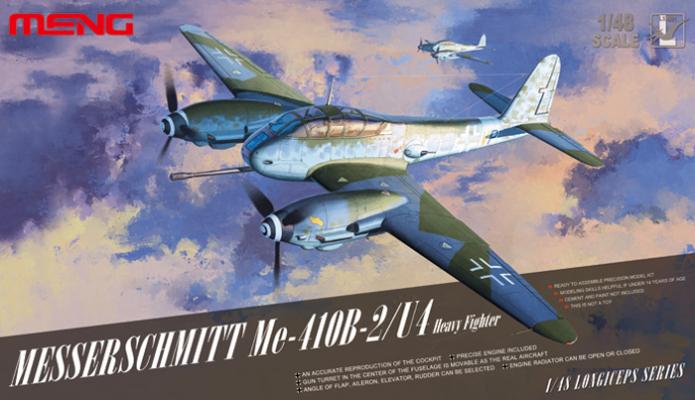
The Messerschmitt Me-410 was a German heavy fighter used by the Luftwaffe during WWII. The Me-410B-2/U4 was used as a bomber-killer. It was armed with a 50 mm BK5 cannon and employed to combat heavy bombers. Though powerful, the BK5 cannon was found not practical in actual combat operations.

Meng has chosen to offer the Messerschmitt Me-410 as its first kit in 1/48 scale, and it is a welcome choice. The parts are molded in grey styrene, with no flash and exquisite surface detail. Also included is a small PE fret with a few details like seatbelts, radiator grille faces, and gun sight supports. Given the sprue breakdown and some indentation in the bottom wings (to open holes), it’s suggestive that there are plans to release different versions of the Me-410 in the future.

My first impression upon opening the box was that this is a quality kit. My impression after having built it, is that is it a very high quality kit that deserves to be treated with proper respect.

Review Author
Pablo Bauleo
Published on
Company
Scale Aircraft Conversions
Scale
1/48
MSRP
$16.99

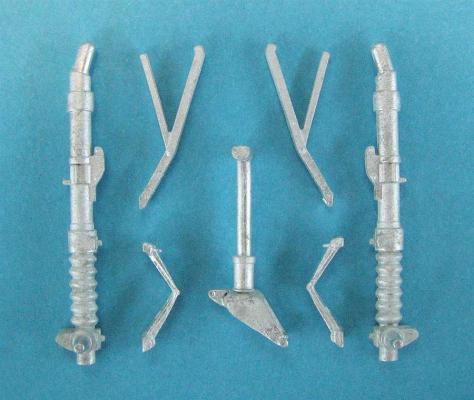
Scale Aircraft Conversions specializes in white metal landing gear replacements for scale models. This was the first time I’ve used one of their replacements and I have to say that it was very easy to use them and that I like it a lot.

This aftermarket set is designed to be a drop-in replacement for the Meng Messerchmitt 410 landing gear. You don’t need to modify any parts to make them fit to your airplane. The fit is perfect and the breakdown of the parts mimics the breakdown of the plastic parts. The replacement landing gear has good surface detail, very similar to the level of detail of the plastic parts.

The white metal parts are actually very easy to work with. I did not need to clean any seams on my parts, nor modify them in any way. They took Model Master Enamel paint very well.

Review Author
Mark Aldrich
Published on
Company
Zvezda
Scale
1/35
MSRP
$19.95

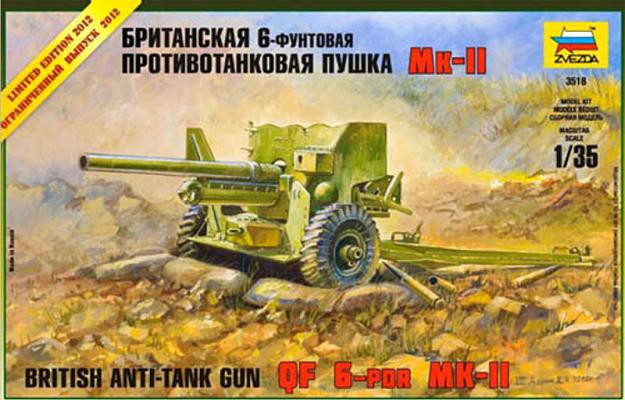
The old adage Things get better with age may old true to a number of items but this is definitely not one of them. This kit started life way back in the old days! It was part of the Max Peerless line and was hitched to their 15CWT and released as kit 3508. Then, Italeri released the gun as a 6 lb. Gun M-1, kit 323. That version included a nice base with fence and ammunition and ammunition crates. Testors added their name to the box and titled it Anti-tank Gun M-1 and changed the kit number to 781. This latest incarnation by Zvezda is nothing new, neat, or improved. It is just the gun. It has suffered from time, as the kit has never had the molds touched up or maybe even redesigned. The parts are riddled with ejector pin sink holes and raised bumps, as well. Some are located on parts that the builder will damage trying to remove them. The most noticeable of these are located on the outside portions of the trailing arms and the outside faces of the gun shield.

Review Author
Mike Hinderliter
Published on
Company
Scale Aircraft Conversions
Scale
1/72
MSRP
$11.95

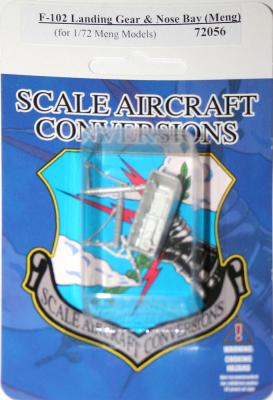
Scale Aircraft Conversions makes various landing gear sets out of lead-free white metal. Some come with the wheels attached, if needed, while others might have the wheel bay included to help with added weight, but most only come with the new landing gear struts. This set comes with the forward wheel bay included so there is added weight up front. I’m pretty sure you will still have to add weight to the nose, but this is a great help.

The detail of the metal parts is crisp and looks flawless. The advantage to these parts is their strength and that they won’t warp under the kit’s weight over time. They will also hold up well while you work with them – no accidentally snapping them apart. To attach the new landing gear, you will need to use CA glue. On their web site they recommend a thicker, gap-filling CA glue so that you can position them the way you want, and then use an accelerator to bond the parts instantly.

Review Author
Roger Rasor
Published on
Company
Albatros Productions, Ltd.
MSRP
$15.00

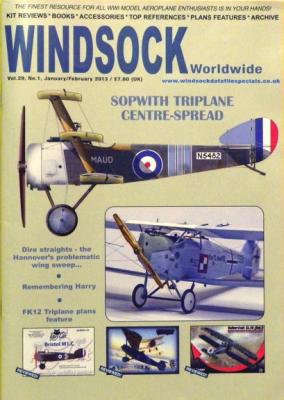
The Jan/Feb 2013 issue of Windsock Worldwide is the first issue of Volume 29, and it continues to deliver the best all-around information about modeling WWI aviation subjects to be found in any publication. The images on the cover clearly indicate that this issue focuses heavily on aircraft recently kitted by Wingnut Wings, but be assured, the publication does not slight other WWI aviation subjects.

Inside, the first regular column, the Reader’s Gallery, presents photo coverage of a 1:6 scale electric-powered flying model of a Hansa Brandenburg D.1, and a Wingnut Wings RNAS Sopwith Pup. Then, following Front Line News and Logbook Entries (that reviews three new titles), Lance Krieg continues his WWI Modeling Master Class with Chapter Eight: Details (Part 3), providing more invaluable advice on creating and adding a wide variety of small details important to any model.

Review Author
Andrew Birkbeck
Published on
Company
Dragon Models
Scale
1/72
MSRP
$22.50

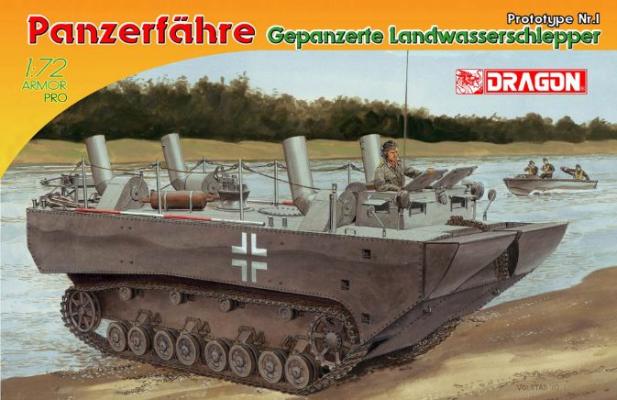
According to Dragon Model’s web site, this model represents “a vehicle whose main function was combat supply on land and in water. It could tow an amphibious trailer, or alternatively it could work in tandem with another Panzerfahre as a floating ferry platform capable of carrying a 24-ton load.” However, other than the prototypes, no other vehicles were manufactured. Yet we get a lovely injection-molded kit of this weird vehicle!! The Golden Age of Modeling, indeed!