ModelArt special subject magazines are really softbound reference books on a particular subject. ModelArt Summer 2010 No. 36 is entirely devoted to ships, so armor, aircraft and care buffs need not apply. In No. 36, the early, non-Akagi and non-Kaga aircraft carriers of the Imperial Japanese Navy are the topics – Hosho and Ryujo. You also get an update on US Navy amphibious warfare model kits and as-built Hiryu and Soryu kit modifications as bonuses. This issue
German U-boat U-176 was ordered on 23 December 1939, and had her keel laid on 6 February 1941. She was launched on 12 September 1491, and was commissioned on 15 December in 1941 at Deschimag AG Wesser in Bremen. The boat was lost with all fifty-three hands on 15 May 1943, while on patrol near Havana, sunk by the Cuban patrol boat CS-13 after being spotted by an American OS2U Kingfisher on watch in the area. During the boat’s career, she served under a single commanding officer, Reiner Dierksen, performed training cruises with the fourth flotilla from 15 December 1941 until 31 July 1942, and was the front boat of the tenth flotilla on a cruise beginning 1 August 1942 until her loss. There were eleven ships sunk by U-176 during her career, consisting of 53,307 gross rated tons.
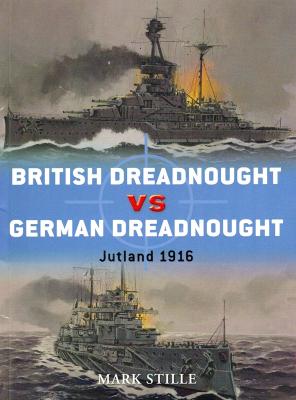
The idea of comparing combatants and combat actions from various historical conflicts is intriguing, whether real or imagined. This new Osprey publication provides a refreshing historical account of British cruiser encounters with German commerce raiders. A single Hilfskreuzer could sortie for a long time, disguised as a merchant ship, sinking commercial shipping. When caught by a British warship, the Hilfskreuzer often effectively exploited the element of surprise, in some case sinking a warship of superior size and firepower. Countering this threat was a challenge to the British Navy, who did eventually prevail over the raiders.
The book content is nicely organized with the following chapters:
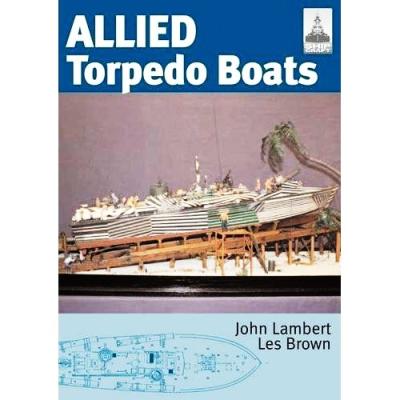
Most of you have heard of PT Boats, E-Boats, and MTBs. There have been movies, books, and some good models of these boats. But a class that doesn’t get that much attention is the British Motor Gun Boats or MGBs. This 48 page soft-cover book starts with the development of these craft. The Motor Torpedo Boats did not have the firepower to take on their German cousins, so the initial thought was to remove the torpedo tubes and add heavier weapons. Later, boats made specifically as MGBs were created and finally, some of these were rearmed with torpedos by the end of the war, making a full circle.
The “Molch” (German for "Salamander" or "Newt") was the first midget submarine developed by the Kriegsmarine, with the intention being a single person manned delivery vehicle for a pair of torpedoes. The first Molch was delivered on 12 June 1944, and AG Weser in Bremen would build nearly four hundred (depending on the reference, the number varies from 363 to 393). The electric propulsion system was designed for coastal operations, providing a range of 40 miles at a submerged speed of 5 knots. The complicated trim and dive controls made combat operations hazardous at best for the submariners, and the boats were later relegated to train submariners for using the follow-on, more advanced mini-subs.
I was intrigued by the title of this PE set when I was notified by John Noack of its availability and was very excited when it arrived. You would think that a set titled “WWII USN Accommodation Ladders and Gangplanks” would not stir the imagination, after all accommodation ladders are available in other sets. But I have never seen gangplanks offered anywhere. It is a subject often neglected by PE manufacturers – “how do you get on and off a ship.” Well, this PE set is the answer.
There is a lot of detail and options packed into this small set:
In the last several years, Kagero Publishing of Lublin, Poland has rapidly expanded, providing a host of publications for modelers. Its newest series is War Camera Photobooks. As the series suggests, it uses photographs from World War Two to illustrate, in this case, German Heavy Cruisers. With the recent release by Trumpeter of the Prinz Eugen and Admiral Hipper in 1/350 and 1/700 scales, this book is a timely release.
Bottom Line
None better – has very fine sagged and straight railings in 2- and 3-bar styles.
Photoetch Set Review
Lion Roar has a large line of 1/700 photoetch accessories for United States, Japanese, German and Royal Navy WW2 navies. This set is devoted exclusively to US Navy railings, both 2- and 3-bar varieties.
The fret contains seven types of railings:
I would like to thank Loren Perry for this review sample and the decal photo.
Until recently, ship modelers have had limited options for aftermarket decals. With the release of so many new ship kits, the demand for additional decal options has grown. While most manufacturers have focused on the etched-brass market, Gold Medal Models - one of the decal torch bearers as well as a PE manufacturer - has answered the call and released a decal sheet that covers the US Navy super carriers from CV(A)-59 on up. Not only will this sheet work with the new Trumpeter 1/700 NIMITZ Class, but also the classic Revell CVAN-65 ENTERPRISE, the venerable Monogram KITTYHAWK Class CV(A)s, the Italeri CV and CVN models and the Fujimi CV kits as well.