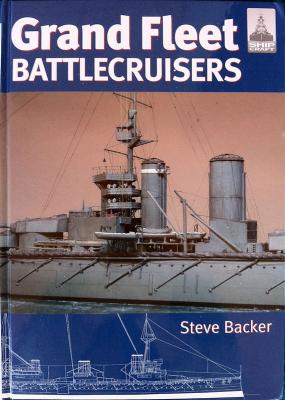
The genesis of the modern all-gun warship occurred when Jackie Fisher, who was for a time Great Britain's First Sea Lord, serving with Winston Churchill, First Lord, during WWI, designed the first fast, big-gun battleship named HMS Dreadnought, a name subsequently given to all ships of that class. Fisher was determined that the prime characteristics of a superior warship were found in two things: speed and firepower. Consequently, this same thinking that produced the Dreadnoughts also created the first Battlecruiser, HMS Invincible, which was basically a somewhat smaller, faster ship, more lightly armored than the battleships, but almost as heavily armed. As the Dreadnoughts made all other battleships obsolete, so the Battlecruisers made all other cruisers instantly obsolete.
Model Art No. 41 Autumn 2011 is devoted to several classes of more obscure Imperial Japanese Navy (IJN) warships in WW2. Specifically, Katori class light/training cruisers, Hatsuharu class destroyers, and Fuso class battleships. For each class, you get to see builds of the most recent kits, drawings, figures and photos showing intimate details of each class/kit, and background history with photos (in Japanese of course). Scales are mostly 1/700 since 1/350 kits are not available for Katori and Hatsuharu classes yet. Battleships kits are mostly 1/350 scale model kits. Coverage is comprehensive, with emphasis on historical accuracy of appearance. This edition is perfect for those modeling these ship classes.
The Detail Parts
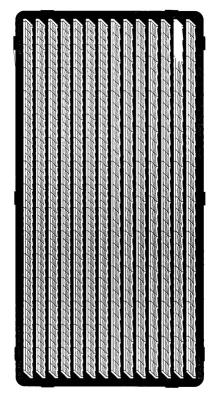
Lion Roar has a reputation for offering excellent P.E. parts for ships and this new product continues that tradition of high quality. This product is labeled as, “WWII USN Ship Vessels Guard Rails” and is not specific to any one kit, but rather, is generic and applicable to most, if not almost any WWII USN subject.
The package contains two frets, both loaded with railings and stanchions. Both frets are identical in content.
The Story
This volume is a newly developed account of the naval war between the United States and its Allies against the Japanese from 1941 through 1945. Since the author and publisher are British, it naturally follows that there is a subdued emphasis on the British and Commonwealth participation in the war, a good thing since this topic has not been covered in a lot of detail over the past few years. In a little over 200 pages, the author condenses the topic to the point that it isn’t really a comprehensive history, but instead a series of chapters dealing with specific issues and events associated with the war, along with his interpretations of the causes and effects of these events.
“Speed is Armor”
Mark Stille is a retired Commander of the US Navy and has written a succession of books for Osprey Publishing on naval topics. He continues as an intelligence analyst at the Pentagon. New Vanguard 182 covers Italian battleships of World War Two, an obscure topic. Like other Osprey books, an in-depth treatment is not given, but an excellent synopsis of design, characteristics and history of each ship is presented.
In the early 1980's, while on active duty in the US Navy, I was stationed at Harbor Clearance Unit One, Detachment, San Diego (or as we called it Harbor Cleaners San Diego). Our unit was tasked to handle ALL Diving, Repair and Salvage, on the West Coast of the USA from San Diego to Alaska. While assigned to this unit, we were tasked with some pretty exciting jobs. We handled everything from Ships Husbandry , Searches, Towing, Recoveries and Salvage. In 1983, I had the privilege to be tasked with one of the most unique jobs I ever did, I was be part of the Towing crew for the USS Missouri. The Battleship was just taken out of the mothball fleet (inactive ships placed in storage for possible reuse) in Bremerton, Washington and prepared to be towed to Long Beach Naval Shipyard in California. She and her sisters were to be modernized for use. Being a Navy Diver we were tasked with riding the ship, while under tow, to undertake in any emergency actions such as fire or flooding.
Master from Poland has added to their impressive line of Sea Master Series detailed ship gun barrels with this set of main and secondary guns for the Fujimi battleship Fuso. Included in this set are twelve 14” (360 mm) turned stainless steel barrels, and fourteen 6” (150mm) turned brass barrels. Both the brass and steel barrels are precisely tapered, with petite segmentations along the barrel length and at the ends. Each of the barrels has an ever so slightly flared open end.
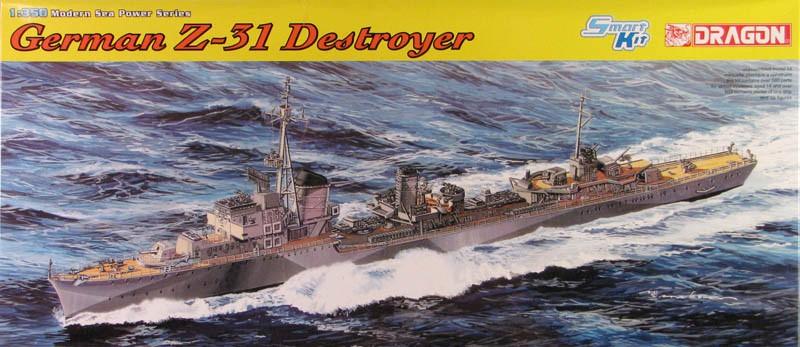
These two armament sets from Master Model provide a full range of replacement brass gun barrels for the new Dragon German Destroyer kits. Set contents include:
- Z-25: Four 150 mm (5.9”); Twelve 37mm; Eighteen 20mm
- Z-39: Four 150mm (5.9”); Fourteen 37mm; Twelve 20mm
Each of the brass barrels is slightly tapered with very finely defined segmentations. Additionally, all of the 20mm barrels and some of the 37mm barrels in each set (four for the Z-25 and ten for Z-39) have barely discernable (but yet, in scale) flash suppressors at the open ends of the barrels. The very high level of manufacturing craftsmanship is readily visible in all the Master Model products, and these sets are certainly no exception.
My thanks to Master Model for providing IPMS with these review sets.
Although I am a former carrier sailor, I have had a long-standing appreciation for submarines and underwater warfare, from the pioneers and early craft to the latest technology afforded to the submariners of today. It takes something special in a person to go out to sea in a vessel designed to sink, and built by the lowest bidder (I had to get that one in), but those who have answered the call in the past, and those will do so in the future, are nothing less than courageous. The submarine has been in existence in one form or another for centuries, and similar to any other weapon of war, has developed into something that would astound the early inventors.