Reviews of products for scale ship models, including submarines.

Review Author
John Lyons
Published on
Company
Eduard
Scale
1/700
MSRP
$32.95

The USS Saratoga was the US Navy's third aircraft carrier, being commissioned a few months prior to its class-lead, USS Lexington CV 2, in November 1927. USS Langley CV 1, Lexington, and Saratoga were instrumental in developing a new generation of fleet tactics that embraced the capabilities of airpower.

Eduard has put together a really nice set of details for the USS Saratoga CV-3 Trumpeter kit. You get 2 sheets of PE that provide a lot of details that are not in the original kit, along with six pages of instructions to help you apply the parts to your kit. The details include upgrades for the turrets and island, upper deck safety rails & nets, stairway guide rails, and ladders. The set also comes with parts to upgrade the deck crane and the plane catcher net.

The PE parts are perfectly etched and can be easily cut from the trees without special tools.

Book Author(s)
David Doyle
Review Author
Dave Koukol
Published on
Company
Squadron Signal Publications
MSRP
$24.95
  • Hardbound
    • Price: $34.95
    • ISBN: 978-0-89747-641-6
  • Softcover
    • Price: $24.95
    • ISBN: 978-0-89747-640-9

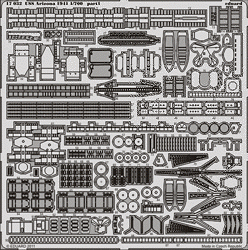
For 70 years following the Japanese attack on Pearl Harbor, the USS Arizona has been the icon of the devastation and loss of American life on December 7, 1941, having lost 1,177 American servicemen herself that infamous day. For many modelers, building Arizona has been a memorable part of their modeling heritage and continues to be a popular subject among kit manufacturers. Many of us have cut our teeth on the classic Revell and Lindberg kits of old, of which the Revell kit is still in production. Over the past decade, numerous Asian kit manufacturers have offered additional kits spanning the range of scales from 1/700 up to the monstrous 1/200.

Review Author
Bill Kluge
Published on
Company
Fine Molds
Scale
1/350
MSRP
$129.95

The Ship

When the Japanese destroyers of the Fubuki class first appeared in 1928, they took the rest of the world’s sea powers completely by surprise, and their combination of large size, high speed and heavy firepower set the standard for other navies to follow for the next decade. Commissioned in 1930, HIJMS Ayanami was the lead ship of an improved Fubuki “Special Type” with its main armament of six 5” guns capable of 75º of elevation, in theory making her the first warship in the world with main guns capable of taking on surface vessels and aircraft. However, her fire control was inadequate to the anti-aircraft task, and these weapons were never effective in that role.

Review Author
Rob Benson
Published on
Company
Bronco Models
Scale
1/350
MSRP
$23.95

Thank you to Alain of Dragon Models USA and John of IPMS for allowing me to review this kit. It really is an honor to critique a new model and share the fun with the greater modeling community.

Bronco Models chose to represent the K335 Giepard, one of the three Akula II submarines constructed by the Amur Shipbuilding Plant Joint Stock Company at Komsomolsk-on-Amur and by Sevmash at the Severodvinsk shipbuilding yard. Research sources are somewhat ambiguous, but generally agree that the Akula II class is a lengthened and improved Akula class, incorporating quieting technology. The K335 name appears as “Gepard” in some references and “Giepard” in others. One member of the class, the Nerpa, is reportedly leased to the Indian Navy. The first member of the class, the Viper, is scheduled to be withdrawn from service in 2015, with the Giepard/Gepard scheduled for retirement in 2025.

Review Author
Bill Kluge
Published on
Company
Dragon Models
Scale
1/350
MSRP
$59.95

The Ship:

Known officially as the Type 36A class (and by the Allies as the Narvik class), these vessels were Germany’s attempt to improve their individual destroyer’s firepower to compensate for their smaller numbers. To do this, these ships carried 5.9” (150mm) main guns, a caliber usually found on light cruisers. These weapons had no AA capability, as well as having the undesirable effect of weighing the ship down by the bow. Z-31 was designed to carry a twin mount forward, but it wasn’t until late in her life that these were mounted. This model represents the ship in the 1943-44 period with a single mount forward. She was also equipped to carry mines, and many of the class had more success in that role than in any other. By the end of hostilities, several of the class had been lost to surface or air attack, but Z-31 survived to be turned over to France as a war prize.

The Kit:

Book Author(s)
Angus Konstam
Review Author
Charles Landrum
Published on
Company
Osprey Publishing
MSRP
$17.95

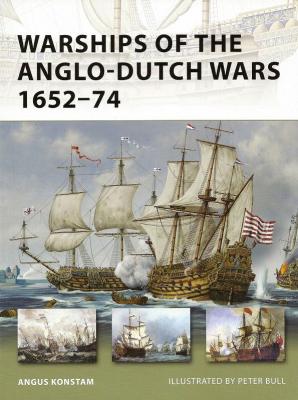
The current rise of Chinese naval power stands in stark contrast to the period from 1900 – 1940 when China had no real Navy and lay prostrate before powerful nations which had unfettered access to its ports and inland waterways. A weak and fading dynasty and competing warlords (including the Communists) did nothing to reassure foreign interests, which led to additional intervention. Like other places in the world, the waterways of China were the highways on which goods moved in and out of the interior of the country. One river stood out in its size and importance – the Yangtze (a western interpretation of the river’s many names). Western business interests and missionaries took advantage of the Yangtze to penetrate far into the interior and the river was the principal line of communication back out to rest of the world.

Review Author
Rod Lees
Published on
Company
Academy Models
Scale
1/350
MSRP
$69.00

This model is not a complex build, but it does have some details that are extremely small. Be forewarned: good tweezers, sprue cutters, and an extra fine razor saw blade are mandatory to release some of the over 650 parts of miniscule carpet-monster food that exist on the trees. An exploded diagram with two hull sides, 7 parts runners, one display base, a decal sheet with flags and early aircraft markings, and a PE sheet with crane structure are provided. I opted to do the kit without extra PE or rigging to show what a buyer gets for his money. In this case, a lot!

Study the instructions first; as usual, since ships hold some pitfalls if you don’t. Small parts that fit in places which are hard to get to later are the norm. Paint the splinter camo as you go along; otherwise you won’t be able to do it upon completion of the build. In this build, the hull is constructed first.

Review Author
Rod Lees
Published on
Company
Eduard
Scale
1/350
MSRP
$26.95

Thanks as usual to Eduard for providing us the latest upgrades for our AMS builds. Eduard’s photoetch is world-class; so here’s a simple upgrade opportunity for the ship builders… the elusive railings for stairways!

During my recent IPMS build of the new Academy “HMS Warspite”, I used a section of this railing for one of the stair sections to the upper fighting top area. Simple as can be; measure, cut, superglue in place. Worth every penny… Railing is always difficult to find, and I appreciate Eduard developing this set. 10 of 10!

Book Author(s)
Steve Backer
Review Author
Michael Scott
Published on
Company
Seaforth Publishing
MSRP
$39.95

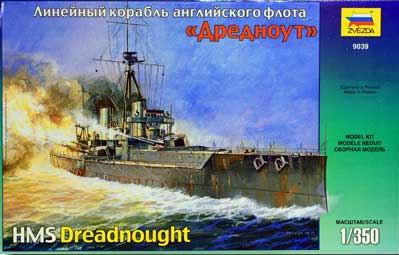
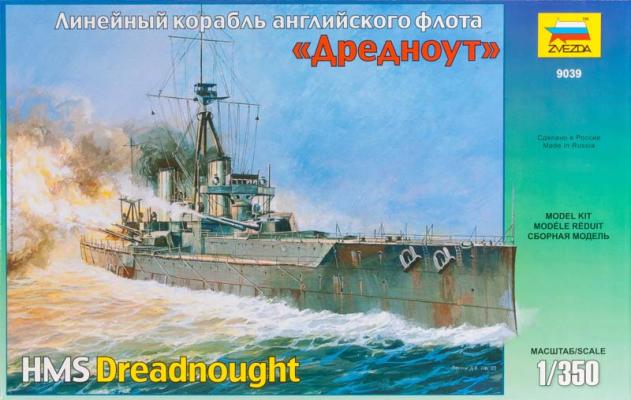
The genesis of the modern all-gun warship occurred when Jackie Fisher, who was for a time Great Britain's First Sea Lord, serving with Winston Churchill, First Lord, during WWI, designed the first fast, big-gun battleship named HMS Dreadnought, a name subsequently given to all ships of that class. Fisher was determined that the prime characteristics of a superior warship were found in two things: speed and firepower. Consequently, this same thinking that produced the Dreadnoughts also created the first Battlecruiser, HMS Invincible, which was basically a somewhat smaller, faster ship, more lightly armored than the battleships, but almost as heavily armed. As the Dreadnoughts made all other battleships obsolete, so the Battlecruisers made all other cruisers instantly obsolete.

Review Author
Luke R. Bucci, PhD
Published on
Company
Model Art
MSRP
$27.95

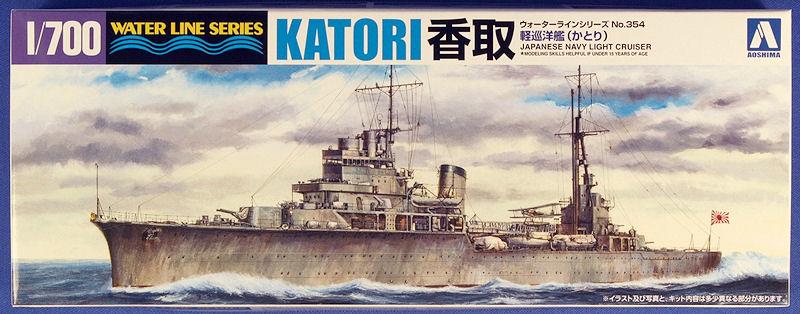
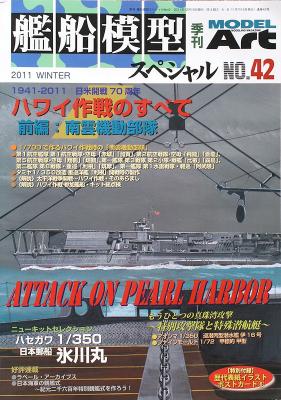
Model Art No. 41 Autumn 2011 is devoted to several classes of more obscure Imperial Japanese Navy (IJN) warships in WW2. Specifically, Katori class light/training cruisers, Hatsuharu class destroyers, and Fuso class battleships. For each class, you get to see builds of the most recent kits, drawings, figures and photos showing intimate details of each class/kit, and background history with photos (in Japanese of course). Scales are mostly 1/700 since 1/350 kits are not available for Katori and Hatsuharu classes yet. Battleships kits are mostly 1/350 scale model kits. Coverage is comprehensive, with emphasis on historical accuracy of appearance. This edition is perfect for those modeling these ship classes.