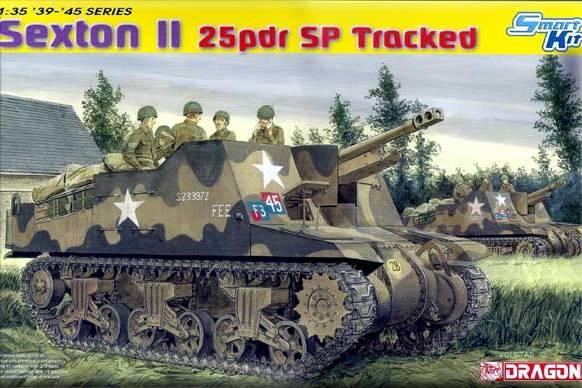
The Tank Destroyers were a short-lived branch of the U.S. Army in World War II, based around a theory that tank destroyers would be dedicated to fighting enemy tanks, freeing our tanks for infantry support. Furthermore, half the Tank Destroyer force would consist of towed anti tank guns. Gradually, the towed guns were replaced by self propelled vehicles, such as the M10, M36, and finally, the M18. All of these vehicles handled themselves quite well against German armor, as well as serving as support vehicles for infantry, but their weak link was the open turret which exposed the crew to small arms fire, shell bursts, and grenades. In the end, the tank destroyer program was cancelled, with standard U.S. tanks assuming the tank vs. tank role. M18s soldiered on in other armies, some seeing action as late as the 1990’s in Serbia.
History
The German Radio Car type 170VK was created on the basis of the serial car 170V of Daimler-Benz Co. The car had in its construction many technological solutions that were advanced for that time frame, such as an X-shaped frame welded from oval-shaped tubes, independent suspension on all wheels, and an engine with overhead valves. The vehicle was very reliable and very popular in all branches of the German army. The car was made in three variations: (1) scout car, (2) radio car, and (3) traveling repair shop. There were 19,075 vehicles built from 1933 to 1942.
Items in the Box
The model is made from injection molded plastic, gray in color. The plans were made up of a fold-out series of sheets, printed on both sides. The build sheet shows various versions of assembly. This build selected was with the radio installed and with the top down. Decal sheets, clear plastic glass, and soft tires were also included.
A few years ago, Tamiya released an all new 1/35th scale version of the Matilda Mk.III/IV, having produced an earlier kit of this venerable British tank back in the 1970’s. Those who build in 1/48th scale hoped that eventually Tamiya would downsize their new 35th kit and allow the modeler to have an alternative to the 35-year old Bandai 48th scale Matilda, which was selling on the collectors circuit for upwards of $100. Tamiya has kindly obliged!
History: The YA-12 light artillery tractors were developed by NATI Designers and launched at the Yaroslavskiy Avtomobilniy Zavod YaAZ-Yaroslav Automobile Plant. In 1943, the United States supplied a large quantity of the U.S.-made GMC-4-71 four cylinder, two stroke, 110 horsepower engines under lend-lease contract. Production started in 1943, and within 12 months a total of 285 units were built. In 1945, production of YA-11s and 12s reached 1,270.
Items in the Box: The model is made from injection molded plastic, gray in color. The plans were made up of a book form, printed on both sides. Clear molded plastic windows, photo etch, and a decal sheet were supplied.
Items in the Box
The model is made from injection molded plastic, gray in color. The plans were made up in book form, printed on both sides. Decal sheet, photo-etched, cable and hose, as well as simulated glass parts were included.
Construction
I started with the lower portion of the tank body, adding running gear and springs. Next, the back and front cover plates, with details, hooks, and exhaust system were added. I pre-painted, as the assembly progressed. Next came the interior details, seats, transmission, and drive shaft, with pre-painting as the assembly progressed. The overhead cover was added next, with machine guns, turret, cannons, and ammo storage container. The tank treads were then assembled to the body. I then assembled the fuel trailers – note: there were enough extra parts for a second fuel trailer, with the exception of the wheels, axles, barrel, and barrel straps. These items were scratch built.
The Sherman tank -- what can you say about it that hasn’t already been said? Perhaps one of the most recognized types of AFV’s of World War II, it symbolized U.S. armor forces of the war.
The Kit
This latest 1/72 offering from Italeri is billed as a “fast assembly kit” which they also say is “especially developed for war game use.” You actually get two identical kits in the box, both molded in light grey plastic. But I feel like Italeri missrd the boat a bit when they tout this kit; as far as I can tell, this would make an excellent model for young or beginner modelers in that it is simple to build, yet accurate in overall shape and many details. Also, mine went together just like one of those snap-fit kits, without using glue (although I did glue mine), and it went together easily and with no drama, with good fit of the parts.
The Merkava began development in 1973 and entered service several years later, in 1978. Since it was originally fielded, it has gone through several iterations. Trumpeter has chosen to model the Mk. III which entered service in 1989. This model of the Merkava has several improvements from earlier models, notably the addition of a 120 mm gun produced in Israel, a larger diesel engine, and modular armor, just to name a few. Trumpeter’s kit goes head-to-head with Revell’s Mk. III which is the only other Merkava in Braille scale.
History
The landmine has always been a danger to troops traveling in unprotected vehicles, and this threat was taken to new levels by insurgent forces in Iraq and Afghanistan. As a result of attacks by mines and IED's, the United States military invested in a special mine clearing vehicle manufactured by Force Protection Inc. Called the Buffalo Mine Protected Clearance Vehicle, or MPCV, it is based on a 6x6 truck with a specially designed armored body. Its shape is designed to deflect blast away from the crew compartment, allowing the vehicle to survive quite large explosions. It carriers a crew of two, plus four plus engineers trained to detect and make safe mines and IED's planted by the road side. A 30-foot extending arm allows the crew to uncover suspect devices while staying safely within the vehicle. Powered by a 443hp Mack AI-400 engine, the Buffalo is capable of 65 mph and has a range of 300 miles. Combat weight is 27.5 tons, with a load capacity of 19 tons.
Prior to starting this conversion, I recommend gathering as many pictures of the “Warpig” as possible, as there are subtle differences between individual vehicles based on the preferences of the crews.
For those old-timers in the hobby, the name Airfix may bring back many a fond memory of simple kits that only generally resembled what they were supposed to, and could be put together on a rainy Saturday afternoon at the kitchen table. However, since being taken over by the toy giant Hornby, Airfix has been in the process of re-inventing itself. Old kits are being updated and new ones issued as well. Their latest military vehicle offering is a King Tiger. It's all-new molding, as Airfix never did a King Tiger. There are 89 parts on three sprues. The molding is good – nice and crisp. However, they chose to mold all the tools and cables, etc., onto the hull. This makes adding zimmerit tricky and requires careful painting to pick them out.