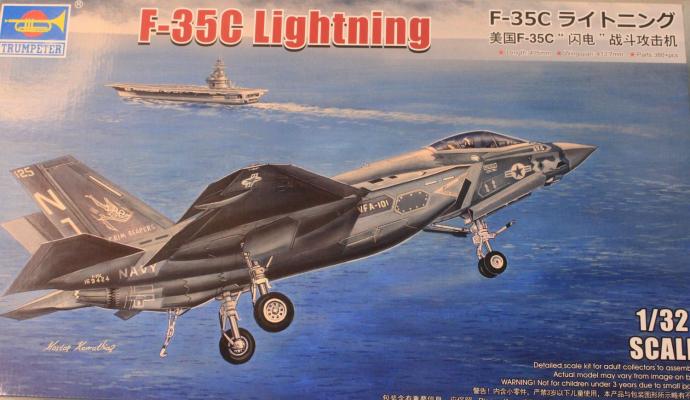
The F-35 Lightning II is an American single-seat multi-role aircraft developed through the Joint Strike Fighter program. The F-35C is the third airframe from this program to enter operational service. It was specifically designed to fill the role of a carrier-operated long range stealth strike fighter. It differs from the other previous variants by having larger wings for slower landing speeds and increased payloads, folding outer wings, a catapult capable twin-wheel nose gear, and a stronger tail hook for arrested landings. The F-35C entered service in August of 2021, with the first squadron of F-35Cs from VFA-147 on the carrier USS Carl Vinson.
all 2023
MMP was founded in 1996 by Roger Wallsgrove, to publish "Mushroom Model Magazine". This quarterly modelling magazine was developed from "Mushroom Monthly”, a club newsletter which ran from 1985 to 1995, achieving a world-wide reputation for quality articles, fearless and honest reviews, and a great sense of humor. From 1997 the magazine was produced in collaboration with Robert Peczkowski and Artur Juszczak (Stratus), which meant a big leap in print quality and design. MMP expanded into book publication in 1999, and since then they have built up a list of books on aircraft and aviation, naval, military vehicles, and military history. MMPBooks are distributed in North America by Casemate Publications.
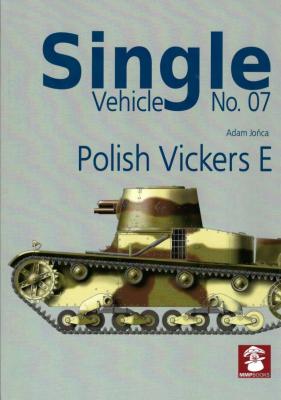
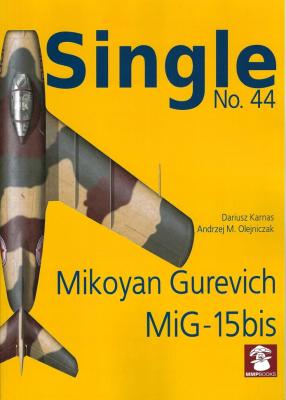
This is the seventh book in the MMP Books Single Vehicle Series (as it is a Polish company, it isn’t surprising that three books are dedicated to Polish vehicles, 7TP single and twin-turret and Vickers E), two vehicles operated by Polish forces (SU-76M and T-72M1), and Type 5 Ha- Gō). The Single Vehicle series are short books, between 24 and 28 pages, and focus on that vehicle. This is not a book for someone wanting to read about the operational history, employment, etc. as the writing is limited to well detailed captions.
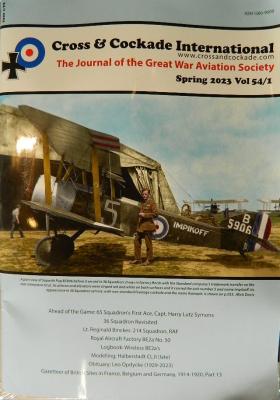
First, I must express sincere appreciation to the editors of Cross and Cockade; IPMS USA sincerely appreciate your provision of a great read.
I decided since I am closet WWI interest-type individual, (when Stationed in Germany I visited Verdun at least 10 times…) I might as well do some reading on “The Great War”.
The society itself has developed a large following (based on people who know more than I) and is considered “the go-to place” to research details on WWI aviation. They are set up with memberships, not storefront operations. Their website also has a plethora of books and resources for research.
From their website:
“Welcome to the web site of The Great War Aviation Society!
Background
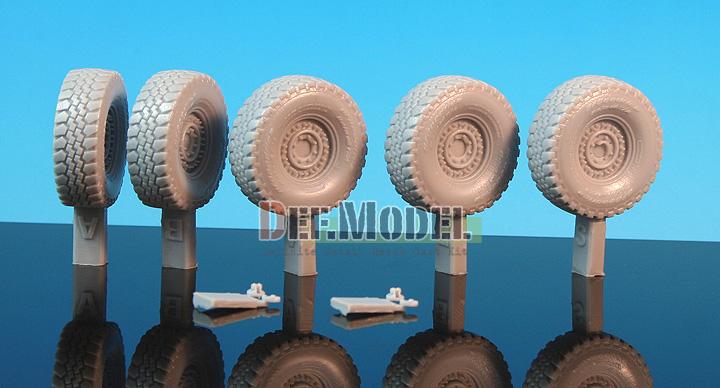
The High Mobility Multipurpose Wheeled Vehicle (HMMWV; colloquial: Humvee) is a family of light, four-wheel drive, military trucks and utility vehicles produced by AM General. It has largely supplanted the roles previously performed by the original jeep, and others such as the Vietnam War-era M151 jeep, the M561 "Gama Goat", their M718A1 and M792 ambulance versions, the Commercial Utility Cargo Vehicle, and other light trucks. Primarily used by the United States military, it is also used by numerous other countries and organizations and even in civilian adaptations. The Humvee saw widespread use in the Gulf War of 1991, where it navigated the treacherous desert terrain; this usage helped to inspire civilian Hummer versions. The vehicle's original unarmored design was later seen to be inadequate. The vehicle was found to be particularly vulnerable to improvised explosive devices in the Iraq War. The U.S.
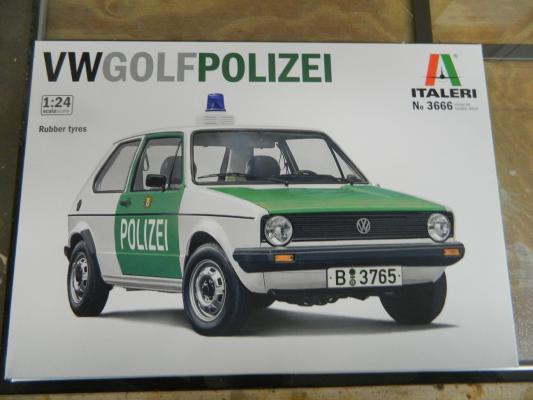
This is a review of the Iltaleri 3666 VW Golf Polizel model kit
Engine
Very basic engine. While engraved beautifully, this is very little additional details so the engine was put together and installed with no further detailing done.
Interior
Interior is wonderfully engraved. I had some issue fitting the separate side panels onto the chassis. Decals in the kit supplied the dashboard decals.
Body
Body was crisp and clean with no flash. I used Tru-Color metallic burgundy over black primer base and coated with 2 part urethane clear. Not being a fan of stock or box builds, I omitted the bumpers and rolled the front & rear pans and filled the stock taillight panels. Aftermarket taillights were installed.
Bottom Line Up Front
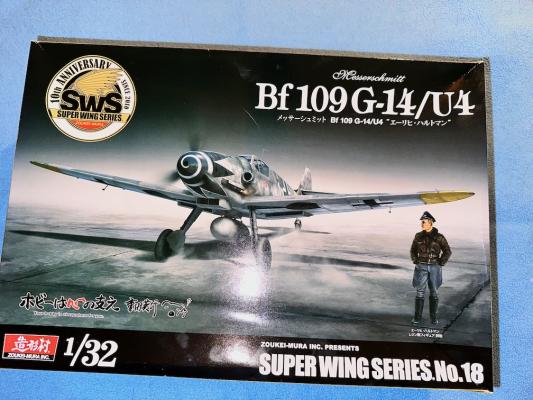
This is a new tooling of the Bf-109 G14 from Zoukei-Mura introduced in 2022. As with the two other Zoukei-Mura kits I have built (J2M3 and DO-335), this kit is really designed to have all of the panels opened. Especially those around the engine. With the panels opened up, you don’t need to worry about gaps and alignments. If you build the model with these panels closed, you will have to address the gaps, because they can be significant. If you want to build a 109 in this scale with the panels closed, you are better off with the Hasegawa kit. The Revell kit also has the ability to open up the engine bay and is less expensive. This kit is very detailed and you should take your time in building (or assembling) it. It builds up into a nicely detailed rendition of a 109.
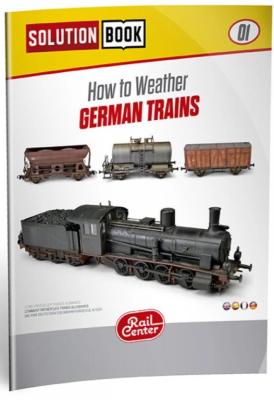
The Mig Solution Book “How to Weather German trains” is book number 01 and is a soft bound magazine style offering step-by-step tutorials explaining how to apply the different colors and effects to German train cars and a locomotive. The book is 64 pages in full color with photographs on almost every page and is available in four languages.
The first section of the book is a description of products of all paints and materials that Mig offers to be used during the weather and paint processes explained in the book, ending with a full page of icons that are used throughout the book. The Icons are used to describe or explain what the builder is to do during each various step such as paint, washes, wait for a certain amount of time to let paint dry, airbrush paint ratios etc. I recommend that you make a copy of the page for reference so that you do not have to keep flipping back and forth in the book to look up the meanings of the icons.
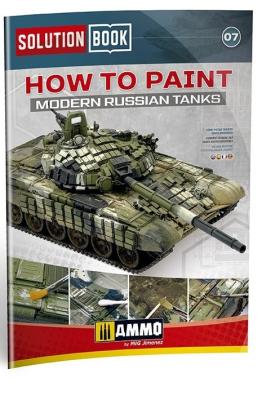
The Mig Solution Book “How to Modern Russian Tanks” is book number 07 and is a soft bound magazine style offering. The book is 68 pages in full color with photographs on almost every page and is available in four languages.
The first section of the book is a description of products of all paints and materials that Mig offers to be used during the weather and paint processes explained in the book, ending with a full page of icons that are used throughout the book. The Icons are used to describe or explain what the builder is to do during each various step such as paint, washes, wait for a certain amount of time to let paint dry, airbrush paint ratios etc. I recommend that you make a copy of the page for reference so that you do not have to keep flipping back and forth in the book to look up the meanings of the icons.
The book is well illustrated and shows the weathering for a Russian tank in steps as follows.
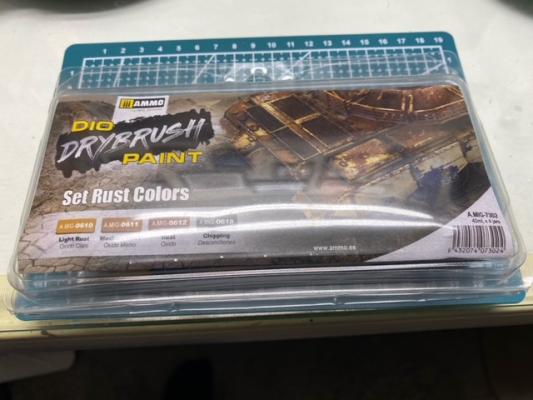
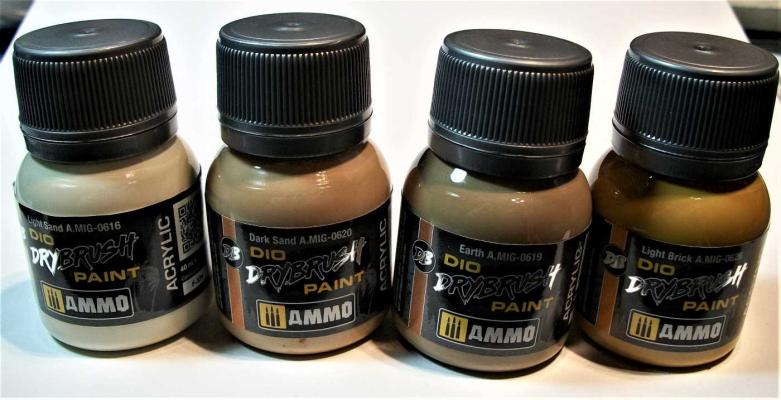
I received the Mig Ammo Dio Drybrush Paint Rust Color set. The Clear plastic container contained four bottles of what Mig refers to as Dio Drybrush paint. The four colors represented the various stages of rust from a dark brown old rust color to a light orange fresh new rust color. Upon opening the paint, I found they are thick and creamy and not a thin liquid like the average paint. No shaking or stirring was needed to prepare them.
When using the paint, they did dry brush and cover very well. If you are familiar with the slap chop method of dry brush painting, they are perfect for that style of dry brushing which uses a wet heavier style of dry brushing.
Cleaning up was very easy because they are acrylic-based and not enamel or lacquer-based paint.
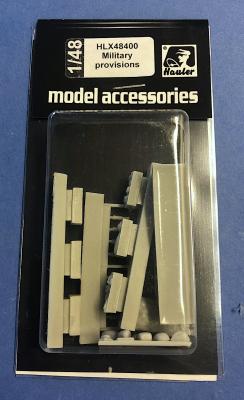
Hauler is a Czech Republic company that produces high quality resin & photo-etched sets for AFVs, airplanes, cars, railway vehicles, accessories for dioramas and resin kits. Their products are available online or in the US from UMM-USA or from Stevens International through your local hobby shop.
The military provisions set includes various food supplies including wine bottles, several crates with various vegetables, a sack of potatoes, several wicker baskets, several bread loaves, cheese loaf, a ham, and several meats & sausages. The parts are crisply molded in resin with very nice detail. All the parts are attached to pour blocks that will need to be carefully removed with a razor saw.
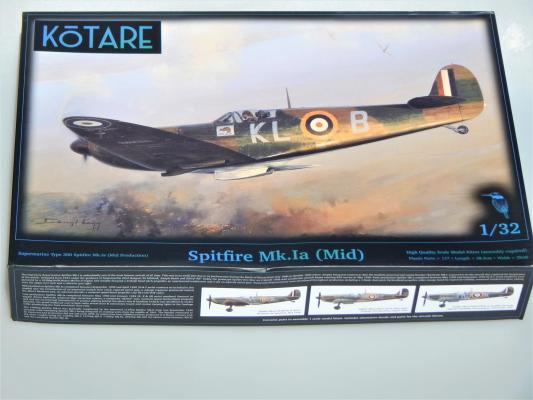
Kotare has released a brand new tooled injection molded kit in 1/32 of the Mid Production Spitfire IA, which hasn’t been done since 1967. This kit was released on March 7, 2023 and is the first from this manufacturer. IT includes a beautifully illustrated color instruction booklet with actual period photographs of wartime Spitfires, which is a nice touch! This is very similar to another New Zealand company that did 1/32 World War One aircraft! This is a brand new company led by model enthusiast and builder Mark Robson , who is a practicing veterinarian, along with Richard Alexander from Wingnut Models who rounds a team of great modelers and enthusiasts that have various skills in model production.
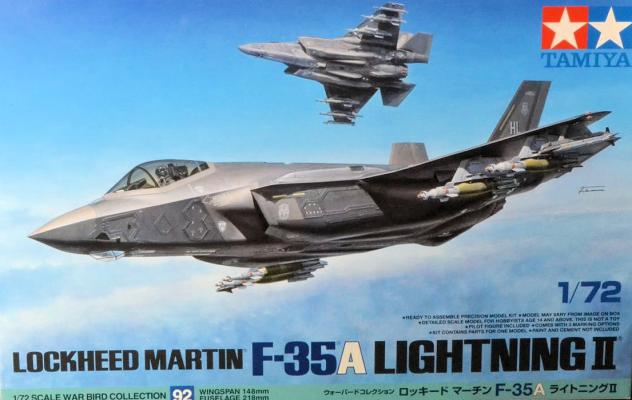
A new tooled kit from Tamiya. It is the Lockheed Martin F-35A Lightning II in 1/72nd scale. This is one of those “Must Buy” kind of kits.
In the Box
Out of the box, this kit has gray sprues labeled A-B, C-D and are connected by a single sprue frame. There are two (2) F sprues for ordnance and wheels. The upper fuselage-wing is on sprue G and the lower fuselage-wing is on sprue G2. A clear sprue labeled E has the canopy, EOTS cover fairing, and lights.
A pilot figure is included, and ordnance includes two (2) AIM-9X Sidewinder Missiles and four (4) GBU-12 Paveway II Bombs.
A large decal sheet is provided for three (3) schemes: USAF 34th FS, 388th FW (June 2022), JASDF 301st FS, 3rd Wing (September 2022), JASDF 302 FS, 3rd Wing (September 2022). For this review I chose to do the JASDF 301st FS.
Founded in 1996, MMP Books is a UK-based publishing company with its book publishing division starting in 1999. Specializing in aviation and military history, MMP Books is known worldwide as a source for anything military.
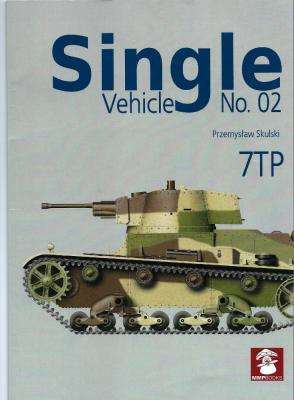
Single Vehicle No. 02 7TP is the second book added to the “Single Vehicle” line of books MMP Books in 2021. Others include Single Vehicle No. 01 ( SU-76M) published in 2021 to their latest Single Vehicle No. 08 (Polish Armoured Draisine TK) entered the market in 2023. Eight books are available in this Single Vehicle Series.
This A4 format 8.2 x 11.8-inch 28-page book is printed on satin paper with 90 black and white images and one color profile page. The front and back covers are both printed on glossy paper. The text is in English.
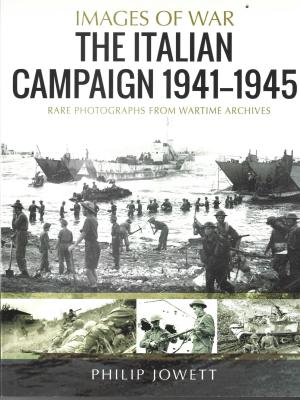
The book is another in the great Images of War series. This book covers the history and actions of the Allies during the Italian Campaign from the invasion if Sicily in 1943 to the end of the war in June 1945. The books front cover I think may be incorrect at it states 1941 not 1943.
This is the forgotten campaign as it was later overshadowed by D-Day. In Italy there were over 600,000 Casualties and well over 100,000 dead. Soldiers of many nationals took part in this campaign. The fighting at time was some of the most grueling and hardest fought campaigns of the war.
The book covers all the major battles as shown in the Chapter titles.
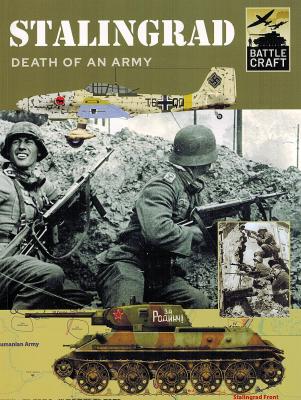
The book is part of the Battle Craft series published by Penn & Sword Military publishers. The book is divided into an Introduction followed by two main areas. The first chapter actually deals with the battle, while the second one deals with several models of equipment used during the battle. This latter part is full of color photos showing the kits. In addition, this latter part contains profiles of equipment and aircrafts used in the battle.
The book is from The Latin America at War series volume 32, and is the first volume of the history of El Salvador from 1970 through 1983. The book is divided into 8 main areas with an Introduction, set of abbreviations, Conclusion, Select Bibliography and a small information about the author.
The section dealing with the Bibliography gives you the name of the principal political, military and groups involved in the struggle. The names/abbreviations are given first in Spanish and then in English. This section is important to the book and one that the reader will continuously be checking during the reading of the book. The Introduction then provides you with the reasons for the book
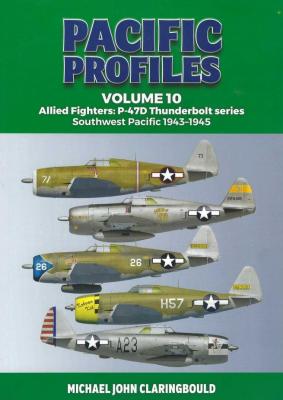
“When we met the Thunderbolts they immediately surrounded and separated us from protecting the Donryu (bombers). They attacked from above, outnumbering us three or four to one, however we lost no fighters. In conclusion we did not lose, and one Hayabusa which failed to drop one of its fuel tanks survived. I am of the firm opinion that the Thunderbolt can be shot down if we take advantage of its mistakes. Four enemy Thunderbolts only amount to one or two of our planes…”
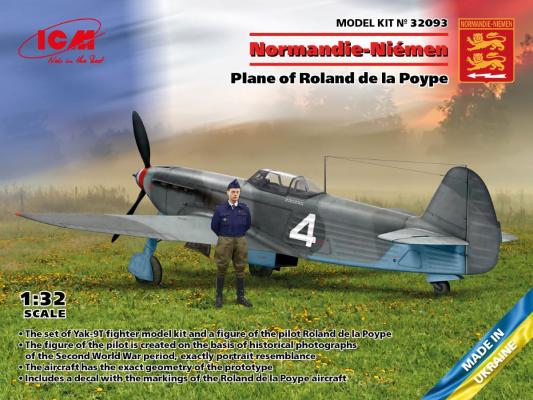
The story of the Normandie (later, Normandie-Niemen) Escadrilles makes for fascinating reading. Originally recruited by DeGaulle himself, these French pilots flew for the Soviets in Soviet-made aircraft at more than typical risk to themselves. The Germans saw this development as a breach of the French Vichy government’s surrender agreement and made it a policy to execute any French pilots downed in their territory. In addition, family and relatives of the downed pilots were arrested back in France and sent to concentration camps, where few survived.
Despite this threat, the small French unit would wind up with over 30 confirmed aces and a total of 273 enemy aircraft downed by war’s end, making them the second highest scoring aerial unit in the Soviet Union. In addition, no Russian bomber under escort by them was ever lost to enemy action.
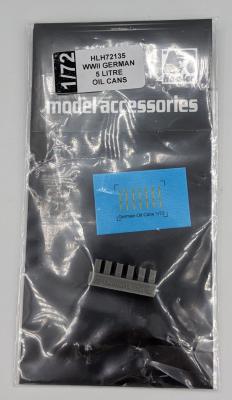
POL (Petroleum, Oil, and Lubricant) containers are ubiquitous on military vehicles in the field. Now braille scale German WW II ground vehicle models can have 5 liter oil cans in their scale. This is a new release by Hauler that joins their 1/35 and 1/48 scale brethren.
These are tiny but very well-detailed. Manufactured by Jan Sobotka, this package comes with one pour block (1” long), this outstanding set comes with six oil cans beautifully cast in resin and six decals, one for each can. This oil can set will bring your German vehicle to the next level.
As you can see from the photos, the accessory set is well-detailed and should take very little cleanup to prepare the parts for your model. There is a simple instruction sheet included, that notes the color of the can and decal placement. If you have experience with small-scale and fiddly resin, this set will be perfect.
I must admit that when I first saw these paints, I did think that they were not really needed in this hobby as we have been dry brushing using normal paint for many years.
But I have been using them now for some time and I confirm they are in fact another useful product.
This set is very good, and I used them on a German North Africa Stug. and with great results.
I have also used this in an airbrush for shading and as a paint on other materials so they can be used in other ways very successfully.
Summary
These are very useful, and I have found it a great addition to my toolbox!
Thanks go to Ammo by Mig Jimenez for providing this set to review and IPMS USA for allowing me to review it for them.
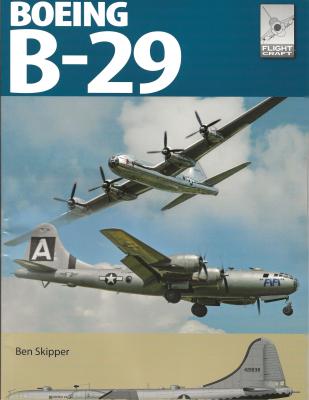
This is number 29 in the FlightCraft series and covers the Boeing B-29 Superfortress. This is the first of this series of books I have had the pleasure to see and review. The book is broken down into 8 sections with the first 45 pages of the book dealing with the real aircraft. These pages cover the design and development, the aircraft in detail. The aircraft in service, variants including the USSR and Chinese Tu-4s and camo and marking. The next 8 pages are 24 color profiles from WWII, Korea, post war, as well as the warbird FiFi and B-50s.
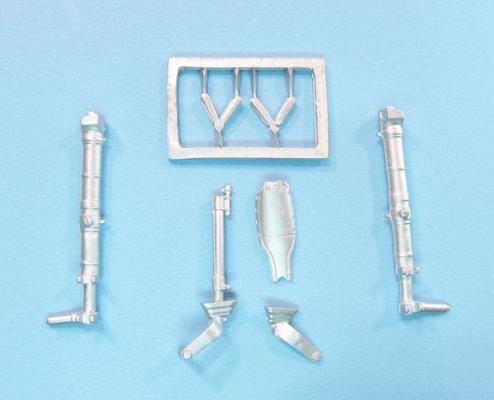
One advantage of white metal over styrene plastic is strength. Metal parts will not warp under the weight of a built model regardless of the size of the aircraft, no matter how many years it stands on display. Another advantage of white metal is the way it holds up under "working" conditions (drilling, scoring, sanding, etc.), as it is much denser than styrene plastic and has a much higher melting point. Being quite malleable, it can be bent without the fear of breaking & a useful characteristic when it comes to final alignment "tweeking". Note: SAC white metal contains no lead.
This set is ideal for adding extra strength to your 1:35 scale Border Models Messerschmitt Bf-109G aircraft models’ landing gear. This set contains 7 nicely-cast white metal parts to enhance your project. As white metal is soft, one of the main gear axles in my sample was bent. Easy enough to correct.
Thanks to Casemate Publishers & IPMS/USA for the review copy!
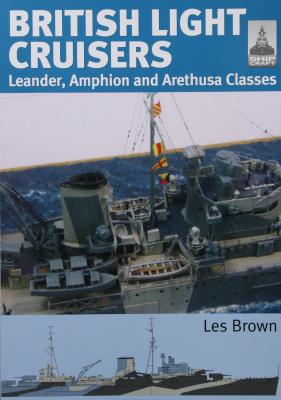
Casemate Publishers presents ShipCraft 31, British Light Cruisers Leander, Amphion and Arethusa Classes by Les Brown from Seaforth Publishing. This heavily illustrated paperback is the ultimate single resource for building accurate models of WW2 British Light Cruisers with twin turret 6in main armaments – the Leander, Amphion and Arethusa classes. Class history, appearances of each ship over time, available model kits, model accessories, many photographs, camouflage examples, line drawings and color plates of finished models make a superb reference for these busy warships with many possibilities for modelers.
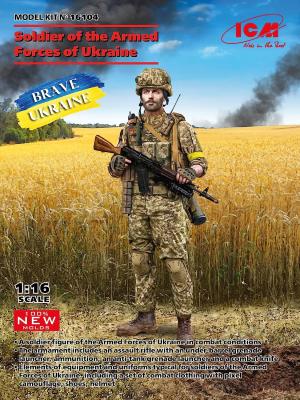
ICM continues to pump out interesting new kits and paint sets despite being in a brutal war that has lasted 487 days as I sit here typing this review up. The subject here is one in a growing line of 1/16 scale figure kits- Soldier of the Armed Forces of Ukraine. Highly praised by military experts around the world, the Ukrainian army is now considered to be among the best trained and skilled in the world thanks to its experience fighting modern combat.
What’s Inside the Box
The kit comes as the standard ICM kit does—with a colorful box top that slides off of an enclosed cardboard box with flap. Parts were packaged well and details were crisp with no flash to speak of.
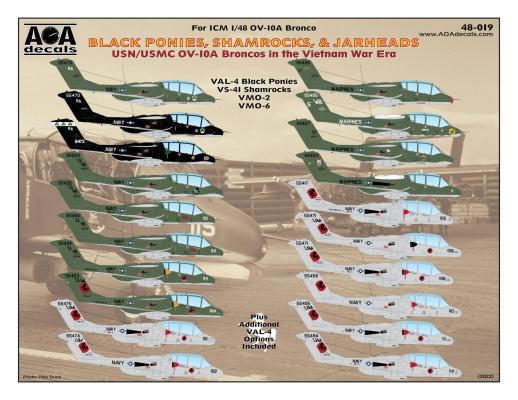
With the release of the ICM OV-10A, the Bronco is brought into the modern age. And because of that it needs decals to keep up. Enter AOA. AOA Decals has produced some of the best researched Vietnam era aircraft markings and this sheet is no exception.
Inside of an 8.5 x 11 zip lock baggie are two pages of double sided, high quality paper printed in full color. There are instructions for 22 aircraft. TWENTY TWO!. Included are markings for the Navy’s VAL-4, the Black Ponies, and VS-41, the Shamrocks, along with VMO-2 and VMO-6 of the Marines. There are 15 markings for VAL-4, three for the Shamrocks, and two each for the VMOs. A little of something for everyone. Also included is a loadout chart for the weapons systems.
Introduction
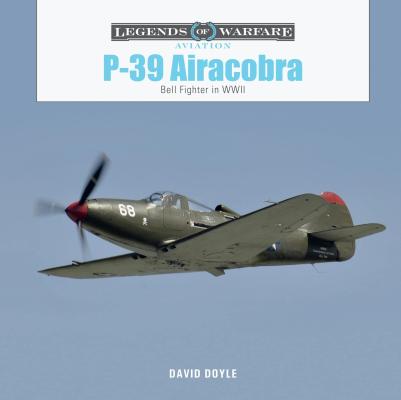
With a mid-engined configuration, sturdy tricycle landing gear, and nose-mounted 37 mm cannon, the Bell P-39 was a thoughtful and innovative design. However, the plane lacked the all-out performance of some other key fighters available to Allied fliers (e.g., Spitfire, Hellcat, Mustang), particularly at altitude. Largely rejected by British and American combat squadrons, the Airacobra was much better received in the Soviet Union, where the Red Air Force successfully deployed large quantities of the type against the Luftwaffe. This new entry in the Legends of Warfare series features detailed photographic coverage of all variants of the Airacobra, including prototypes, trainer versions, production models C through Q, and the P-400
Contents
This publication is broken down into chapters as follows:
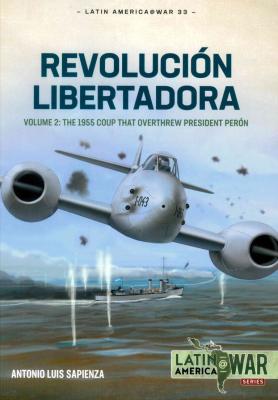
Revolución Libertadora, Volume 2 - The 1955 Coup that Overthrew President Perón picks up where the previous book, Revolución Libertadora, Volume 1: The 1955 Coup D’état in Argentina, abruptly left off (see the previous review here for details). Author Antonio Luis Sapienza writes in the Introduction -
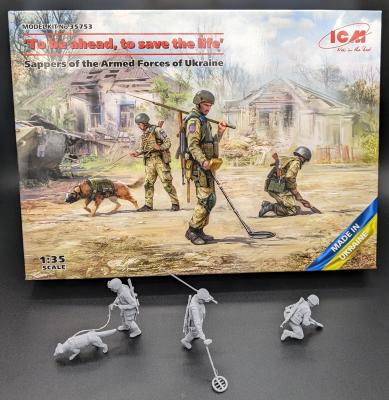
ICM continues to announce new models despite the ongoing Russian initiated war in Ukraine. While most subjects released by ICM are welcome, the current conflict subjects are even more relevant and welcome. When anything military engineer-related hits the market, I am intrigued; this kit is a double hit for me.
Unexploded munitions, Improvised Explosive Devices (IEDs), booby traps and mines are hallmarks of modern warfare. Breaching obstacles and cleaning up battlefields often fall to sappers and combat engineers. This fantastic ICM kit begs to be opened upon arrival. Upon opening the colorful lid and cover of the typical sturdy ICM box, there is a reinforced white inner box that does a good job of protecting the single sprue containing the three Sapper figures and dog, along with an advertisement folder for ICM acrylic paints.
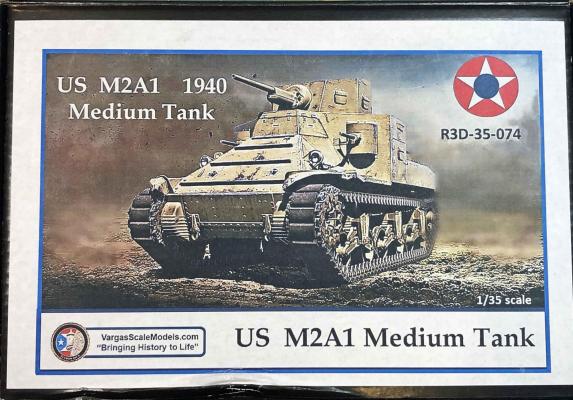
Vargas Models specializes in unusual 3-D printed, limited-run armor models, and is now offering the M2A1 Medium tank, the forerunner to the venerable line of early-WWII medium tanks.
The unmistakable lines of the M3 Grant/Lee hull are evident in the M2A1, and the lower chassis and running gear point straight at the M4 Sherman, the most-produced Allied tank of the war. The M2 was armed with four 30-caliber machine guns mounted in revolving sponsons bracketing the turret, two additional, fixed 30cal machine guns in the front hull, and a turret-mounted, 37mm main gun. The M2 carried an impressive 12,250 rounds of ammunition for a simple reason; at the time of its design, medium tanks in the US Army were employed not as tanks proper, but as infantry support weapons. To this end, the 4 revolving machine guns and the 2 fixed hull machine guns would have greatly helped it in that role.
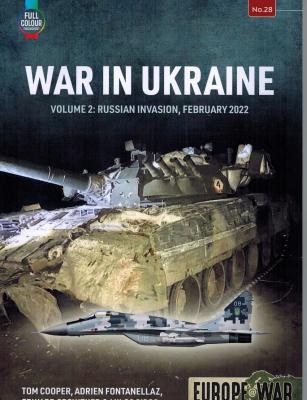
The first chapter/section deals with a history of the Ukrainian armed forces from August, 1991. The history continues with the events of November, 2013. and during 2014, the authors begin to provide us with information about how the Ukrainians started rebuilding their forces. How Ukraine started to arm itself, as well as the overhauling of its forces is addressed. Such topics as defensive weapons, the Army Aviation, Territorial defense, National Guard and Air Power are touch upon. The chapter ends with a short review of the Ukrainian Navy.
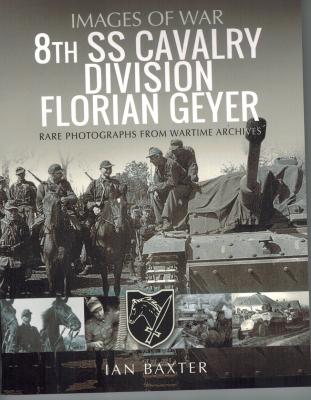
This book is part of The Images of War Series published by Pen & Sword Publishers and distributed by Casemate Publishers. The book is divided into an Introduction, Four Chapters and six Appendixes. Most of the book is dedicated to photos taken from wartime archives. The introduction gives us a short synopsis of the unit. The unit operated mostly behind the lines and is responsible for many atrocities to the civilian population. This is the unit that is responsible for the elimination of the Warsaw Ghetto. Of the 30,000 men of this unit only 300 reached the German lines after their defeat in Budapest.
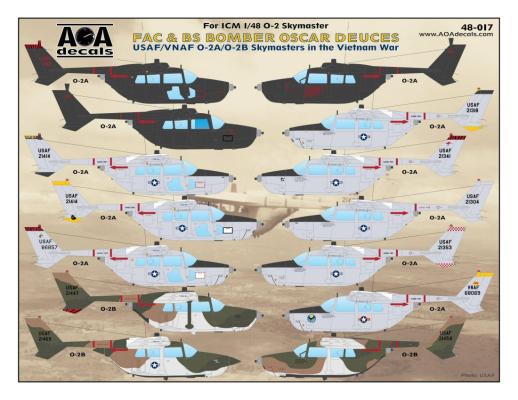
We’ve had the Testors O-2A Skymaster for many years but with the release of the ICM O-2A we get a modern tooled version of this aircraft.
Inside of an 8.5 x 11 ziplock baggie are three pages of double-sided, high quality paper instructions printed in full color. The instructions are full of useful information including loadouts and color callouts. There are 11 USAF/VNAF O-2As and three O-2Bs. The colors range from all black, to grey and white to camouflaged O-2Bs. Included in the decals and instructions are markings for three O-2B aircraft, straight off the shelf Cessnas fitted with loudspeakers and leaflets. True there isn’t a kit or conversion yet but there are decals for those so inclined. I thought that was a nice touch plus they are colorful. That will be my next one.
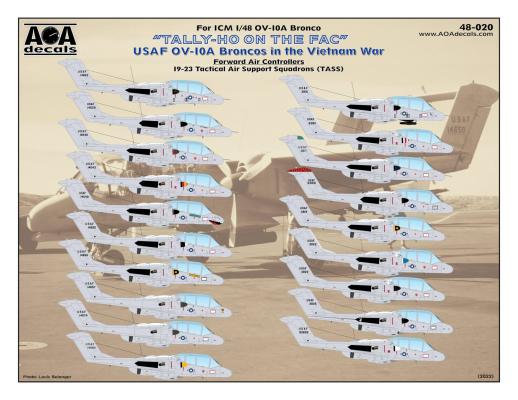
AOA has provided us modelers with some great Vietnam markings for aircraft of all types. This latest sheet covers the OV-10A as used by the USAF in Vietnam.
Included in the 8.5 x 11 ziplock baggie are instructions and decals for 19 USAF aircraft. They are pretty much the same style of paint scheme as used by Air Force FACs in Vietnam, white on top of the wings with grey used on the rest of the airframe.
One unique airplane is the inclusion of a Pave Nail modified OV-10A. It is the beginning of guided munitions deliver. For more info on this system, check out: https://www.loran-history.info/Operation_Tight_Reign/PAVE%20NAIL.pdf
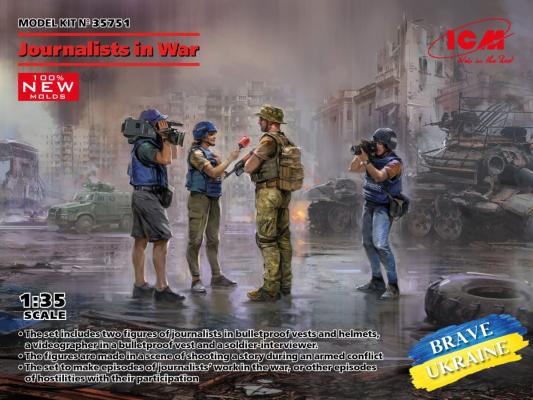
No one can argue that being a war correspondent is anything but dangerous work. Journalists who choose this branch of their profession face death, kidnapping, torture and more on a regular basis, as well as dealing with the repercussions this activity can have on their family lives back home. All of this is especially true in this age, where the “Press” label affords far less protection than it has in the past.
ICM is no stranger to controversial or challenging subjects, and this package offers a selection of figures that can be utilized in a wide variety of contemporary settings, not just the Ukrainian conflict. This set includes a camerawoman, a video cameraman, an interviewer with microphone and a standing Ukrainian soldier. I believe the journalists are supposed to represent international correspondents (rather than Ukrainian) as the PRESS markings are in English on both their helmets and vests.
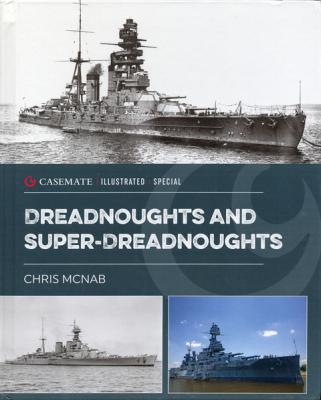
By the turn of the Twentieth Century, Great Britain was at the height of its industrial and colonial power, with the largest ironclad navy in the world. By 1904, Britain ruled the seas with 45 “pre-dreadnaught” battleships. Each of these carried a main armament usually consisting of four 12- or 13-inch main guns in two twin turrets (one forward and one aft) along with a number of lesser caliber weapons (6”, 12-pounder and 3-pounder) for close in defense. Other navies, primarily Germany, the United States, and after 1905 Japan followed on Great Britain’s heels. The stage was set for an abrupt alteration in the status quo, as industry, technology and the critical thinking of one man combined to change the face of naval power in the decades to come.
Introduction
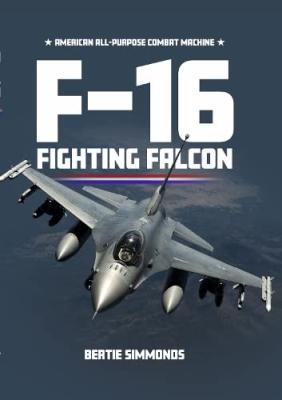
Sleek, futuristic and deadly – the General Dynamics F-16 Fighting Falcon was born from the crucible of the air war over Vietnam and the need for cheaper, simpler and more maneuverable fighter aircraft with which to combat the many thousands of Soviet-bloc supplied aircraft sold around the world. Back in the early 1970s the F-16 was the pinnacle of modern design, integrating a powerful turbofan engine and offering unrivaled maneuverability – thanks to its relaxed static stability and fly-by-wire system with computer control. Today’s F-16 Viper is light years away from the simple, lightweight point defense fighter first envisaged, but it has evolved and matured into the finest and most exported fourth-generation combat aircraft around the world. This is its story.
The book's cover has a stunning, head-on, in-flight photo of an F-16.
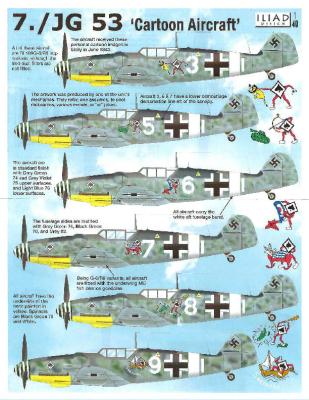
Oh great another 109 decal sheet. Well yeah, but this one is different. This one has cartoon characters on the sides. Big cartoon characters!
Contained in a standard ziplock bag is one decal sheet with markings for six airplanes from 7./JG-53 based in Sicily in 1943 and two smaller sheets with fuel stencils. I believe they are printed by Cartograf these are some gorgeous decals for some very unique airplanes. The sheet is the standard 9x6 decal sheet with markings for the known cartoon aircraft. All of them are basically marked the same with the exception of the cartoon character. The decals provide you with all the aircraft numbers and characters. You get crosses, swastikas and fuel stencils for eight aircraft . Four sets of JG-53 emblems are included. There are no additional stencils included. You’ll have to source them elsewhere.
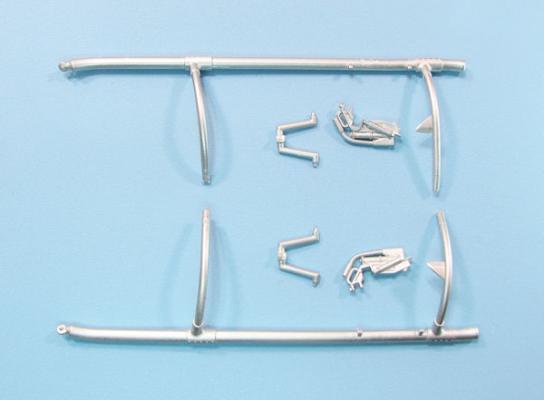
I’ve built two ICM AH-1Gs in 1/32nd scale. They are great kits, but the landing gear mounts can be fragile in the hands of a ham-fisted modeler like myself. On the two I built I had to pin and glue the gear back on a couple of times. It was frustrating as it was near the end of the build.
The difference between the early and late gear is the early gear has the fairing around the crosstubes. The late are just the round crosstubes.
Inside SAC’s typical blister pack are two white metal landing gear and four parts for the ground handling wheels. Mine were perfectly cast and were exact replicas of the kit landing gear, but stronger. This set does NOT have the aerodynamic fairings installed. Many of the later Vietnam era Cobras had the fairings removed to save weight but more importantly was they really didn’t help. They were a major pain to remove and reinstall.
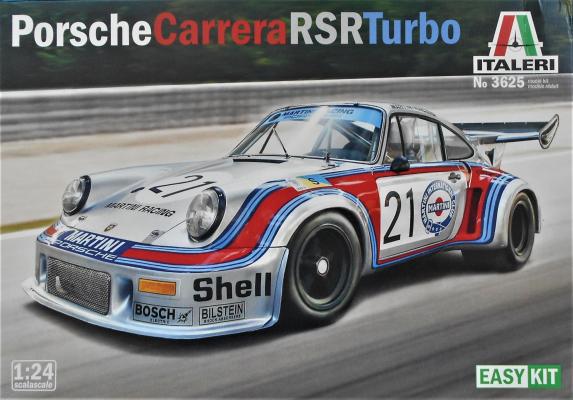
For the 1974 racing season, four Porsche 911 Turbo Carrera RSR cars were produced for the Martini Racing Team introducing a turbo boost to the 911 platform. Powered by a 2.1 L turbo-charged engine providing nearly 500 HP, the #22 car driven by Muller & van Lennep took second place at the 24 Hours of Le Mans race.
This 2023 model kit re-release has been issued numerous times by various manufacturers. Italeri gives it a skill level 2 rating. It’s a simple kit to build in out-of-the-box (OOB) form (minus the decals). The kit contains 42 pieces. The body is molded in a silver color. The rest of parts are on one tree molded in black, and there’s a clear window piece with headlight lenses. The model features soft rubber tires and colorful Cartograph waterslide decals. There are instructions for 2 versions with full-color decal placement images and paint callouts.
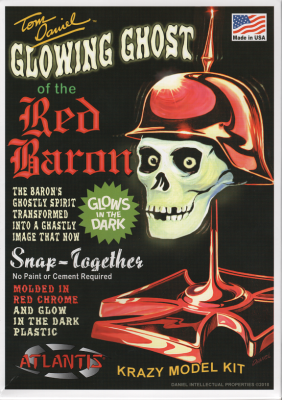
Atlantis Models gets credit for another Tom Daniel classic save by resurrecting the Glowing Ghost of the Red Baron kit Atlantis M6742-Model Kit. At 1:4 scale it’s easy to work with and It’s a great kit for beginners too.
Attesting to its popularity the kit’s been re-released a few times in various versions as well as, but this fresh new 2023 offering by Atlantis Models is the first reissue in decades.
Originally released as kit #PC220 in 1969, and according to Tom, “I thought we could do something fun with the chrome helmet again (at the time) and sketched out this skeleton "ghost" design on a place mat at a Mexican restaurant.”
Also included is a beautiful new waterslide decal sheet featuring the Iron Cross markings from WWI and a rubber band to activate the “bobble bone” and invoke the jittering eyeballs.
The original, “far out” instructions now printed in red and black, detail the 10,740 steps required for construction.
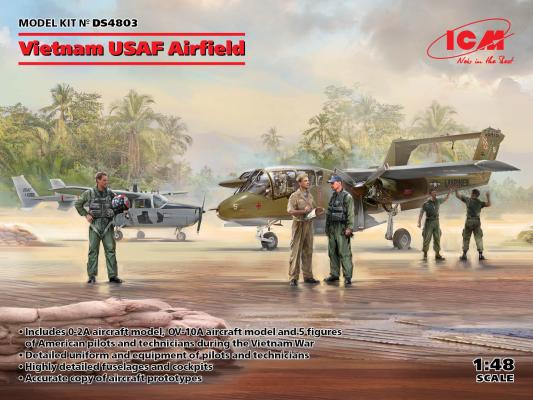
Boxing up multiple kits into a single boxing and offering a discount is not a new concept, however, it has yet to be as effective as what ICM currently offers in their product range. This offering offers two great aircraft and a set of figures to compliment them. A diorama waiting to be put together.
As there are three kits in this boxing, the O-2A Skymaster and the OV-10A Bronco along with USAF Personnel in Vietnam, I’ll offer three reviews in one as well.
Pilots & Technicians
First off, the personnel. This single sprue contains the parts for five figures found on a USAF flight line.
Finding figures in 1/48th scale for Vietnam is a pretty hard chore. Whether you want to depict USAF or Army helicopter pilots your choices in the past have been pretty slim. Well thanks to ICM there is at least a new option.
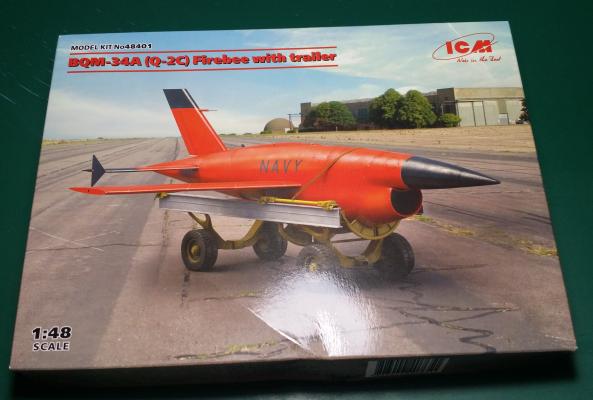
Ryan Aircraft was awarded a contract to develop a new, second-generation target drone based loosely on the Q-2A drone. It vaguely resembled its Q-2A ancestor in general outline. The BQM-34 would spawn a whole family of remotely controlled drones, from the original aerial target, up to reconnaissance variants.
Molded in light grey plastic, there are 42 pieces in all, four of which are not used in the build. The only major problem with the kit is that the intake lip, for some reason, is a separate piece.
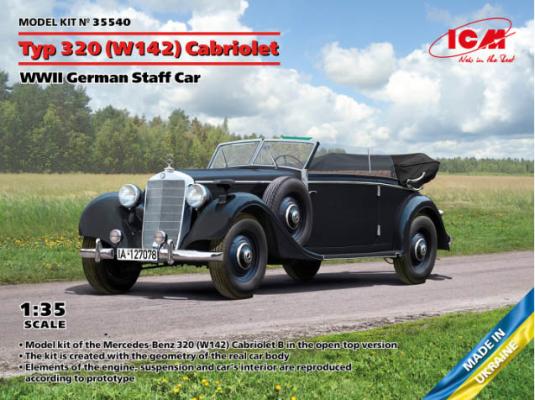
A Very Brief History the Typ 320 (W142) Cabriolet
WWII German Staff Car (from Manufacturer’s kit notes)
“The Mercedes-Benz 320 (W142), developed by Daimler-Benz AG, was launched in 1937. It was equipped with a six-cylinder engine with a volume of 3.2 liters (3.4 liters in later versions), which had 78 horsepower. It was available with a short (2880 mm) or long (3300 mm) wheelbase. The Mercedes-Benz 320 (W142) was the most prestigious of the three 6-cylinder middle-class models. One of the body variants for long-wheelbase cars was the Cabriolet. In turn, there were also several versions of this version of the Mercedes-Benz 320, which differ with number of seats, doors, and side windows. The four-seat Cabriolet B version had two doors and four side windows. This car was used by the Wehrmacht as a staff car and was also used as a vehicle for the transportation of senior commanders.
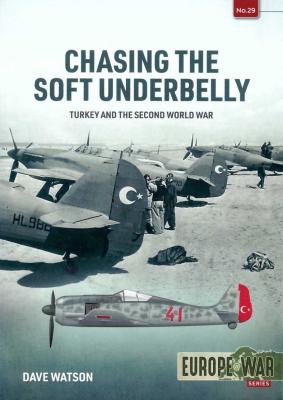
Chasing the Soft Underbelly - Turkey and the Second World War is an amazing, detailed and concise (for the breadth of history covered) book on Turkey’s involvement in World War II, its involvement in the Balkans, its neighboring countries, and the aftermath of World War I that saw the dissolution of the Ottoman Empire. While this is not an easy book to digest if you don’t have any background with Turkey, the Balkans, or the principal players (especially the non- historically relatable Turkish leaders), it is well worth the time and money invested. It will fill in a lot of previously known factors of Turkey and its neighbors in the critical 20th Century.
Do modelers really need another book on weathering models? The authors defend their position in the opening paragraph of the book,
“This is a book about weathering and designed with one audience in mind – the military modeler. To be sure, there are many books concerned with weathering military models available, but they all concentrate on weathering techniques – pre-shading, washes, pin-washes, dry-brushing, hairspray, you name it, it has a name and technique. This book is different; it does not tell the modeler how to achieve a particular finish. Rather, it is a reference book showing a range of real military vehicles and their components in real military environments.”
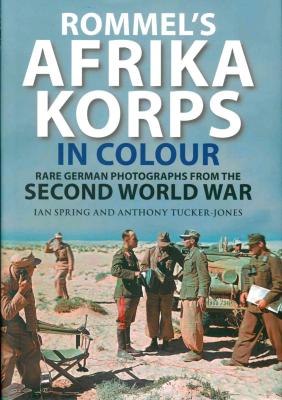
Anthony Tucker Jones really doesn’t need an introduction to military history readers with his impressive book pedigree, over 500 articles and his contributions to modelers through Pen & Sword and Casemate. His latest book builds on his impressive reputation, and his ability to tie in well-known history of a pivotal and influential German Field Marshall, along with amazing color photographs from Ian Spring’s digital archive, makes this a highly recommended book.
Rommel's Afrika Korps in Colour - Rare German Photographs from the Second World War, is composed of an introduction, five parts with 14 chapters, and an order of battle:
Now that the major subassemblies are complete, it was time to put the pieces of the jigsaw puzzle together. I naively thought that it would all be downhill from here, even if it was a gently sloping downhill. I didn’t quite realize how many lengthy flat spots there would be along the way.
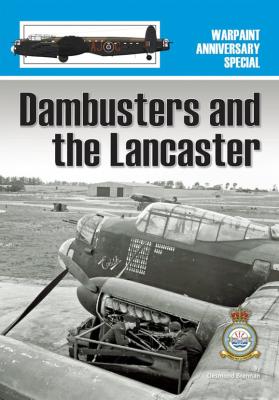
Operation Chastise, the Dambusters Raid, hardly needs an introduction to anyone remotely interested in military aviation history. In this 80th anniversary year, there are several new books about the raid. This slim new volume from Guideline explores different aspects of the operation, its build-up, and aftermath in a general and abbreviated manner.
Author Des Brennan will be familiar to modeling magazine readers, and he approaches the subject with a number of short chapters outlining topics including:
- The development of the Lancaster
- Short biography of Barnes Wallis, developer of the ‘bouncing bomb’
- Bomber Command and Arthur Harris
- Preparations for the Raid
- The aftermath
- And others.
It’s an interesting, if short read. Brennan does a good job distilling the essentials into a cogent narrative.
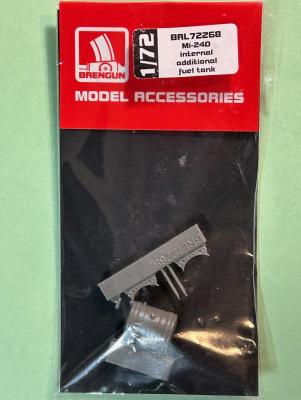
This is an interesting set from Brengun as it allows the modeler to replicate the large internal fuel tank sometimes carried by the Mi-24 Hind. The set has 6 parts, consisting of the tank, what appears to be a spigot or filler connection, and 4 parts that make up the cradle the tank sits on. The parts are all crisply cast. However, I did discover a few pinholes on the underside of the tank and the ends of the cradles that needed to be filled and smoothed out when I put on the first coat of primer.
As with Brengun’s other resin accessory kits, the first step is to remove the parts from the pour stubs. A sharp razor saw makes quick work of this. I next assembled the cradle with superglue and then set it aside to dry and harden. Before the superglue had set completely, I test fit the tank onto the cradle to ensure that everything lined up. Next, I attached the spigot/filler part to the appropriate end of the tank, making sure it was aligned as shown in the instructions.