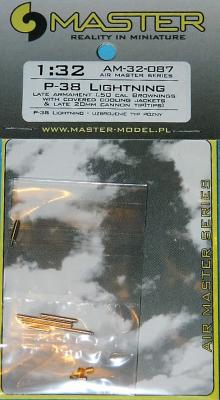
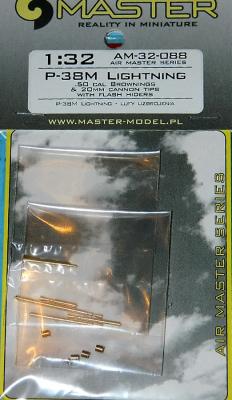
Master Models once again provides IPMS USA with examples of machine-shop excellence… We are extremely thankful to Piotr for providing examples of his work to review.
all 2016
Master Models once again provides IPMS USA with examples of machine-shop excellence… We are extremely thankful to Piotr for providing examples of his work to review.
As you can see by the product photographs, these .50 caliber browning machine gun barrels are exquisite works of art. Designed to fit one of the two 1/32 Lighting models currently available, this nine-part set provides four different length .50 caliber barrels, and one 20MM cannon barrel; all have flash hiders integrally-machined in place, and represent the armament as used on P-38M night-fighter variants of the Lightning. Unlike set 086, this one does not have separate cooling jackets or barrels, so it is a simple finish and install set to replace the kit items. I do not have a night fighter conversion for the 1/32 kit, so this set was not installed. However, attached is a great picture of the actual item and how it would look on the real item…
The Parts
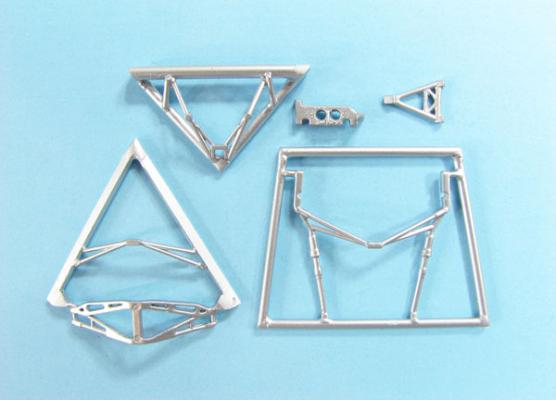
Scale Aircraft Conversion is known for making white metal landing gear replacement sets for numerous aircraft in multiple scales. I have reviewed a few of these sets before. Normally, the only advantages that I see are that these make for a sturdier model. However, this set I feel is different. The parts are exact replacements of the Airfix parts; instead of plastic, these are made of white metal. There really is no additional detail. The parts do not have the mold seams that the kit parts do, which is nice.
The reason I am very much for this set is that the Airfix parts are very finicky. What I found to be very useful of the SAC parts is the ability to bend slightly some of the parts so that you can fully assemble the landing gear. Once assembled, and thanks to the material (white metal), you are able to manipulate the landing gear so you get the perfect stance of your Wildcat!
Applications
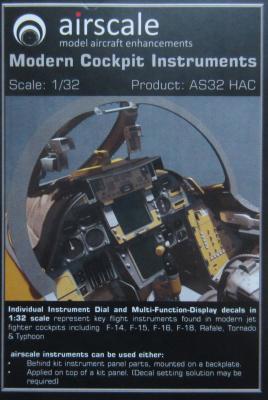
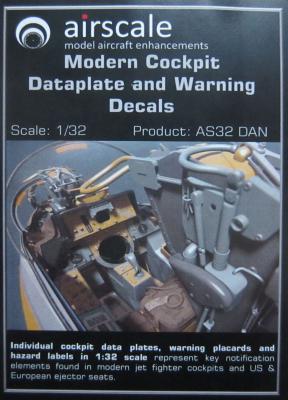
Airscale, as usual is a leader in making cockpit enhancing products and this is a new product to their line. Finally the modern cockpit has been addressed with these decals allowing a modeler to get just the right look of electronic flight displays and round instruments. Included on the electronic displays are the bezel buttons surrounding the bezel. The modelers would have to remove any raised buttons if retaining this portion or simply cut the display portion out and paint the buttons.
There is a little surprise and a real bonus in this set, a legend giving the name of each instrument type. Usually if you look close enough you can guess here but this is taken care of with this nice feature.
Applications
Airscale, as usual is a leader in making cockpit enhancing products and this is a new product to their line. Finally the modern cockpit has been addressed with these decals allowing a modeler to get just the right look of warning markings and dataplates. Trying to paint the cross hatch lines of two colors is extremely difficult and these decals make it easy to do so. There are also tri-color (black/white/yellow) markings in the selection. In addition to the striped markings, dataplates for the sidewalls and for ejection seats are also provided. There is a little surprise and a real bonus in this set, a legend giving the name of each placard and warning type.
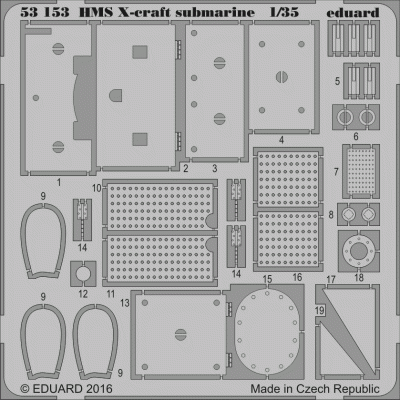
Merit quietly issued a 1/35 X-craft submarine and once I got my hands on it, I was impressed with both the molding and size of the kit. Still, there was some room for add-ons and improvements and Eduard has issued a photoetch sheet to help address some of the issues.
Eduard’s sheet is composed of a single sheet with 30 superb parts. The sheet addresses the hatches on the top of the ship by replacing 6 individual parts and adding detail and texture. A little removal of the hinges and these go on smoothly. There are slight folds on four of the parts but this is easy to accomplish with a new #11 blade.
Next, the kit propeller is undersized and Eduard uses the kit hub but has you wrap three individual blades around a dowel and add them to the hub. This takes a little patience but the result is a larger and more accurate prop.
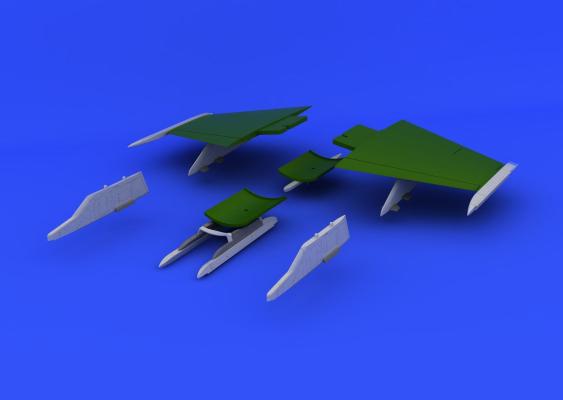
Hasegawa’s 1/48th scale F-104 kit has been around for a while and it is a very nice kit making the grade at many shows all over the world. One thing missing from the standard kit is any underwing pylons. Granted, there are a lot of pictures of F-104’s with any pylons attached but they were able to carry one under each wing and also a centerline pylon also. Eduard gives that option in spades with this newest release- a complete set of pylons for the entire airframe.
Inside the package, you’ll find 25 beautiful resin cast parts, a photoetch fret with 25 detail parts for the pylons and also a full set of decals. This is a very comprehensive set for $14.95.
Let’s take a little more detailed look at what the pylons are and what they are used for:
Background
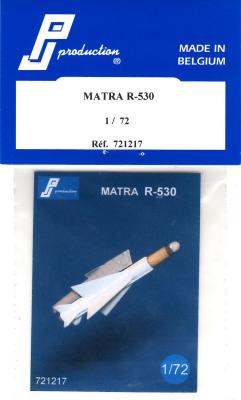
The Matra R-530 is a medium range air-to-air missile. This two stage rocket propelled missile entered production in 1962. Frequently, interceptor aircraft utilize this missile for longer range along with the Matra R-550 Magic 2 short range air-to-air missile. The missile is available with Infrared Homing or with Semi-Active Radar Homing. In some cases, a missile of both types is carried. This weapon is used by at least sixteen countries, most utilizing French sourced aircraft.
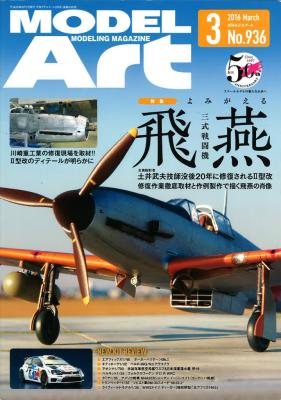
Model Art Issue 936 is typical of other Model Art magazines in that it is written entirely in Japanese, with occasional English words, usually in article titles or in captions. The Model Art magazine is a monthly issue that has evolved from their first issues in 1966 that focuses on all modeling subjects. I’ve attempted to capture the contents below, but please be aware of translation difficulties. There are about 40 pages of advertising, out of the 160 pages, showing what is available and new, always useful for building up that wish list. Nearly all the articles are supported with color photos. A few of the ongoing series are supported with black and white drawings and photos
History
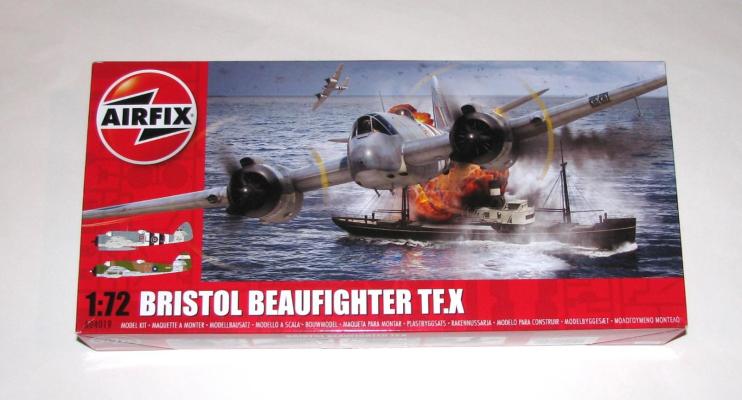
The Bristol Beaufighter was a British long range heavy fighter, developed from the earlier Beaufort design. Featuring two Bristol Hercules engines, the aircraft gained a fearsome reputation for being both fast and able to deliver a powerful blow from its four 20mm cannons and a choice of either Torpedo or Rocket projectiles. Although developed to be a fighter, and used successfully as a night fighter, it was the Mk.X Coastal Command version that was most successful; its range and power enabling it to take a heavy toll of Axis shipping. The Royal Australian Air Force also used the type, finding it to be very suitable for the Pacific war, where the Japanese called it ‘Whispering Death’ due to its quiet engines. After the war Beaufighters continued to serve until the early 1950s.
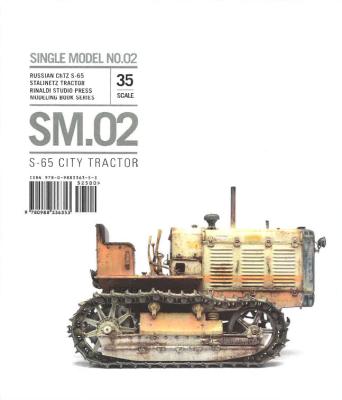
This is Michael Rinaldi’s second book in this series, the first being on the Industria Mechanika 1/35 FichtenFoo's Fantastical Fish-shaped Submersible resin kit. This issue focuses on the Trumpeter Stalinetz S.65 Russian Army tractor kit. The Single Model (SM) series represents a focus on a specific kit and as such is a limited edition (i.e. Only One Print Run!). This singular focus permits Michael Rinaldi to tackle topics outside of his successful TankArt series and allows him to address finishes that he has not attempted before. Indeed, the next in this series is on the Bandai Sazabi Master Grade Mobile Suit. A core premise of the new book series is to explore and redefine artistic and creative finishes for each subject.
Background
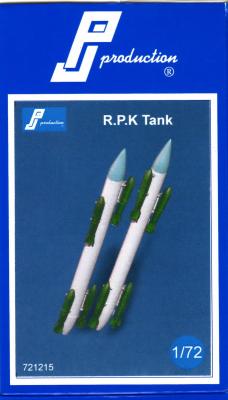
This is an interesting accessory for Mirage III or V models from PJ Production of Belgium. These R.P.K. tanks are basically 500 L fuel tanks with four 250 kg bombs attached to each. The weapons are used for ground attack. They were used by French aircraft as well as Australia, South Africa, Peru, Bolivia and possibly others. I was able to find a few photos on the internet but very little data. Most of the information came from a request to PJ Production.
Background
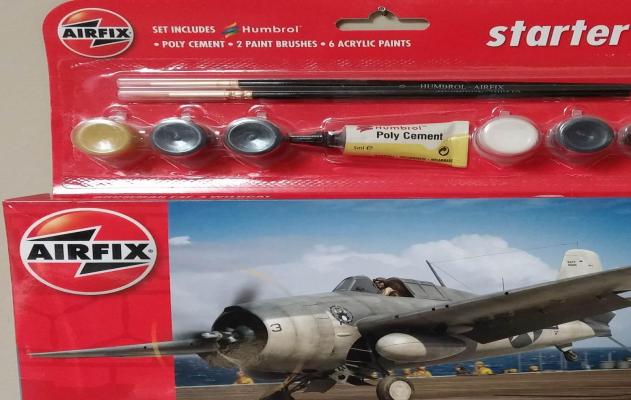
This is Airfix’s second boxing of its new-tool F4F-4 Wildcat. This is the same plastic that comes in the first Airfix release, but this release is marketed under the “Starter Set,” meaning it comes with some paints, glue, and two paintbrushes. The paints are Humbrol acrylic and include: Trainer Yellow Matt (No 24), Sea Grey Matt (No 27), Black Matt (No 33), White Matt (No 34), Gunmetal metallic (No 53), and US Light Green Matt (No 117). I tried the paints with the supplied paintbrushes, and although the brushes are not very fine, they did work well with the paint once mixed. Therefore, for someone new to the hobby, this kind of a starter set should actually be useful.
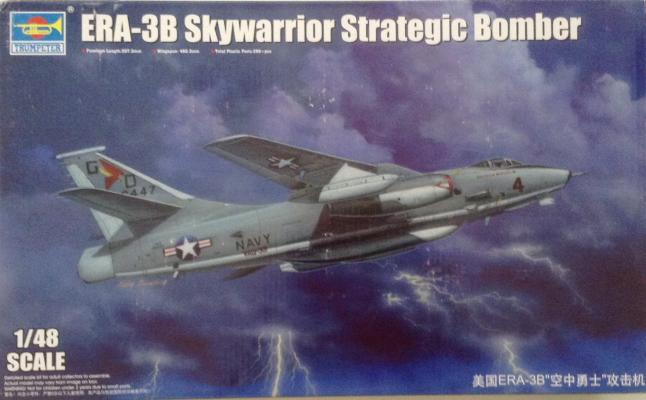
This is the first installment, “First Look,” of Trumpeter’s Douglas ERA-3B 1/48th scale variant to be released by Trumpeter in 2016. The plane represents the US Navy, VAQ-33 ‘Firebirds’, ERA-3B, 104/GD BuNo. 146447. The ERA-3B variant was converted from the RA-3B variant as an electronic aggressor aircraft serving with the VAQ-33 and VAQ-34. I won’t bore you with a long lengthy dissertation on the history of the Douglas A3 and this variant so I will just include here a description presented on Trumpeter’s product website which will suffice for most modelers. I’m sure during your build one would do their own further research. “The Douglas A-3“Skywarrior”was a strategic nuclear bomber developed for the US Navy.
Early last year I was excited to see that Revell was going to release two new NASCAR kits sometime in the 4th quarter of 2015. I was equally excited because these would be of the newer Generation 6 style of cars and Ford Fusions. Well the bubble burst when I discovered that these kits would be SnapTite kits. Excited for the kids and snap builders, but a little disappointed that we haven’t had a new glue-style NASCAR kit in almost two decades.
I understand Revell plans to rectify this situation in 2017-18, based on the sales of these snap kits. At $24 dollars each I am really skeptical that they will be able to penetrate the youth market with these kits.
Summary
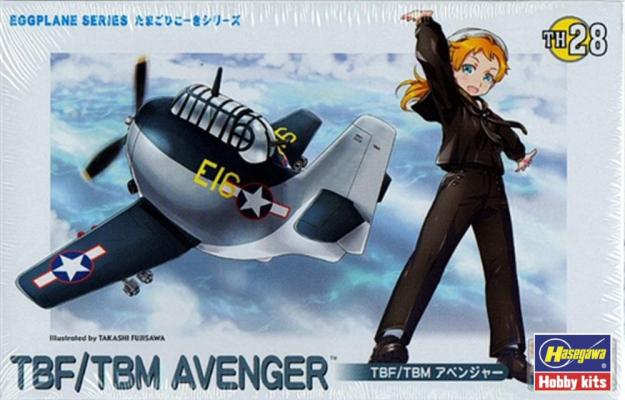
Hasagawa has re-released their previously out-of-production Tamago Plane Series Egg Plane caricature of the venerable TBF/TBM Avenger, this issue sporting two sets of new markings, including the popular set for USS Mission Bay (Code E16).
The small, sturdy box contains two sprues of relatively hard, blue plastic, a clear plastic canopy packaged separately, one medium sheet of decals which are thin and in perfect register, and one instruction sheet totaling 6 pages with 2 steps, printed in black and white.
The markings in the kit cover two schemes: TBF-1C: U.S. Navy USS Mission Bay Code: E16 and TBM-1C: U.S. Navy VC-42 Code 21.
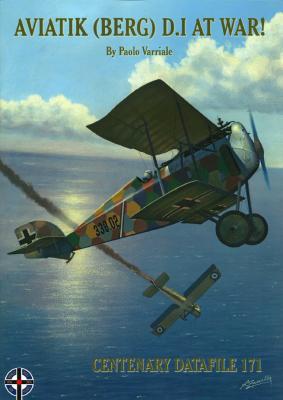
Italian historian Paolo Varriale has taken a new look at the Aviatik’s (Berg) D.I service in WWI.
A single seat fighter designed by Julius von Berg, the Aviatik D.I first flew October 16, 1916, unfortunately killing the test pilot. Approximately 677 airframes were built, and that constituted nearly 43% of the fighters accepted by the Austro-Hungarian Army Air Service. The Aviatik (Berg) D.I was light and fast, but suffered from poor manufacturing quality leading to an adverse reputation for shedding wings.
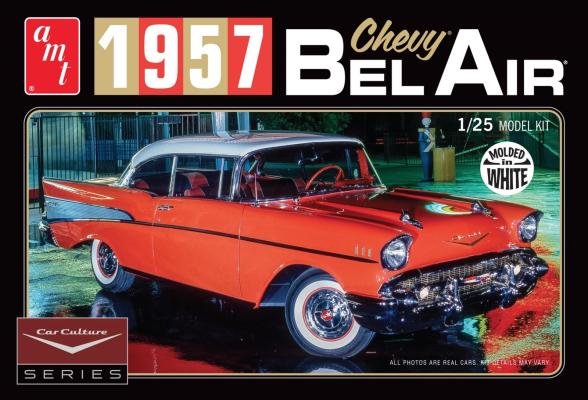
The '57 Bel Air is truly one of the most beloved cars in the history of the automobile. Its unique styling is unmistakable. I was thrilled to be able to have the opportunity to build Round 2's newest creation. It is released under their series of cars entitled "the Car Culture" series. Everything comes molded in white so to me that's a good thing. It has no flash and the entire car is very intricately detailed. It contains 160 plus pieces including photo etched chrome.The chrome etching covers the namesake fins, as well as the front and back gold V's that require some gold paint to accurately depict them, as well as the 3 inserts in the front fenders. As of these pics I hadn't completed these yet.
History
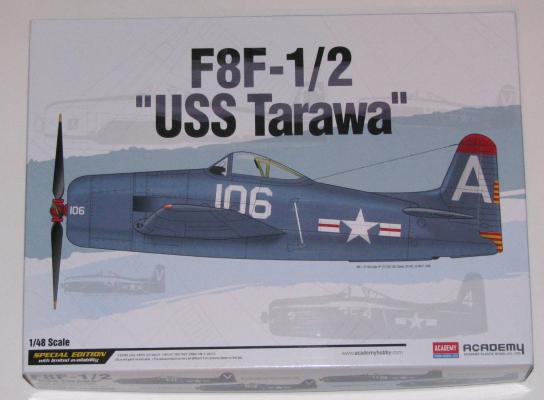
Ordered in 1943, the first F8F flew in 1944. The XF8F-1 had a speed of 424 mph was armed with four .50 caliber guns in the wings and could carry two 1000lb bombs. Deliveries of the F8F-1 began in May 1945 but due to the end of the war the order was cut to 770 from 2900. Later Grumman received a contract for 126 F8F-1Bs which had four 20mm cannons instead of the .50 guns. The F8F-2 was introduced in 1948 and 293 of the -2 Bearcats were built by Grumman with the biggest differences being a taller fin & rudder and a revised cowling. Besides the U.S. Navy & Marine Corps F8Fs were used by Thailand, South Vietnam and France.
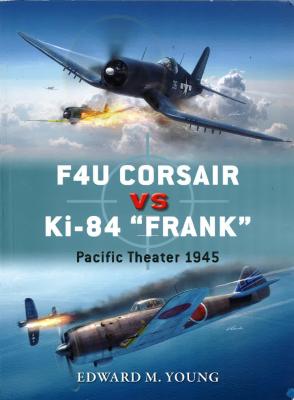
The newest in Osprey’s Duel series is authored by Edward Young, a retired financial executive. He has written a number of books and numerous articles on aviation and military history, including: Osprey Campaign Series 136: Meiktila: The Liberation of Burma, Warrior Series 141: Merrill's Marauders, Osprey Combat Aircraft Series 87: B-24 Liberator Units of the CBI, Duel Series 41: B-24 Liberator vs. Ki-43 ‘Oscar' and Osprey Aircraft of the Aces 109 - American Aces Against the Kamikaze. Illustrator Jim Laurier, a native of New England, provides the color profiles. Jim has been drawing since he could hold a pencil and throughout his life he has worked in many mediums creating artwork on a variety of subjects. He has worked on the Osprey Aviation list since 2000, and has been featured in hundreds of aviation books. Gareth Hector is a digital artist of international standing as well as an aviation history enthusiast. Gareth Hector the cover artwork along with a two-page spread of Lt.
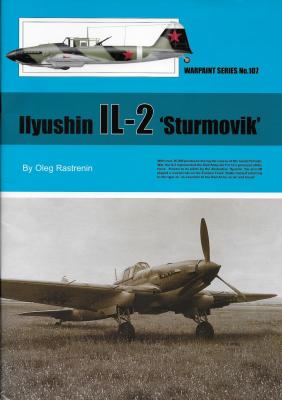
Guideline has just added the Ilyushin IL-2 to the list of titles in their “Warpaint” series.
The pages of this book are all printed on high-quality, glossy stock, and the covers are in stiffer card stock, also glossy. As with other titles in this series, the production quality is quite high.
There are not really any distinct “chapters” in the book, but each new section is labeled in bold type. The author dives right in on page one to explain the history behind the idea of the Il-2, and its subsequent creation. Having established that, he then discusses early production, modifications, and further production. The addition of a second crewman (rear gunner) is covered in depth, as this was a major change to the initial version of the aircraft. Some brief combat history is woven throughout the developmental history, as in large part it was the combat experience that resulted in the need for changes to the airframe.
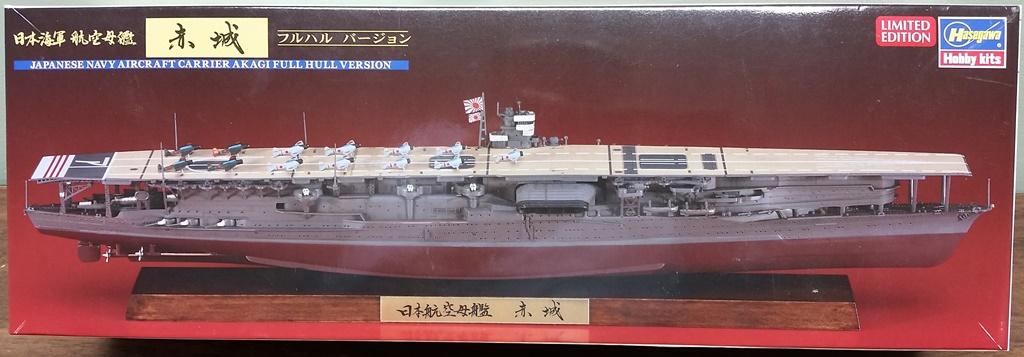
The Akagi is arguably the best known of Imperial Japan’s aircraft carriers. Like the American carriers Saratoga and Lexington, she was laid down as a battle cruiser, and then converted to carrier as a consequence of the Washington Naval Treaty. Commissioned in 1922, Akagi was Japan’s second aircraft carrier (after the diminutive Hosho). Initially built with three separate flight decks, Akagi was updated in the 1930s to handle larger and heavier aircraft. Gone were the three separate decks in favor of a single flight deck running the length of the ship, together with an island structure added to the port side.
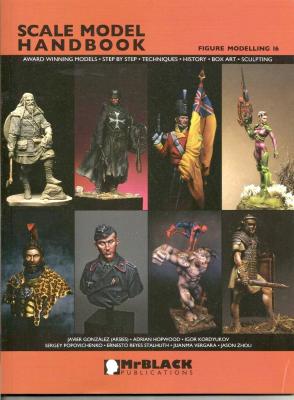
Mr. Black Publications offers a very thorough and comprehensive series of books which feature “Figure Modelling”. This book is the 16th book in that series.
The book is not a Beginner’s Guide to Figure Painting, although there is much “foundation skills” information that is in the book. Rather, there are eight chapters, each featuring a specific subject, each with a different contributing author.
Each article is accompanied by a number of excellent photographs showing the project “in progress” and “completed”. A list of paints, brushes, primer, glue, and other materials used in the project are provided. This “shopping list” is something that I, as a rookie figure painter find extremely important. In each article, the author describes specific techniques such as base preparation, painting skin, armor, clothing, weapons, and “weathering”, or adding damage to the figure.
The Aircraft
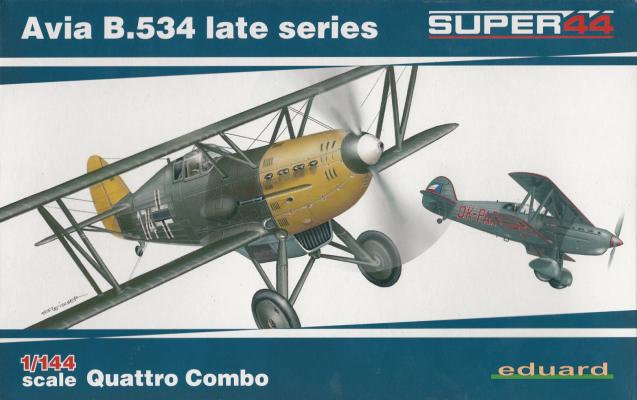
OK, this is not my first review of an Eduard 1/144 B.534. I reviewed the “early” version and now I get to review the “late” version. In the previous review I mentioned in the history that a B.534 flying with the Slovak uprising in October 1944 shot down a Hungarian Ju-52 transport. This was the last victory by a biplane ever. Well, this model is that airplane. The Avia B.534 began its career in 1934. At the time it was an advanced aircraft. By 1940 it was well into obsolescence. In August of 1943, Bulgarian B.534s were sent to intercept the B-24s on the Ploesti raid. They had neither the speed nor the altitude to reach the bombers. The decals for a Bulgarian B.534 are included in this kit.
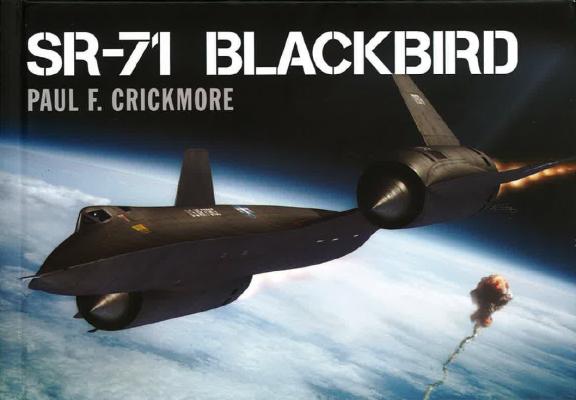
This is at least the second in this as yet un-named series from Osprey. The first that I’m aware of was Spitfire by Tony Holmes published in the same hardback format in August 2015. This appears to be a ‘handy’ size book that is possibly derived from earlier books by Paul Crickmore on the SR-71 Blackbird. Paul Crickmore has quite a history photographing and writing about the Lockheed Blackbirds leaning on his time as an Air Traffic Controller in London. Following the termination of the SR-71 program, Paul Crickmore produced a very detailed book, Lockheed SR-71: The Secret Missions Exposed that won praise from the aviation press, SR-71 crews, and the late president of the Skunk Works, Ben Rich.