all 2013

Book Author(s)
Marek Ryś
Review Author
Paul Mahoney
Published on
Company
Mushroom Model Publications - MMP Books
MSRP
$39.00

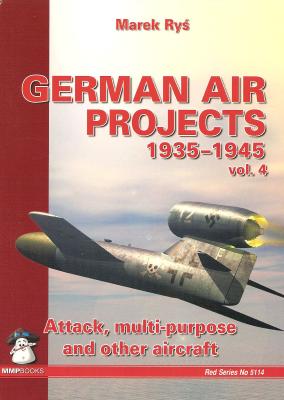
This is the fourth and final volume in MMP’s German Air Projects series that covers Luft46 “might have beens.” This particular volume covers attack, multi-purpose, and “other” subjects. The “other” is essentially an addendum to the other 3 volumes, and covers subjects that were previously omitted, or subjects about which new information has been uncovered. Without the “other” section, this would be a very slim volume! Illustrations throughout the book consist of line drawings and artist renderings – there are no photos in this book as everything is conjecture.

The first 38 pages of the book cover attack and multi-purpose aircraft, arranged by manufacturer. Line drawings accompany many of the sections.

Pages 39 through 64 cover other types of aircraft not previously written about in previous volumes (or those with newly discovered information). Again, many line drawings accompany the text.
Review Author
Paul Mahoney
Published on
Company
Eduard
Scale
1/32
MSRP
$14.95

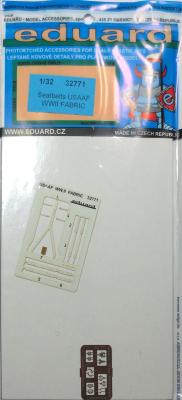
Eduard’s original detail sets consisted of photo etch brass to be assembled and painted by the builder. More recently, they started producing pre-painted seatbelts and other details (still made out of brass). This is the next evolution in the ever-expanding world of Eduard’s accessories line.

Eduard’s #32771 set includes pre-cut belts made out of a fabric material and a photo etched hardware fret that assemble into one set of seatbelts designed for use in USAAF aircraft (primarily fighters). I believe this was originally a product developed by HGW (their logo is stamped on the fabric fret).

Review Author
Jim Stepanek
Published on
Company
AMT
Scale
1/25
MSRP
$22.99

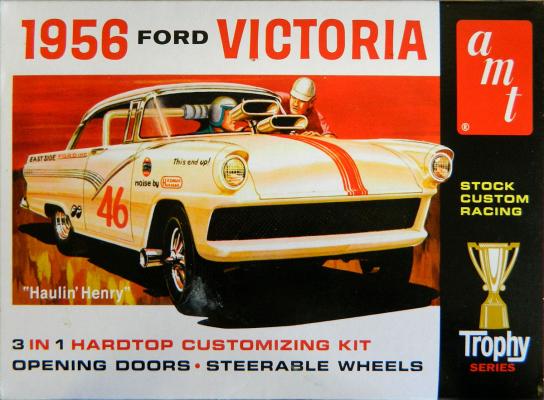
This ’56 Ford Victoria was originally issued by AMT in the 1960’s, then re-released several times after that. Even with Round 2’s mold clean-up process, I have never encountered so much flash on a model before. Literally, every piece had excessive flash that needed to be cleaned off prior to fitting and painting.

Review Author
Dave Morrissette
Published on
Company
Tamiya
Scale
1/32
MSRP
$199.99

Once I had the fuselage sealed up, it was time to build the engine. The engine is 46 pieces and the fit is excellent. One note – the parts and order of addition is specific. Also, take time and make sure alignment is good. The intake and exhaust pipes coming off the back of the front cylinders needed to be aligned where they slide over the exhaust pipes I mounted to the firewall in part 1. One thing missing was the ignition wires. I used 32-gauge wire and added them based on Internet pictures. Once the engine was complete, the front cowling and rings were attached. These were a little fiddly and support the remainder of the cowling, and need to be glued on firmly. The contact points are small, so make sure things are square and glued tightly. Lastly, there is the choice of open or closed cowl flaps. I chose closed for this one (yes, I WILL build more), and since I was building option A, there were also a few special instructions.

Review Author
Doug Hamilton
Published on
Company
Moebius Models
Scale
1/87
MSRP
$44.99

I remember when The Munsters were first introduced to us. Just your typical all-American family, who came from Transylvania, and who also just happened to be Frankenstein and The Bride of Frankenstein! The rest of the family had Count Dracula as the slightly off-kilter Grandpa; a prepubescent wolf boy named Eddie who slept in a cupboard; and one out-of-place niece, the beautiful Marilyn. The house they lived in was an amazing place of dungeons, secret passages, and cob webs galore. The architecture was mostly Gothic, with hints of Victorian included, and a little Haunted House thrown in for good measure!

Review Author
Dick Montgomery
Published on
Company
Hasegawa
Scale
1/48
MSRP
$40.00

The Instruction Sheet

The instruction sheet is typical Hasegawa – that is, the instructions are free of any errors (at least that I noticed), easy to interpret, and with clearly labeled paint call-outs and part call-outs. The thirteen construction steps are on three pages, decal placement and painting guides are on two pages, aircraft history is on a single page, and a parts guide and color call-out list is on a single page.

For the most part, you can jump around on the instructions from step to step. We all do it. Not to worry, but study the assembly process for the prop or you’ll end up having a bit of a mess on your hands. Do not install the blades into the spinner until the spinner has been attached to the spinner shaft. Also, the placement of the six exhaust stacks is unique – the sequence is according to the part number of the stack. Start with the stack farthest aft on each side and work toward the front of the aircraft.

Review Author
Jim Stepanek
Published on
Company
Revell
Scale
1/25
MSRP
$23.95

In front of the "A" pillar, the '66 Chevelle Station Wagon is all muscle car. It was built with the same engine and drive train as one of the most potent muscle cars in history, the Chevelle. But you have to put the kids somewhere. The station wagon's designers stretched the two-door, four-seat car into a four-door, eight-seat wagon.

The kit directions contain a paint guide that you can follow if you so desire, and a beautiful decal sheet should you care to use it. The decal sheet contains decals that will cover most of the side in a wood grain pattern with flames.

Engine

The kit features a big block 396 ci engine that’s engraved very well. I changed out the kit chrome-plated valve covers for a resin pair of painted Moroso covers. The engine then got spark plug wires in the correct firing order, alternator support, fuel lines, throttle linkage, an aftermarket air filter, and heater hoses.

Book Author(s)
Colin A. Owens
Review Author
Roger Rasor
Published on
Company
Albatros Productions, Ltd.
MSRP
$21.95

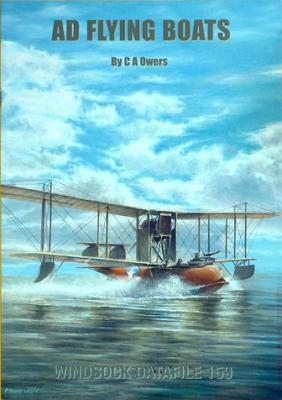
Windsock Datafiles from Albatros Productions are considered by many to be the most comprehensive reference/historical publications available for those who build WW I scale aircraft models. Each volume focuses on a specific aircraft and can be counted on to provide a thorough study of the subject. The most recent volume, Windsock Datafile No. 159, details the history of the AD Flying Boats.

Review Author
Michael Novosad
Published on
Company
Eduard
Scale
1/48
MSRP
$14.95

History

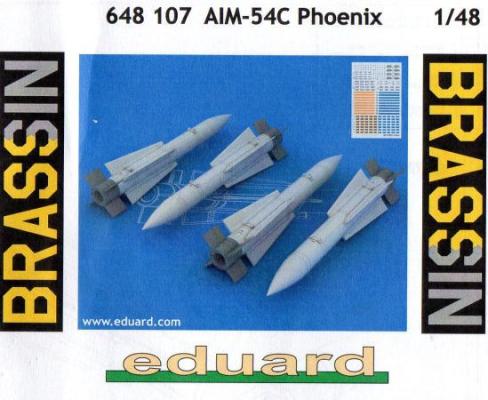
The AIM-54 Phoenix is a radar-guided, long-range air-to-air missile (AAM), carried in clusters of up to six missiles on F-14 Tomcats, its only launch platform. The Phoenix was the United States' only long-range air-to-air missile. The weapons system based on Phoenix was the world's first to allow simultaneous guidance of missiles against multiple targets. Both the missile and the aircraft were used by the United States Navy and are now retired, the AIM-54 Phoenix in 2004 and the F-14 in 2006. Following the retirement of the F-14 by the U.S. Navy, the weapon's only current operator is Islamic Republic of Iran Air Force.

Book Author(s)
Gary Wetzel
Review Author
Ken McDevitt
Published on
Company
Osprey Publishing
MSRP
$22.95

Review

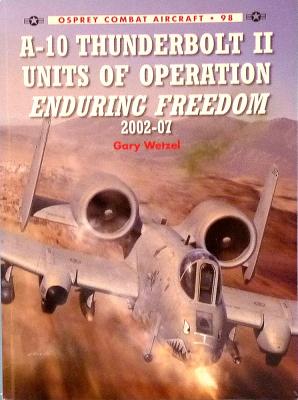
The Fairchild Republic A-10 Thunderbolt II is so ugly, it’s beautiful. It is clearly an example of function over form. The A-10 is designed to maximize the pilot protection with a titanium bathtub cockpit and heavily armored cockpit glass. The airframe design has redundant control systems and high mounted engines to provide maximum survivability when damaged, and also to reduce the risk of engine damage. The book starts with the fly-offs between manufacturers and the selection of Fairchild Republic as the design winner. In response to pilots’ feedback for a big gun, the General Electric GAU-8 Avenger 30 mm cannon was selected, with a rate of fire at 3900 rpm.

Review Author
Franklyn Cook
Published on
Company
Fine Molds
Scale
1/35
MSRP
$100.00

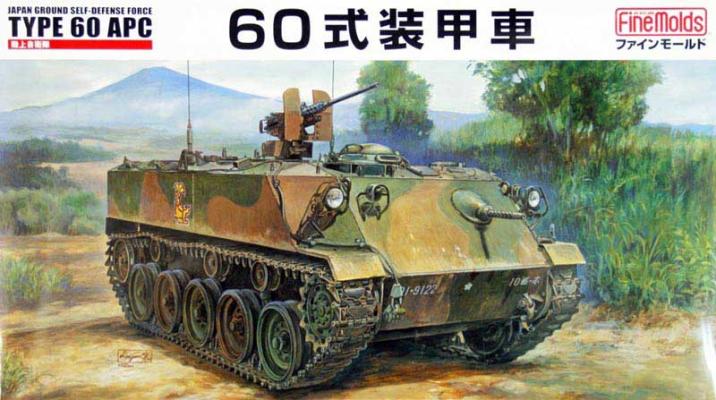
The JGSDF Type 60 APC

The Japan Ground Self Defense Force (JGSDF) is the main branch of the Japan Self-Defense Forces responsible for land-based military operations. It is the de facto army of Japan.

Development of the Type 60 armored personnel carrier (APC) began in 1957. Mitsubishi Heavy Industries and Komatsu Ltd. were tasked by the Ministry of Defense to develop prototypes for an APC that would see use exclusively in Japan by the JGSDF and could keep up with their main battle tanks. From 1958-60, several prototypes were evaluated. In 1960, the Type 60 was selected and production began. There was no amphibious capability, nor was the vehicle protected from biological, chemical, or nuclear contaminants. It was capable of a top speed of 28 mph and weighed 11.8 tons. The armor was welded rolled plate steel, good enough to protect against most rifle calibers and shrapnel.

Review Author
Roger Rasor
Published on
Company
Quickboost
Scale
1/48
MSRP
$8.50

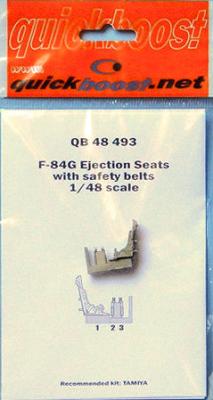
Quickboost now offers aircraft builders a highly detailed 1/48 scale ejection seat that is intended to replace the one found in either the Tamiya or Revell F-84G kit. It is recommended as a replacement for the Tamiya seat, but it also can be used to replace the Revell kit seat with very little adjustment. As nice as the kit parts may be, this replacement provides a higher level of detail along with casually posed shoulder and lap belts molded in place. The details are very delicate and crisply molded.

Review Author
Brian R. Baker
Published on
Company
Hobby Boss
Scale
1/72
MSRP
$17.99

History

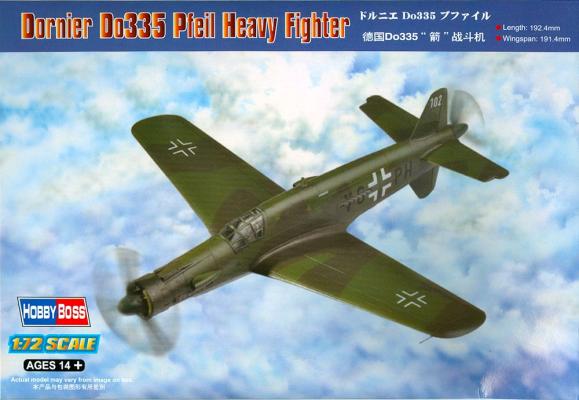
The Do-335, like many German aircraft of World War II, had a checkered development. It began its life, at Hitler’s insistence, as a high speed bomber, and only later, when Hitler was told that the Me-262 would be a better high speed bomber, was the plane’s basic mission changed to that of heavy fighter and reconnaissance.

First, Dornier used a scaled down (1/2.5) Do-17Z airframe (Goppingen Go.9) to test the feasibility of the rear mounted engine with a prop behind the tail unit. Tests showed the usefulness of the arrangement, so design began on the full size airplane. Featuring a tandem engine arrangement (which was not new to Dornier), the aircraft was a large, single seat, twin engine aircraft with two DB-603 liquid-cooled engines. The type began as a high speed bomber (Nov. 1943), reconnaissance fighter and night fighter (Jan. 1944), and ended finally as a heavy fighter (Mar. 1944). In July, 1944, the first prototypes were delivered as bombers.

Review Author
Brian R. Baker
Published on
Company
Zvezda
Scale
1/72
MSRP
$11.99

History

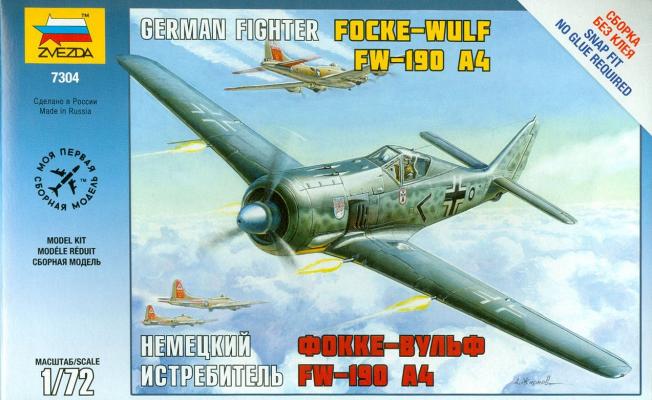
The Focke Wulf Fw-190 is probably one of the most modeled aircraft in any scale, mainly because it was such an excellent design and was produced in very large numbers during World War II. Although sources vary as to the number produced, slightly fewer that 1,000 of the A-4 type appear to have been manufactured during 1942 to replace the A-3, and subsequently being supplanted by the improved Fw-190A-5. Constantly upgraded during the war, the type held on until the final days, both as a fighter and as a ground support and reconnaissance aircraft. Most serious modelers are familiar with the type and its history, so I’ll refer you to other sources. There is certainly no lack of information on this aircraft, both in publication form and on the internet.

Review Author
J.R. Sharp
Published on
Company
MiniArt
Scale
1/72
MSRP
$34.00

The Kit

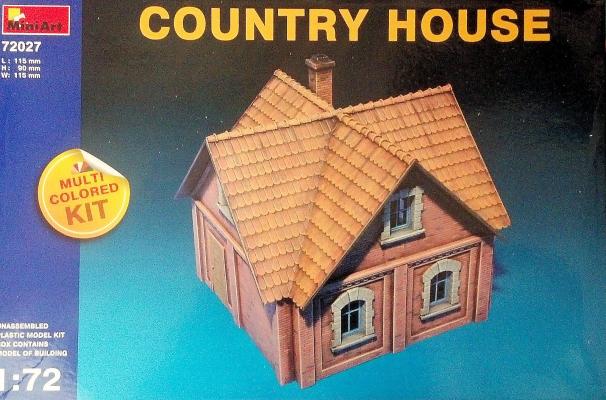
The kit consists of 110 injection molded parts in the standard MiniArt colors; orange, maroon, black and white. All parts are relatively free of flash (some may have just a small bit around the attachment points) and are very crisp in detail.

Construction

As with the kits before it, the Country House is very well made. Being a smaller kit, assembly should not take much longer than an hour or two. A few points worth mentioning on this kit centers around the roof. As with prior offerings, the thin roof pieces seem to have a slight bow to them. Given that all of these meet in the middle, there may be some considerable use of cement or CA to get them to remain. I was able to resolve this by tacking them with a little cement and then gap filling with CA.

Review Author
Tom Pope
Published on
Company
Showcase Models Australia
Scale
1/350
MSRP
$30.00

Introduction

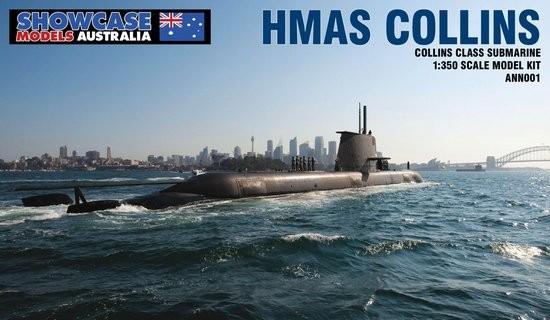
Showcase Models Australia is a relative newcomer as a model distributor in Australia (founded in 2011, according to their Facebook page) and has recently branched out into manufacturing their own kits. In May 2013, the production of the Collins Class subs was completed and the kit made it to the Showcase Models showroom and subsequently, other retailers and distributors.

A big Thank You goes to Dragon Models USA for providing this review sample to IPMS/USA.

Review Author
J.R. Sharp
Published on
Company
Zvezda
Scale
1/72
MSRP
$14.95

The Kit

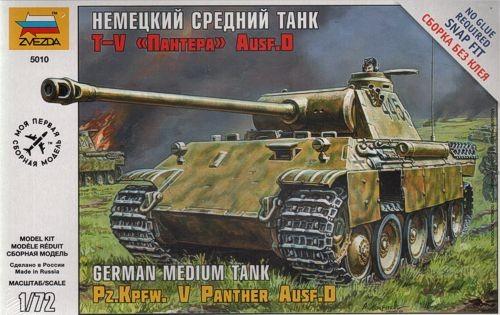
Nearly 100 injection molded parts in tan plastic plus 2 black plastic treads. All parts exhibit crisp detail and are flash free. The muzzle of the main gun is not slide-molded so will need to be drilled out. Being a snap kit, all parts had a number of locating pins. All of them fit together without modification.

Review Author
Mark Aldrich
Published on
Company
Trumpeter
Scale
1/35
MSRP
$63.95

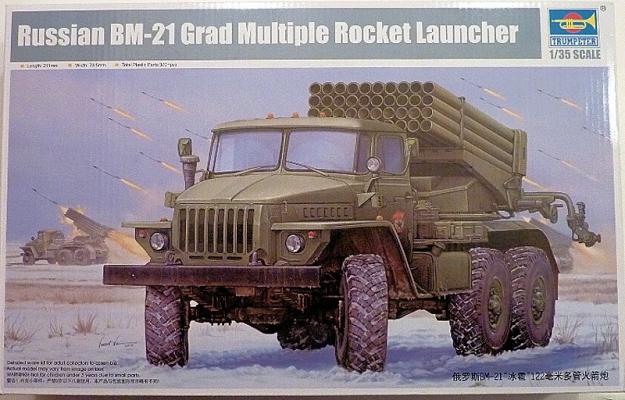
This was another item that had been on the review list for some time before I volunteered for it. As this vehicle comes with almost no external markings, Steve said I could do it as a Middle East Vehicle. I am thinking Syrian Militia based on a picture I came cross surfing the web. However, I do need to include some information about this particular kit as it might actually be a “What If”.

Review Author
J.R. Sharp
Published on
Company
MiniArt
Scale
1/72
MSRP
$34.00

The Kit

The kit is cleanly molded in 154 pieces of multi-colored plastic. These parts are the same parts used in constructing many of the other 1/72 offerings from MiniArt. No flash is apparent and detail is very crisp on all parts. A new part that I have not seen on this model was the introduction of a stone foundation.

Construction

Assembly of this kit was straight forward as all of the offerings before it. However, I took a different approach. On many of the other kits, I found that doing each wall with the end connectors tended to produce minor gaps at the corners. This time I decided to pre-build the corner assemblies and then add the walls. Also, I decided to paint parts separately before assembly. This approach offered a much cleaner look to the house, a departure from the worn down structures I had built in the past. The result was by far my favorite work of all of these kits I had done.

Review Author
Greg Wise
Published on
Company
Hobby Boss
Scale
1/48
MSRP
$55.99

History Brief

F4U-4: The last variant to see combat during WWII, the Navy took deliveries in late 1944 and had two fully operational squadrons by the end of the war. The type incorporated a lot of changes over the F4U-1D. Most notable is that it had a more powerful engine with a new four bladed prop.

F4U-4B: Designation for F4U-4s to be delivered to the British Fleet Air Arm but were retained by U.S. for its own use. The British received no F4U-4s.

The Product

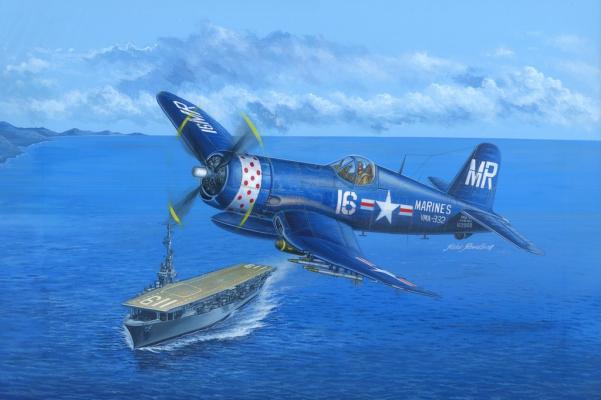
My sample came packaged in a large, sturdy corrugated box. The box art is very nice depicting a Marine Corsair circling the USS Point Cruz.

Review Author
Brian R. Baker
Published on
Company
Hobby Boss
Scale
1/72
MSRP
$17.99

History

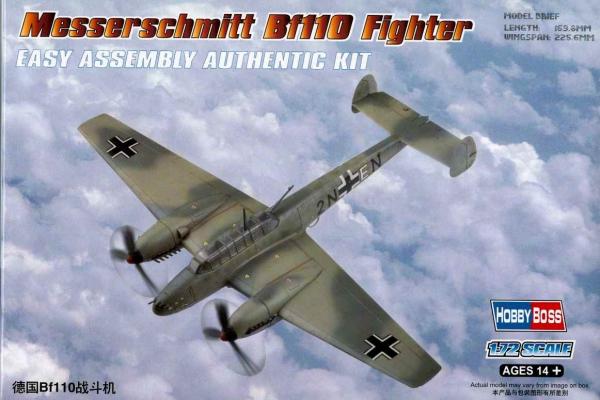
The Messerschmitt Bf-110 was an early attempt by the Luftwaffe to develop a long range strategic fighter for deep penetration missions. It was also intended as a long range escort for bombers, as an interceptor against enemy bomber formations, and as a light bomber and ground attack aircraft. The first prototype flew in 1936, but protracted engine development kept the Bf-110 from entering service until 1938 as the Bf-110B. In 1939, the Bf-110C went into production, and this was the first version produced in large numbers. The Bf-110C appeared in fighter, ground attack, reconnaissance, and “destroyer” versions. The Bf-110C was used to effect in the Polish campaign in 1939, and this gave Goring the impression that the type was unstoppable, the ultimate air weapon. After success in shooting down unescorted RAF Wellington bombers, the type was committed in Norway and Denmark, and later during the Battle of France.

Review Author
Charles Landrum
Published on
Company
Kitty Hawk
Scale
1/48
MSRP
$69.99

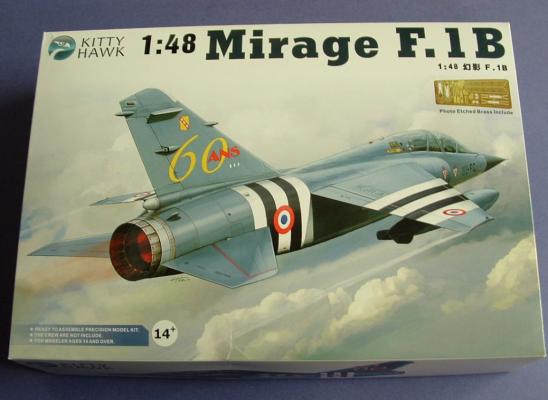
Kitty Hawk is a newcomer on the scene and seems to be filling a niche by releasing subjects not kitted before and new kits of older subjects previously kitted. The only previous kitting of the Mirage F.1B in 1/48 was the Fonderie Miniatures limited run multi-media kit. That is why, as a fan of the Armee de l’Air, I was pleased to see Kitty Hawk release this kit, especially in two colorful anniversary schemes, including the D-Day 60th anniversary scheme from 2004. Kitty Hawk has started to release single seat variants of the F.1 as an option to the elderly ESCI/Italeri Mirage F.1.

Review Author
Chris Graeter
Published on
Company
Tamiya
Scale
1/35
MSRP
$29.00

Kit

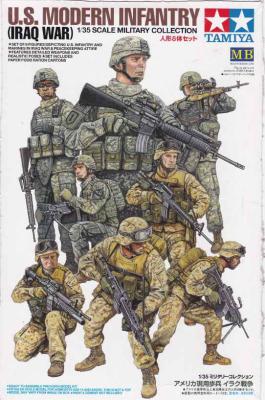
The kit comes with two sprues, one for the four US Army figures and one for the four US Marine figures. There is a paper sheet with printed US food ration boxes that can be cut, folded, and glued up to represent these ration boxes. Also there is and instruction sheet for assembly. The first thing you will notice about this kit is that it is not a Tamiya mold, but instead a Master Box Mold. In fact the kit contains two Master Box figure sets into one. Why Tamiya used, Master Box Molds instead of producing their own is beyond me (could be a distributor relationship- Ed). Tamiya has a history of producing excellent figures, so I was a little dumb founded as to this fact when I received the kit. The figures have excellent detail with little to no flash to clean up. There are a few options for some of the figures. There are different weapons and equipment for some of the figures to choose from, but most build up to what you see on the box art.

Review Author
J.R. Sharp
Published on
Company
MiniArt
Scale
1/72
MSRP
$43.00

The Kit

This kit is cleanly molded in the standard multicolored plastic offered by MiniArt. Using the same parts as with the other kits, there are no surprises; all parts are cleanly molded with crisp detail and free of flash.

Construction

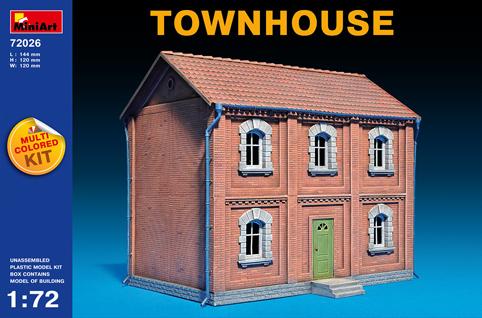
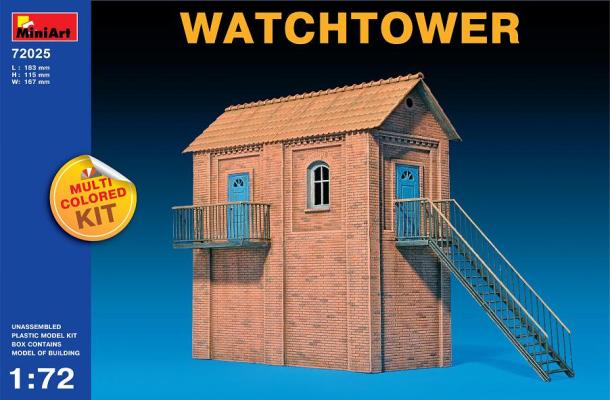
Assembly was followed in the same manner as the Townhouse kit, building the corners first and then attaching the walls. Once again, I feel as if this is the preferred method for a better construction. All parts went together without issue on the main structure. Next, it was time to tackle my bane/failure from one of the previous kits…the stairs. I honestly cannot give a whole lot of complements to the stairs due to lack of alignment/attachment points for the entire assembly. I ended up just making the stairs look close to correct and moving on. The manner in which the railings attach on the balcony and stairs is not very sturdy. I found that my cement melted the holes closed in no time.

Review Author
Jim Fry
Published on
Company
Trumpeter
Scale
1/32
MSRP
$130.00

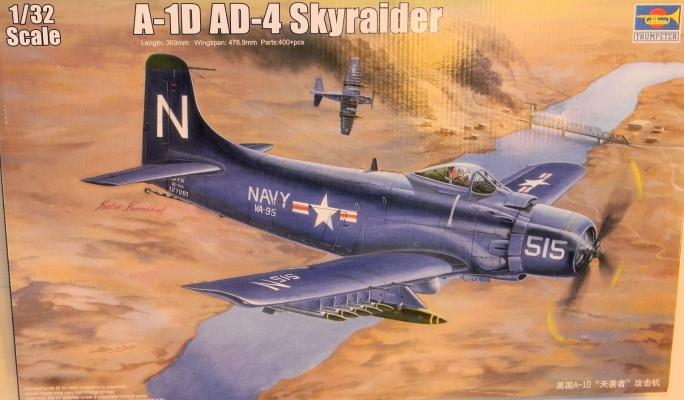
As The Douglas Skyraider series was arguably the most effective and all-around aircraft of the Vietnam War, I won’t go into any history. If you don’t know about the Skyraider but are reading this, you should be aware of this versatile aircraft which was used by both the US Navy and US Air Force.

When I received the kit for this review, I first spent time going through the plans and the many sprues to get a feel of the fidelity to scale and detail level of the kit. I was excited by what I saw and anxious to get started with the build.