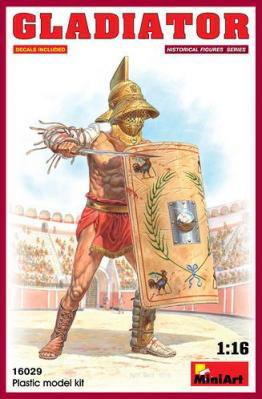
The latest release in MiniArt’s 1/16th historical figure series is this Roman Gladiator around the time of the 1st Century AD. There were many different classes and types of gladiator, each with specific weapons and armor, and this figure is a Mirmillo, a type of gladiator who was armed with a short sword called a Gladius and a large Imperial army-style shield called a Scutum. The Mirmillo gets his name from a type of fish – his helmet has a large crest like a fish’s dorsal fin. Supposedly, he was pitted against the Retarius, the “fisherman”, the guy with the net and trident. But it is believed he was more often up against other types of gladiators armed with short swords and heavy armor.
all 2013
I have always wanted to do a series of trainers, so when Kinetic announced this and it came up for review, I was ready to go. Add to that some excellent aftermarket from TwoMikes Resin (with new intakes and tail hook and fairings) and Caracal’s excellent sheet for the Salty Dogs, and we were off to the races.
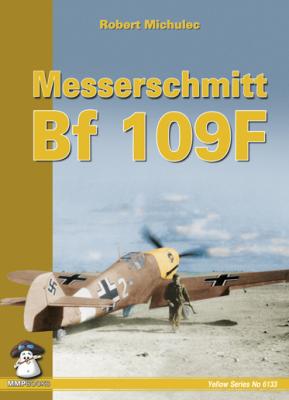
Mushroom Model Publications has released the latest installment of their Yellow Series titled Messerschmitt Bf 109F. Like all the other books in the series, it is printed in glossy paper and lavishly illustrated with period b&w photographs, color profiles, and color pictures of restored aircraft. Also of note is also the fact they have included 3D computer-generated images of different parts of the airplane (nose, control stick, etc.).
In addition to the above, there are 1/48 scale plans of all the main Bf-109F variants, plus a 620mm fold-out (2-feet) color profile of a Bf-109. I wish I could frame it!
The main sections of the book include: early stages, armament, prototype (Bf-109F-0), main variants (F-1 to F-4), production series, modifications (/Trop, reconnaissance, etc.), final variants (the rare F-5 to F-8 marks), research programs, etc.
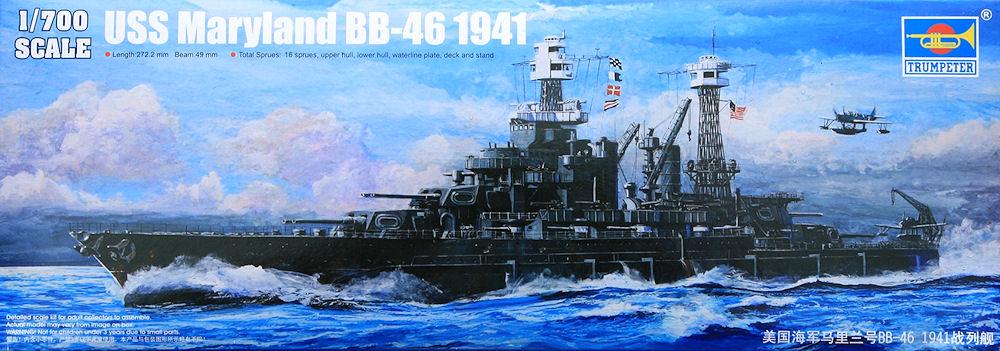
Finally, a long-awaited need is met! – an injection-molded 1/700 styrene plastic kit of the USS Maryland at Pearl Harbor (December 1941), in correct appearance. A good value, an easy build, and a fine-looking model with some photo etch.
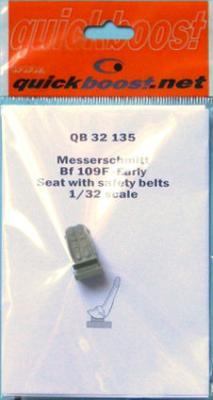
Quickboost has added a highly detailed Bf-109F early-style seat with safety belts to their continually growing line of 1/32 scale detail parts. It is designed as a drop-in replacement for the seat parts included in the kit. This part adds considerably to the overall detail of the cockpit and solves a problem that the kit parts present. Hasegawa provides the seat in the kit in two parts – left and a right side that are joined in the middle of the seat pan and back, thus creating a vertical seam through the center of the entire seat that must be eliminated. (see the photo below of the two kit parts surrounding the aftermarket seat). The Hasegawa seat also has ejection pin protrusions on the inside walls of both pieces that will need to be dealt with before joining the pieces.
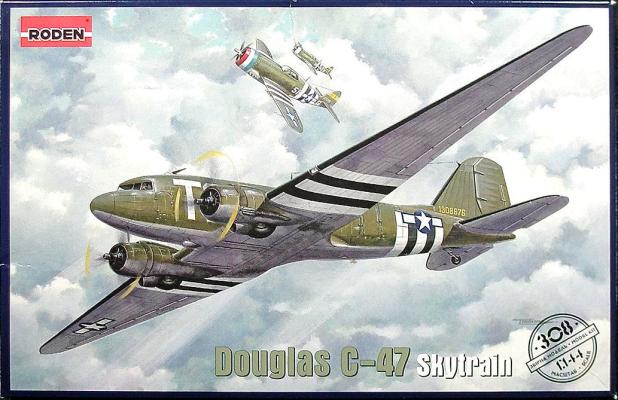
The first release of C-47/DC-3 kits from Roden has been issued as a C-47B from the 53rd TCW, 437th TCG, 83rd TCS. The parts have some nicely engraved detail on them, but on my sample it wasn’t entirely consistent. It looked great on the wings, tail, and the sides of the fuselage, but on the top and bottom of the fuselage halves, it faded out and was pretty faint. The rear door is molded as a separate part to fit into the space in the left fuselage half, and contains the main entry door and cargo door with its hinges.
Clear parts consist of two strips of windows which fit inside the fuselage, two landing light lens covers, the astrodome, and the windshield, which on my sample was missing from the sprue and wasn’t in the poly bag, either. A replacement was promptly and graciously supplied by MMD-Squadron, so construction could continue.
History
Another of Kelly Johnson’s modern marvels in aviation history, the F-104 truly lived up to the many nicknames it was bestowed. The “Missile With a Man In It” is probably the most reflective of this great machine. It was a plane that was produced in greater numbers for foreign use rather than US use. It was, however, a major leap forward in technology that led to multiple advances that allowed the US to be the leader in high-performance aircraft. A quick look at the main gear configuration and wing thickness can lead one to see how the F-16 was influenced.
Lady Furry is a one-piece resin bust that is 100mm tall, or approximately 1/17th scale. The kit comes with two metal hoop earrings that can be added to her but does not include a plinth for display. There are no color suggestions for the kit.
First off, let me warn you, I am not a figure painter…yet. I have been trying to improve this side of my modeling skills, as I want to do some dioramas. I have a few large-scale figures under my belt, namely Spiderman and Green Lantern. Painting them is about as far away from painting Lady Furry as possible, but sometimes, it helps to step out of your comfort zone. Boy, is it chilly out here.
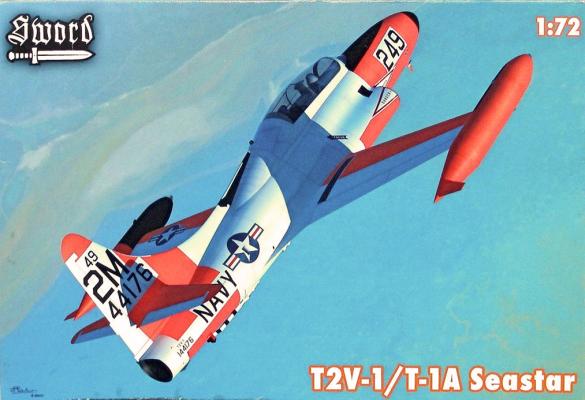
Lockheed’s derivative of the venerable T-33 as the Navy’s carrier-capable jet trainer, the T2V/T-1A bears a strong family resemblance to the T-Bird, but was a far different animal. A redesigned and strengthened wing with leading edge droops, different flaps, and boundary layer control was a big item, while a strengthened fuselage and gear, plus the raised rear cockpit for better visibility by the back-seater, gave the Seastar its characteristic humpback look. Larger tail surfaces, intakes, tailpipe, and an uprated J33 engine were included. Additional fuselage speedbrakes were added to the fairings aft of the wing, and other improvements were added as well, along with upgraded ejection seats, a hefty arresting hook, and a catapult hook.
History
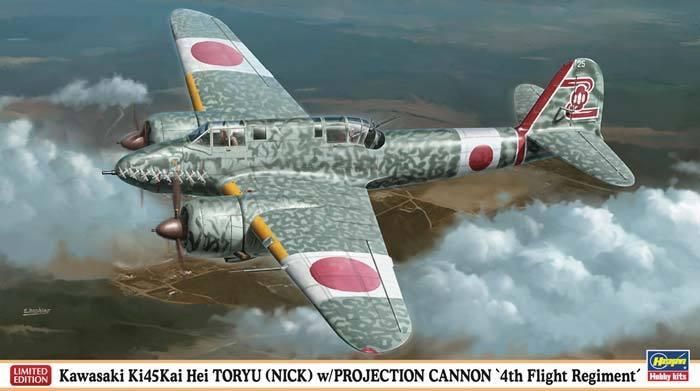
The Kawasaki Ki-45 was the first attempt by Japanese manufacturers to provide the JAAF with a modern twin-engine fighter. The original specification was issued to Nakajima, Mitsubishi, and Kawasaki in 1937, but the first two soon withdrew from the project, Kawasaki continued into 1939 with the completion of the Ki-45 prototype. This proved to be inadequate in many respects, so in 1940 the aircraft was completely redesigned, with some existing Ki-45 prototypes being converted to Ki-45 Kai (Modified), with different wings, tail surfaces, and engines. Thus modified, the new aircraft was accepted for production by the IJAAF, entering service in 1942. The aircraft served throughout the Pacific War in China, New Guinea, Indo-China, Manchuria, the Philippines, and finally in mainland Japan against the B-29 heavy bombing offensive, where it was one of the few relatively effective interceptors.
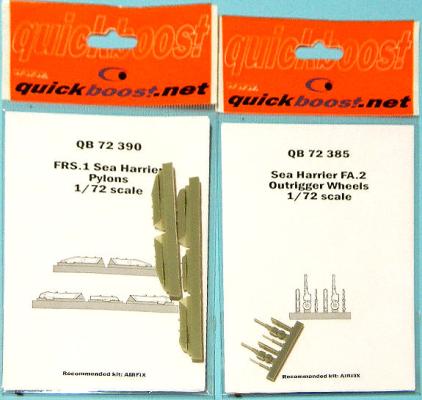
- Product/Stock # QB 72 390 Sea Harrier FRS.1 Pylons for Airfix kit, $8.50
- Product/Stock # QB 72 385 Sea Harrier Outrigger Wheels for Airfix kit, $6.50
We continue to express sincere appreciation to our friends at Quickboost for providing us more of the prolific output of their company; I buy a lot of their items and hope others do as well. Without their expertise, we would be the poorer!
Not much I can say for these additions...the new Airfix kits are a boon to the modeling community, addressing the need for simple yet detailed kits for the newcomers and also us old guys. But sometimes the details cry out for more. As usual, Quickboost steps up to the plate!
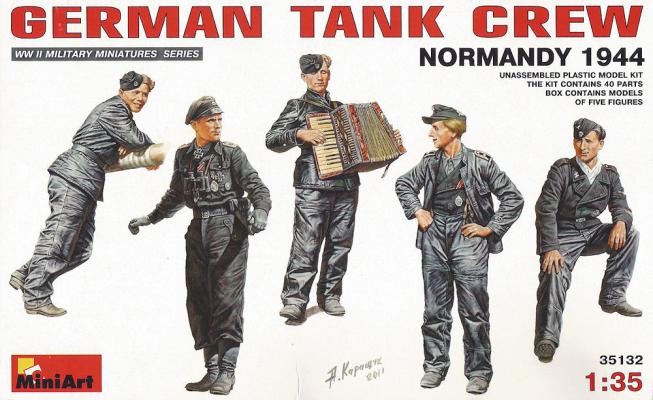
MiniArt’s German Tank Crew Normandy 1944 contains five figures wearing their German uniforms under bad weather leathers. The commander figure is posed as if he’s standing in a vehicle hatch, scanning the terrain. The other four are depicted during moments of relaxation and revelry. An accordion player appears to tap his toe in time with the music. An NCO stands with his jacket open and an amused look on his face. Perhaps he’s listening to the music or a joke. His jacket has a nice undercut behind him. A crewman wearing a scarf is posed sitting somewhere on the tank (turret, hull) or a stack of boxes, perhaps listening to the music or posing for a photograph. A smiling crewman is posed to lean on the main gun, the hull, or stacked supplies/equipment.
Yet one more “You really should buy this or have your plastic gear fail in a year” set for a heavy model. Thanks as usual to our friend Ross at SAC for providing IPMS USA this set, and IPMS for sending it to me for review!
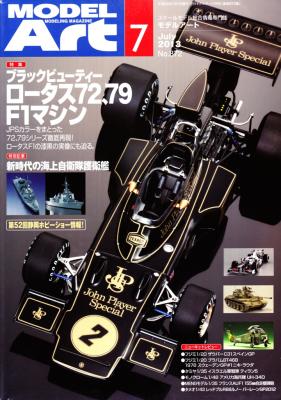
Model Art Modeling Magazine is a Japanese publication that is released monthly. The text is mainly in Japanese with some English subtitles throughout. One benefit of these magazines is the high quality of the photographs and the models that are used.
This month’s issue is geared toward the Formula 1 fans, but the issue starts off with a report from the 2013 Shizuoka Hobby Show. This is covered in four pages packed with color photographs. Some models of note – Tamiya’s 1/32nd F4U-1 and Minicraft’s 1/72nd PBM-5/5A are just a few of the examples.
The Formula 1 article is covered in over fifty one pages. The largest focus of the article is on the John Player Special cars. They use models of these cars along with tips on building them, captured in black and white and color photos. Along with models, there are photos of the actual cars in color and black and white photographs.
History
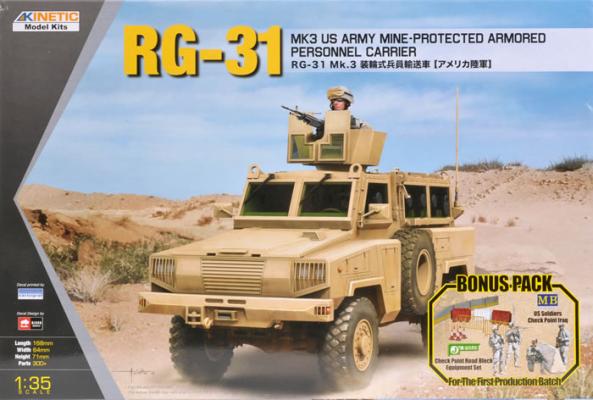
The RG-31 is a 4x4 mine-protected, all-terrain armored personnel carrier(APC) first manufactured in South Africa. It is able to withstand mine blasts and small arms fire due to the V-shaped, all-steel welded armor monologue hull and high suspension. As a multi-purpose vehicle, the RG-31 assumes a wide range of roles, such as APC, ambulance, and surveillance vehicle, but is mostly used during peacekeeping missions for its non-aggressive appearance. The RG-31 has served in Iraq & Afghanistan.
Kit
Inside the box, there are 5 tan plastic sprues, 1 clear sprue, 1 black rubber sprue, 5 black hard rubber tires, a PE fret, a decal sheet, and a 24-page instruction booklet. Also included in the kit box is a bonus "Check Point" set. The set consist of four figures and barricades (both water & concrete). I did not build this set for this review, but after looking it over, I think this set would build into a very nice diorama featuring the RG-31.
The Aircraft
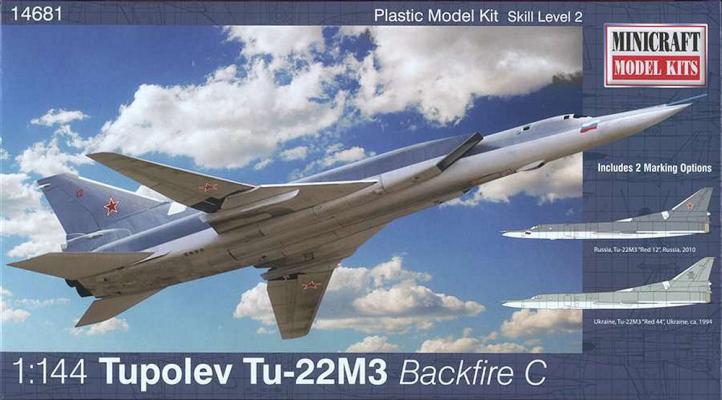
The Tu-22M3 Backfire C has had a somewhat confusing development history. The original Tu-22 was NATO code-named Blinder. It had two pod-mounted engines above the rear fuselage, one on either side of the vertical stabilizer, and fixed sweptback wings. Then Tupolev came out with what I think is almost a new design, with the engines mounted in the rear fuselage and intakes along the fuselage side, and variable-position wings...I think the first on a large Russian bomber. This was the Backfire. The designation for this aircraft was Tu-22M1. The M probably stands for “Modified.” There were only nine Tu-22M1s built, and it was fairly quickly replaced by the Tu-22M2. The M2 had more powerful engines, a bigger wing, and an area rule fuselage.
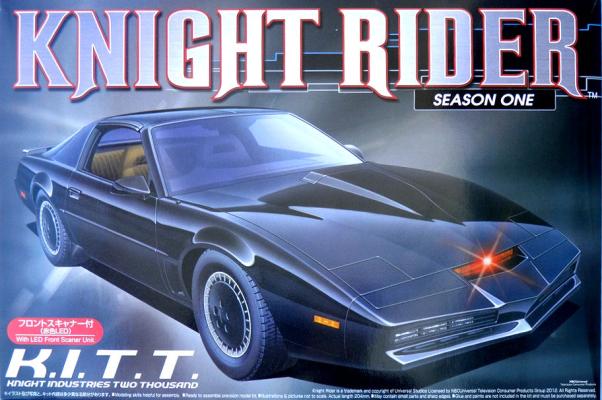
So what would be cooler than having your car talk to you, be bulletproof, and able to drive itself? Well, if you were Michael Knight, not much…and while he drove several different versions of KITT (Knight Industries Two Thousand), the original from the first season of the show was always my favorite.
I don’t build many car models, but when I do, they usually were involved in some movie or TV show. So when KITT came up for review, my hand also came up. I am not sure if this is a re-release by Aoshima of a previous kit as I remember KITT kits from years ago, but if it is a re-release, it is a good one.
The kit includes 95 plastic parts in black, tan, chrome, aluminum, clear, clear red, clear orange, and tinted black colors. There are also 4 rubber tires, 4 polyethylene caps for the wheels, and the scanning unit with 4 screws to mount it.
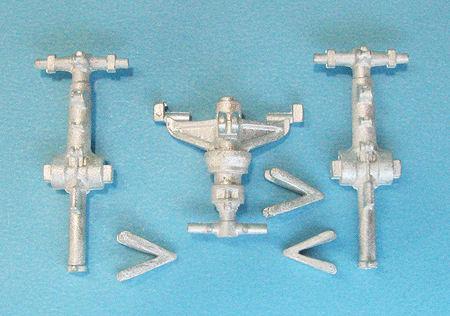
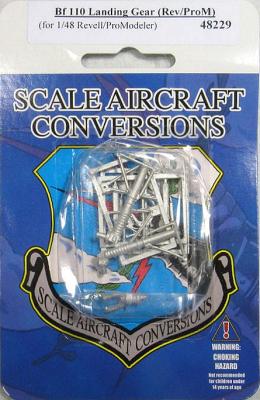
Scale Aircraft Conversions specializes in white metal replacement parts. Its line of replacement landing gear has been expanded to include a set for the venerable Bf-110 from Revell/Monogram.
This set is one of the more elaborated sets from SAC I’ve seen. It includes three main parts – two landing gear struts and a two-part tail wheel, plus 3 “frames” with the rest of the delicate parts.
My example arrived partially crushed (I guess due to shipping). Having the small parts attached to a “frame” actually prevented them from being distorted. But still, a bit of work might be needed to straight them out; however, it is very easy to work with white metal.
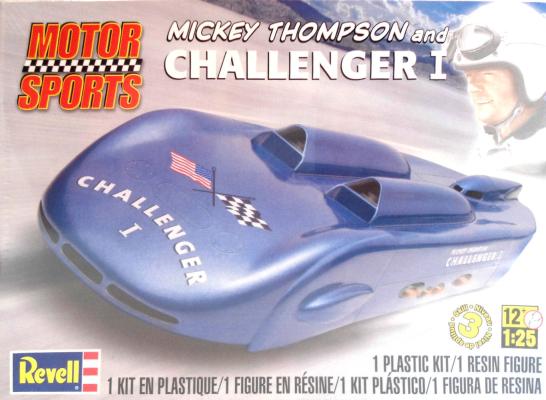
Back in 1960, I remember a guy named Mickey Thompson setting the land speed record of 406.6 mph at Bonneville Salt Flats. He did this feat with one of the most original cars ever seen. This was the Challenger 1. It was powered by four supercharged Pontiac engines, each powering a separate wheel. I remember at the time hoping that someone would make a model kit of this car. Well, Revell did back in 1962. They produced the kit from 1962 until 1966. I was busy with getting on with my life at that time, so I forgot about Challenger 1. Last year at the IPMS Nationals in Orlando, I saw that Revell was going to re-issue the kit. I couldn’t wait for it to come out and when it came up for grabs by the Reviewers corps, I jumped at the chance to build it.
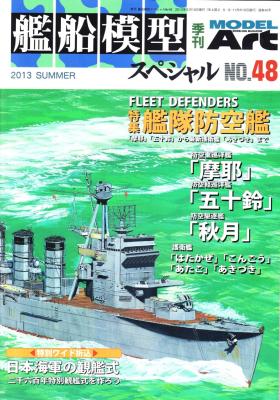
This is Model Art Magazine’s special quarterly issue that focuses on naval subjects. As with the regular Model Art Magazine, this is printed in Japanese with some English subtitles. This special ship model edition focuses on "Fleet Defenders.” They use examples from both World War II and modern-day, with a high focus on the IJN and the JMSDF.
The issue starts off with a section called “Only Ships – New Items.” They devote three pages to this with a multitude of color photos showing all the new ship models and aftermarket that is coming out on the market.
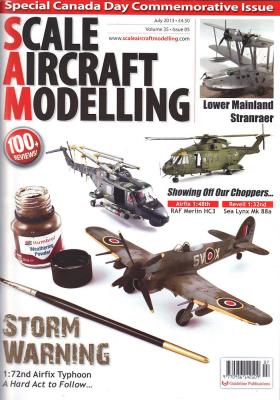
The June issue contains two Feature articles. Feature 1 is entitled, “Arthurian Legend” and is nine pages of images coupled with an excellent description of how Chris Fleet built his Airfix Agusta Westland Merlin HC3. Interestingly, Chris shares his use of copper wire to simulate detail within the model. Two pages of full-color images of a real Merlin add to the trove of detailed information that one can use when building this Airfix kit.
Feature 2, by Neil Pinchbeck, covers the Revell Supermarine Stranraer in 1/72nd scale. Neil’s article covers how he dealt with the rigging (oh, those hated double stands!), cutting the canopy open, and adding rivet detail. Neil’s work is outstanding, both on the model itself and then within his article.
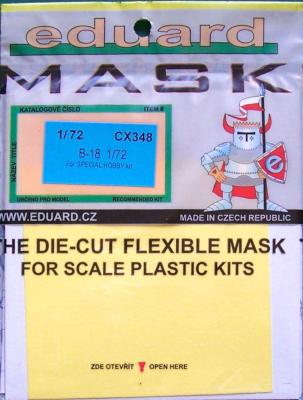
The idea behind these pre-cut masks is to save you time and frustration when painting your model and also to protect the clear areas under the masks. I think the B-18 could be a “poster child” for using pre-cut masks on a model. As a typical pre-war bomber, it sports lots of clear areas with lots of framework. I counted 74 individual clear window panels on the model. In addition to the large number, the panels on the windscreen have rounded edges which present problems when using tape or foil, since very careful trimming is called for. Do not despair, fellow modelers, Eduard has come to the rescue. This particular set, matched specifically to the Special Hobby B-18, has all the masks necessary to cover all those 74 “panes,” as well as masks for the wheel hubs.
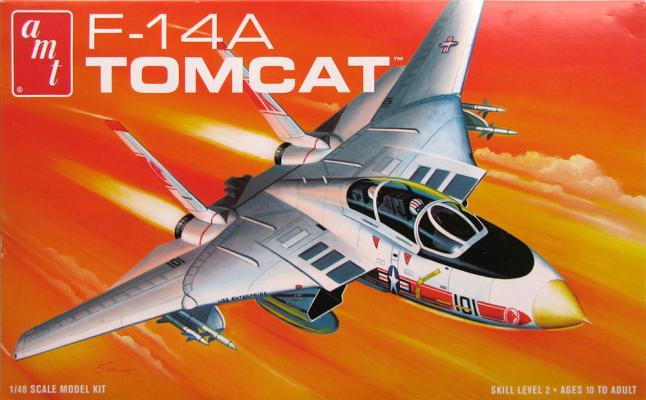
If you are interested in building some of the older kits that you may have missed when they were first introduced, you have a friend in Round 2 Models, who is re-releasing kits from the likes of AMT, MPC, and Polar Lights. One of their latest releases is the AMT F-14A Tomcat that includes vintage kit packaging and some nicely produced decals. The kit has parts included to add up to four Phoenix (AIM-54) missiles, two Sparrow (AIM-7) missiles, two Sidewinder (AIM-9) missiles, TARPS (Tactical Air Reconnaissance Pod System), and has the markings for two different early F-14A aircraft. The built-up kit is a respectable looking early F-14A Tomcat; just keep in mind that, being an older kit, there will be some fit issues to overcome, and there are some items not mentioned in the instructions.
History Brief
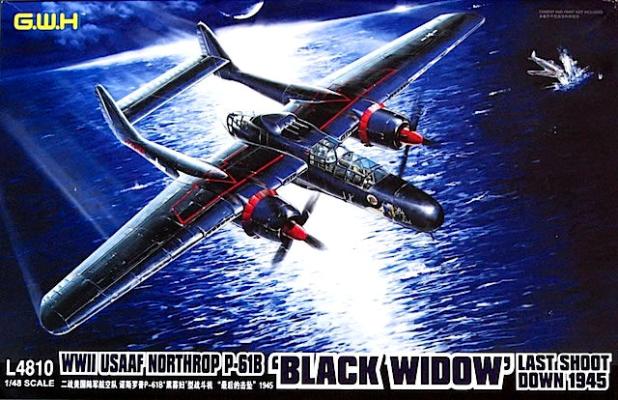
The Northrop P-61 was the US military's first operational aircraft designed specifically as a night fighter interceptor. Our subject, the P-61B, was the second major production variant derived from the type. The most noteworthy improvement to the already large and infamous twin engine beast was an upgraded radar necessitating an additional 8 inches of length to the forward fuselage. This was added just in front of the nose gear bay and behind the radome.
The Black Widow depicted in the kit, “Lady In The Dark”, is historic in that it claimed the last aerial kill of World War II.
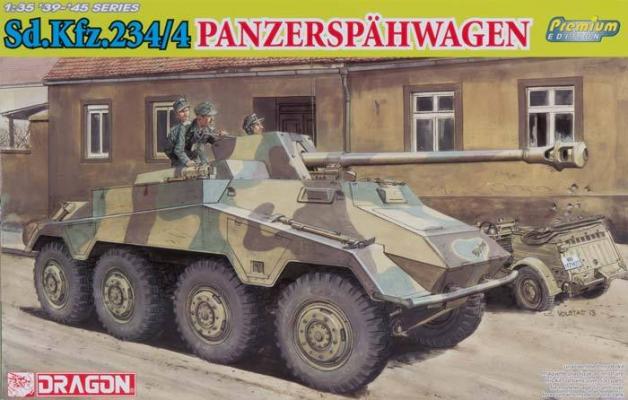
Dragon Models has released an updated version of their original (excellent) Sd.Kfz. 234/4 armored, anti-tank wheeled vehicle produced five years ago (#6221). This update replaces the eight large wheels and spare with newly engineered sandwich-style wheels that are magnificent. Each highly visible wheel is made up of eight thin disks that are assembled to produce accurate and stunning tread, with separate two-part hubs that simplify painting and weathering.
The only other change is that Dragon has replaced the aluminum barrel in the original kit with a slide-molded one in the update. For fit and finish, I prefer the latter, so that’s also a welcome replacement.