Reviews of products for scale ship models, including submarines.

Review Author
Allan Murrell
Published on
Company
OKB Grigorov
Scale
1/700
MSRP
$22.00

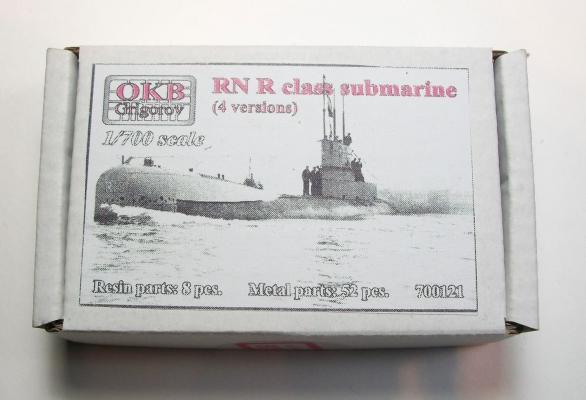
OKB Grigorov has provided super little set of 4 submarines which represent all the various produced of this class of British Submarine ordered at the end of WW1. They were the forerunner of the modern Attack submarine. They produced 12 of these small diesel electric submarines. All but 2 were scrapped by 1923. The remaining two until 1929 and 1934.

Included is:

  • Four resin parts
  • Four Photo Etch Sheets
  • Four different resin submarines
  • Instruction Sheet

The detail quality is great; The parts are very delicate parts that need careful removal from the resin bases.

The instruction sheet is very basic but enough to get them built. You just must ensure you use the correct Photo Etch sheet with the right resin submarine. Here is a quick list to help
Book Author(s)
Mark Lardas
Review Author
Steve Zajac
Published on
Company
Osprey Publishing
MSRP
$24.00

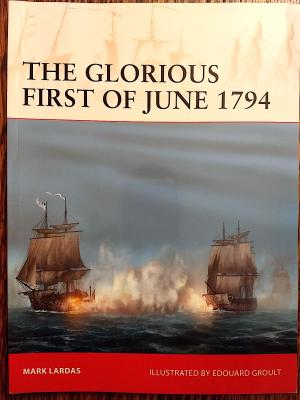
By 1765 Britain had achieved hegemony in Europe, North America, India, Africa and the West Indies over archrival France with its decisive victory in the Seven Years War (1756-1763) fought on 5 continents and the sea (Quiberon Bay). However, the overthrow of the Bourbon monarchy in 1791, and the emergence of revolutionary France was an entirely new phenomenon, and by 1793 virtually all of the major European nations, all headed by monarchs, had declared war on the new French Republic. As a result, France in 1794 was threatened by famine and risked all by organizing a massive North America to France food convoy against the Royal Navy and harsh North Atlantic seas.

Book Author(s)
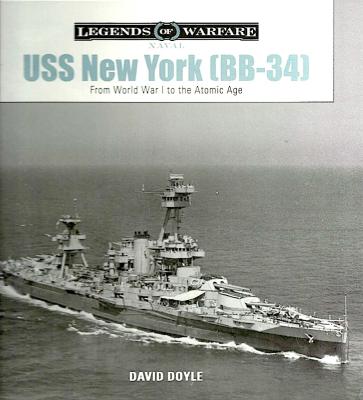
David Doyle
Review Author
Blaine Singleton
Published on
Company
Schiffer Publishing
MSRP
$19.99

The Author

David Doyle’s earliest published works appeared in periodicals aimed at the hobby of historic military vehicle restoration. By 1999 this included regular features in leading hobby publications, appearing regularly in US, English, and Polish magazines. Since 2003, over 100 of his books have been published. Broadening his horizons from his initial efforts concerning vehicles, he soon added aircraft and warships to his research objectives.

Contents

The book is divided into six chapters all covering the beginning construction to the final day of the ship.

Book Author(s)
David Doyle
Review Author
Bill Kluge
Published on
Company
David Doyle Books
MSRP
$19.99

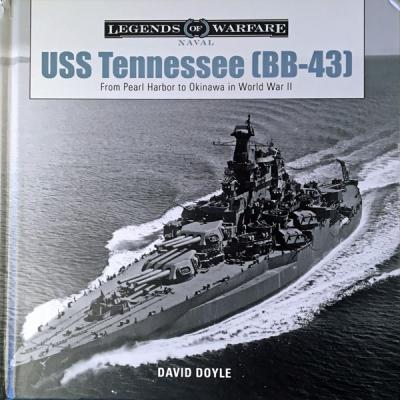
Launched on the last day in April, 1919, and commissioned just over three years later, on June 3, 1920, this sixth vessel to carry the name Tennessee was the name ship of her class (which included her sister, USS California) and the last US battleship to carry 14” guns. In this Naval edition of his extensive “Legends of Warfare” series, author David Doyle provides another extensively illustrated history of this famous warship. While each chapter - covering Construction; Launching, Fitting Out and Commissioning; To War (with subsequent descriptions of her collision with USS California and participation in the action in Surigao Straight); and The End of the Line - includes a brief introductory written description, the bulk of the written information comes as captions to the hundreds of photos (the vast majority in sharp black & white, with four color photos of her following decommissioning).

Book Author(s)
Angus Konstam
Review Author
Pablo Bauleo
Published on
Company
Osprey Publishing
MSRP
$19.00

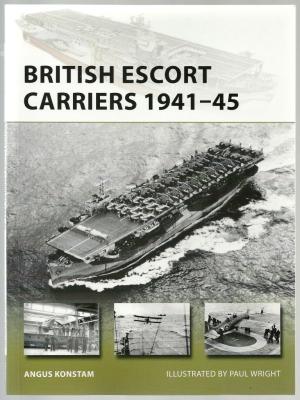
Osprey Publishing just released a new book devoted to the Escort Carriers under British Flag during World War 2. Still this book has a few paragraphs devoted to the first two Escort Carriers under Dutch Flag. They had (Dutch) Fleet Air Arm Flights detached to them, under operational control of the British, so I think they count as ‘British’.

This book is relatively short at 48 pages but don’t let the relatively small thickness of the book fool you. The book is packed with information. It clearly describes the need for air cover for convoys and how out of necessity many merchant ships were converted to operate as a ‘proof of concept’. Once the value of the Escort Carrier was proven, the larger US industrial capacity provided the vast majority of the Escort Carriers under British Flag.

The book is broken down in the following sections.

Book Author(s)
Carlo Cestra
Review Author
Marc K. Blackburn
Published on
Company
Kagero Publishing
MSRP
$36.95

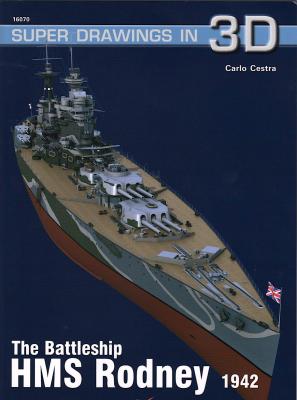
Casemate Publishers, distributors for Kagero Publications, has added another title to their ongoing series of Super Drawings in 3D. This time they turn their attention to the classic British Battleship, HMS Rodney. If you are familiar with these titles, a ship is rendered in full color, 3D illustrations. Each of these super drawing books provide a short overview of the ship in question specifications and a summary of its operational history before plunging into the illustrations. Kagero also provides a black and white fold out plan of the HMS Rodney.

Book Author(s)
Mark Ladas, Johnny Shumate, and Julian Baker
Review Author
Robert Head
Published on
Company
Osprey Publishing
MSRP
$18.00

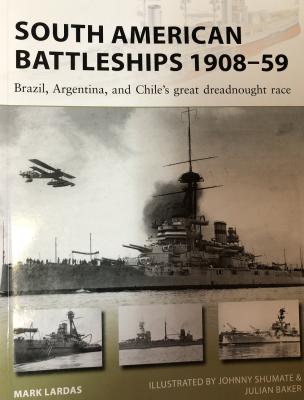
So, before we get into the specifics of the book. Here is a little about the author and illustrators, Mark Ladas holds a degree in Naval architecture and has written a few naval publications for osprey, he is an avid ship modeler and amateur historian. The illustrators Johnny Shumate and Julian baker both work as freelance illustrators and have both also been longtime contributors to osprey.

Here we breakdown the contents of the book.

Book Author(s)
Brian Lane Herder, Illustrated by Paul Wright, F. Rodriguez, and A. Gilliland
Review Author
Bill Kluge
Published on
Company
Osprey Publishing
MSRP
$19.00

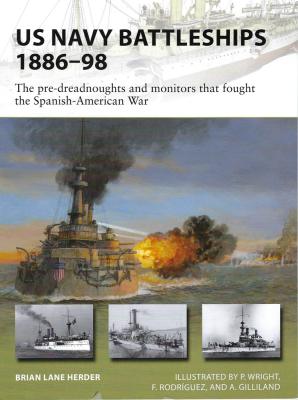
In the 1860s the US Navy led the world with the innovative, turreted ironclad USS Monitor - a vessel that gave rise to a series of warships whose name defined the class. However, within ten years of the end of the Civil War, the US Navy had become a mere ghost of its former size and power. Ships were decommissioned, sailors released from service, and the Secretary of the Navy was returning funds to the Treasury. By the 1880s, British built ironclad battleships of the Brazilian and Chilean navies caused panic within the halls of Congress and along the east and west coasts of the United States. Frustrated officers from the US Navy, along with insightful members of Congress and the Garfield administration determined that major changes were needed to prevent the US Navy from declining into irrelevance.

Book Author(s)
Oleg Pomoshnikov, Jan Radziemski
Review Author
Marc K. Blackburn
Published on
Company
Kagero Publishing
MSRP
$36.95

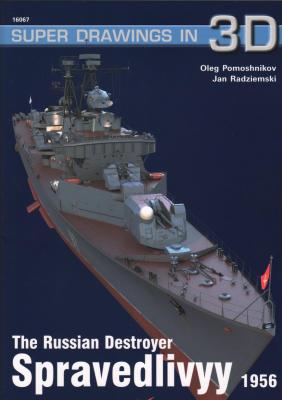
Casemate Publishers, distributors for Kagero Publications, has added another title to their ongoing series of Super Drawings in 3D. This time they turn their attention to the Russian Destroyer Spravedlivvy. Built in 1956, the ship was part of a class of Soviet destroyers that are not well known in the west. By no means an iconic ship, given that Kagero is based in Poland, this ship was turned over to the Polish navy in 1970 where it took the name Warszawa (Warsaw). When it went into service with the Polish navy, the ship had been modified to carry missiles. The book looks at its original configuration, as the ship was commissioned, rather than in its modified form.

Review Author
Charles Landrum
Published on
Company
AFV Club
Scale
1/350
MSRP
$24.99

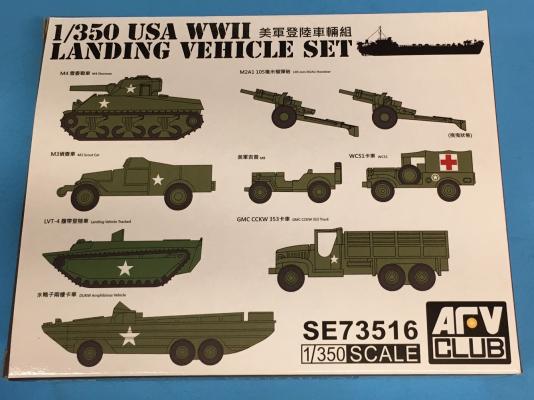
In conjunction with their release of the U.S. LST-1 Class of ships, AFV Club has also release a box of 1/350 WWII military vehicles to populate the deck and well deck of the ship. Injection molded, the set includes two sprues, one the duplicate of the other allowing the modeler to build 7 different vehicles and 2 artillery pieces from each sprue for a total of 18 pieces in a box. Also included is a set of decals, which curiously does not match the number of vehicles. The instructions are isometric and printed on the box. There is no locating guide for the decals, just side view color drawings of the vehicles, so the modeler must rely on research for marking placement on the tops of the vehicles. Plus, the color call outs are poor. But aren’t all WWII vehicles olive drab?