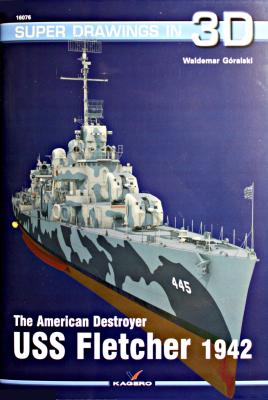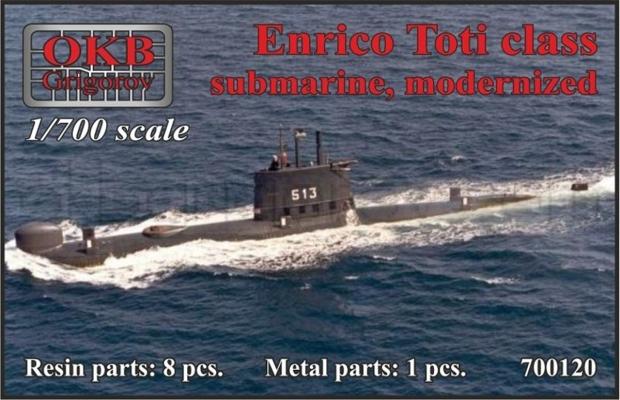
Kagero, the prolific Polish publishing company, has released the newest addition to their series, Top Drawings. This is number 86, the German heavy cruiser, Prinz Eugen. Distributed by Casemate Publications, this 28 page paper book provides drawings and a color profile of the famous German cruiser. I imagine most of you know the ship’s history. It accompanied the Bismarck on its first and only voyage, accompanied the Scharnhorst and Gneisenau in their famous channel dash, and ended her career in the Baltic.
OKB Grigorov has provided very nice Israeli Dolphin submarine which represent a diesel-electric submarine developed and constructed in Germany for the Israeli Navy. They were based on the export only German 209 class submarines. The Dolphin class entered service in May 1999 and are still active today.
- seven small resin parts
- two photoetch sheets
- one resin submarine
The detail quality is great; The parts are very delicate parts that need careful removal from the resin bases.
There was no instruction sheet provided, this was not a problem as it was a simple build.
The assembly is quick and easy.
The resin stand is an awesome addition to the kit.
The final part is painting.
This is my forth one of these great kits and I really enjoy building these and they make a wonderful display all lined up.
The USS Forrest Sherman was the lead ship in the US Navy Destroyer program instituted in 1953. Constructed at the Bath Iron Works in Bath, Maine beginning in October 1953, launched on February 5, 1955 and commissioned November 9, 1955. After a long and distinguished career, she was decommissioned on November 5, 1982, and stricken from Naval logs on July 27, 1990. An effort to maintain the ship as a Museum ship failed with a few artifacts having been saved for exhibit.
Bottom Line Up Front
This is a short, easy to read introduction to ships and history of the private warships which played a major part in the American War for Independence. It is profusely illustrated with period artwork and accurate modern-day artwork of actual ships. The artwork by Paul Wright is the standout feature of this book.
Author
Angus Konstam is the author of over 100 history books, most of which have been published by Osprey. A former naval officer and museum professional, he worked as the Curator in both the Royal Armouries, Tower of London, and the Mel Fisher Maritime Museum in Key West, Florida. He now works as a full-time author and historian, and lives in Edinburgh, Scotland.
The Author
David Doyle’s earliest published works appeared in periodicals aimed at the hobby of historic military vehicle restoration. By 1999 this included regular features in leading hobby publications, appearing regularly in US, English and Polish magazines. Since 2003, over 100 of his books have been published. Broadening his horizons from his initial efforts concerning vehicles, he soon added aircraft and warships to his research objectives.
Contents
The book is divided into four chapters all covering the beginning construction to the final day of the Hornet. I’ve included a brief description of what is contained in each chapter.
OKB Grigorov has provided a super USS Skipjack submarine which represent this classic class of American Submarine. The Skipjack class first entered service in 1974.
Included is:
- Five resin parts
- One photoetch sheet
- One resin submarine
- One resin stand
The detail quality is great; The parts are very delicate parts that need careful removal from the resin bases.
There was no instruction sheet in the box I received to review, this was not a problem as it was a simple build.
The assembly is quick and easy.
The resin stand is an awesome addition to the kit.
I would like to have seen some small decals.
The final part is painting.
Thanks go to OKB for providing this kit to review and IPMS USA for allowing me to review it for them
OKB Grigorov has provided very nice and unusual submarine in this German Type 201. This was the first post war German submarine. They only built three type 201’s U-1, U-2 and U-3 and they first entered service in 1961. The had issues with the Amagnitic steel material which lead to cracks in the structure, so all were scrapped.
Included is:
- Two Photo Etch Sheets
- One resin submarine
- Two small resin parts
The detail quality is great; The parts are very delicate parts that need careful removal from the resin bases.
There was no instruction sheet in the box I received to review, this was not a problem as it was a simple build although there was not much reference materials online due to this being a very short lived program.
The ssembly is quick and easy.
I would like to have seen some small decals.
The final part is painting.
Michael Green is a freelance writer, researcher, and photographer. He specializes in military subjects and has authored and coauthored over 100 non-fiction books, for both children and adults. His books have been translated into several languages. Mr. Green is an honorary lifetime member of the "Marine Corps Tanker Association," as well as the U.S. Army Brotherhood of Tankers. Michael Green lives in Dale City, California.
Pen & Sword’s latest book in the Images of War series is a square back soft cover includes 234 gloss paper pages. I counted 130 black and white period photographs. There are 95 color photos, 8 black and white illustrations, and 17 color illustrations.
Developed following the concept of a titanium-hulled design first seen in K-162, Project 705, or the Lira class, was a small, streamlined double hull design which was built to operate at depths in excess of 2200 feet, and allegedly deeper than 3600 feet. The submarines of this class (seven in all) were 265 feet-9inches in length, 31 feet at the beam, and had a draught of 26 feet-3inches. The liquid metal reactor and two steam turbines could propel the boat at a speed of 20 knots surfaced, or 42 knots submerged. The weapon options included a loading of up to 18 torpedoes or 21 missiles or 36 mines, and the crew compliment was a mere 31 sailors. In addition to the main screw for propulsion, two small propellers were also present for emergency operations as well as slow, quiet maneuvering.
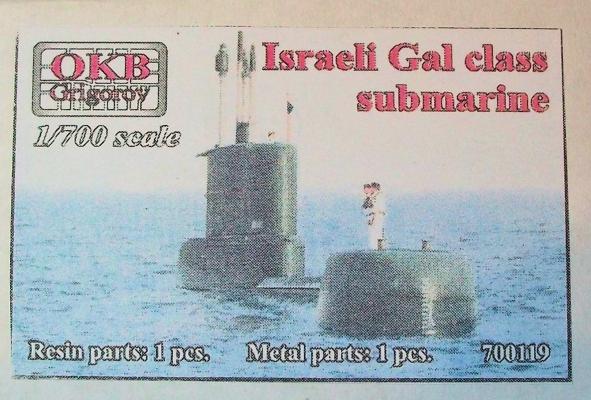
If there was an obscure or one-off submersible designed and built in the 20th century, you can be sure that the folks at OKB Grigorov, a Bulgarian company, will release a kit. (Check out their website, they manufacture and sell a variety of ships, armor and figure accessories as well).