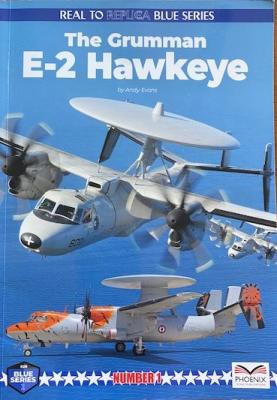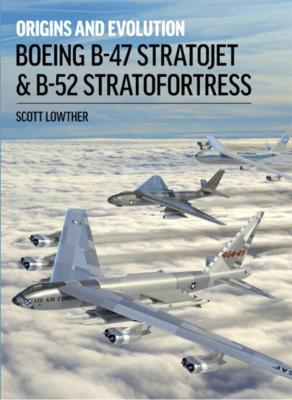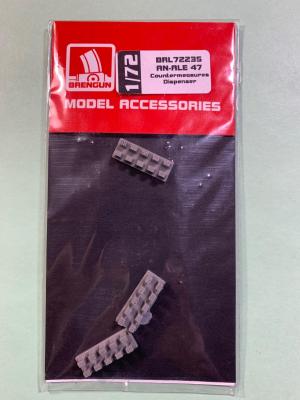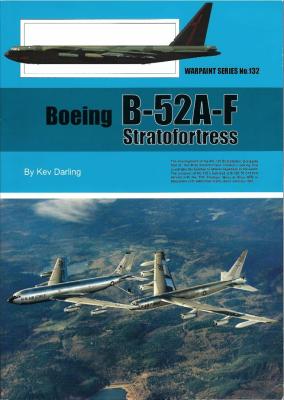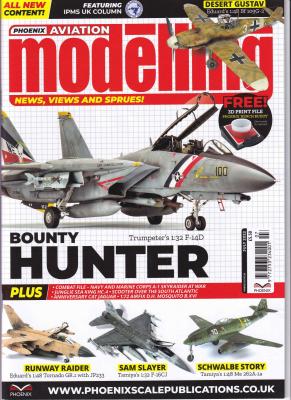
Valiant Wings Publishing was founded in 2010 under the guidance of Richard A. Franks and Mark Peacock. Valiant Wings has released several series of primarily airplane monographs [Airframe & Miniature, Airframe Album and Airframe Detail series] with the first Airframe Album dedicated to the Heinkel He 219 ‘Uhu’ released in 2012.
Platz Hobby produces several kits in 1/144 scale (currently 394 to be exact), and I was fortunate enough to receive this two-plane kit for review. In addition to the parts for two aircraft, there are markings for four different planes included. Construction was quick, and the detail is very good for this scale. Modelers familiar with working with small parts should not have issues building this release, and I would highly recommend it.
There have been many releases of the F6F in its variants over the years, so I probably do not need to mention much more on the history of a plane that had over 10,000 copies released during WWII. The dash 5K planes featured in this release were used following WWII as drones, drone controllers, and to tow targets. The final combat missions seen by these planes were as radio-controlled air-to-ground guided weapons used in Korea against well defended targets in the North.
Let’s face it, British aircraft are pretty standard as far as camouflage goes, however, they sometimes exercised some individualism in personal aircraft. This release from Foxbot decals deals with just that.
Inside of the resealable baggie, is a single sheet of 8.5 x 11 heavy stock paper folded in half to provide some protection. The instructions are printed in full color and feature the profile view for six aircraft. On the backside of the instructions are stencils and the color callouts using FS numbers, Humbrol, Model Master and AKAN paints. The plan view is also shown with both the A and B scheme.
The Il-2 Sturmovik is THE iconic Russian aircraft for me. It wasn’t fast. It wasn’t maneuverable, but it was a deadly ground attack aircraft. It could take a lot of punishment and was produced on larger numbers than any other aircraft in history. So you know it had to have some colorful markings. Well thanks to Foxbot we have some examples to add to our collections.
Packaged in a standard ziplock baggie, the decals and instructions are protected from moisture. The instructions are printed on an 8.5 x 11 sheet of high-quality paper folded in half. This provides strength to protect the decals from bending. They are printed in full color and feature EIGHT aircraft, two single seaters, three modified single seaters with the gunner in the exposed back, and three of the later model with the enclosed rear gun position. So, there is something here for every modeler.
Lifelike Decals from Japan has released its 6th installment in a series of Ki-27 “Nate”. You get a total of 8 aircraft, with 5 of them being of the Japanese “Gray Green” color, which the instructions suggest to replace by the German RLM 02.
One of the other three aircraft is painted in Japanese Dark Green over Gray-Green, the next one is an attractive disruptive camouflage of dark green, green and brown over Grey-Green and the final one is an overall Gray-Green with field-applied Dark Green and Brown on a pattern of stripes and bands, which in some cases even slightly overlaps and covers the national markings.
Maintaining aircraft in hot and humid conditions often meant that they would sit around getting worked on. This gave the crews time to personalize their aircraft and since there weren’t any women around most of the time the aircraft sported some beautiful nose art. Foxbot has taken on some very sexy nose art.
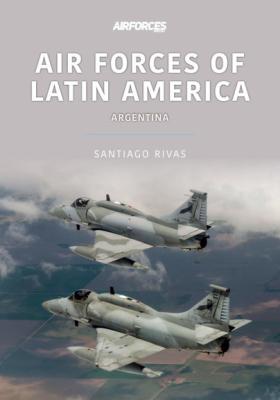
The Dassault Mirage III needs very little introduction among aviation enthusiasts. A lightweight, single-engine, delta-winged, all-weather interceptor, it was in 1961 and soon found its way into air arms around the world. The Mirage III has seen combat, notably in Israel, South Africa, Argentina, and Pakistan, and has been upgraded and modified over the years in order to extend the life of the airframe. Sixty years later, Pakistan is the only remaining air force flying the Mirage in the form of the ROSE III upgrade.
Did you know that the Republic of China Air Force (RoCAF) is one of the oldest air forces in the world? It marked its 100th anniversary on November 29, 2020. It may also be the only air force that has physically moved, from the Chinese mainland to the island now known as Taiwan in 1949, after the Chinese civil war. The RoCAF has a special place in American history, when a volunteer group of US pilots fought Japanese forces in the Second World War in P-40Bs marked with RoC markings. This unit is, of course, the famous Flying Tigers. The RoC also flew many dangerous reconnaissance missions in the late 60’s, over China to gather intelligence regarding the latter’s early nuclear testing. The RoCAF also flew numerous support missions against Viet Cong forces during the Vietnam War, with high losses. The many combat missions this tiny nation has undertaken is largely unknown due to the secretive nature of its military.
This book has 3 chapters going over many aspects of this aircraft.
- Development History
- Fury Variants
- FJ-1
- XFJ-2 prototypes
- FJ-2
- FJ-3
- FJ-1/FJ-2 Details
- Cockpit Details
- Canopy
- Fuselage
- Wing Details
- Landing gear
- Tail detail
- Engine Details
The book starts with the Development history of the aircraft all the way to production, along with there Variants.
This book has a lot of detail on majority of the aircraft and what I loved the most is the detailed cockpit and how all the oil lines are ran along with the hydraulics, this is a must if you are building one of these models.
I can recommend this book for anyone with an interest in the FJ Fury and its an excellent reference for anyone building this aircraft. I look forward to Part 2 of this book to come out.
From the publisher:
Justo Miranda is the author of books and monographs on aviation since the 1980s. A widely known historian, Miranda specializes in aviation of the 1930s and is the author of two volumes on aircraft used during the Spanish Civil War. The exciting discovery of a microfilm on secret German weapons in the early 1990s drove him to publish Secret Wonder Weapons of the Third Reich, later published by Schiffer in 1996. Since then, Miranda has published Reichdreams and monographs on little known airplane projects.