Scale Aircraft Conversions (SAC) specializes in white metal replacement landing gear parts for aircraft kits. This review is for the 1/72nd scale Hasegawa F-104 Starfighter from the 1989 original mold and its reissues (which there are several). Two full sets are in the blister pack, so two kits can have metal landing gear. These are drop-in replacements for the F-104 (parts D7, C12, B11 & B12) and TF-104 (parts F15, C12, B11 & B12). Attached pictures are for the F-104 comparison.
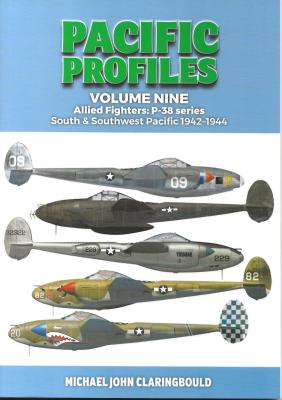
I first discovered this publisher and series at an IPMS Nats a few years ago. As the title says, they specialize in WW2 Pacific aircraft, and do an excellent job covering some lesser-known subjects.
This is a softcover publication, with 120 pages in a nice, high-quality semi-gloss finish and a stiff outer cover. Publishing quality is first-rate, as is the content itself.
The introduction to the book describes the author’s intent, which is primarily to detail and clarify the various markings of Airacobras in the South and Southwest Pacific theater. This contains a brief explanation of the deployment of the type, and some explanations as to the differences between the various models of the P-39, as well as the P-400. The author is very concise and clear in spelling this all out. This is immediately followed by tables showing the various bases used by the squadrons flying the Airacobra in this region, as well as a brief glossary.
This set is designed to provide replacement parts for the Hasegawa/Hobby 2000 SBD Dauntless kits. The package includes two complete sets of gear, consisting of the two main gear struts and two options for the tail wheel assembly – one with the small hard rubber tire used for carrier operations and the other a larger pneumatic tail wheel used for shore-based operations by Navy and Marine aircraft and the Army Air Corps A-24.
As with most of SAC’s landing gear sets, the metal parts are intended to be one-for-one replacements for the kit parts. The parts are well cast and need just a little clean-up of the casting seams with a sharp Xacto blade. I recommend taking your time removing the tail wheels from the casting tree or you will end up with a very flat looking tire as I did on the smaller wheel. Also, be sure you do not trim off the long extension pointing aft above the tail wheel as it is supposed to be there - it is a tow bar used to help move the plane.
As an airplane builder, one of the necessary but boring parts for me is sanding smooth and then restoring panel lines and rivets. UMM-USA has the solution for the rivets with multiple sets. We will look at MN-006 (1/48th scale rivets), MN-021 (1/32nd scale rivets) and MN-049 (for 1/32nd and 1/24th scale rivets). Each riveter comes with a comfortable plastic handle with a wheel containing cuts with the raised pegs representing the rivets.
The AH-1G Cobra was the first helicopter specifically designed for air to ground attack missions. They first saw action in Vietnam. The type went on to serve several nations, including Spain and Israel (the subject of this model).
I picked the model up at the Review Corp get together at the IPMS National Convention in Omaha. Phil had gotten it straight from Special Hobby.
The kit was presented in Special Hobby’s standard strong, top opening cardboard box with an attractive painting of the helicopter on the cover. Inside, ten sprues were contained within one clear plastic bag. The clear parts were protected inside their own bag. A decal sheet and glossy, color instruction sheet was found in the bottom of the box.
The instruction manual showed a parts sprue layout, and each step was presented in a legible and easily followed manner. Colors were highlighted where needed.
The book is volume 34 of Helion & Company’s Middle East @ War series and, as noted in the title, is the second volume of its coverage of Czechoslovak Arms Exports to the Middle East focusing on arms exports to Syria between 1948 and 1989.
Starting in the mid-1950’s and continuing up to the collapse of the Eastern Bloc in 1989, Syria was one of the prime customers of the Czech arm industries, particularly as successive coups resulting in Syrian politics becoming dominated by leftists and communists over the years. Initial deliveries were Panzer IV’s and StuG III’s manufactured or overhauled in Czechoslovakian factories, but as Soviet influence grew in Syria, Syrian began requesting more modern equipment or equipment of Soviet origin and in ever increasing quantities, often playing the Soviet Union against Czechoslovakia to see who they could get the better deal from.
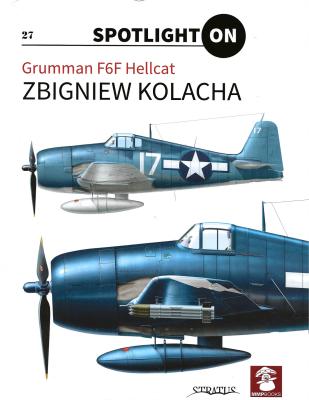
This book is the latest in a new reference series for aircraft modelers called "Spotlight On" and presents detailed illustrations of the famous American carrier-based fighter aircraft that began service in 1940 with the US Navy.
The Wildcat was the only effective fighter available to the US Navy and Marine Corps in the Pacific Theatre during the early part of the Second World War.
The book contains 42 specially commissioned color profile views of the colors, camouflage and markings of the Grumman F4F Wildcat and the General Motors built Wildcat including the Martlet.
Perhaps the most famous and most long-lived transport aeroplane in history, the DC-3 and its military versions including the C-47 Dakota are still in service around the World some 85 years after it’s first flight. There cannot have been many air forces around the world that have not operated the type and at one point or another still use them today.
It is only fitting that the almost as famous and long-lived Warpaint series of books from Guideline Publications has now seen fit to include the type – the only mystery here is why it has taken so long!
Author Adrian Balch has been a fixture of the British aviation scene for well over half a century himself and has amassed an unrivalled collection of aviation photos, some of which grace this volume.
David Doyle’s latest book continues to expand Squadron Signal’s monograph series that initiated back in 1971. This is a completely updated and expanded edition over Squadron’s previous editions, including their 1978 edition, Aircraft In Action SS0034 by Ernest R. McDowell, Squadron’s 1997 Walk Around by Lou Drendel; and Squadron’s 2015 edition Aircraft in Action SS1221 by David Doyle. This 2022 release continues Squadron’s Detail in Action series that is intended to be a combination of the In Action and Walk Around series. All seven previous Detail In Action books were written by David Doyle (M50A1 Ontos; K5(E) Railgun; Ferdinand. Elefant; M3 Gun Motor Carriage; Gamma Goat; M19-M20 Tank Transporter; and F8F Bearcat).
The book takes you from the humble beginning of The Ethiopian Airline to the present. The book is divided into 11 chapters with three appendices, as well as an introduction. The introduction provides the reader with a small history of the country from around 8 BC to the present. The first chapter deals with the early beginnings of the airline, and mainly focuses on the individuals that were instrumental for the creation of the Ethiopian Airlines. The airline starts in 1929 with France delivering several Potez 25 to the country. Not to be outdone the Germany brought 2 aircrafts at the same time. Yet, it was the Germans that were the first ones to organize mail delivery, as well as money and people throughout the country.