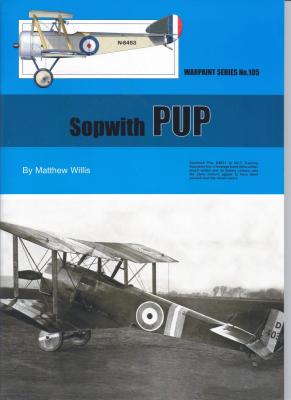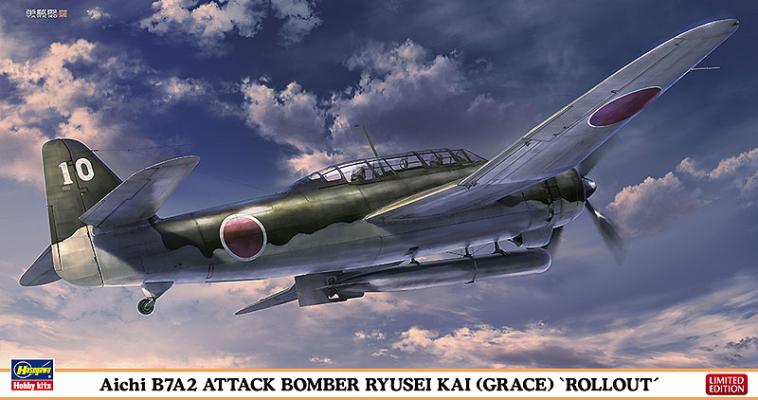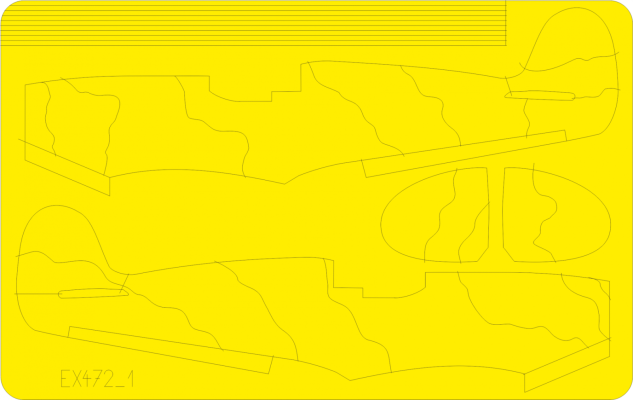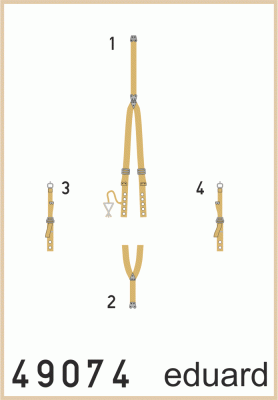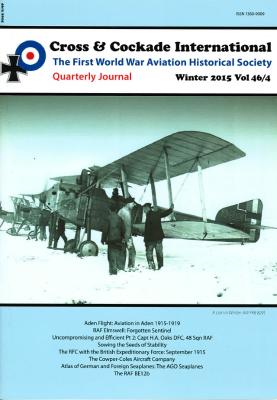
Ray Rimell starts it off with “A steep learning curve…. Building one of the WNW AEG kits is not for the faint-hearted…” This is the fourth Modeling Special that WindSock has done and like the three that preceded it, it is simply amazing. If you have any intention of buying the WingNut Wings AEG G. IV, or for that matter any AEG G. IV, you will want this book. The rest of Ray Rimell’s quote tells you why: …but with patience and care the results can prove simply spectacular!”. Illustrated with over 230 photos, this 60-page (card covers get it to 64) guide provides a great supplement to the WindSock Datafile 51 on the AEG G. IV. Ronny Bar provides six color profiles as a ‘pull out’ centerfold with short descriptions of each profile.
The GBU-49 is an American laser guided bomb consisting of an Enhanced Paveway II GPS/INS-equipped guidance section and a 500 lb. bomb. It is one of the weapons of choice for the MQ-9 Reaper and is often carried by USAF F-16s with two GBU-49s on triple ejector racks on the middle wing pylons.
The set consists of two bomb bodies with the tail fins and guidance sections molded as single pieces except for the seeker head (resin) and the nose and aft guidance fins (photo-etch). Two options are provided for the seeker head, one with the seeker head exposed and the other with the plastic ground cover in place. I chose to use the heads with the cover installed as I plan on displaying the bombs on a parked, but armed aircraft.
This is Eduard’s third release of their 1/144 MiG-15. The first was the Czechoslovak MiGs, the second was the MiG-15 bis, which used a different engine, but is generally the same.
The MiG-15 has been used by 44 different countries, including the US Air Force (!) and such world powers as Albania, Burkina Faso, Mali, Sri Lanka, and Yemen.
The aircraft on the decal sheet this time are from North Korea, China, USSR, Poland, and two Czechs.
I decided to do the Soviet MiG after checking out the histories of the aircraft. The pilot of this aircraft was Major Alexi Mikoyan. His uncle was Anastas Mikoyan, who was Khrushchev’s number 2 man for many years. His father was Artem Mikoyan, one of the founders of Mikoyan-Gurevich (MiG) design bureau. I think the pilot was pretty well connected.
The Storm Shadow/SCALP EG is an air-launched cruise missile developed for England, France and Italy. The missile is a follow-on development of the earlier Apache anti-runway missile, carrying a warhead instead of multiple sub-munitions.
Background
In the mid-fifties, Northrop Corporation started the development of a lower cost, light weight, high performance fighter airplane. The impetus for the program was potential sales to allies under the Military Assistance Program. Initial US interest was in the trainer version of the program. This resulted in the T-38 Talon supersonic trainer. This was a great looking, high performance airplane. I loved watching them fly out of Luke AFB. The initial fighter version, the F-5A followed in the early sixties and had significant commonality with the T-38. This aircraft was sold to various allies and in fact, was built in some of the countries – Canada, Spain and the Netherlands. In the early seventies, the upgraded F-5E was developed.
This set is scaled down version of Eduard’s 1/48 Brassin Mk. 84 2,000 lb. bomb set. As with the 1/48th set, this set includes two bomb bodies with standard low drag fins for normal drops, and three options for the nose – a fuse extender, a standard fuse or a nose cap, and a small photo-etch brass ring for the tail.
As with most US bombs, painting is easy – olive drab overall with a little silver or steel for the fuse. An option not noted in the instructions would be to paint the bomb blue to represent a cement filled training bomb. I left the fuses off until painting was complete so as not to knock them off. I sealed the paint with a nice coat of Future to prepare the bombs for decaling.
Eduard continues to expand its Brassin weapons range with this set of Mk. 84 2,000 lb. bomb set. The set includes two bomb bodies with standard low drag fins for normal drops, and three options for the nose – a fuse extender, a standard fuse or a nose cap, and a small photo-etch brass ring for the tail.
As with most US bombs, painting is easy – olive drab overall with a little silver or steel for the fuse. An option not noted in the instructions would be to paint the bomb blue to represent a cement filled training bomb. I left the fuses off until painting was complete so as not to knock them off. I sealed the paint with a nice coat of Future to prepare the bombs for decaling.
AOA Decals continues their releases for Trumpeters 1/32 A-6 and in this the A-6E version. The decals included cover all three squadrons from the Operation Prairie Fire (March 1986) and Dorado Canyon (April 1986) missions in Libya, and also two squadrons from Desert Storm from Jan. to Feb. 1991.
The markings included are:
This set provides 2 wire baggage carts presumably for 1/72 airliners or cargo aircraft (there is no history included with the kit) in a single fret of photo etch. The wire baskets are very well engineered, and with car fold up nicely to form a basket about ½ inch tall that is open on one side and at the top. The basket is attached to a base once you have folded over the edges of the base. There are also 4 photo-etched casters for each cart that require you to make two folds in each to represent 2 wheels on each caster and circular base for each caster. The completed casters are then superglued to the bottom of the base of the cart. The final touch is to add to photo-etched handles to each cart. I painted my carts aluminum to give me the maximum flexibility of how to use them, and I think they would look cool next to a C-54, a C-47 or possibly an early airliner to show some scale.
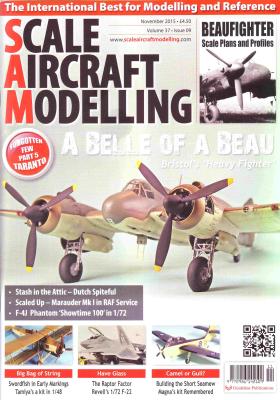
Scale Aircraft Modelling's August 2015 issue continues its fine history and modelling articles with everything from new kits, scratchbuilds and older kits.
The articles start with an Academy 1/48 F-4J Phantom built by Bill Clark. He adds Hypersonic Models canopy set and Quickboost resin seats to build an RAF Phantom in a unique turquoise scheme. The finished build looks great.
Andy McCabe builds Revell's 1/144 747-8F in Cargolux markings. The kit is built on a stand with an excellent paint job. Airliners and cargo planes never seem to get enough attention and this is a wonderful article covering just such a subject.
Meng Models 1/72 Kayaba Katsuodori Ramjet fighter is built by Mike Williams. Not only does he do an excellent review of the kit, he fits it to a modified Ki-67 turned into a Ki-109.