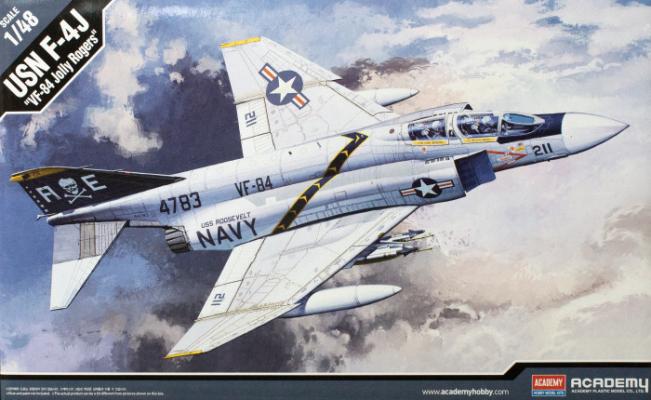
When initially opening the kit you are greeted with this note: ‘This product can be assembled without having to glue but usage of proper glue is recommended for detailed parts.’ I find these instructions intended to entice younger modelers bit comical—as this Phantom model clearly requires the aid of glues of several types. With that caveat, it is a very easy-to-assemble kit and enjoyable kit to build. In keeping with these basic instructions, I have assembled this kit using almost no filler, aside from a very small amount of Perfect Plastic Putty (applying it using a very fine tooth pick to apply the filler).
all 2016
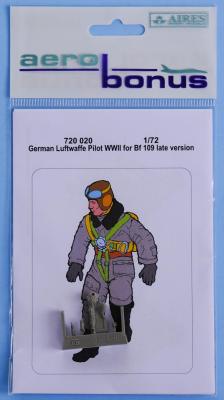
This Aires Aerobonus figure is a perfect addition to your diorama or display base. This German Pilot figure is designed to be used with any late version Bf 109 in WWII. The figure is designed to have its right foot standing in the seat, with the left foot on the cockpit edge and both hands on the canopy framing. The pilot is wearing a parachute, but no life vest. Aires Aerobonus provides a resin figure with separate arms and head on one pour stub with side bars to protect the figure. Of note is the re-sealable packaging that Quickboost uses that makes the parts easy to review and then stuff back into the package securely. The supplied instructions provide color drawings for painting.
I have never heard much about the British Special Boat Service and was pleased to hear of this book as it tells of the SBS exploits that were never really told fully before.
The book tells the story of the SBS from its conception from within the Special Air Service (SAS) in 1942 through to the end of World War II when it was disbanded. The story covers the missions and history of the unit, its men and the major impact they had on the war in and around the Mediterranean. Like the SAS the SBS were very highly trained and ruthless. They were experts in Guerilla warfare and exploiting the Germans weaknesses and local country side whenever they could.
The SBS used hit and run tactics on German airbases and installation in and around the Mediterranean to help reduce the forces available to attack the Allies as they fought in North Africa and Italy. They were used intensively in actions on the Greek islands to hinder the German war effort.
In this final installment of the review of this superb kit we will look at the engines and we will get the airframe assembled and get the decals applied.
The engines are really models unto themselves. I took my Mosquito to a club meeting and displayed it as a Work In Progress, and most of the comments and questions about the kit dealt with the engines and the plumbing for the engines.
There is a great deal of detail and plumbing, and the best part is that the cowls can be left open to show off your handiwork. As with other aspects of this kit, you are strongly advised to study the instructions, and to follow the sequence of construction laid out in the instructions. This is especially important when it comes to the tubes and pipes that are attached to the engines, and that run from the airframe into/onto the engines. Test-fit as much as you can before assembly.
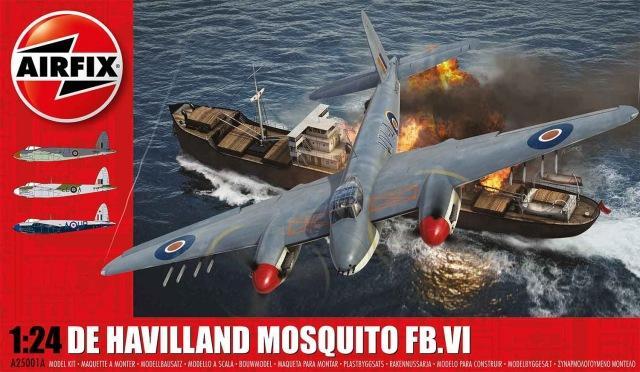
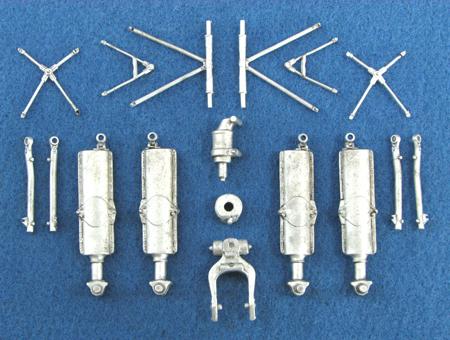
I purchased an Airfix Mosquito kit, (A25001) in 2010 while attending the IPMS National Convention in Phoenix. After waiting for over 5 years after the purchase I decided that it was “Mossie Time”. The short version of the story is that while the Airfix kit was a fun and enjoyable project, through impatience and clumsiness I managed to trash one of the main gear to the point that it would not support the weight of the model.
Having learned a valuable lesson, and having a timely opportunity to review the 2nd release of an Airfix Mossie in 24th scale, I decided that I would incorporate the SAC gear into the Mosquito review of the Airfix A25000A kit. (The primary difference between the two Airfix kits is that the 2nd release does not contain parts for the Nightfighter version and has a different set of decals.)
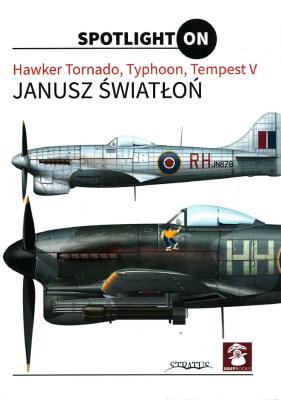
Janusz Światłoń authors the ninth book in Mushroom Model Publications’ series that presents detailed illustrations of celebrated aircraft (and in one case, AFV). This volume’s focus is on the Hawker Tornado, Typhoon, and Tempest V fighters that display a variety of authentic camouflage schemes and markings. A native of Krakow Poland, Janusz Światłoń, is an aviation history enthusiast and military modeler. He has retired for the Polish military after serving with the 6th Airborne Brigade. He has a long history of being published as an illustrator and as an author for many magazines and books from publishing houses as Osprey, Kagero, AF Editores, Chevron, and Mushroom Model Publications.
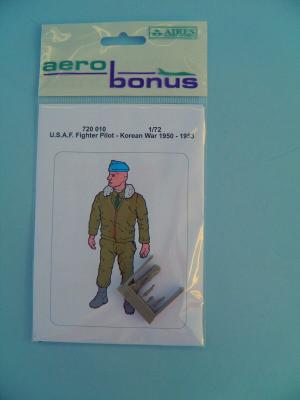
Aero Bonus is the figure line from Aires. They do several figures ranging from 1/72nd to 1/32nd. This 72nd scale guy, as the name implies, is a USAF Fighter Pilot during the Korean War. You could also use it with any other USAF jet from the early 50’s and probably into the 60’s. He is depicted wearing khakis and what I think is a B-15 Flying Jacket. He is topped off with the standard Garrison Cap.
The figure is cast in 4 grey resin parts on one mold block, a body, two arms and a separate head. The parts are perfectly molded with just a slight seam to be removed from the inside of the legs.
There are no assembly instructions but it is pretty obvious where things go. A generic paint guide is provided basically telling you to paint him olive with a blue hat.
Product provided by: The reviewer while trolling the internet, and his wallet
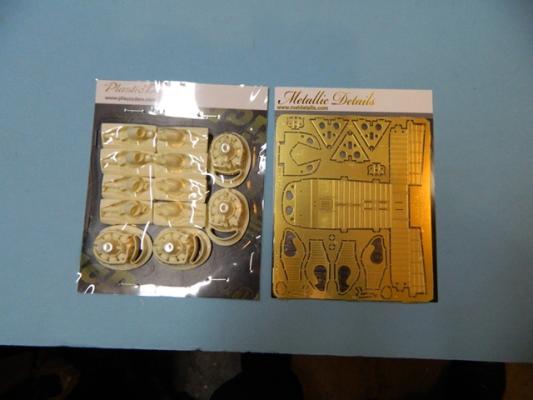
Metallic details is a new company to me. Based in the Ukraine, I found them while searching for 1/48 engines for my Monogram/Revell (Now Revell) B-29 builds. They have a VERY comprehensive and growing catalog of items for armor, aircraft, cars, they are obviously growing!
When I received the package about two weeks after ordering (that’s REALLY good delivery time given today’s worldwide issues) I was impressed with the quality of what was provided, read on!
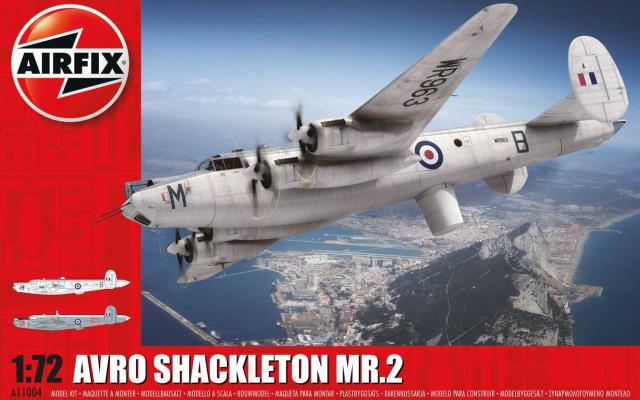
Airfix has been steadily updating its catalogue of 1/72 aircraft. One of their newest is the Avro Shackleton MR.2. This kit is a doozy! You will never have to look back at the old mold Shackleton kit again. Airfix gives you the choice of building either the early version with top turret or the late version with added antennas and turret removed. It also comes with a full interior with radarscopes, seats, panels etc., along with a detailed bomb bay with weapons, and movable rudders and elevators.
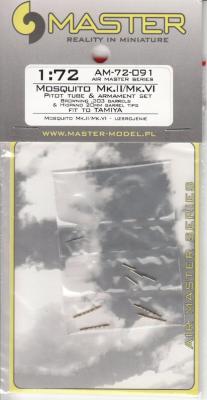
Master Models is a company that makes turned-brass after-market parts, specifically pitot tubes, refueling probes, and antennas.
The first thing I would like to point out is how good the packaging and instruction sheet is. The packaging consists of a zip-lock type bag while the part is in a smaller bag, keeping it from moving all over or losing one of these small pieces. The instruction sheet is very clear and easy to understand, needing only 3 steps: 1) Cut off original part; 2) Drill a hole (0.5 mm) and (0.7 mm) for the 20mm cannons; 3) Glue in the new metal part with CA.
Just be very careful drilling the holes, especially in 1/72 scale.
When compared to the kit part there is no comparison. The kit pitot tube and guns look like little blobs of plastic, while the Master Model parts are complete works of art. Once you use a couple of these pieces, you will be completely spoiled, and will never want to use the kit pitot tubes or guns again.
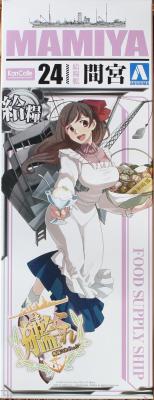
Bottom Line: Same model as Aoshima 01035 IJN Mamiya kit, 1931 fit, but with Kantai Collection Fleet Girls (KanColle Kanmusu) extras to accompany the model. Simple but effective portrayal of a Japanese Navy supply ship. Great detail, easy to assemble (mostly), only one glaring issue. Note that Kanmusu collection kits are not intended for non-Japanese builders so instructions are in Japanese.
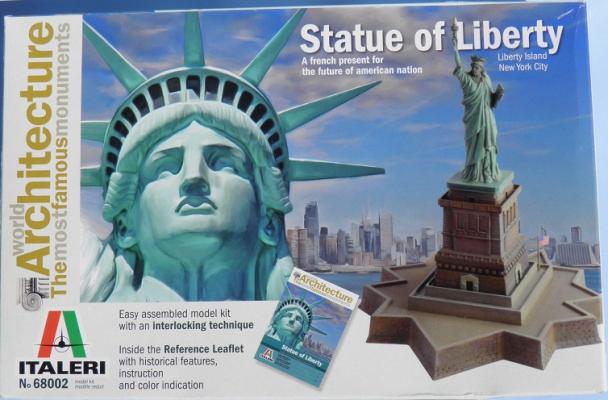
On October 28th, 1886 a gift from France was dedicated in New York Harbor, the Statue of Liberty. I am sure most of you are familiar with it and those who want to read it’s fascinating history can find much more online than I can give you here. However, I can relate my personal experiences with the Lady of Liberty.
History
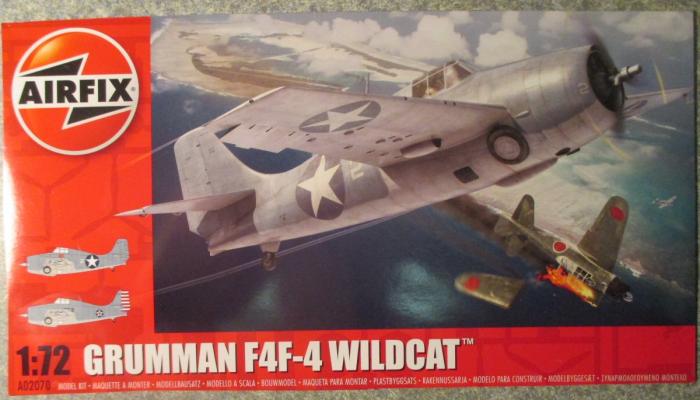
The Grumman F4F-4 “Wildcat” was the standard carrier fighter used by the United States Navy and Marine Corps at the beginning of World War II. It differed from the earlier F4F-3 by the addition of folding wings and extra armament. Although the F4F-4 could not outclimb or outmaneuver its chief antagonist, the Mitsubishi A6M-2 Zero, superior tactics and pilot skill usually tipped the balance in favor of the F4F, and eventually, the F4F was replaced by the superior F6F “Hellcat” and the F4U “Corsair”. The Zero, on the other hand, was only slightly modified during the course of its career, and that, along with the larger number of American fighters produced, helped the U.S. Navy’s efforts to defeat the Japanese. The operational history of the F4F is well known, and any serious modeler should be aware of the basic story, so it will not be repeated here.
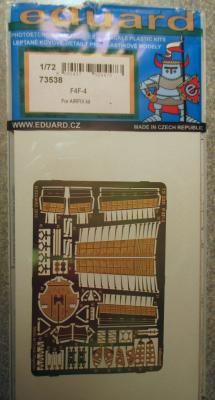
This is a much more extensive set of PE details for the Airfix F4F-4 kit, and actually includes both the larger sheet and the smaller #SS538 PE sheet which has the cockpit details. In addition, the much larger PE sheet provides parts to construct more detailed wings, including flaps and sections of the folded wings. Some of the inner details for the wings in the folded position are provided, and they look excellent. Also, a new firewall is provided, and some details for it. A set of bomb racks and shackles is also on the sheet. The parts are relatively easy to prepare for assembly, but some careful trimming is required, and I would suggest using some pretty sophisticated magnification equipment, as these parts are pretty small and assembly is tedious. If you want to display your model with the flaps in the “down” position, this set will fill the bill.
However, there is a major philosophical problem here. The PE SHEET provides two sets of flaps,
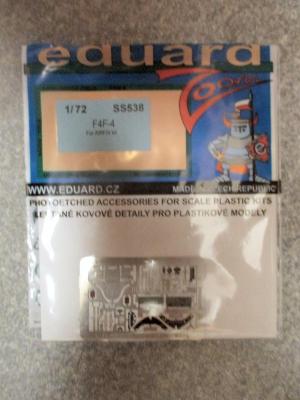
This photoetched sheet provides a lot of detailed parts for the interior of the Airfix F4F-4 Wildcat kit. A total of 18 parts are provided on a sheet measuring about 2 inches by 1 ½ inches, which should tell you that some of the parts are extremely small. An instrument panel, metal pilot’s seat, and side panel details are included. In addition, some details are provided for the aircraft’s firewall, which can be seen behind the landing gear structure. There is a lot included here, and these will add to the detail if you are trying to super-detail the cockpit. Very detailed instructions are provided, which tell what parts to remove and replace with the PE parts. Be sure to follow the instructions carefully.
Recommendations
This set is highly recommended for adding additional detail to the cockpit of your Airfix F4F-4. It would also be useful in adding details to other F4F kits.
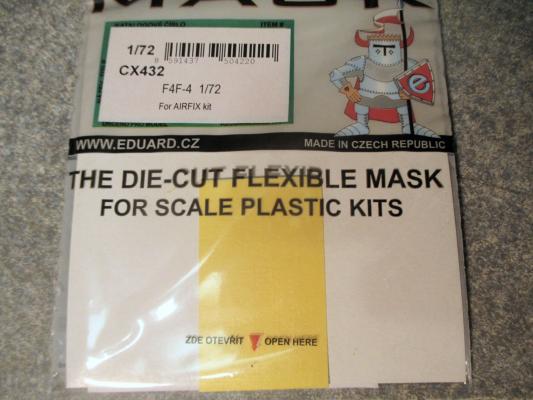
This is a mask set for the Airfix Grumman F4F-4 kit recently issued by Hornby-Airfix. It consists of a small sheet of yellow masking paper die cut so that the parts required can be easily removed without damage and applied to the areas to be masked. These include the clear glass areas of the cockpit canopy and the armpit windows below the wing. They fit exactly, and should quicken the painting process.
Recommendation
These are worth getting, and would be useful on the Hasegawa and Hobby Boss kits as well.
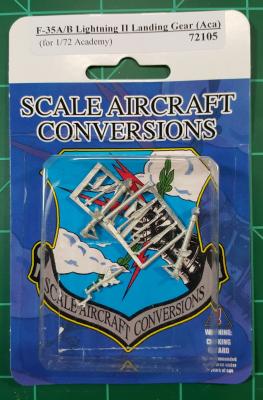
Scale Aircraft Conversions is known for making replacement landing gear for a wide variety of kits in virtually every scale in which model aircraft are available. This set is designed to replace the plastic gear in the Academy F-35A kit. The packaging says it’s for F-35A/B, but Academy doesn’t do an F-35B yet. The only F-35B kit in 1/72 that I know of currently is the Fujimi kit and these landing gear are a bit shorter and less beefy than the ones in that kit. Perhaps the guys at SAC know something we don’t.
The set includes both main gear legs and the nose gear with their separate retraction struts. The struts are very sturdy and are made to be drop-in replacements for the kit parts. The parts require very little clean up, though some parts do occasionally become a bit bent during shipping. No worries there, though, since they are very easily straightened. Recommended, especially if you want landing gear that are sturdier than the kit ones.
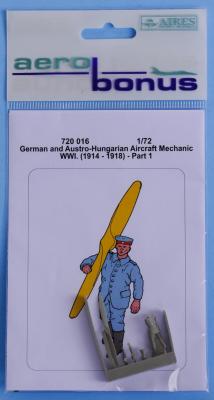
A perfect addition to your diorama or display base is this Aires Aerobonus figure. This WWI era German or Austro-Hungarian Aircraft Mechanic is carrying a replacement propeller. Aires Aerobonus provides a resin propeller along with a figure with separate arms and head on one pour stub with side bars to protect the figure. Of note is the re-sealable packaging that Quickboost uses that makes the parts easy to review and then stuff back into the package securely. The supplied instructions provide color drawings for painting.
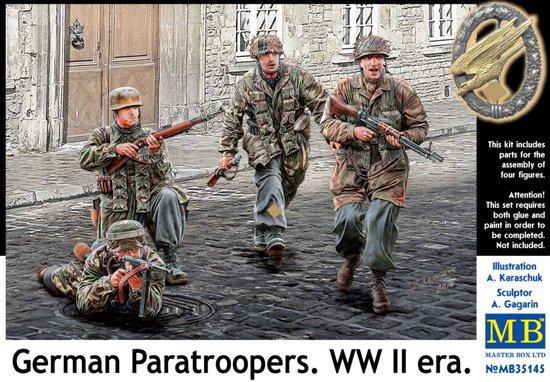
Master Box LTD is an Ukranian company specializing primarily in 1/24, 1/32, and 1/35 military and historical figures. They also produce some fantasy subjects, and a line of 1/72 WWI AFVs, and 1/35 vehicles. The company tends to package figures in groups to support a stand-alone vignette or diorama.
This kit features four figures from one of Germany’s elite infantry units during World War II, the German paratroopers, or Fallschirmjäger. Unlike other countries during World War II, the Fallschirmjäger were part of the Luftwaffe, as opposed to the regular army, and as such had some notable differences in their uniforms and equipment. Master Box captures these differences perfectly.
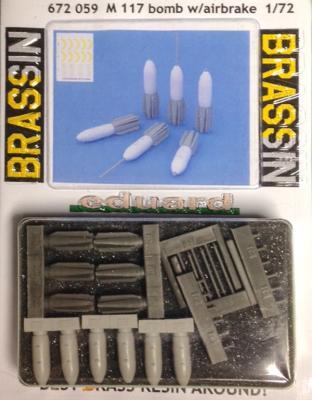
The M117 is a general purpose 750 lb. (unguided) bomb used by the United States military starting in the 1950s and continuing up through Operation Desert Storm, Iraqi Freedom and Afghanistan. It was used extensively in the Vietnam War being carried by everything from F-100s, to F-111s, to B-52s. The bomb consists of a bomb body containing the explosives, one of several different tail assemblies and fuses.
Eduard has issued three different M117 sets. This set represents the M117 with the high-drag tail assembly primarily for use in low altitude deliveries. The tail assembly has four large plates that open up when the bomb is dropped, greatly increasing the drag on the bomb, slowing its descent so as to allow the delivery aircraft an opportunity to get clear before the bomb impacts and explodes.
The phenomenon that began with the TV Series Star Trek has permeated American culture since the inimitable sixties when our favorite villains, the Klingon’s, invaded our space. This kit has been issued a number of times since then attesting to the popularity of the show and delighting the Sci-Fi hobbyist as well!
The Kit
This review covers the AMT Klingon Bird of Prey (BoP) 1:350 Scale AMT Model Kit #949. This kit is molded in light green styrene which is a close approximation of the final color and could be built as such. On the other hand, for the best look, painting and highlighting the model is needed.
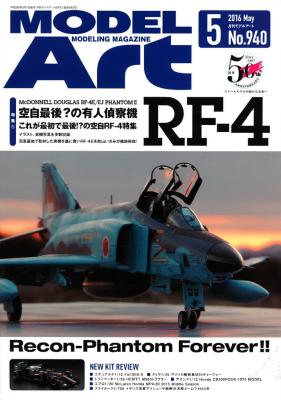
Model Art Issue 940 is typical of other Model Art magazines in that it is written entirely in Japanese, with occasional English words, usually in article titles or in captions. The Model Art magazine is a monthly issue that has evolved from their first issues in 1966 that focuses on all modeling subjects. I’ve attempted to capture the contents below, but please be aware of translation difficulties. There are about 40 pages of advertising, out of the 160 pages, showing what is available and new, always useful for building up that wish list. Nearly all the articles are supported with color photos. A few of the ongoing series are supported with black and white drawings and photos
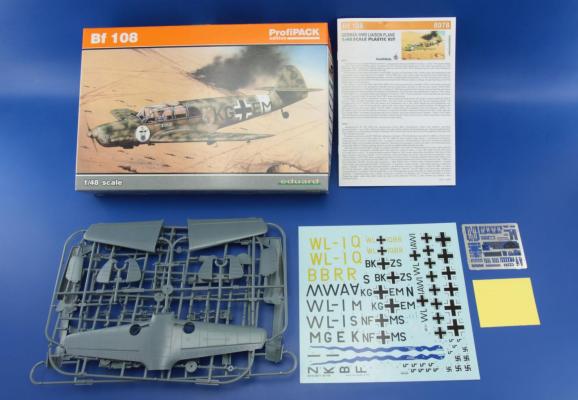
The Messerschmitt Bf 108 Taifun is a German single-engine sport and touring aircraft developed by Bayerische Flugzeugwerke (Bavarian Aircraft Works) in the 1930s. The Bf 108 is of all-metal construction.
Originally designated the M 37, the aircraft was designed as a four-seat sports/recreation aircraft for competition in the 4th Challenge International de Tourisme (1934). The M 37 prototype flew first in spring 1934 powered by a 250 PS (247 hp, 184 kW) Hirth HM 8U inverted-V engine, which drove a three-blade propeller. Although it was outperformed by several other aircraft in the competition, the M 37's overall performance marked it as a popular choice for record flights. Particular among these traits was its extremely low fuel consumption rate, good handling, and superb takeoff and landing characteristics.
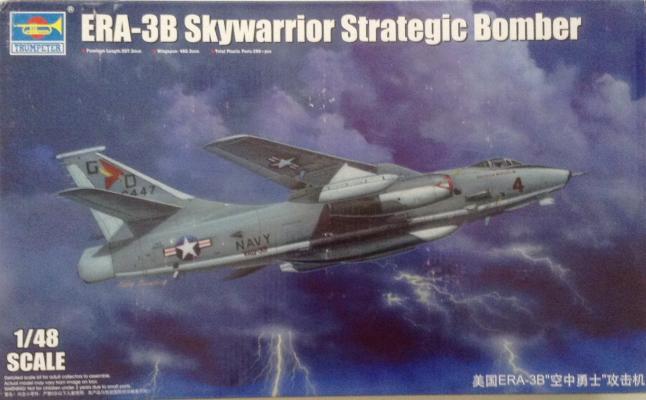
This is the second installment, “Full Build,” of Trumpeter’s Douglas ERA-3B 1/48th scale variant to be released by Trumpeter in 2016. This plane represents the US Navy, VAQ-33 ‘Firebirds’, ERA-3B, 104/GD BuNo. 146447. The ERA-3B variant was converted from the RA-3B variant as an electronic aggressor aircraft serving with the VAQ-33 and VAQ-34. This variant follows Trumpeter’s release of the A-3D-2 Skywarrior Strategic Bomber 02868 in 2013 and its EKA-3B Skywarrior 02872 in 2015. The model will be based upon the US Navy, VAQ-33 ‘Firebirds’ plane as seen on page 49 in the “A-3 Skywarrior in action book, Jim Sullivan, Aircraft Number 148, Squadron/Signal Publications”. Jim Sullivan’s depiction of the picture states that this plane is sitting on the flight line at NAS Oceana Virginia on 12 May 1977.
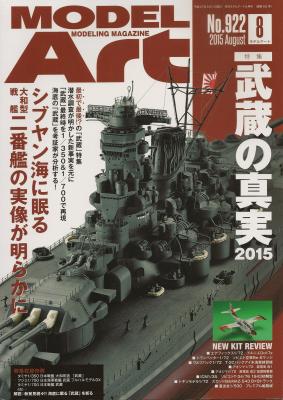
Model Art Issue 922 is typical of other Model Art magazines in that it is written entirely in Japanese, with occasional English words, usually in article titles or in captions. This issue shows a large photo spread of the result of a conversion of the 1/350 Tamiya Yamato to the Musashi, specifically as she currently is, lying on the bottom of the Pacific Ocean. Also, there’s a pretty good review of the Wolfpack release of the US Navy T-2 Buckeye training jet. Plus, there are lots of advertisements showing what is available and new, always useful for building up that wish list.