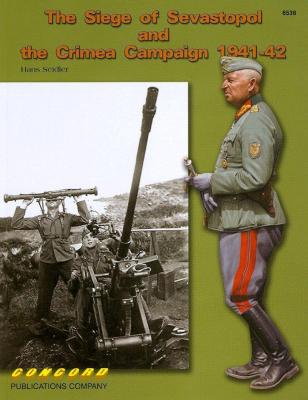
This book is Number 6530 in Concord’s Warrior Series. There are 3 pages of narrative on Operation Saturn and Heeresgruppe Sud (Army Group South), including the break down of which units were included. The rest of this volume is just filled with rare pictures of what the soldiers had to endure on the Russian Front, I was getting cold just looking at these pictures. The pictures are printed on glossy paper and are very clear so that you can make out everything in them. I especially liked how thorough the descriptions under each photo were. These pictures are just “diorama heaven” for the modeler showing everyday troop living and pointing out various uniforms and equipment.
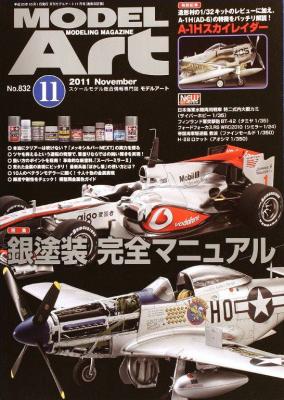
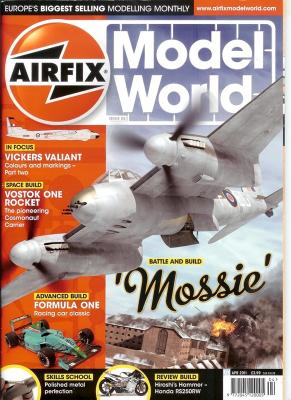
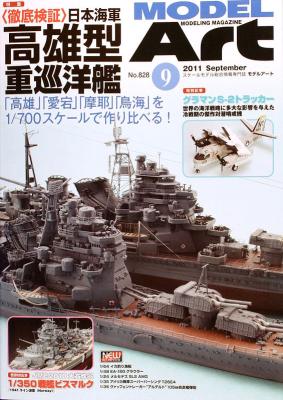
Model Art magazine is a very well known model magazine from Japan. It seems to do well selling here, even though it is written completely in Japanese. They really do believe in the saying “a picture is worth a thousand words”. There are so many wonderful pictures in this magazine that you can really tell what is going on.
The magazine is 7 1/8 inches X 10 1/8 inches and is printed on glossy stock. Most of the pictures are in color and also a lot of black-and-white, toward the back. This magazine looks more like a trade paperback than a magazine, and it has a superb binding. No pages falling out here! This book is built to last for many projects to come.
This book has nothing to do with models or modeling. If you are into modeling that part of the world, you might find a useful picture of a vehicle or aircraft.
The author, Al J. Venter, is a South African war correspondent who has covered Africa and the Mideast for 40-some years He has about 20 books to his credit, a few of which are on diving. I have read none of them, so this was a first for me. There is no doubt that he is not, and never has been, sitting behind too many desks.
From the publisher's data sheet and the book end covers, I gathered the purpose of this book is the show that it's a dangerous profession -- well, yeah, think Ernie Pyle. It was fortuitous (I guess) that as I was reading this, the Egyptian government was being overthrown -- the media became the target of the "pro-government" forces and there was the scene of Katie Couric almost swallowed by a mob -- all that brought the theme home, maybe as well as the book did.
Basically, this is a catalog of the Tamiya Paint line in a soft bound, in a ninety-six page format. The book is in Japanese; however there are English captions under the paint chips. The book is divided into sections of colors for cars, metallic’s, clear coats, primary colors and AFV’s/aircraft/ships by nationality.
Also included are photo instructions of masking techniques for those modelers who don’t have an airbrush but rely on hand brushing and spray cans. They are broken down into aircraft, armor and ships. As an added plus there are pictures of their fine line of tools, tape, weathering kits.
This book would be very welcome to any modeler who uses Tamiya paint. It’s a handy reference to have on hand before going down to the local hobby shop or ordering mail order because you know what color you will want and its number.
For those of you that do any scratch building or those that super detail kits, you are well aware of punch sets. For the rest of us, a quick explanation is needed. Roll Models Sub-Miniature Punch and Die set includes a series of series of metal punches and a guide to allow you to replicate small discs. The Sub-Miniature set comes in sizes 0.063, 0.058, 0.053, 0.048, 0.043, 0.038, 0.033, 0.028, 0.023, 0.018 inches. It can be used for punching out plastic card to replicate bolt heads or used to punch paper to make masks.
The process is simplicity itself. You select the size punch you need. Slip your material to be punched between the guide bars, insert the punch and strike sharply. Out the other side comes a perfect little disk. You can do this over and over and it remains the same size.
I had the day off from work and had some time to spend with the Grex Tritium TG3 airbrush I recently purchased. The basic kit included the TG3 gravity-feed airbrush, three interchangeable paint cups - 2ml, 7ml, and 15ml, one needle and one crown cap. The caps are magnetized for easy on/off switch outs. The magnetic, spare needle crown cap sticks to the back of the rear handle cap - NICE feature. A tool/wrench is also included for switching out the caps and general disassembly. The total weight of the unit is 6.4oz.
The airbrush comes preset from Grex. To assist with consistent line widths, the Tritium has a Pre-set knob at the back of the airbrush. Turning it clock-wise limits the trigger and how much amount of paint sprayed. Completely turning it clock-wise will stop the trigger entirely and lock it shut. Turning it counter-clockwise, allows for more/unlimited paint and trigger extension. Turning in completely counter-clockwise allows unlimited trigger control.
Two more green machines added to the arsenal. The basic kit included the Genesis XG ( $149.98) airbrush with a 7ml cup capacity, .3mm nozzle, and weighs in at 4.2 OZ. To assist with consistent line widths, the Genesis has a Pre-set knob at the back of the airbrush rear handle cap. Turning is clock-wise limits the trigger and how much amount of paint sprayed. Turning it counter-clockwise, allows for more/unlimited paint and trigger extension. Just the feel of the airbrush lets you know it's solid. The balance is very nice as the rear handle cap is all metal. Not plastic like some other airbrushes in its price range of $120. Grex also makes the comfort grip set that can be purchased separately for a more ergonomic/comfortable feel.
ALC306 Bottle White Primer & Microfiller
ALC309 Bottle Black Primer & Microfiller
Never resting on his laurels (or whatever else he might call them), Tony Hipp, inventor of Alclad II, does it yet again. As I have stated in several “how to” articles on this product, I couldn’t stress enough the subject of surface preparation prior to applying the metal finishes. If any sanding scratches were present, they would require a base coat of a primer with filling capabilities, then sanding and polishing so that in the case of the “high shine colors”, a gloss black primer could be applied, followed by whatever finish coat was desired. These new offerings cut down on the workload substantially, in that these primers may be applied, sanded and polished to the desired sheen and followed by any of the Alclad II metal finish coats, thus eliminating one or two full steps and drying time.
The November 2010 edition of the Model Art Magazine has the following articles:
- Main article is Q&A how-to using the following kit builds to discuss selecting paint colors, painting winter camouflage, different types of paints and painting techniques, different glues and their use, use of canopy masks and photo etch, detailing cockpits and engines, painting national markings and different modeling tools:
- Hasegawa 1/32 Bf109 F4 trop - Hobby Boss 1/32 IL-2 Sturmovik on skis - Tamiya 1/48 Mitsubishi A6M3/3a - Hasegawa 1/48 Nakajima B6N2 Tenzan “Jill” - Tamiya (Italeri) 1/72 Mig-29 Fulcrum
As a painter of military miniatures I welcome any new book on uniforms. Since my field of interest is the Napoleonic Era, this book by Casemate was most welcome. When John Noack offered it, I jumped at the chance to review it. I was not aware that it was written by the most renowned expert on the uniforms and history of the Napoleonic Era.
When I fist started painting figures of the Napoleonic period, I was taken by the beautiful prints by Lucien Rousselot. At that time they were very expensive and I could only afford a few. Now Casemate has chosen to print all of his works in one book. To someone like me, it was like finding the Holy Grail.
The book in s very large format (11.75” x 8.25”) hardcover book printed on beautiful glossy paper stock. It even has place markers.
This book is broken down into many sections showing the Infantry, Cavalry, Artillery Staff, Marines, Imperial Guard, Aux Corps and many more.