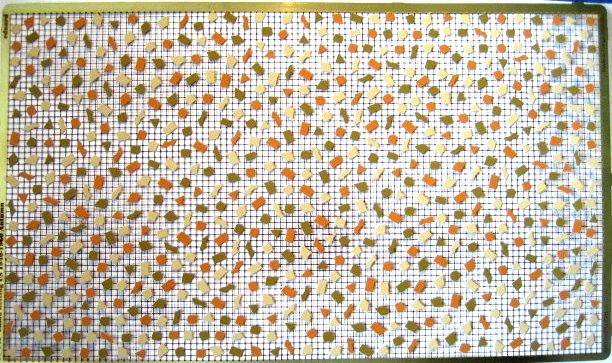
Two more green machines added to the arsenal. The basic kit included the Genesis XG ( $149.98) airbrush with a 7ml cup capacity, .3mm nozzle, and weighs in at 4.2 OZ. To assist with consistent line widths, the Genesis has a Pre-set knob at the back of the airbrush rear handle cap. Turning is clock-wise limits the trigger and how much amount of paint sprayed. Turning it counter-clockwise, allows for more/unlimited paint and trigger extension. Just the feel of the airbrush lets you know it's solid. The balance is very nice as the rear handle cap is all metal. Not plastic like some other airbrushes in its price range of $120. Grex also makes the comfort grip set that can be purchased separately for a more ergonomic/comfortable feel.
ALC306 Bottle White Primer & Microfiller
ALC309 Bottle Black Primer & Microfiller
Never resting on his laurels (or whatever else he might call them), Tony Hipp, inventor of Alclad II, does it yet again. As I have stated in several “how to” articles on this product, I couldn’t stress enough the subject of surface preparation prior to applying the metal finishes. If any sanding scratches were present, they would require a base coat of a primer with filling capabilities, then sanding and polishing so that in the case of the “high shine colors”, a gloss black primer could be applied, followed by whatever finish coat was desired. These new offerings cut down on the workload substantially, in that these primers may be applied, sanded and polished to the desired sheen and followed by any of the Alclad II metal finish coats, thus eliminating one or two full steps and drying time.
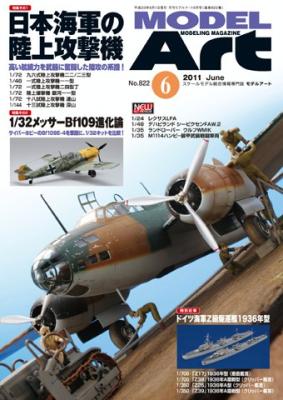
The November 2010 edition of the Model Art Magazine has the following articles:
- Main article is Q&A how-to using the following kit builds to discuss selecting paint colors, painting winter camouflage, different types of paints and painting techniques, different glues and their use, use of canopy masks and photo etch, detailing cockpits and engines, painting national markings and different modeling tools:
- Hasegawa 1/32 Bf109 F4 trop - Hobby Boss 1/32 IL-2 Sturmovik on skis - Tamiya 1/48 Mitsubishi A6M3/3a - Hasegawa 1/48 Nakajima B6N2 Tenzan “Jill” - Tamiya (Italeri) 1/72 Mig-29 Fulcrum
As a painter of military miniatures I welcome any new book on uniforms. Since my field of interest is the Napoleonic Era, this book by Casemate was most welcome. When John Noack offered it, I jumped at the chance to review it. I was not aware that it was written by the most renowned expert on the uniforms and history of the Napoleonic Era.
When I fist started painting figures of the Napoleonic period, I was taken by the beautiful prints by Lucien Rousselot. At that time they were very expensive and I could only afford a few. Now Casemate has chosen to print all of his works in one book. To someone like me, it was like finding the Holy Grail.
The book in s very large format (11.75” x 8.25”) hardcover book printed on beautiful glossy paper stock. It even has place markers.
This book is broken down into many sections showing the Infantry, Cavalry, Artillery Staff, Marines, Imperial Guard, Aux Corps and many more.
Contents
- Origins of the campaign
- Chronology
- Opposing commanders
- Opposing fleets
- Opposing plans
- The battle of Midway
- The aftermath
- Further reading
- Index
Mark Stille has written a masterful work in this latest of Osprey’s offerings on the famous battle of Midway. The original book, now available in paperback, was written by Mark Healy. Published in 1994, the original was titled the same as Stille’s work. However, it cannot match this latest version in the areas of concise analysis and excellent illustrations.
First Impressions
This review product arrived in the mail wrapped in cardboard and amply reinforced duct tape. Upon opening the mailing package I found a heavy-duty, injection-molded black plastic, 11 ¾” by 15 5/8” long, enclosed in a clear plastic bag wrapper. A small sprue of clear plastic parts was also enclosed. The aircraft carrier deck is molded as an inverted tray, and is quite sturdy.
The engraving for the deck planks and elevator were clean and crisp, but might be considered too pronounced for an airplane model. For the bean counters, there are 190 tie downs. The welded seams are almost too finely rendered, with only a small portion that appears to have “faded”. There are four rectangular depressions that I assume receive the clear parts. On the underside of the tray was a date: 2001.
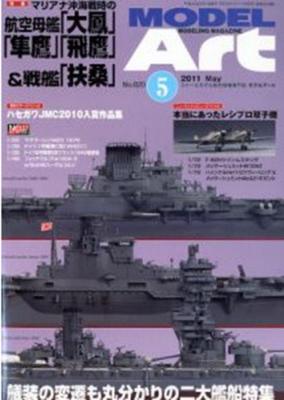
Model Art is a well known Japanese model magazine. It is famous for high quality builds and photographs that fully live up to the publication’s name. This issue covers Grand Prix cars from the 1970’s and 1990’s as well as all aircraft of the Japanese Blue Impulse team. Other articles cover the Zvezda 1/48 Bf-109F2; 1/35 JGSDF Type 96 WAPC; 1/48 WWII Japanese Type 94 6-wheel truck; 1/700 USS Independence LCS-2; 1/24 Mazda AZ-1, and a 1985 Mazda RX-7 in 1/24 scale.
The first 40 pages give extensive photographic coverage to Lotus 79 from the 1979 French Grand Prix and the Williams FW14B from the Hungarian Grand Prix 1992. This section has a multitude of photos showing the completed models as well as detail shots of the real cars and photos of the model during construction.
This is a very nice slick covered magazine, but if you want to read it, you better know Japanese. It contains a lot of visual information for the modeler. All the pictures are clear and high resolution, even the multitude of advertisements. This issue deals mainly with aircraft with some auto, armor and ship articles.
This edition’s articles are:
As any modeler knows, a good wash can pick out details and set a model apart from the crowd. There have been a lot of tips, tricks, and formulas over the years for the perfect wash. But The Detailer may have finally done it. The Detailer has created a line of twelve pre-mixed washes in various colors.
The washes come in 1-oz. bottles and are available in colors ranging from black through grey and white to greens and even purple. There are several uses for the washes, whether you’re a car modeler or a military modeler. The liquid is slightly thicker than water, and can be used straight from the bottle or thinned with water. The Detailer website shows some of the automotive uses such as blacked out grills, chrome tinting, lens and glass tinting, and various anodized metal looks.
I’m not a war gamer, but I’ve been curious about it for a few years now so I jumped to the opportunity to review a war gaming book.
Fields of Glory is a series of war gaming books oriented to the ancient and medieval ages. This current book is the first of the series expanding into the renaissance era and as such is the rulebook.
The book has a historical introduction to the military doctrine of the renaissance era including pros and cons of different military formations of the time (tercios, keils, cavalry, etc).
Then the book moves into what is needed in order to be able to play, before diving into details of troops, battle groups and in general, the rules of the game, including movement rules and combat phases like impact, maneuvering, shooting and melee. Each rule is demonstrated with examples, which makes understanding and learning of the rule much simple.