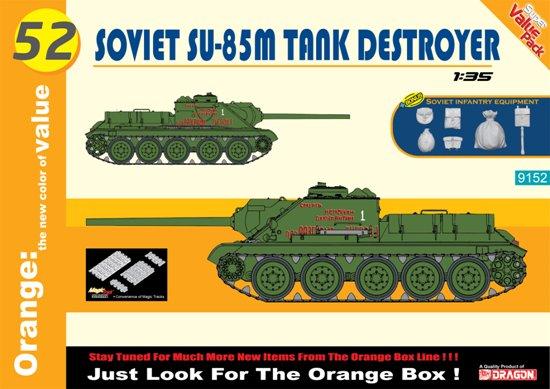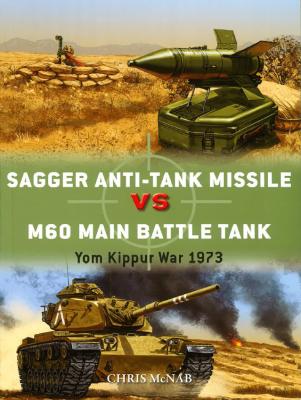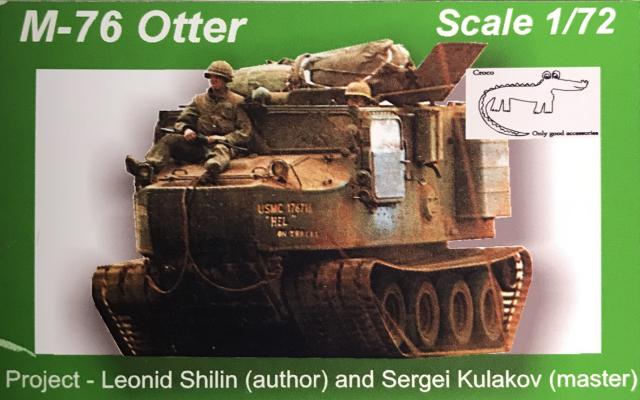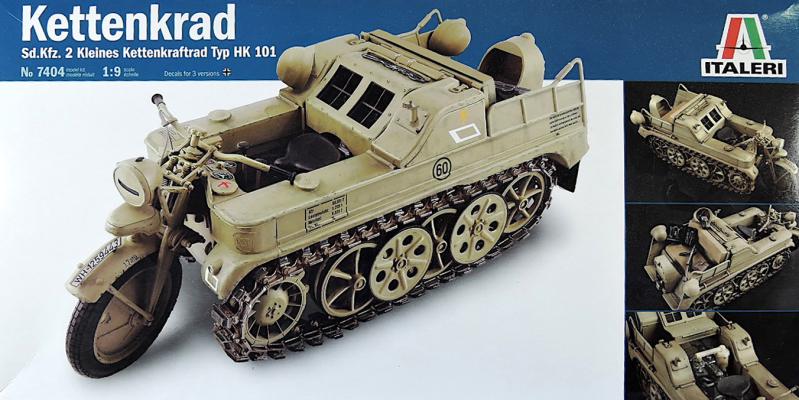
You’ve got to give Dragon Models some real credit – they’re willing to put out the oddball kit now and then, and to do it with class. The U.S.-made T54-E1 tank (not to be confused with the Russian T54) was one of the several attempts in the mid-50’s to upgrade the M48 from its 90mm gun to something with a bit more punch. Three different approaches to this idea were initially attempted, including this one, which clearly owes its ancestry to the famous French AMX-13 tank developed around the same time. The idea, of course, was that an autoloading main gun would eliminate the need for a human loader, and would permit extremely rapid firing during combat. There were a couple of problems with this idea, however. First, once the nine-round “magazine” was expended, someone typically had to exit the vehicle to reload it – not something you necessarily want to do under fire.
History
The T17 Staghound Mark I armored car was designed in the United States based on British specifications at the beginning of World War II. The British were looking for a wheeled reconnaissance vehicle with a high level of armor, well-armed and highly mobile. Chevrolet started production in late 1942 and a total of 3000 units were produced. British and Polish units started fielding this vehicle in the spring of 1943 in the Italian Campaign. The Staghound was used by many different counties during the post war era up into the late 1970s.
The U.S. Army accepted their first M109 in 1963. The M109 sported the short barrel (23 Caliber) 155mm M126 gun. Since 1963 the M109 has gone through a series of changes and upgrades. Most notable is the change to the longer barreled (39 Caliber) M185 gun on the M109A1 and the removal of the external floatation kit and addition of the external ammunition storage box on the M109A2.
The Israelis received their first 60 M109s in 1967. After years of boycotts, refusals, and subterfuge, the United States agreed to openly sell Israel much needed modern armored fighting vehicles. The only changes the IDF did to the original M109s were to add some hull mounted crew rails on the side and the conversion of some muzzle brakes to the Soltam version (probably for testing purposes).
During the early 1930’s, the Soviet Union’s military embarked upon a program to produce a massive new tank force capable of defending the vast territories of the Motherland. Tank production was broken down into six “types” of vehicles: amphibious scout tanks (as there was massive amounts of waterways and marshland within the country); light tanks; infantry support tanks; fast (cavalry) tanks; medium tanks; and heavy tanks. The latter were to be produced in smaller numbers (due to their expense and also complexity of production) and utilized for “breakthrough” maneuvers such as engaging large concentrations of enemy tanks, or against hard to dislodge fixed defensive positions unable to be dealt with by lighter armed or armored tank units.
Background
As production ramped up, it was discovered that the T-54-1 Model 1947 had a number of technical issues. This lead to relatively few vehicles being produced, and production ceasing quickly, to be replaced as the problems were sorted out with a modified variant, the Model 1949. This second variant had a different turret configuration than its predecessor, the fender mounted machine guns of the Model 1947 were deleted, and the fender mounted cylindrical fuel tanks (as seen on late model T-34/76 and T-34/85 tanks) were replaced by a rectangular design.
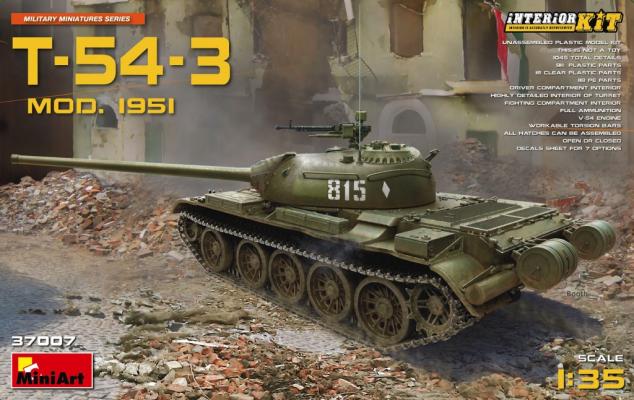
This is the second T-54 kit from MiniArt that I have had the great pleasure of reviewing for IPMS/USA. The first, MiniArt Kit #37003, was of the T-54-1 Model 1947, the first production variant of this important Soviet Cold War warrior. For this review, see here: T-54-1 Review
First released by Panda-Hobby in 2015, this is a good kit of an interesting and very unusual vehicle. The parts have some fit issues, but are generally okay. There are not a huge number of parts (220) and there is not a lot of detail to the vehicle, which simplifies assembly.
Background
The Husky VMMD was first developed for the South African Defence Force in the 1970s to clear military convoy routes of mines. Formerly called the Chubby System, the Husky uses ground penetrating radar to locate mines and IEDs. Driven by a single occupant, the vehicle can withstand explosions and is easily repairable due to its modular construction. The Husky VMMD has been used extensively in Afghanistan and Iraq.
The Vehicle
Every armed force in World War II used civilian automobiles as transportation for “important” people. There were American Dodges, Buicks, and Fords. The British used Bentleys and Austin. The Germans used Opels and Horches. Brengun doesn’t specify which model of automobile this kit represents, but it’s obviously a “luxury” car, with a hard top and 4 doors. It’s definitely nicer than Hans-Joachim Marseille’s Kubelwagen.
The Kit
You get two resin staff cars in the kit. There is a PE fret an instruction sheet, and a small decal sheet with license plates for two cars.
Assembly
There really isn’t any assembly to this kit. I removed the pour block from the connectors at the bottom of the car, and then cut these connectors off of the bottom of the car.
Introduction
I won’t go into the history of the Valentine Tank because each modeler, I’m sure, does his own research before beginning the build. But, what I found interesting was the different opinions as to how the Valentine got its name. One reference implies that the name came from the middle name of Sir John Carden, the designer of the A9 and A10 which were prototypes of the Valentine. Another reference article states that the name came from an acronym of the designer. (Vickers Armstrong Limited Engineers Newcastle-upon-Tyne). Even other references imply that the name came from the date it was introduced to the Army of which was Valentine’s Day, February 14th, 1938. Whatever the reason for the name, the Valentine and its variations continued to be used. As to accuracy of the model, it does appear to be very accurate when compared to some scale line drawings.
The Büssing-NAG 4.5 ton truck was manufactured for the Wehrmacht and Luftwaffe between 1942 & 1945. The truck was adapted for many uses including cargo, troop carrier, artillery prime mover, flak carriage, and even a version that could run on railroad tracks. This particular version of the Bussing Nag was fitted with a Bilstein 3 ton crane which could be used to lift engines and change tank gun barrels. After 1943, the Büssing-NAG with 3 ton Bilstein crane was designated Kfz. 100.
The Büssing-NAG was first issued by AFV Club in 2012 as a cargo truck, again in 2014 with new parts, and this version in 2015 with the Bilstein Crane.
At the 2015 Russian Army May Day Victory parade, the world got its first official view of Russia’s latest family of armored fighting vehicles. This new series of vehicles presented a new doctrine for Russian armament, design and ultimately survivability by creating a modular system to work across multiple platforms similar to what the U.S. Army attempted with their Future Combat Systems. The “Bumerang” is the design of Russia’s newest addition to the BTR family, intended to replace the BTR-80 and BTR-82 designs.
The Bumerang more closely resembles Western LAVs, rather than the BTR systems. The engine has been moved to the front, it has a v-shaped hull to make it more mine-resistant, instead of exiting the vehicle through the sides of the vehicle, as was the case with the BTR, troops exit the rear, and the Bumerang features an unmanned turret.