This is one of three photoetch sets provided by Eduard for the Meng 1/35 scale D9R Armored Bulldozer kit. The Meng D9R kit itself has previously been reviewed [Meng D9R Review]. The Eduard Cooling Slats set has also previously been reviewed [D9R Cooling Slats Review], as well as the Eduard Interior Photoetch set [D9R Interior Photoetch Review].
Bronco Models has released a kit of the Marder IID, so let’s take a look at what's in the box. This was my first Bronco kit, and I was pleased to find the box was completely full. Inside you will find:
Background
Designed to fulfill a requirement by the United States Army and Marine Corps for a main battle tank to replace the M4 Shermans and M46 Pershings of the 1940’s, the M48 Patton tank found its place America’s armor hall of fame as the United States’ main battle tank from the early 1950’s through the early 1970’s. Originally fitted with gasoline engines, early M48’s were limited in range and were prone to erupt in flames when struck by hostile fire, thus necessitating the need for an improved version with increase range and less susceptible to secondary explosions and fire when impacted by enemy rounds. Enter the M48A3 variant, equipped with a new diesel engine and improved drive train and fire control system. In addition to production of new M48A3’s, earlier M48 variants were retrofitted to the M48A3 standard, and became the primary US tank during the Vietnam era.
Eduard is well known for their photo etch accessories to help modelers enhance their models. These sets are just another great addition for modelers. The one thing with these particular parts is that you will have to cut and fit them. I used the 6x6 screen and the 1mm Stripes on an Academy M551 turret storage rack to show as an example of what can be done to enhance your models. I chose this particular kit as they used vinyl screen for the sides and the bottom of the rack was solid bottom with a raised screen molded on it.
The 6x6 and 4x4 screens come on one photo etch steel fret. The material cuts very easy with a scissors. I used a template to cut out the shapes that I needed and attached them with Gator Glue. These screens could also be used as screening material over air intakes.
The Willys Jeep is probably the most recognized vehicle during World War II with production equaling 660,703 from 1940 through 1945. This model by AMC models represents a unique variation in its use during the war. It was used to travel on the railroad system with the addition of modified wheels in Europe by some U.S. Army transportation battalions, and in the India Burma theater by British Commonwealth troops.
This model by AMC models is a full resin kit with the addition of a PE windshield screen, grab handles, and clear acetate for the glass. The model comes packaged in a sturdy box with all 31 parts contained in Ziploc bags. There is one decal sheet included of an allied star for mounting on the front hood. Included in the kit is a resin display base of railroad tracks. I
The instruction sheet is one small sheet of double-sided print comprising 5 steps to build the model and suggested painting of the vehicle.
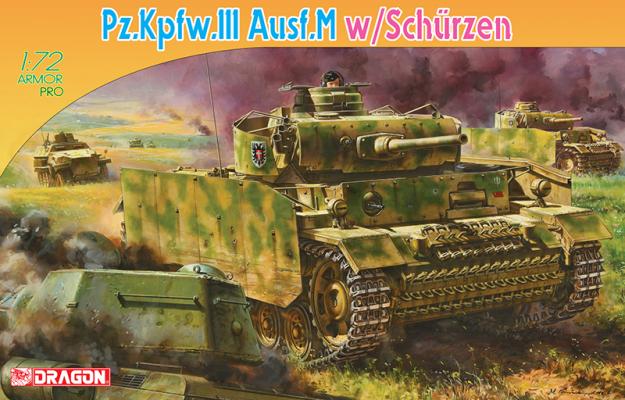
Quick summary, this is not Dragon’s first Panzer III kit released but it might be one of their finest. Upon opening the box, you will find the following items, all 650 parts (about 70 of which are not used):
- 24 sprues of gray plastic
- 2 bags of Magic Tracks
- 1 decals sheet with 5 sets of markings for gray panzer schemes
- 1 clear sprue of periscopes
There are a few variations to decide upon for he build. After looking over the instructions a few times, I decided to start building a vehicle from 2nd Panzer Division, Russia 1941. The kit has different cupolas to choose from and the 2nd Panzer Division had late model cupolas which I prefer over the early cupolas used by the 16th Panzer Division.
Squadron has issued 1/35 resin sets for nuts and bolts to detail your armor and about any other kit needing nuts and bolts. The Three examples review here are:
- 93505- 1.6mm Nuts and Bolts- $6.99
- 93506- 2.0mm Nuts and Bolts- $9.99
- 93507- 2.5mm Nuts and Bolts- $11.99
Each resin set contain 36 nuts with bolt tips and 36 bolt heads, 6 complete separate bolts and 6 separate nuts. There are 84 pieces per set all in blemish and pin hole free resin. Threads are so fine on the nut and bolt that they will actually thread together. Check pictures for proof!
The packaging draws reference to 1/35 scale but I am sure that these will look well in whatever scale you chose to use them. Just remember to scale your sizes.
This is one of three photoetch sets provided by Eduard for the Meng 1/35 scale D9R Armored Bulldozer kit. The Meng D9R kit itself has previously been reviewed [Meng D9R Review]. The Eduard Cooling Slats set has also been reviewed [D9R Cooling Slats Review], as well as the Eduard Exterior Photoetch set [D9R Exterior Photoetch Review].
The Bussing-NAG 5 cm KwK 39/IL/60 four-wheel German armored car is one of two prototypes of this nature built. Historical reference for these vehicles is very hard to come by. However, it is known that they were in fact built but never put into production. It is also accepted that they were in fact field-tested, but it is debated as to which unit actually tested them. Some sources saying it was the 12th SS Panzer division, but again, there is no definitive proof of this as the data does not exist to confirm this information. There were two paint schemes observed in a photo that exists: one dark yellow and one with a yellow and green camo scheme (with a hard-to-discern pattern). The box art depicts a two-tone camo scheme, so I followed that suggestion based on discussions I had on the Axis WWII forum of the Missing-Lynx armor web site.
To say that the appearance of this kit was a surprise to me, is an understatement! Lately, it seems that all we ever get on the ‘new’ kit front is another Panther-this or Tiger-that. A JS-4? Wow! I mean, the JS-4 was a pretty obscure piece of Soviet armor. Originally developed in competition with the IS-3, the JS-4 (or IS-4, but we’ll stick to the kit name) referred to as Object 245, was, like the IS-3, an extensive redesign of the IS-2. The hull was lengthened with an extra set of road wheels added and an improved engine. The turret and hull were both up-armored. While other alternatives were considered, the IS-2’s 122mm gun was retained for the JS-4. Technical data derived from the study of German wartime Panther tanks was utilized in the layout of the JS-4’s engine cooling system. Although the tank was approved for mass production in 1948, only 200 were produced due to disappointing speed and mobility. Can you say “obscure’?