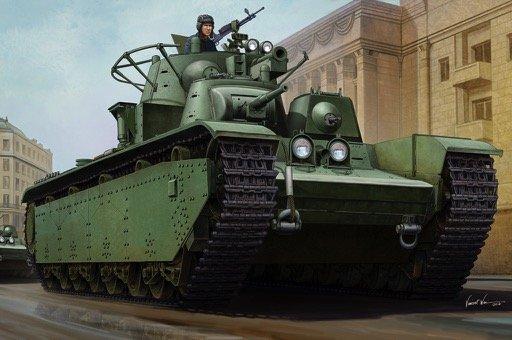
The T-35 heavy tank is perhaps the ultimate expression of the land battleship concept originally explored by the British in their Vickers A1E1 “Independent” prototype. Designed to work in conjunction with the T-28, another multi-turreted vehicle, the T-35 was intended to serve as a breakthrough tank, pushing through enemy fortifications while suppressing return fire with its antitank and antipersonnel turrets. Of course, history has proven this concept obsolete at best, and virtually all of the operational versions of this massive vehicle were crippled by their poor transmissions long before encountering any opponents on the battlefield. In total, 61 of these behemoths were manufactured, only the final six in the configuration displayed in this kit. Most of these were lost during the defense of Moscow. Only one example still exists in a museum.
Overview
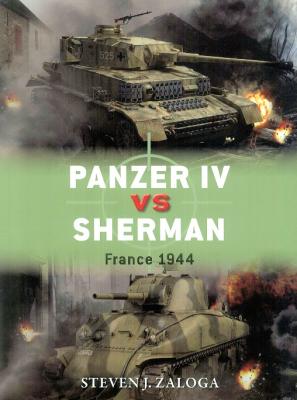
Osprey describes this newest Duel series book this way: “As the Allies attempted to break out of Normandy, it quickly became apparent that there would be no easy victory over the Germans, and that every scrap of territory on the way to Berlin would have to be earned through hard fighting. This study concentrates on, the ferocious battles between the German Panzer IV and US Sherman that were at the heart of this decisive phase of World War II. The two types were among the most-produced tanks in US and German service and were old enemies, having clashed repeatedly in the Mediterranean theater. Throughout their long service careers, both had seen a succession of technical developments and modifications, as well as an evolution in their intended roles - but both remained at the forefront of the fighting on the Western Front.
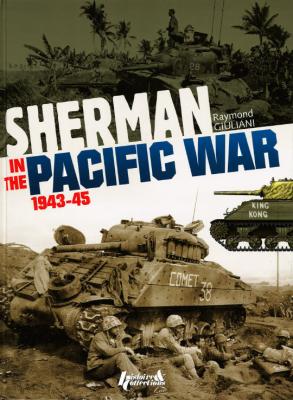
Raymond Giuliani covers a fairly rare subject, of the use of the Sherman tank in the Pacific. This book begins in 1943 as the Sherman began replacing the M3 Stuarts in the Pacific as the US island hopped towards Japan. The good news is that neither had to face any steel Tigers. Raymond Giuliani traces the trek across the Pacific island by island and also depicts the evolution of the flamethrower tank. The book includes over 350 photos, 25 color tank profiles, and 23 maps. There are spelling errors and interesting grammar choices due to the translation from French, but nothing that will hinder your understanding.
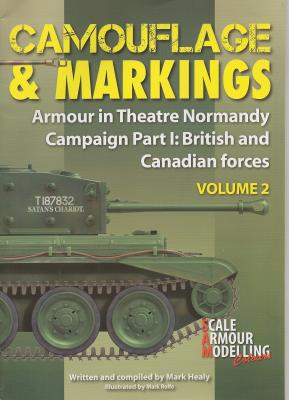
This book is Part I of Volume 2 of the Camouflage S Markings series from Guideline Publications, publishers of Scale Aircraft Modelling and Military Modelcraft magazines and the Warpaint series of books. It covers British and Canadian armored (armoured? – two countries separated by a common language) forces in Normandy.
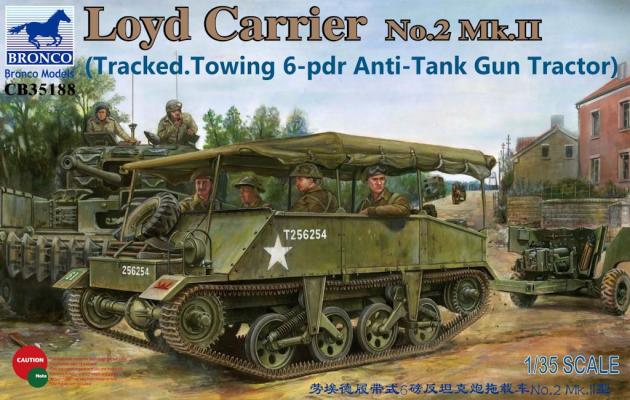
The Loyd Carrier was built upon the mechanicals (engine, gearbox and transmission) of a 15 cwt 4x2 Fordson 7V truck with light steel frame to which armor plate was bolted to the front and sides for minor protection. The engine was at the rear of the Carrier with the radiator places behind it. The transmission took the drive forward to the axle at the very front where it drove the tracks. Both the front drive sprockets and idlers (which were also notched) at the rear of the tracks were fitted with brakes, actuated by a pair of levers by the driver. To turn the vehicle to the left, the brakes were applied on that side and the Carrier would slew round the stopped track.
The upper hull covered the front and sides but was open to the rear and above; as the Carrier was not expected to function as a fighting vehicle this was not an issue. To protect the occupants from the weather a canvas cover could be put up with included frames.
This is a great kit, and will build a beautiful model of a unique WWII vehicle. Building this model is a challenge however, and will require lots of resin experience and careful fitting of many delicate parts.
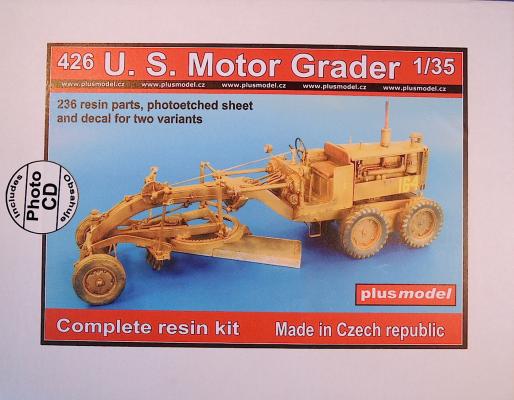
Originally introduced as the "Caterpillar Diesel No. 12 Auto Patrol" in 1938, the grader was renamed as a ‘Motor Grader’ one year later. The U.S. Army used the Cat 12 Grader during WWII in all theaters for airfield and road work. This is an iconic vehicle that has long deserved a quality kit and Plus Model has delivered a beauty. The Grader follows Plus Models other excellent full resin dozer kits.
An Out-of-the Box review is located here U.S. Motor Grader - Part 1.
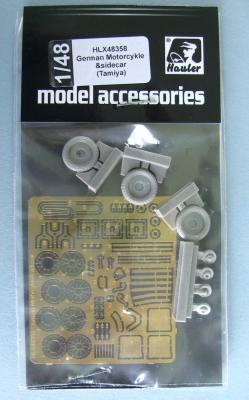
Adding to their line of detail parts for military models, Hauler has recently released a resin and photo-etched parts set for the Tamiya 1/48 scale German Motorcycle & Sidecar (Tamiya kit 32578). The set is comprised of seven resin and seventy photo-etched items. I would highly recommend the small photo-etched parts for experienced modelers, as removing the parts from the fret is a delicate process in itself, and maintaining control of these items through installation can be a challenge. In the end however, the results can certainly be worth the effort.
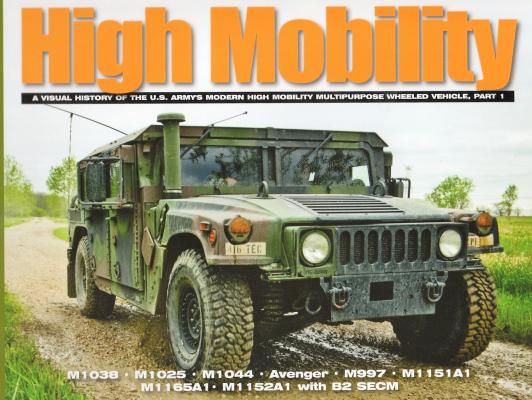
This is another of Ampersand Group’s Visual History Series using high-quality photography to show subjects in detail and in action. These books are excellent resources for modelers looking for formation and details on specific vehicles. This book, by the prolific author David Doyle, covers the High Mobility Multipurpose Wheeled Vehicle (HMMWV) popularly known as the Humvee.
The two-page Introduction discusses the history of development of the Humvee, and then briefly describes some of the 40 models in its development. Several models of predecessors in early variations are included. The Humvee has evolved from its original function as a soft skin utility vehicle to serve many other functions, including an armored combat vehicle.
The book focuses on and includes a chapter on each of the following variations:
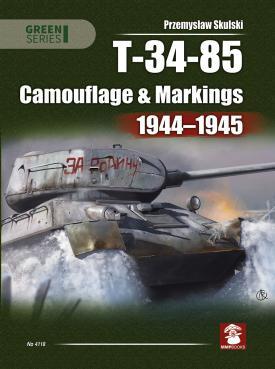
This book describes the colors and markings applied to the T-34-85. It served in huge numbers with the Soviet Army and its allies. All of its major users are beautifully illustrated with incredible artwork including the color profiles. The period photographs are clear and in focus exposing the modeler to the harsh conditions of war. A total of more than 35,000 T-34-85s were produced in several variants from different factories. The museum walk around photos points out the differing turrets and chassis from their respective factories. This book is a must have as it covers; unit/ tactical markings, air recognition details, captured enemy markings and even individual names and insignias.
The book is a glossy soft cover featuring a hearty cord & gum binding measuring 8.5 x 11 with 120 pages and 120 illustrations.
History Brief
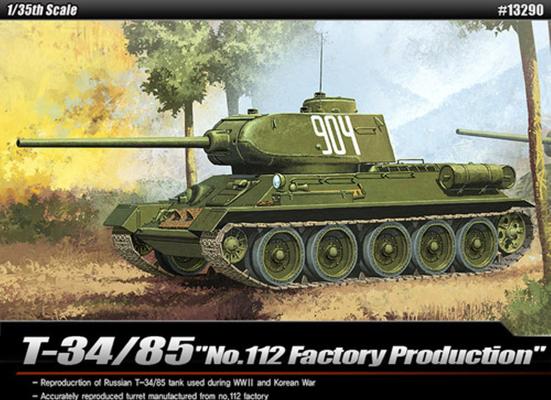
The iconic T-34 medium tank has certainly left its mark in the pages of history. It’s one of the highest produced and longest serving tanks of all time. Identifying T-34 variants can be frustrating and complicated. There were several differing turret castings between factories. New features were commonly added in the middle of production runs while other features were deleted. In addition damaged or older tanks were rebuilt or retrofitted and the addition of newer-model equipment and new turrets was a common practice. Our sample tank is from factory 112 located in Gorki. It appears to be a late version with a ‘mushroom’ type turret featuring early or late style copula and venting arrangements options.