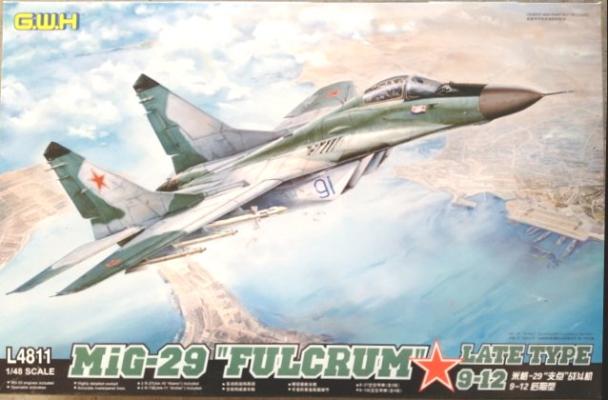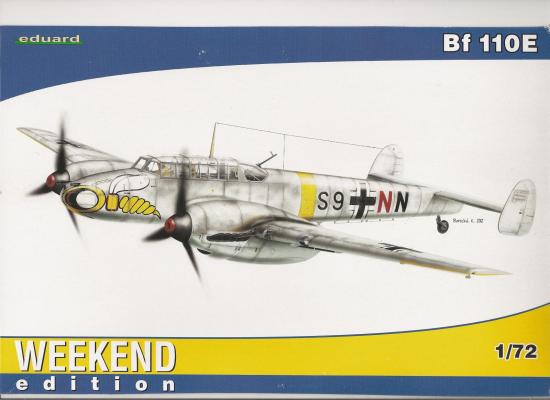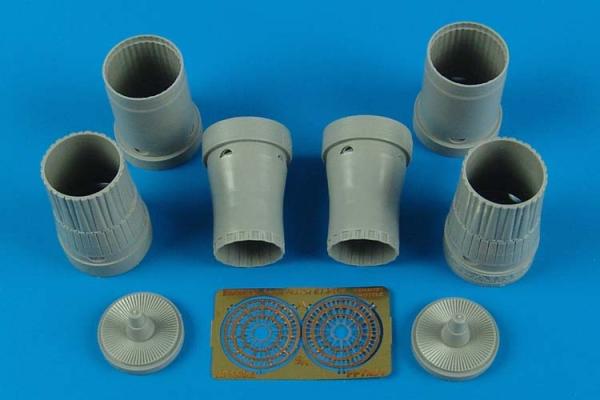
Hasegawa has released their 1/72 F-15E Strike Eagle kit several time, and this latest release (kit#01569) does sport three new sprues and one sprue from their JDAM weapon set that provides the Lantrin pods. Comparing an earlier release to this one, I did notice that some smaller parts are beginning to show fine flashing, at least on this kit that I have. However, the recessed panel lines are still as sharp and fine as ever. You may ask if with these new parts, does this F-15E finally build into the ultimate F-15E? You'll have to read the review to find out, but I will tell you that the new J sprue provides new CFT's, correct pylons, bulged main gear doors, bulged gun door, and two proper instrument panels; the K sprue provides a new arresting hook; and the new M sprue provides the final two CFT pylons. The existing G sprue (clear parts) has been modified to include the wide HUD found on F-15E's (part G6).
Contents
Made for the long-nosed versions of the F-4 Phantom II, Master Model has created a beautiful set of metal probes for your 1/72 build. This set includes the nose-mounted pitot tube, side-mounted Angle of Attack (AOA) probe, and vertical stabilizer-mounted Ram Air Inlet tube. As with previous Master products, the detail and quality of the parts are exceptional, especially considering these are extremely minute parts in 1/72 scale!
Construction
Hasegawa’s newer-tool F-4E was chosen to receive these fine detail parts. A great kit in its own right, you can easily see how much of an improvement these metal replacement parts are compared to the injection molded plastic ones included in the kit.
The Nov/Dec 2012 issue of Windsock Worldwide concludes Volume 28 and serves as further proof that Albatross Productions continues to publish the best WW I aircraft modeling magazine available anywhere. This issue of the bi-monthly publication provides a number of exclusives for WW I aircraft model builders and historians. The cover photos provide a look at two of them: Wingnut Wings’ new Fokker D.VII kits, and TVAL’s third full-size replica, an Albatros D.Va.
Inside, the first regular column; the READER’S GALLERY, presents six featured models in 1/48 and 1/32 scale…with one, a Roland D.II cleverly constructed from LEGO pieces. Then, LOGBOOK ENTRIES reviews a new book titled Nachtflugzeug! German N-Types of WW I, and the latest issue of Cross and Cockade International (Vol.43, No.3). Following that, photo coverage is provided of one of the subjects on the cover, TVAL’s replica Albatros D.Va.
This is one of two new sheets Lifelike Decals has released covering the Nakajima Ki-43. A quick check of Lifelike’s website reveals that this latest addition to their line is only available in 1/48 scale at the moment. The website is definitely worth a visit, as they not only list their products, but from time to time also give updates and corrections to existing decal sets.
The instructions consist of two sheets of paper (approx. 8 1/2” x 11”), each printed on one side and folded together, resulting in a small booklet. One sheet is printed in full color and provides profiles of the aircraft, while the second features in-depth text describing each subject. Clearly, a lot of time and effort has gone into the research on this sheet. 13 different reference books (or websites) are listed and cited throughout the individual aircraft descriptions.
Resuming after a holiday break, I finished the model on January 2. Once the fuselage was closed and the wings and undercarriage were glued, the major work involved rigging the undercarriage, wings and control wires.
Castor Oil, Grim, Mud, Dirt and Goo
Reference photos show that once an Eindecker went into front-line service, it rapidly became stained, oily, and dirty. The two main factors were the dirt and grass airfields, which soon became muddy during most months of the year (except when they became snow-packed ice fields), and the engines which threw off their lubricating fluid as they operated. My understanding is that this was primarily castor oil, or some similar substance that was ubiquitous to all rotary engines. Consequently, I had no choice but to dirty up the wings and fuselage. Fun!
- Kit No. QB 72 374 Exhaust & Damper Cooler, $5.50
- Kit No. QB 72 375 Gun Barrels, $5.50
- Kit No. QB 72 376 Undercarriage Covers, $5.50
These are simple but clean sets of precisely cast resin replacement parts that quickly and easily improve already good 1/72 scale early P-40 kits. Each set consists of one gray resin block with easily removed molded parts. The hollowed-out exhausts, scale thin damper cooler flaps, machine gun barrels with oblong cooling vents, and detailed undercarriage covers (landing gear doors) are intended for Airfix’s new-tool 1/72 Curtiss Hawk 81-A-2 (P-40B/C) kit, but can fit other kits as well. QB 72 374 has two rows of six round exhaust pipes attached to the resin block by a narrow feed that can be easily sawed free, as can the Damper Cooler (the cowl flaps underneath the rear end of the engine).
From the Philippines to Okinawa, the unthinkable Kamikaze generated surprise and fear across the US Pacific fleet that outweighed the actual combat effectiveness of these Special Attack units. The new title in the Osprey aces series focuses on the Navy, Marine, and USAAF commands that confronted this new threat. The IJN and IJA lost some 900 aircraft in these mass attacks. 91 pilots from the Navy, Marines and USAAF became aces during these campaigns (most aces were from the Navy).
Edward M Young walks you through the development and first use of the Special Attack units right up to VE day. The Navy’s response and tactics to counter this new threat is very well chronicled. Each ace is covered with his individual tallies and the circumstances of each victory.
The Seafire Mk.Ib was basically converted from the Spitfire Mk.Vb. The kit follows the heritage of the actual subject, being a “regular” Hasegawa Mk.Vb with a resin plug for conversion into a Seafire Mk.Ib. Be aware this model is a conversion; that means you will have to cut and replace some parts of the plastic fuselage with the resin replacement parts. But as conversion goes, this is an easy one to get your feet wet in the world of conversions.
The boxing includes decals for 4 different finishes on 3 different airframes. The instructions only list 3 camouflage styles, but actually there are markings provided for two different finishes (blue gray/green/sky) of the same airframe (MB 345), before and after being assigned to the HMS Formidable. The other two finishes are for a training unit (blue gray/green/sky) and another one in an overall glossy sea blue, for operations in the Pacific with SEAC roundels.
This book looks at the RAF and Britain’s air defense, post-World War II. More specifically, it looks at the defense of Britain from nuclear strikes.
This book is broken down into ten chapters, beginning at the end of WWII when the British defenses were set up to protect her from massive raids by piston-engined bomber aircraft and the post-war realization that the advent of the V-1 and V-2 missiles and the jet engine had rendered all of this obsolete. Add the atomic bomb to this, and the RAF was scrambling to devise new defenses.
The author does a good job of discussing the Soviet threat, as well as all of the various programs that were being devised to deal with it. Those that made it to reality, as well as those that never made it off paper, are all covered. All of the aircraft projects, as well as those involving missile defense, are discussed, with coverage even given to dealing with hijacked airliners.
Airscale is relatively new to scale modeling and has come out with decals in popular scales to aid in detailing instrument panels, and which can also be used for dashboards along with placards, which is another added touch to instrument panels and dashboards. I’m sure that anyone who has bought these products has used them some way in every model that they have built since purchasing them.