Thank you to Mr. Neil Yan of HK Models and the IPMS Reviewer Corps for the opportunity to review a wonderful new model release in large-scale aircraft. This next installment is fairly brief and describes the construction of the nose section and the remainder of the fuselage.
Thank you to Mr. Neil Yan of HK Models and the IPMS Reviewer Corps for the opportunity to review a wonderful new model release in large-scale aircraft. This next installment covers the waist interior and fuselage assembly, which is from the ring mount around the ball turret through the Cheyenne tail turret, and closing up the fuselage. I originally thought it might be more instructive to work up the armament first, but after reviewing the kit more with some experience, I elected to skip the all of the cool-looking 50s and describe them when they get installed. Instruction steps 15 through 25 are used to construct this subassembly.
The cascade of kits, aftermarket details sets, and decals for WWI aircraft has given model builders reason to play in an appealing arena that only a few had the nerve to venture into in the past. Because most of these products have been conceived and produced in the last four or five years, current technologies have blessed builders with ever-improving quality. And, since the level of detail molded into today’s kit components – especially in 1/32 scale – is literally breathtaking, any aftermarket detail that is introduced into the fray must equal or surpass what will be found inside the kit box.
For the longest time, the only 1/48 scale model of the workhorse Sikorsky H-34 helicopter was made by Revell, whose molds at one point were rumored to be “lost at sea.” Then, after being missing in action for nearly 25 years and fetching high prices on eBay and elsewhere, the venerable Revell kit was joined by a new-tool H-34 coming from MRC’s house brand Gallery Models. The announcement was released in 2012; MRC displayed test shots and box art for two forthcoming versions in Orlando at the 2012 National Convention – a USMC version and a US Navy version. The USMC version is the subject of this review.
When you open the largish box, you are greeted by no less than 231 parts on eight sprues of light gray plastic, three sprues of clear pieces, and two frets of brass photo etch parts. Decals are provided for three different H-34’s:
Eduard has been producing model-specific masks for a while now, but this is only the second set I’ve used. This one is a die-cut set specifically designed for the HobbyBoss F-5E kit and contains masks for the canopy, windscreen, main wheels, and nose wheel. In the package is a single page of instructions and a small square (about 1.5 inches) of masks on Kabuki type tape. You have to look closely at the yellow square since the laser cut lines are delicately inscribed.
Eduard Mask CX337, A6M2b, is intended for Tamiya’s recent Mitsubishi A6M2b Zero Fighter (Zeke) (Tamiya item no. 60780) in 1/72 scale. The package consists of one sheet of diecut masks for one model and a set of instructions. The masks are for the aircraft’s canopy and main wheels. The kit comes with a closed canopy (1 part) and open canopy (3 parts).
The masks may require careful cutting at some corner points to ensure they separate cleanly from the paper backing. Use a sharp hobby knife, preferably with a new blade. With the exception of the masks used in the center section of the canopy (the portion that slides open), all of the masks fit well within their panes.
The masks for the center portion were too large, requiring some careful cutting down to size. If your manual dexterity isn’t all that great, this is a nerve-wracking task—and it defeats the purpose of masks in the first place!
History
The Halberstadt CL.II series of two-seat close-support biplanes was introduced during 1917, and the type became the standard German type for the duration of the war, supplanted but never replaced by the later CL.IV and Hannover C1 biplanes. Robust and efficient in construction, and powered by the 180 hp. Mercedes D.IIIau water-cooled engine, the type was used to support ground troops – attacking, strafing, and bombing enemy positions, and causing considerable problems in Allied operations. In addition to ground support, the type often encountered Allied fighters, and crews often held their own against the more nimble Allied single-seaters. Postwar, surviving aircraft were flown into the 1920s, and the only surviving example, which was originally displayed in a Berlin aviation museum, is currently in Poland awaiting restoration. Detail photos of this aircraft are included in this publication.
Eduard has given us some really great 1/72 Bf-110’s in the last few months, and now they have given us the stencils for them. Get out your Optivisor or your favorite magnifier, because you will need it. They are tiny! At first, I thought there were enough stencils for four aircraft, but that is only partially true. There are only enough for two aircraft in some cases, enough for three in some, enough for four in some. Even though they require magnification to read them, they are readable. Just another case of the quality of Eduard products. And, they are super thin. You can barely see the carrier film.
Two placement charts are provided to help you with placement. The decals are designated by a letter on the charts, but not on the decal sheet. They are easily figured out, however. These are very high quality decals, and are highly recommended.
My thanks to Eduard for the review sample and IPMS/USA for the review opportunity.
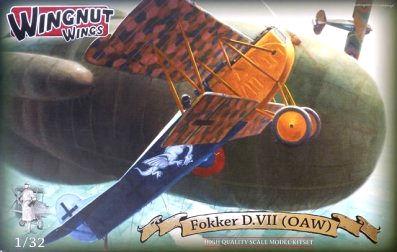
Released simultaneously with the Fokker D.VII F kit, this decal set provides five alternative markings for the BMW IIIa-powered version of this famous fighter. It is the fifth in a series of decal sets that Wingnut Wings now offers for the different versions of their Fokker D.VII kits. This set includes two decal sheets, printed by Cartograf. The larger sheet contains the personal markings for each of the aircraft, with codes, national markings, and a variety of panel sections with bands and shapes that wrap around the fuselage. These panels have a number of indents and holes located within them that coincide with the location of openings for control lines, fuel filler ports, etc. The second sheet provides additional sizes of national markings, instrument decals, data plates, propeller markings, and additional stencils.
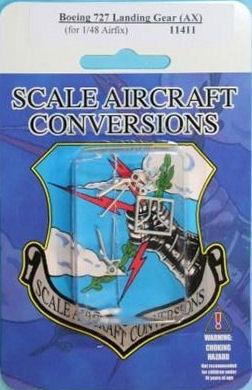
SAC continues its prolific output of gear to handle the loads on our models. This is yet another drop-fit set designed for an aircraft which can put it to good use, particularly if you load it down with resin aftermarket ordnance (guilty, Your Honor) like an F-4.
Everything was a perfect fit. Main gear legs fit nicely in the resin gear wells (toldja I was guilty). The nose gear slid into place just as easily; the actuating ram also went right into place.
And as usual, my favorite, most-best part…now I don’t have the concern of collapsing gear within a year after I finish the model.
Highly recommended and well done to SAC for yet another winner! Thanks as usual to our friend Russ at SAC for providing IPMS USA this set, and IPMS for sending it to me for review.