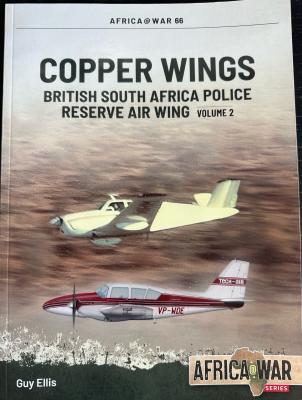
In volume one we followed the exploits of the Police Reserve Air Wings (PRAW) operating in Rhodesia from 1967 to the last 1970s. These units supported the Rhodesian police by providing air support in countering resistance units that were attempting to force independence from British control. Although that goal was achieved in 1980, PRAW operated until the early 2000s. This volume covers PRAW operations from the mid 1970s till they ceased operations. Like the first volume, the story is told in words and pictures that included excerpts from “The Outpost Magazine”, a journal published by PRAW. As the fighting grew more intense, so did the level of weaponry carried by PRAW aircraft. This escalation is advertised on the cover photo showing a Beech Bonanza with gun pods, and inside Cessna Sky masters with over-wing gun pods. Several of the stories reflect just why it was necessary to shoot back. A few aircraft were hit by small arms fire and one gunner died from his wounds.

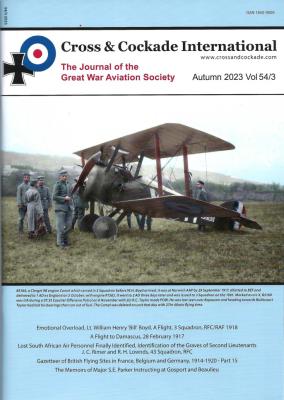
all 2023
The Camera On series is unique for modelers in that it not a specification/tech manual for the subject under discussion, it is a pictorial study with pictures taken directly from archives and the original prints and detailing visually the subject in question. In this case, the subjects are Luftwaffe Search Lights and Range Finding Equipment, Volume 1.
As an overview, the book contains dozens of period pictures of search lights and range finding equipment in various forms of use. The pictures are WWII period and are all black and white. From the foreward, Alan Ranger explains the goal is o present the pictures of the equipment as taken by the German soldiers not professional photographers. The goal is to get the feel and way of life of the soldiers that manned these batteries. This includes wonderful shots of the men manning their machines and the installations. Not only are search lights included but the Luftwaffe range finding equipment is included with explanations.
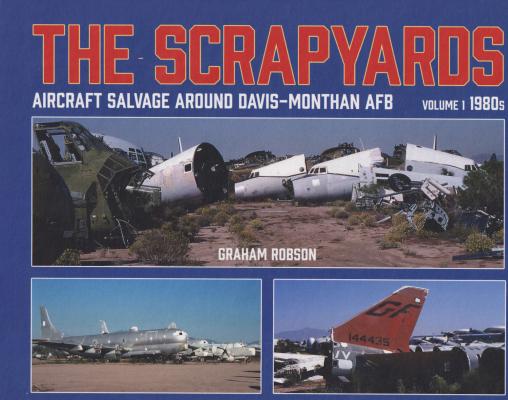
New from Tempest Publishing is a great book covering the Davis Monthan AFB Scrap yards and this volume focuses on the 1980’s. the book starts with an introduction and Mr. Robson goes into his love of the fields and there is a great overall shot of the many planes stored and dismantled there.
One of the first things I learned was that there are multiple actual scrapping and recovery facilities. The book is actually broken down by these and follows a path around the yards. The chapters include the following:
Packaging and Contents
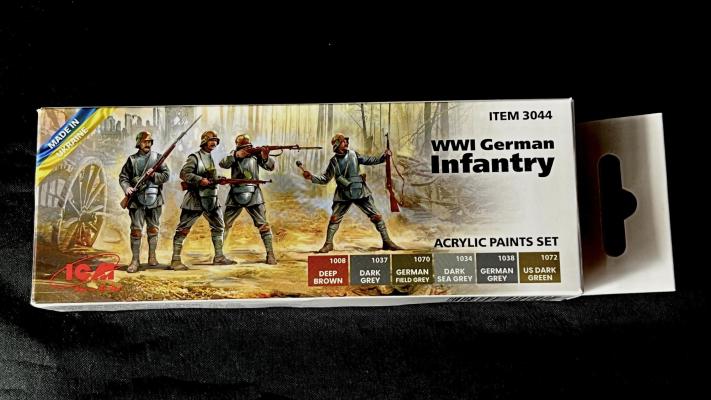
The ICM WWI German Infantry paint set comes in a small cardboard box (Image #1). The back features (Image #2) graphics showing some common uses for the included colors. The set of six paints includes: 1008 Deep Brown, 1072 US Dark Green, 1038 German Grey, 1037 Dark Grey, 1070 German Field Grey, and 1034 Dark Sea Grey (Image #3).
The paints come in 12ml plastic bottles with twist-off type caps. I believe ICM has included ball bearings in the bottles to aid in shaking/mixing, which is nice. Like many, I add a small 6mm ball bearing to all of my paints, and anyone who does this knows that it can be messy, so having these in already in place is both a time and mess saver. (Image #4). [Caption: Colors, from L to R: 1070 German Field Grey, 1037 Dark Grey, 1038 German Grey, 1034 Dark Sea Gray, 1072 US Dark Green, 1008 Deep Brown]
The Testing
I am a figure painter, so understand that this review is written from that perspective.
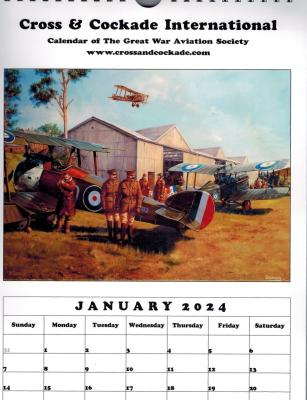
This is the 2024 Cross & Cockade Calendar published by The Great War Aviation Society located in England. The organization focuses on WWI aircraft and provides more than 50,000 pounds British Sterling toward the maintenance of the British Air Services Memorial at St-Omer, France, through annual calendar sales.
The calendar consists of 12 beautifully detailed artworks of WWI planes. Each painting has been done by a different artist. They include the well-known "kites" in their normal environment - flying, and on the ground. Only two paintings show them in a battle/combat situation. Other lesser well-known aircraft are also featured.
The renditions are superb and the subject descriptions are also good. Each painting will look great framed!
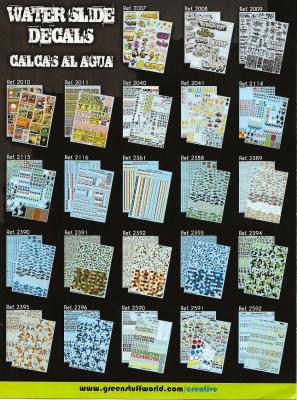
I am familiar with Green Stuff World but was unaware that they branched out into water-slide decals. They have done so with a varied selection of after-market sets that will help you with your next project. (In particular are the three different sets of graffiti art!)
This review concerns itself with their Pin-Up Girls decal set. There are two sheets in the package with twelve different 'girls' depicted along with roundels that could be used separately or as background for the ladies. German and Japanese 'kill markings' are included along with stars and assorted shark-faced bombs.
Each decal, thoughtfully provided in left- and right-hand versions, is printed in three different scales (28mm / 1/58, 32mm/ 1/54, and 54mm/1/32). They are, however, more than adaptable to just about any scale. Color definition and detail is excellent with minimal carrier film.
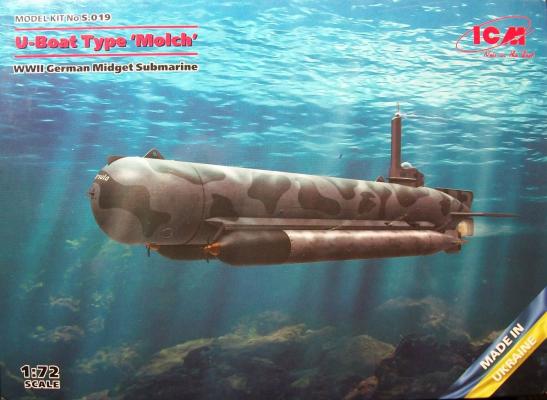
ICM has provided this very midget Submarine for review, in 1/72 scale of the U-boat Type ‘Molch’. The Molch was a single seat ultra small submarine developed for costal operations. With serial production starting in July 1944 with around 393 were produced in the Bremen. They operated mainly in the Mediterranean and North Sea completing round 140 missions.
- One Light grey Sprue
- One Clear Sprue
- Small Decal sheet
- Instructions
The detail quality is excellent.
The Assembly is quick and easy.
From the ICM website -
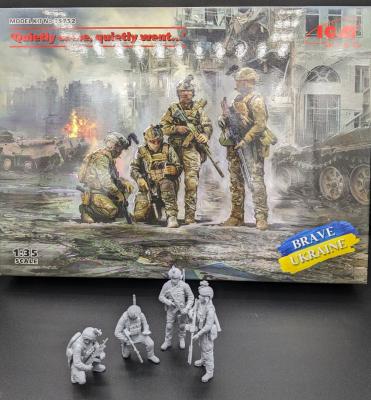
The modern Special Operations Forces (SOF) of the Armed Forces of Ukraine were created in 2016 on the basis of existing units and subunits, most of which already had some combat experience. As of the summer of 2023, the Ukrainian Special Operations Forces are based on two special purpose regiments – a special purpose maritime center, a special operations center and several other units. Their main tasks include in-depth reconnaissance, combat raids behind enemy lines, search and evacuation of captives or hostages, and anti-terrorist activities.
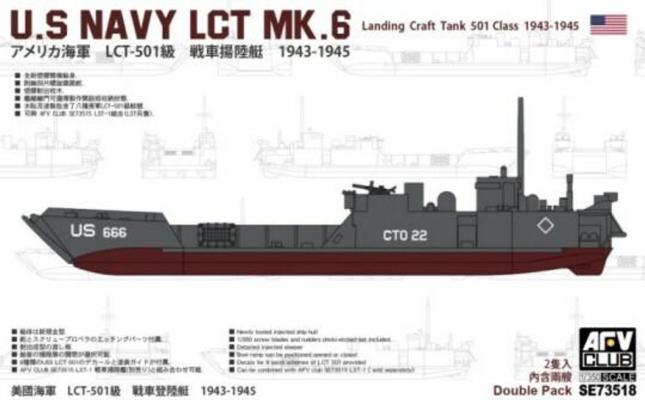
Initially developed by the British and used heavily by US Forces, the Landing Craft Tank, or LCT was developed to give amphibious landings the added punch of armor early in an operation. Over 950 MK 6s were eventually built by the US and used any time an amphib operation needed to put ashore tanks. Both the Korean and Viet Nam wars saw LCT’s in action. With a displacement of 284 short tons, with a LOA of 119” and a beam of 32’ 8” these work horses had an incredible draft of 3’ 4” at the bow allowing them to put their cargo right on the beach. Powered by 3 225 HP Gray Marine diesel engines and three shafts delivered a maximum speed of 7 knots with a range of 700 nautical miles. The capacity was rated at 150 short tons of personal and cargo which included tanks, trucks, and towed artillery. The LCT’s protected themselves with two single mount 20MM Anti-aircraft guns and had a crew of 12.
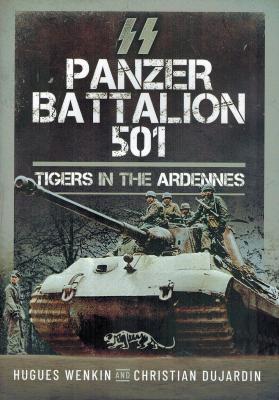
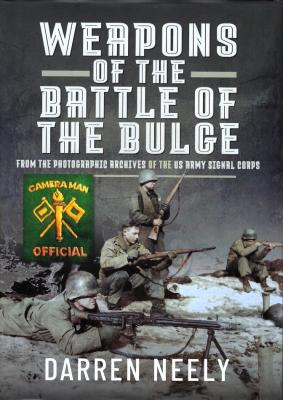
The book covers the history of the SS Panzer Battalion 501 in the Battle of The Bulge (Ardennes for the Germans). The book is divided into 5 chapters with an Introduction, Conclusion, Notes and Bibliography at the end of the book. Each chapter in turn is divided into individual sections dealing with specific points. The book contains a total of 169 pages, 191 black and white photos, 7 maps and 1 order of battle table. The unit was attached to the 1st. SS Panzer Division Liebstandart Adolph Hitler (LSSAH) another unit of was the 12th. Panzer Division. The goal of the unit was to reach the port of Antwerp and thus divide the Allied units in two. The unit personnel were very experienced. One of the biggest problems the unit had was the great deal of maintenance and mechanical problems that plagued the unit.
Author Darren Neely in his book’s Introduction,
The Great War Aviation Historical Society is a non-profit UK-based group that publishes the Cross & Cockade International journal four times a year. Issues are available in printed or digital formats. They also provide a free newsletter (sign up on their website) and occasionally publish WWI themed books like the “Sopwith Dolphin” monograph, which I reviewed earlier for IPMS/USA. Cross & Cockade International is the sister of the US journal Over the Front.
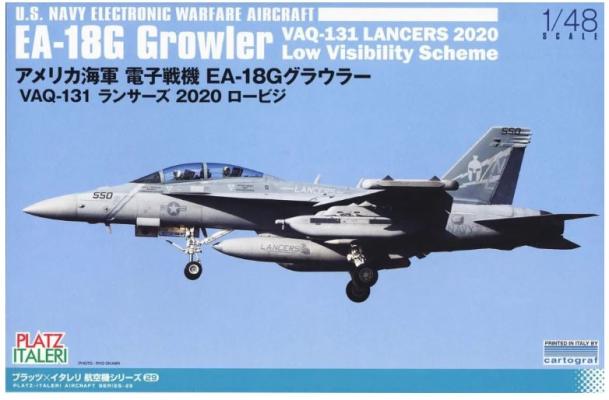
I opted to try this kit knowing full well it was Italeri plastic with Cartograph decals and Platz boxing - with their instructions.
The box has a great image of a real F-18G on the front When you open the box you find gray plastic with clear for the canopy and taxi lights. Cartograph decals (yay!) and a very well-laid-out instruction manual from Platz. (yay!) The Italeri plastic was the negative.
I purposefully did not read any reviews on the model from either company before beginning. This will be a simple review.
ICM continues to model the Chernobyl disaster and its side effects, and this is the sixth set in that series.
Backstory
Unlike the previous, more generic versions of various first responders and/or victims, this is a specific set dealing with a very specific set of men. Here’s the story:
In 1986, the Number 4 reactor at Chernobyl in the Ukraine exploded, heralding one of the worst nuclear accidents in history. More than 500,000 personnel were mobilized to contain the disaster. The total cost of the effort exceeded roughly $68 billion dollars overall. Completion of the cleanup will still not be complete until around 2065 and with the current war going on, is likely to take much longer than that.
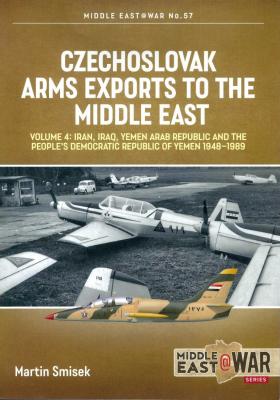
Illustrators: David Bocquelet and Tom Cooper; photo credits to the author, DoD, and Aero Vodochody
This is the fourth book in Martin Smisek’s Czechoslovak Arms Exports to the Middle East series. The previous three volumes were previously competently and eloquently reviewed by Paul R. Brown of the IPMS/USA Review Corps:
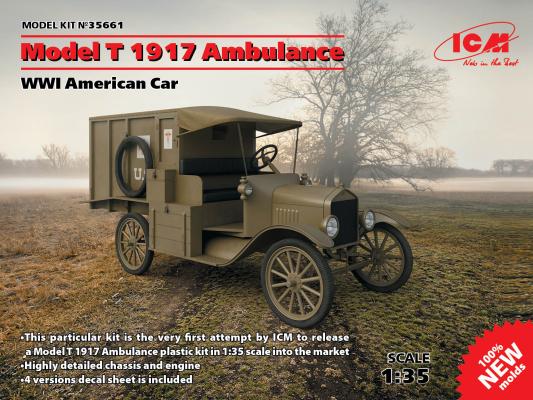
The Model T Ford was one of the most produced vehicles of the pre-WWI and WWI eras. The basic frame was highly adaptable to numerous roles. One of the more important roles was that of ambulances, especially for the war effort. 4,362 Model T ambulances were shipped to Europe, with most serving in France.
This model, in 1/35th scale, is manufactured by ICM and contains 88 parts total, with 9 crystal-clear parts. The parts are crisply molded as well, and I was surprised that the wheels and spokes didn’t have any flash, and the mold lines are straight down the middle of the tires. A word of caution: There are quite a few tiny parts in this kit that can easily be eaten by the notorious Carpet Monster!
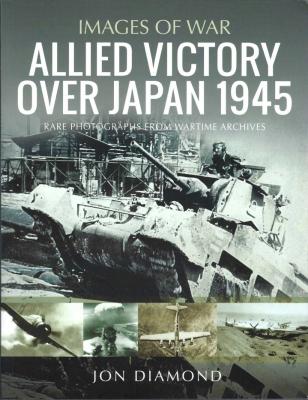
The book’s title, Allied Victory Over Japan 1945, is a little misleading as the first, very detailed chapter delves into the strategic overview of the Pacific and Asian War with the Japanese blitzkrieg beginning in December 1941 through 1942. The Japanese victories in China, the Dutch East Indies, Singapore, Hong Kong, Malaya, New Guinea, the Solomon, Mariana and Marshall Islands and the Philippines set the stage for this book on a long forgotten and neglected theater of World War II. The author does an amazing job simplifying the complex conditions, multi-national components, and the incredible distances encountered. The more one studies the Pacific War, the deeper the rabbit holes; the author’s strength is making it understandable and relatable. The first two maps alone are worth the price of the book and really help the reader understand the complexities of these campaigns with their vast distances.
From the Acknowledgments,
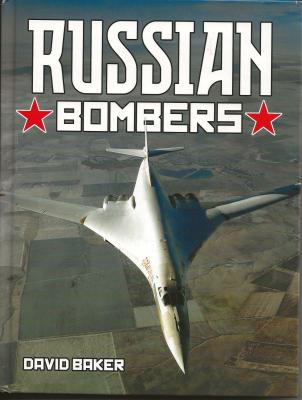
Just as when one thinks of American bombers the iconic B-52 comes to mind, when thinking of Russian bombers, the same can be said for the Tu-95 Bear. The Allies had done much to prove the success of and need for long range strategic bombers in their defeat of the Nazis and Japan. The Russians (then Soviets) like many countries, had not developed much in the way of long-range bombers prior to and during WWII. The success of the British and American long-range bombers during the war would change that for the Russians.
With a few American B-29s making emergency landings in Russia during operations against Japan, the Soviets were given an engineering opportunity to not only study the B-29 but per Stalin’s direction to completely reverse engineer it to become the Tupelov Tu-4.
The Kit
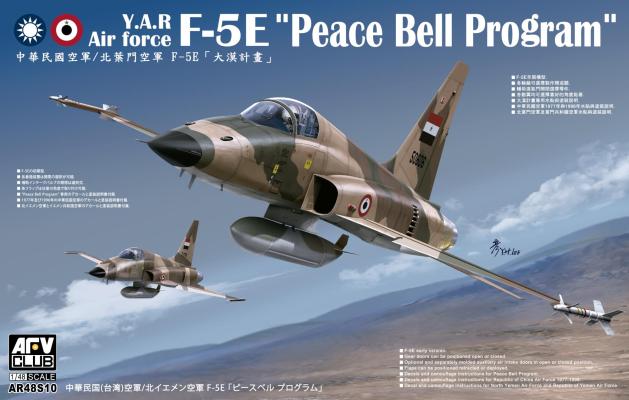
This is a reissue of the AFV Club F-5E, first released in 2010. This version includes parts for an early F-5E, with the original nose and short leading-edge extensions (LEX). It focuses on the markings for the Yemen Arab Republic Air Force. There are six marking options, four depicting various schemes used by Yemen, and two schemes from the Republic of China Air Force. The kit consists of seven gray plastic trees, one clear tree, one tree consisting of four polycaps, a small photoetch fret, and one decal sheet. The upper main fuselage and afterburner cans are molded separately and not attached to a parts tree. The surface detail consists of engraved panel lines and rivets. The kit is packaged in a sturdy cardboard box, and a print of the box art is included.
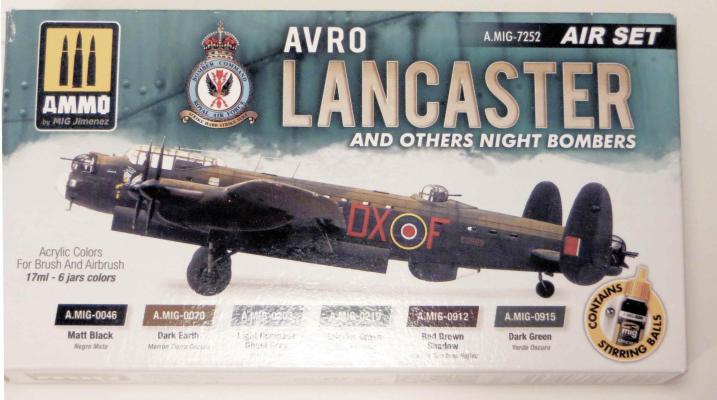
This is another paint set by the prolific Ammo by MiG concern out of Spain. I’m sure many of you already use these acrylic paints and so are familiar with their ease of use with both brush and airbrush. The featured colours in this set come in the familiar yellow-capped 17ml dropper bottles and includes colours needed for many of your favorite RAF bombers flown during World War II.
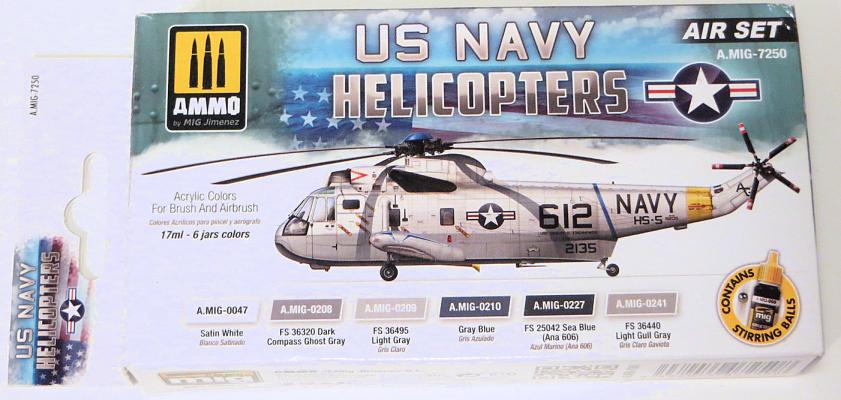
This is another paint set by the prolific Ammo by MiG concern out of Spain. I’m sure many of you already use these acrylic paints and so are familiar with their ease of use with both brush and airbrush. The featured colors come in the familiar yellow-capped 17ml dropper bottles and include the necessary colors to paint the SH-2 Seasprite, SH-3 Sea King or SH-60 Seahawk, and many other post-war US Navy helicopters.
The colors themselves look good for the applications required, and have, apparently, been slightly lightened for scale effect. Each bottle contains a small stainless steel ball bearing to aid mixing, which is a great idea that ought to be copied by other manufacturers. The paints are water-soluble, odorless and non-toxic; they can be thinned using distilled water, but Ammo recommends using their proprietary thinner.
Colors included in this set are:
About Tru-Color Paint
Tru-color paint was formed by Rick Galazzo and Scott Cohen in 2008 in Phoenix, AZ.
Tru-color paints are a solvent based paint. For those modelers out there who are also model railroaders, Tru-color is a reformulation of the old Accupaint formulation, modified to flow better and give a more glossy appearance after drying.
There is currently over 600 colors in 7 separate product lines; railroad paints, naval ships, military armor, military aircraft, automotive colors, sprayable (air-brush ready) matte-finish colors and brush able flat-finish colors. Individual colors come in 1-oz. and 2-oz plastic jars.
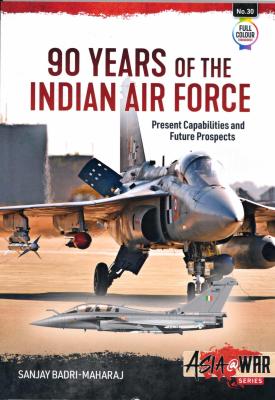
The Indian Air Force celebrates 90 years of existence in October 2022. As the fourth largest air force in the world, and one of the few with nuclear capability, the subject is interesting and important both historically and in the context of its future role on the global stage. Its position in Asia, sharing a border with China, only serves to heighten the significance of this air service.
Noted author and defense consultant, Steven Zaloga, is well known to armor modelers the world over. He wrote this about the Ford M8 armored car,
The M8 light armored car is a 6×6 armored car produced by the Ford Motor Company during World War II. It was used from 1943 by United States and British forces in Europe and the Pacific until the end of the war. The vehicle was widely exported and as of 2006 still remained in service with some countries.
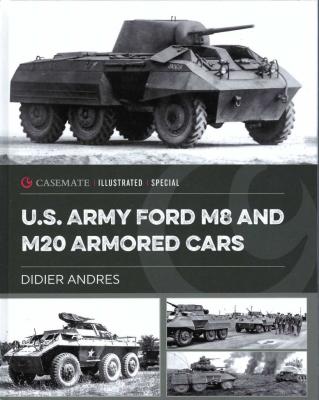
Author Didier Andres’ book “U.S. Army Ford M8 and M20 Armored Cars”, is a detailed, fascinating and photographic insight into the Ford M8 and M20 armored cars in the European Theater in WWII. The book is complete with extensive photographs, technical details and specifications, and detailed illustrations, composing the following five chapters:
-
Chapter 1. The Genesis of Light Armored Cars
-
1914-18
-
1928-34
-
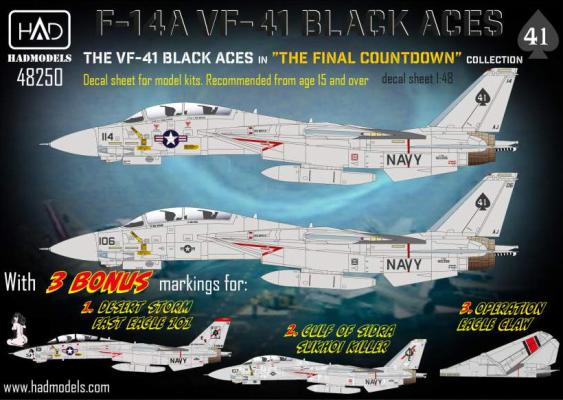
HAD Models is a group out of the Budapest Hungary and specializes in decals and masking sets for aircraft kits in the all-major scales from 1/144 to 1/35. They range from WWII to modern era planes. This set is in 1/48th scale and covers F-14A’s from the VF-41 Black Aces. Markings are included for seven unique planes:
A good book takes you to places you’ve never been and opens your perspective in ways you might never have considered. This book does just that with an object so ubiquitous that we don’t really notice them, the recreational vehicle or RV. Andrew Woodmansey has written a book that takes us on a worldwide historical journey tracing the origin and development of these vehicles.
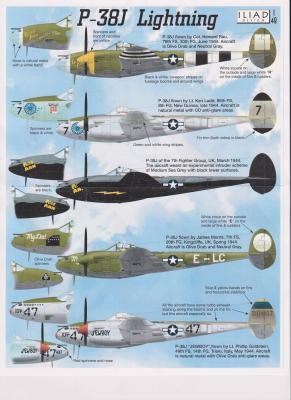
Iliad Designs makes a bunch of decals with really great schemes in all the popular scales. The object of this set is the P-38J with several kits being available. I had a Tamiya kit looking for some markings so I jumped at the chance to review the decals.
Inside the package there is a single sheet of well printed decals with two full color instructions sheets with profiles of the plane and details associated with the plane as well as top and bottom profiles. There are markings for five planes covering everything from natural metal, OD over neutral gray and one with medium sea gray and a black bottom. Note that ONLY the markings are included. Stencils and all need to be sourced from the kit or elsewhere. The markings are:
-
P-38J, 79th FS, 20th FG June 1944, “Gentle Annie”
-
P-38J, 80th FS, 8th FG, New Guinea, Late 1944
-
P-38J 7th FG, United Kingdom, Experimental Intruder scheme (Medium Sea Grey and Black) “Miss Ann”
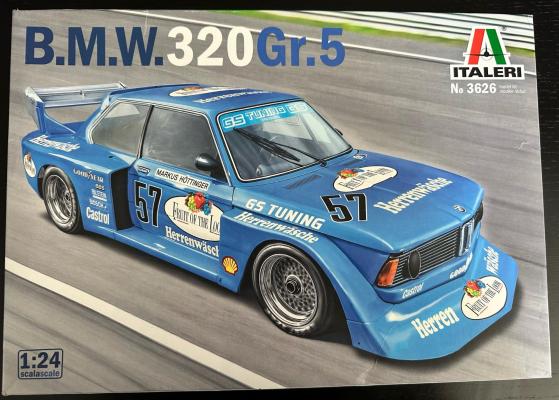
Italeri offers us a reissue of a kit first released in 1977 by ESCI. The B.M.W. 320 ran in a new group 5 class introduced in 1976. Regarded by driving enthusiasts as one of the best cars ever made, the three series was a natural for conversion to racing. Group five rules allowed wider body width which in turn allowed wider tires. This car ran a two-liter turbo charged engine making 300 horsepower. In this boxing you get the number 57 car driven by Markus Hottinger at the Deutsche Rennsport Meisterschaft (DRM) Norisring circuit, Nuremberg in 1978.
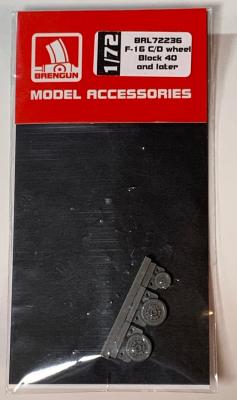
This set supplies drop-in replacement wheels for 1/72 F-16 C/D Block 40 and later kits.
As you would expect from Brengun, the wheels are very finely cast featuring realistic tread pattern, raised lettering and other markings on the sidewalls and sharply detailed brake pads and wheel hubs. I compared them to the wheels of a Tamiya F-16CJ kit and as shown in the photos, the detail on the Brengun parts is a vast improvement over the kit wheels. Each tire also has a flat spot to simulate the weight of the aircraft on the tires, however, it is not overdone so that the tires look flat.
I painted the wheels Tamiya NATO Black and the rims/brake pads Tamiya Flat White, with a black wash to bring out the details. I used a white colored pencil to highlight lettering and markings on the sidewalls.
The wheels have round mounting holes on the back side, so they should be adaptable to just about any 1/72 F-16C/D Block 40 and later kit.
Highly recommended.
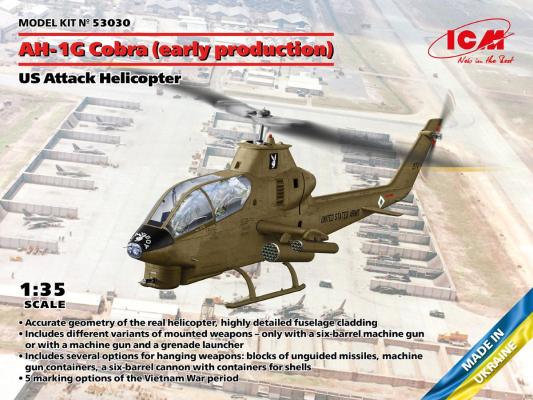
I was in college when Revell first released their 1/32nd scale rendition of the AH-1G Cobra Helicopter gunship, at that time being actively used in the Vietnam conflict. I am forced to admit that I was enamored with the sleek and deadly look of this machine, and the fact that Revell had released it in my favorite scale only made it more desirable.
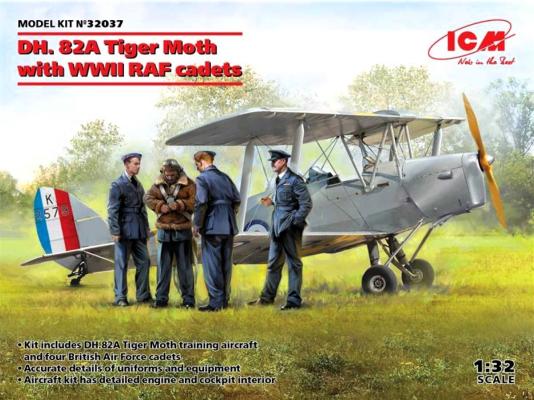
ICM has released another combo aviation kit, this one including the ubiquitous Tiger Moth training aircraft and their RAF cadets figure set.
The DH. 82A Tiger Moth is perhaps one of the most common light aircraft in the world to this day and really needs no introduction. First beginning production in 1931, it served as the main basic training aircraft for the Royal Air Force well into the 1950s, and was exported to more than 25 other air forces during that time. Now in demand in commercial venues, it continues to fly all over the world to this day.
The Airplane
This is actually the second iteration of this famous aircraft in 1/32nd scale, the first being the venerable Matchbox variant, which came out in the 1970s. This version featured a host of special features, including floats and the Canadian enclosed cockpit variants. Although ICM’s kit doesn’t feature all of these options, it has much more refined details as befits a kit of the 21st century.
In 1940, the British Air Commission (BAC) approached U.S. aircraft manufacturers about purchasing aircraft, particularly fighters. Curtiss presented their model 81 and planned P-46 which the BAC later ordered 480 model 81s and 960 P-46s. Lockheed presented their YP-38 prototype. North American Aviation (NAA), who as of yet had little experience with fighters, drew up a proposal for a fighter that they insisted was to be at least as good as the P-46. The BAC required assurance for NAA’s claims and that each aircraft be less than $40,000 each. Eventually the BAC ordered 400 of NAA’s fighters, even before a design was presented. The company's lead structures engineer recalled that Edgar Schmued had given the subject of a single seat fighter a great deal of thought in the previous years, called the P-51. NAA’s design team and Schmued were determined that the aircraft would be cutting edge. By the end of 1940, the first prototype, called NA-73X or XP-51, was ready for flight.
Introduction
The dry brushing technique is a popular and effective method used in scale model building to enhance surface details and bring out textures by selectively applying a small amount of paint onto the raised areas of a model. This technique is particularly useful for replicating weathering effects, highlighting edges, and adding depth to intricate details.
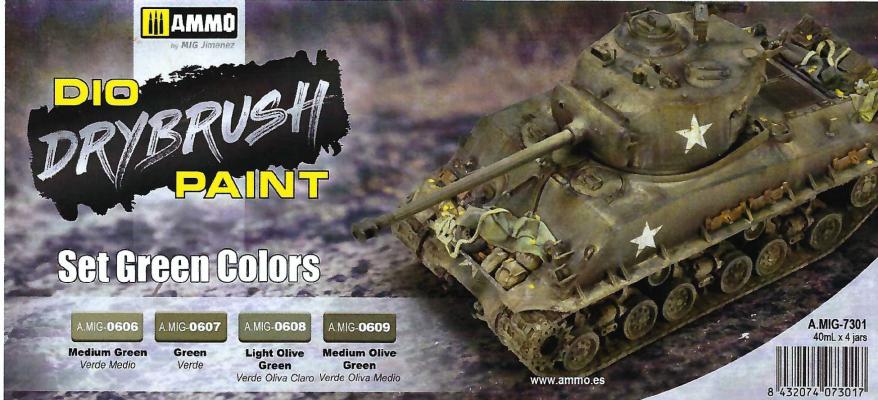
When given the opportunity to evaluate any Ammo by Mig products I jumped at the chance. I received Ammo by Mig’s set number A.Mig-7301 containing Dio Drybrush Medium Green (A.MIG-0606), Dio Drybrush Green (A.MIG-0607), Dio Drybrush Light Olive Green (A.MIG-0608), and Dio Drybrush Medium Olive Green (A.MIG-0609).
From the GSW Website, here are the use and application of these new items. I used them on my review build of a Supermarine Spitfire and you can see the results.
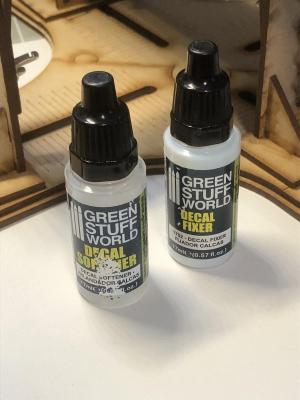
GSW Decal Fixer helps the application of decals onto surfaces of models, miniatures and dioramas. The GSW Decal Fixer prepares the surface with special agents that soften the solvents of modern paints making decals more resistant and glue stronger. In addition, the decal fixer makes the decal more flexible and increases the adherence, preventing the silvering effect.
Decal Fixer
Content: 1x 17ml bottle
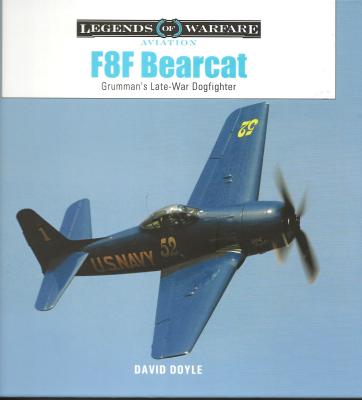
David Doyle is well known to historians and modelers alike, with over 200 books to his credit. His Legends of Warfare series covers many of the important machines used in warfare. This latest volume is for the Grumman F8F Bearcat. The F8F was the last and ultimate of the Grumman propeller driven fighters. Too late for combat in WWII and with the dawn and superiority in speed of the jet, the Bearcat order was cut down considerably. The only combat was while serving with the French in Indochina. Like its contemporaries, the Sea Fury, and the La-9/11, the F8F was fast and maneuverable. And like the sea Fury it survived because of that speed and maneuverability making it a favorite on the air show circuit and air racing.
The book is broken down into an introduction and two chapters. Chapter one covers the F8F-1 and Chapter two covers the F8F-2.
Introduction
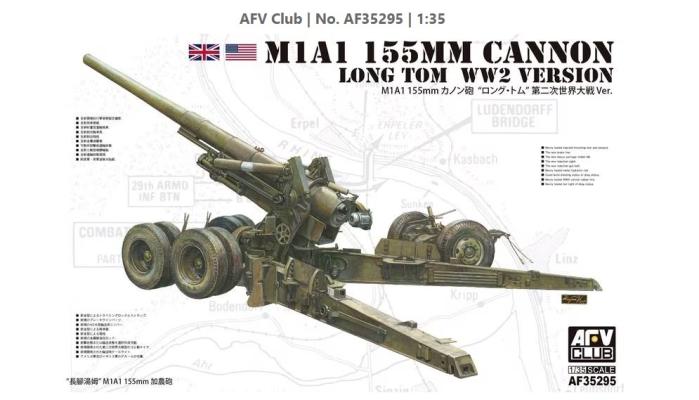
The M59 is a heavy towed howitzer from the World War II era with its origins in the United States. Initially developed after World War I as the 155mm Gun M1 due to the limited heavy gun capabilities identified in the U.S., it underwent redesignation as the M59 after World War II. However, it continues to be commonly referred to by its popular nickname, "Long Tom." Functioning as a gun, the M59 was specifically designed for a long-range and flat trajectory, distinguishing it from traditional howitzers that typically have shorter ranges and much higher trajectories.
AFV Club is a well-known plastic model company based in Taiwan that specializes in producing high-quality scale model kits, particularly focusing on armored fighting vehicles (AFVs) and military-related subjects. The company has gained a reputation for its attention to detail, accuracy, and innovative model kits that cater to the needs of both casual model builders and serious hobbyists.
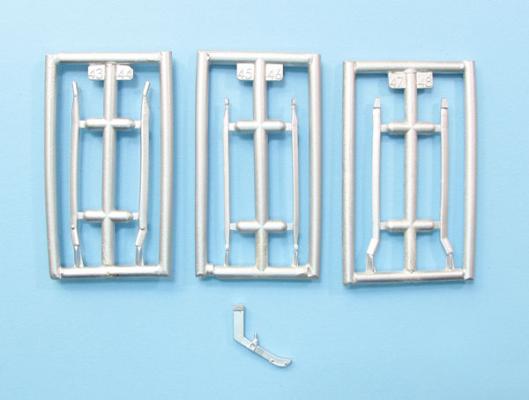
This Scale Aircraft Conversions release for the Meng 1/24 kit is a replacement set for the plastic struts that are the kit parts. I am not an expert on the Fokker Dr. 1a by any means - but there is a definite size discrepancy between the kit parts and the white metal parts in the conversion set. The white metal parts are noticeably longer than the kit parts as you can see from my photos. I am not sure which is more accurate - but I can at least say they got the shape dead on from the kit parts and the width is pretty similar.
This series has been around for many years, and they still continue to come out with new volumes, sometimes of little-covered subjects such as this one.
This is a softcover publication, with 44 pages in a nice, high-quality semi-gloss finish and a stiff outer cover. Publishing quality is first-rate, as is the content itself.
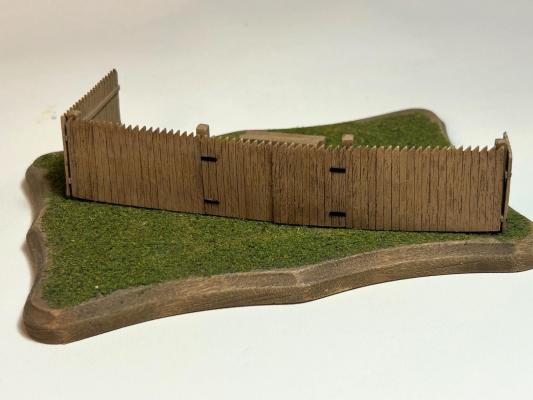
While this set is labeled “Wooden Corral” it is actually a wooden fence set (it is more of a privacy type of fence as the sections are all closed up, rather than open like a corral fence would be - need to be able to see the animals in a corral). The set consists of 12 resin parts for a wooden fence. It includes 3 long fence sections: 6 posts, two types of gates – a single narrow gate and a double wide gate. The fences and gate sections have a very nice wood grain effect cast in, while the gates also have hinges and latches. I am a bit confused by the texture of the posts as rather than continuing the grain texture shown on the fence sections, the posts have a pebbled texture. I don’t know if this is to suggest they are concrete posts or just a different type of wood. I assumed the latter and painted the posts the same color as the fence sections.
Brengun Models is a scale model and detailing parts manufacturer located in the Czech Republic. Their lines include limited production run multi-media kits and exquisitely detailed photo-etched, turned brass and white metal replacement parts for aircraft in the most commonly produced scales.
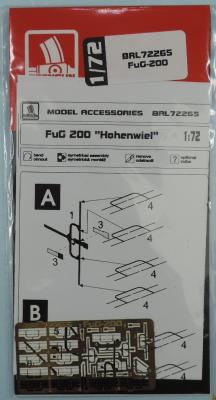
Brengun has produced a set of FuG-200 Antenna to fit any appropriate 1/72 scale Luftwaffe aircraft kit.
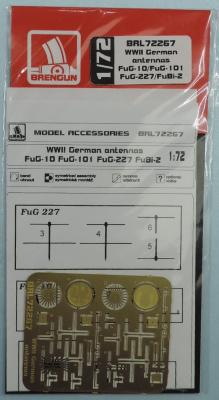
Brengun Models is a scale model and detailing parts manufacturer located in the Czech Republic. Their lines include limited production run multi-media kits and exquisitely detailed photo-etched, turned brass and white metal replacement parts for aircraft in the most commonly produced scales.
Brengun has produced a set of WWII German Antenna to fit any appropriate1/72 scale Luftwaffe aircraft kit. The package contains FuG-10, FuG-101 and FuG-227 arrays, as well as an FuBi-2.
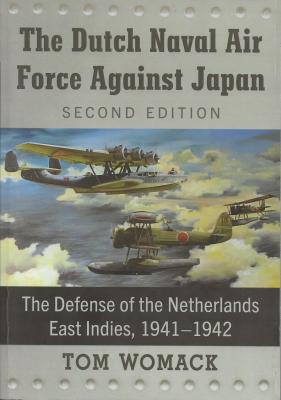
Eighty-some years after the fact, we are still learning about the Second World War, in all its global aspects. One neglected area, handsomely remedied in English by this book, is the role to the Netherlands East Indies Naval Air Service during the Japanese onslaught into the area we now call Indonesia. This book is doubtless the ultimate study on the subject, at least in English. And what a far-flung topic it is; the numerous islands of the Netherlands East Indies covered an area wider than the Continental U.S. and nearly as deep.
This is the 1st volume of a new Key Book Historic Commercial Aircraft Series – Soviet-Era Airliners, The Final Three Decades. This book covers the history of the demise of the great soviet airliner fleet from 1991 to today. The Soviet designed and manufactured Airlines have always been fascinating with me as I watch the changes and downfall happen during this period while working in the airline industry. The chapters are fascination and give way more details that I expected in such an apparently small book.
The chapters most aspects of the decline and changes in the Soviet Airlines and its way through the historic changes happening in the Soviet world. This book does excellent work showing the main airlines world-wide using these aircraft. It goes on to explain the aircraft they used and what western aircraft were used to replace them in many cases.
All the photographs are some of the best I have seen and are great reference material.
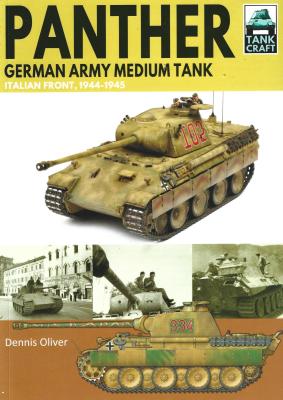
This is no 38 in the Tank Craft series which details tanks and also covers model kits and accessories to build the tanks covered in the book. This book covers the Panther German Army Tank on the Italian Front 1944 to 1945. The Panzerkampfwagen V Panther was a great tank and was better that most allied. It was very successful on most fronts except Italy where the terrain was a hindrance to the performance of this tank.
I found this book contains so much detailed information and pictures of the Panther and its variants. The Profile pictures are a particular favorite and has given me a few great ideas of the color schemes for when I build my many Kits.
The chapter on the different model builds and kits are of great interest and will provide a good resource when modeling this tank.
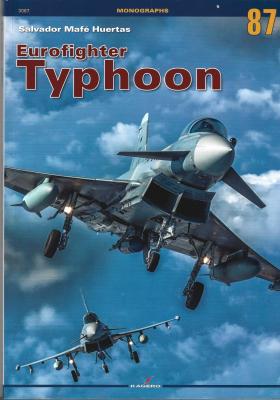
This is the 87th book in the Kagero Monographs series covering aircraft in details photos and diagrams. This book covers the Eurofighter Typhoon. The book provides great detail drawings of the Typhoon, mainly from the Spanish Air Force with some coverage of the aircraft in sue with the Royal Air Force and the German Airforce.
I found the drawings in this book to be fascinating and very detailed, ideal for any modeler as reference materials. The photographs are extremely good and many I have never seen and provide great details for super detailing any scale model of the aircraft. The very details Spanish Air force chapter is extremely interesting. I would like to have seen more coverage of RAF use of the aircraft and squadron’s.
Along with the many photos there are outline drawings, schematics, and very nice profile drawings.
I recommend this book to everyone with an interest in the armor and a must for modelers.
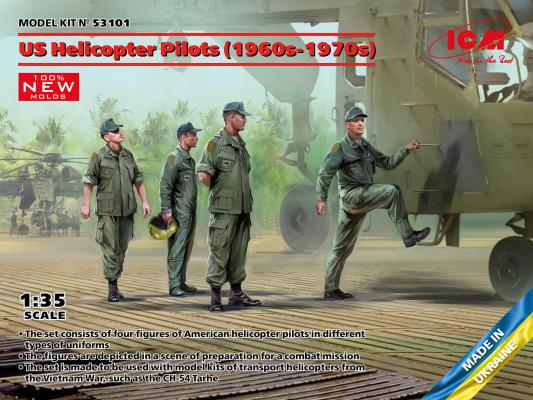
ICM has produced some stellar helicopter kits, but the thing for me is finally we have good Vietnam era figures for helicopters. This is their first set of 1/35th scale, having made the change from 1/32nd to a more common 1/35th scale helicopters.
Packaged in a sturdy cardboard side opening box with a card stock covering, this set includes two sprues of light grey plastic that show no signs of flash or mis-molding. There are 41 parts molded with good detail. Four figures are included, along with four flight helmets. The instruction sheet is full color and shows you what the figure should look like when finished. It also has references to ICM paints. I did paint the figures mostly with the ICM paints which performed well, but I didn’t have all the colors needed in the set.
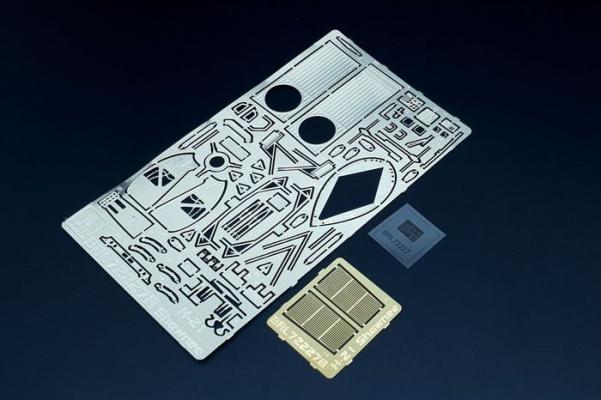
THANKS to Brengun for providing more of their expansive line for us IPMS reviewers to address. For the Detail hounds, AMS, whatever among us, Brengun continues to provide really cool items for us to use. And this set holds great promise to upgrade the venerable 1/72 Italeri kit.
Notice I said 1/72. When I was digging through the “Review stash” to see where I could help, I saw this and thought “great, I can finally build the small version (Having the 1/48 model sitting in the box, I made a big assumption.
1/48 and 1/72 do not mathematically convert into equals. “why is this set of screens for the transmission and engine cooling intake too small when held up to the 1/48 model?”
Stupid reviewer. Brengun, I sincerely apologize, you don’t get one of my fantastic, non-sniper reviews with a kit involved, because I don’t have a 1/72 kit. I thought for some reason this was for the 1/48 kit when I agreed to do it.
This is #131 of the Top Drawings series describing the G.55. The book consists of a total of 16 plan views and 5 profiles of the aircraft. The book is written in English and Polish. The first page of the book has a small history of the aircraft in both languages. You will find a single page drawing for a 1/32 scale aircraft, 3 for 1/72 scale, and 11 for 1/48 scale. There are two drawings in which 1/48 and 1/24 are combined and one in which 1/72 and 1/48 are combined as well. The large 1/32 scale drawing is a single sheet added to the book. This drawing is provided in a two-sided single page. The backside of the drawing has profiles of the aircraft for the single seat fighter as well as the trainer version.
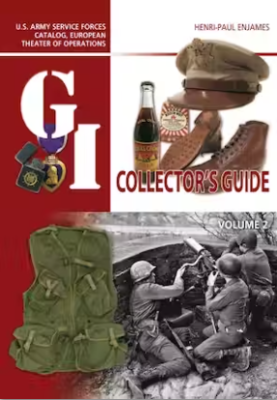
As the book title states this book is directed to the collector of U.S. Army Service Forces gear, focusing on the European Theater of Operations (ETO). The book is volume #2 of the series.
You will find everything that was used by the Gi's while in Europe! The book is divided into 24 sections with an Abbreviations section, as well as an Index.
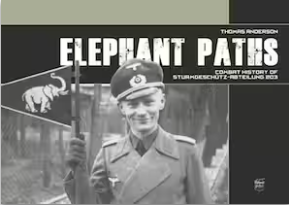
The book covers the history of the unit from its creation through the end of the war, and is divided into an Introduction and six sections, as well as a glossary of terms on page 2. The book refers to the unit designed first as StuGA.Abt.203 and later named StuGBrig.203. Book information was gathered from Russian archives as well as those located in Freiburg, Alexandria and Podolsk. The first chapter deals with the establishment of the unit and how they were trained. The second chapter deals with their transfer to the east. Many of the pictures in this chapter deal with the type of equipment used by the unit. These included both AFV's as well as soft skinned vehicles.