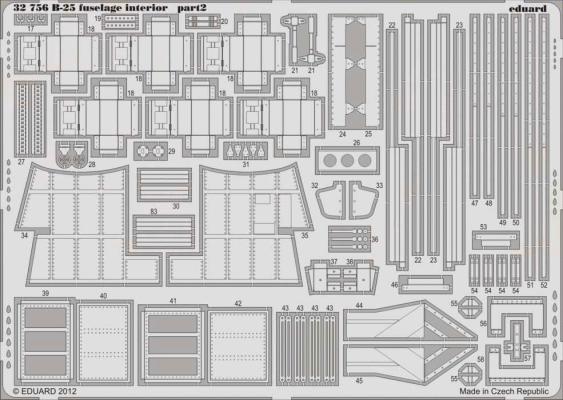
Eduard has issued this interior set to upgrade the HK Models 1/32nd B-25 interior by addressing several areas. The set comes with two large photo etched frets and one small colorized fret, all of which have excellent relief on the parts and great color on the small fret. This set addresses the tail gunner position, the top turret gunner position, both exit hatches, and the rear fuselage interior, along with barrel covers for the guns.
all 2013
History Brief
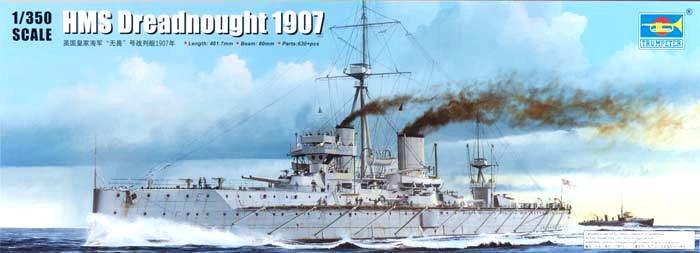
May, 1905 – HMS Dreadnought approved for construction. Entered into service December, 1907, and served as the flagship of the British Royal Navy’s Home Fleet until 1912. March, 18, 1916, during the First World War, the HMS Dreadnought sank the German submarine U-29 in the North Sea. By 1918, the Dreadnought was assigned patrol duty of the Thames estuary. She was then transferred to the Reserve in 1919 and finally demolished in 1921.
The Product
Kit features 2-piece full hull, internal strengthening bulkheads, separately molded bilge keel, engraved deck plank texture, finely molded fittings, well detailed ships boats, hollow tip main battery gun barrels, 12pdr rapid fire guns, filigree masts and yardarms, display stand with nameplates, metal chains, and plenty of photo-etch parts. Includes 4-view color painting guide and decals representing jack, ensign and stern name lettering.
History
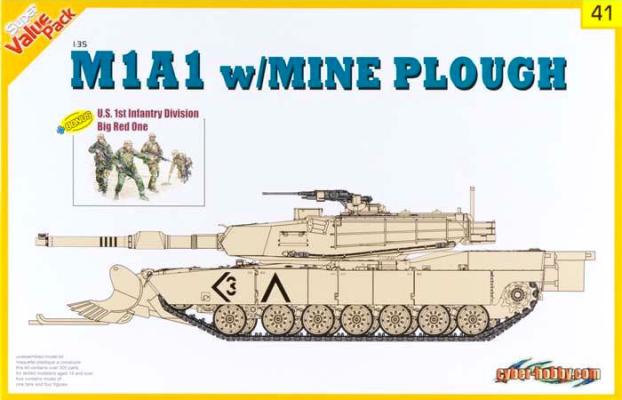
The M1 Abrams is a third-generation main battle tank named after General Creighton Abrams, former Army Chief of Staff and Commander of US military forces in Vietnam from 1968 to 1972. Designed for modern armored warfare, the M1 is highly mobile, well armed, and heavily armored. Features include a gas turbine engine usually fueled with JP8 jet fuel, composite armor, and separate ammunition storage in a blow-out compartment. Weighing nearly 68 tons, it is one of the heaviest main battle tanks in service.
The M1 Abrams entered service in 1980, replacing the M60 tank. The M1 remains the principal main battle tank of the United States Army and Marine Corps, and the armies of Egypt, Kuwait, Saudi Arabia, Australia, and Iraq.
Three versions of the M1 Abrams have been deployed – the M1, M1A1, and M1A2, incorporating improved armament, protection, and electronics. The M1A3 is currently under development.
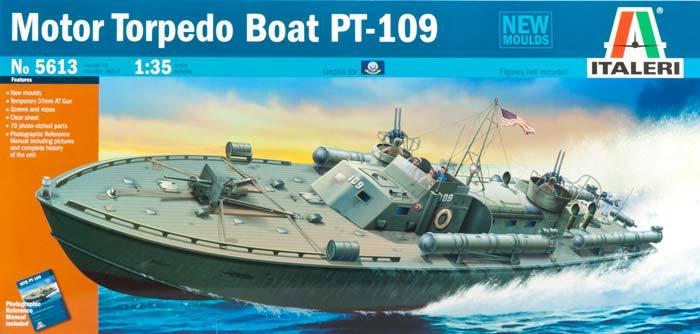
If you were male, young, and interested in ships in the early 1960’s, you know all about President John F. Kennedy and his crew with the PT-109. The movie PT-109 was released in June, 1963, right before President Kennedy was assassinated. Read about it on the net… those of us of a certain age already know the story! It’s also a great book to read…and Revell released a 1/72nd scale model of the boat at that time. It’s still available from the Revell catalog; an unending legacy.
Now, step up into big scale. Huge is a great moniker. Italeri’s PT-109 is the logical follow-on use of their previously released Elco PT-596. In 1/35nd scale, this is an absolutely massive model. Many in the R/C community have modified the basic kit with good results; as an electric-powered model, it’s impressive to watch. But that’s not why we’re here, is it?
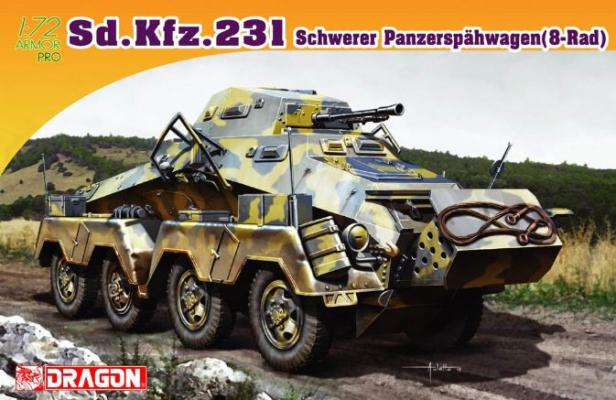
The iconic Sd.Kfz.231 has joined the fleet of Dragon’s 1/72 German vehicles from World War Two. Like its cousin, the 231 served in every theater of action. With dual driving positions, it served the Wehrmacht until 1943 when the production run came to end. The kit has five sprues and the two halves of the vehicle each molded separately, for a total of 93 parts. There is a small decal sheet and color schemes for five vehicles. The quality of the molding is very good. The sprues were loose in the box, though each sprue is individually bagged. Despite being knocked around during shipping, none of the pieces were damaged or separated from the sprue.
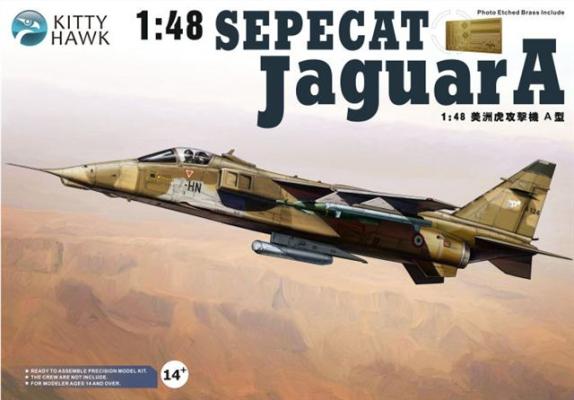
History – The SEPECAT Jaguar is an Anglo-French jet ground-attack aircraft, originally used by the British Royal Air Force and the French Armée de l'Air in the close air support and nuclear strike role, and remains in service with several export customers, notably the Indian Air Force and the Royal Air Force of Oman.
Originally conceived in the 1960s as jet trainer with a light ground attack capability, the requirement for the aircraft soon changed to include supersonic performance and reconnaissance and tactical nuclear strike roles. A carrier-based variant was also planned for French service, but this was cancelled in favor of the cheaper Dassault Super Étendard. The airframes were manufactured by SEPECAT (Société Européenne de Production de l'avion Ecole de Combat et d'Appui Tactique), a joint venture between Breguet and the British Aircraft Corporation, one of the first major joint-Anglo-French military aircraft programs.
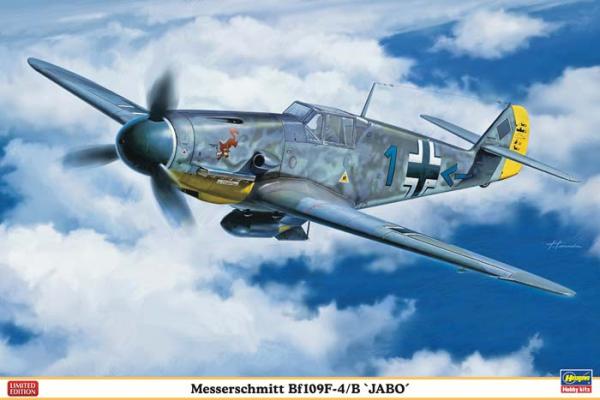
I recently built the Hasegawa 1/32 scale Bf-109 F4 “Jabo” version. This was a great kit to build. In fact, if by some miracle I win the lottery or find a decently paying job, I actually plan on picking another one up.
The decal sheet gives you three versions to build: Oberleutnant Frank Liesendahl from 10 Jabo /JG2, Unteroffizier Felix Sauer from 10 Jabo /JG53, and Oberleutnant Werner Langemann, 10 Jabo /JG53. Unlike the Hellcat I reviewed a short while ago , the decals for this kit were crisp, clean, and really well done. The white is a clean, bright white, and the Blue 1 I plan on using for Liesendahl’s aircraft looks like it will stand out when applied.
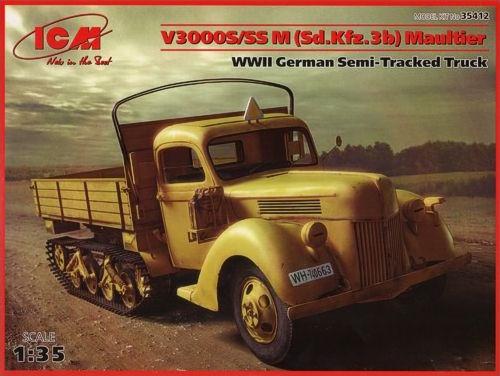
During WWII, the German Wehmacht used a varity of truck types for their supply system. The most numerous were the 3-ton trucks, and of these many were the V3000S, produced at the Ford plant in Cologne. With the invasion of Russia, it quickly became obvious that tracked vehicles were vital if supplies were to be delivered. A solution was found to develop an add-on track system that could be bolted to the frames of different types of 3-ton trucks. When added to the Ford V3000S, it became the V3000S/SSM (Sd.Kfz.3b) Maultier. The Opel truck became the Sd.Kfza, and so on; they were all called Maultiers (German for mule).
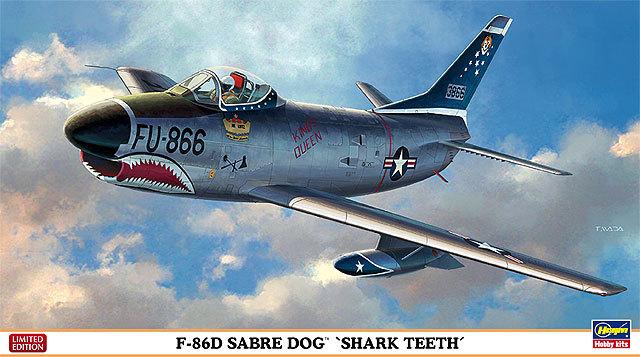
I happen to love F-86s in any shape or form, and the “D” is one of my favorites. I have built a few in the past in most scales and welcomed this one by Hasegawa in 1/72 as I never built one in this scale.
With this kit, Hasegawa chose to do it in the unusual “Shark Mouth” markings. This is a pleasant change from the usual marking as seen on most “D” models.
Upon opening the box, I was greeted with the usual Hasegawa silver plastic in four sprues, plus a clear one. The moldings were crisp with engraved panel lines. I had looked at an older kit of the “D” by Hasegawa and it seems to be the same kit, only with new decals.
Assembly was straightforward with no fit problems. The wings went on without the need of filler. One must remember to add a weight to the nose to prevent tail dragging. The cockpit was very nice; however, I think that seat harnesses could have been molded to the seat for a better look. I added some from tape.
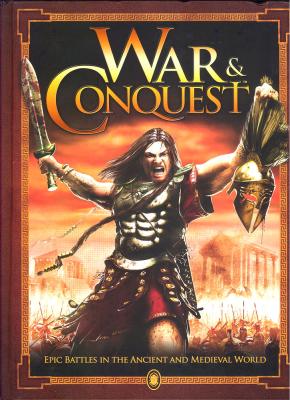
I started war gaming when I was in high school because I was always interested in military history. I’ve also wondered about the “what if” scenarios of different battles. My interest in the subject just stayed with me through college and even into the Navy. I remember while I was at the anti-submarine warfare base in San Diego, California, my barracks room mates and I used to push our bunks out of the way and play General Quarters, metal warships and all. So when they wanted someone to review the War and Conquest rules book, I just had to jump at the chance to do it.
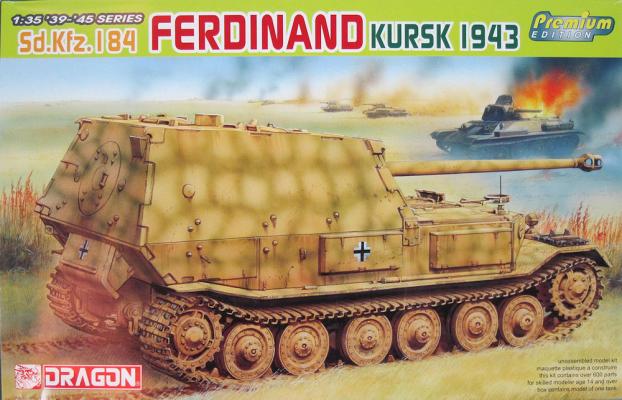
This kit is basically a slightly upgraded re-box (reboot) of their Premium Edition Kit 6317 that came out in 2008. The new parts are two photo etched tool boxes instead of one, a newly designed photo etched tool box to fit on the rear of the fighting compartment, different Magic Tracks specifically for the Kursk campaign, and a new set of decals that are supposed to allow you to build any vehicle that served with the s.Pz.Jg.Abt.653 or s.Pz.Jg.Abt.653 units at Kursk.
This is a multimedia kit comprised of 270+ styrene parts, magic tracks in the early pattern, three photo etched frets, a turned aluminum gun tube, decals, and the set of instructions that need to be reviewed very carefully before gluing any parts together. Most Dragon models today are a collection of old sprues with new sprues added to create a new kit variant, and Dragon has done so with this kit.
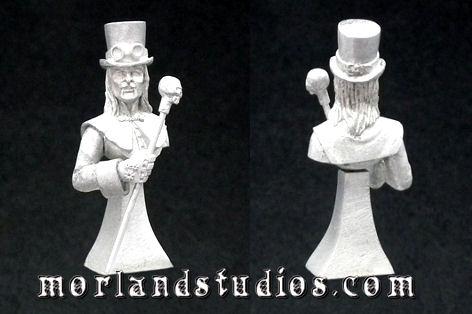
I was intrigued in seeing a 54mm bust available for review. I had painted a few larger scale busts, and have also painted a number of 54mm figures, but never a bust in such a small scale. I asked to review it and subsequently received the Morland Studios 54mm offering of a – or would it be The – Vampyre Lord? I finally settled on The Vampyre Lord because I couldn’t find anything relating him to a gaming scenario or a story line, so I see him as a standalone character. Not personally knowing any vampyre lords, it’s always so hard to figure how they would like to be addressed!!!
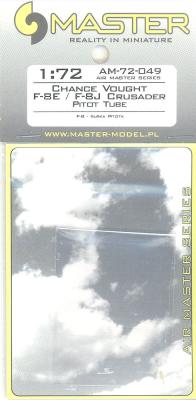
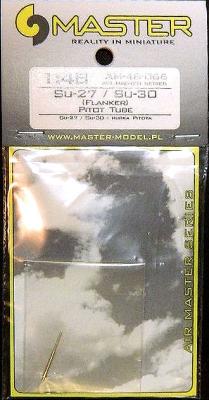
Master Model is a company that makes turned brass aftermarket parts, specifically pitot tubes, refueling probes, and antennas.
The first thing I would like to point out is how good the packaging and instruction sheet is. The packaging consists of a zip-lock type bag, while the part is in a smaller bag, keeping it from moving all over. The instruction sheet is very clear and easy to understand, only needing 3 steps. Cut off original part, drill a hole (0.8 mm), glue in the new metal part – complete. Just be careful drilling the hole, especially in 1/72.
When compared to the kit part – there is no comparison. The kit pitot tube looks like a little blob of plastic, while the Master Model part is a complete work of art. Once you use a couple of these pieces you will be completely spoiled and never want to use the kit pitot tubes again.
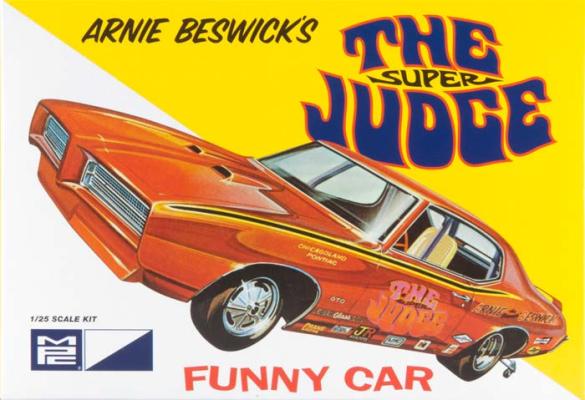
To honor funny car racers of the ’60s and ’70s, Round 2 LLC announced last year that it will be releasing a new drag racing memorabilia line called "Legends of the Quarter Mile." The first model kit released was Arnie "The Farmer" Beswick's 1969 GTO funny car known as the "Super Judge." Hailing from Morrison, Illinois, Beswick is a legend in his own time. He is the most well-known Pontiac drag racer in the world. For over 50 years, his successes have made him a fan favorite. Keep in mind this nostalgia kit was originally issued in 1969 by MPC, and has been reissued several times since, this time in a very cool original box art. As it’s an older kit, expect to spend considerable time cleaning up the parts. Round 2 has also added "MH Racemaster" printed slicks and very nice Beswick decals. The assembly breaks down into several sub assemblies:
Should you be looking for a little something different to build, I would like to point you in the direction of this one-quarter scale instrument panel that is being offered as a Limited Edition release by the folks at Eduard. The kit assembles with relative ease, and is a good representation of the instrument panel used in the Messerschmitt Bf-110C variant, although the variant is only mentioned once on the side of the box. The needles used in the various gauges are the only tricky items to handle during construction, so this would be a good item for modelers fourteen and up, as the box recommends.
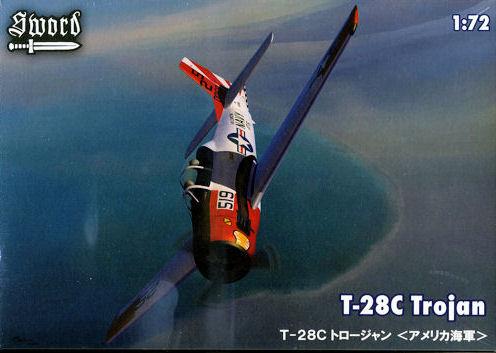
The North American T-28 was used by both the Air Force and Navy and was designed as a replacement for the old T-6/SNJ. It saw use in the American military from the 1950's until the mid 80's. In the end there were 4 variants, the A, B, C, and the counter-insurgency D models. Several other variants, such as the Fennec, were used in foreign service.
The T-28C, the subject of this kit, came out in 1955 and was the same as the B model except for the tail hook installed for carrier training and a slightly shorter prop. The T-28C had a Wright R-1820 engine and a three-bladed prop.
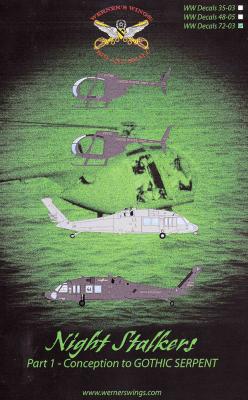
New from Floyd Werner and Werner’s Wings are decals and history for the Night Stalkers, the 160th Special Operation Aviation Regiment (SOAR). This set of decals covers the history of the group from its conception in 1981 through Operation Gothic Serpent in 1993.
The aircraft covered here are H-60's and H-6’s in 1/72 scale. The decals are also offered in 1/35th and 1/48th scales. The decals cover eight markings for the H-6 and 9 markings for the H-60. Each scheme has a specific color guide and also notations about specifics of that particular helicopter. There are notes about antennae locations, markings, and history of all airframes.
- Sukhoi Su-27, AM-48-066, $8.50
- Harrier GR.3, AM-48-069, $5.50
- Sea Harrier FRS.1, AM-48-070, $6.50
Iwona and Piotr at Master Model in Poland are a gifted team. Here’s to you and your efforts; we FINALLY have a source for detailed, strong, accurate pitot tubes (and other things like gun barrels) with exquisite detail! Thank you for providing IPMS USA with these review samples, which were passed to me. We appreciate and support you!
History
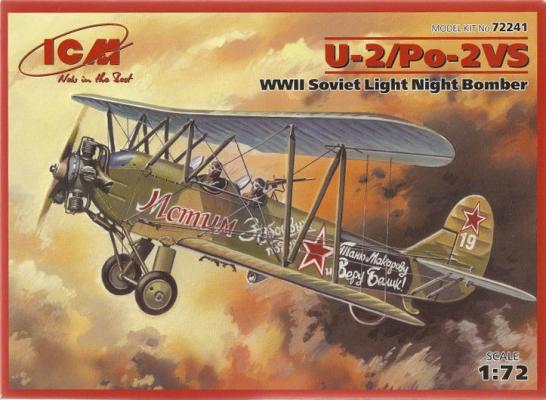
The Polikarpov U-2 biplane was designed and built during 1928 as a primary trainer for the fledgling Soviet Air Force, and it seemed to possess all of the characteristics desired by that service, including rugged all-wood construction, a low-powered but reliable power plant, and excellent flying characteristics. It was produced in massive numbers, approximately 40,000 of them eventually being manufactured in the Soviet Union and foreign countries. The type was adaptable to many uses, including training, air ambulance, night bombing, crop dusting, and a few were even used as floatplanes. During the war, the plane was re-designated Po-2 in honor of the designer, Nikolai Nikolaevich Polikarpov. A few were even used by the North Koreans during the Korean War for night harassment, as, having all-wood construction, they had a very low radar profile. There are still a few flying today, especially in Europe.
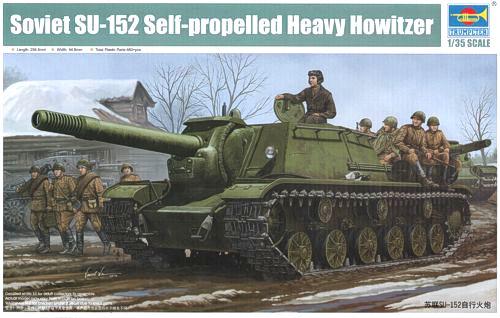
The Stalingrad counteroffensive (Operation Uranus) showed the Red Army's urgent need for mobile heavy guns. The firepower of Soviet tanks, both motorized and with infantry units, was not sufficient to deal with German pillboxes and fortified buildings. In November, 1942, the development of a heavy self-propelled gun armed with 152.4mm ML-20 gun-howitzer was begun as project name KV-14, and the first prototype, Object 236, was completed in 25 days. Using the KV-1S tank chassis, mass production of the SU-152 started in mid-February, 1943, and about 700 were produced until superseded by the ISU-152 in December, 1943. During combat, it was found that the SU-152 was a great anti-tank gun that could take out a Tiger or Elefant tank destroyer with its 107 pound HEAT projectile. During the Battle of Kursk, the lack of roof vents led to crews passing out, so a later production model added vents and a hull machine gun.
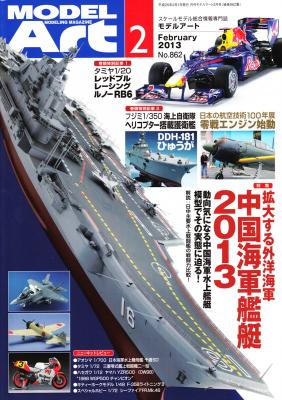
Model Art Modeling Magazine is a Japanese publication that is released monthly. The text is mainly in Japanese with some English subtitles throughout. One selling point about these magazines is the high quality of the photographs and the models that are used.
1/24th scale, molded in “WRX” mica blue, black, clear and chrome; includes window masking templates, photo etched parts on an adhesive backing, and metal hood brace. The kit makes one version.
History and Research
The Subaru BRZ (B=boxer enginer, R=rear wheel drive, Z=last letter in the alphabet) is a result of a joint collaboration between Toyota and Subaru. It was designed as a world car and is known by the names Subaru BRZ, Toyota GT86, and the Scion FR-S. They are all powered by a flat “boxer”-style 4-cylinder engines in all models and is engineered by Subaru. Most of the rest of the development of the car was the work of Toyota.
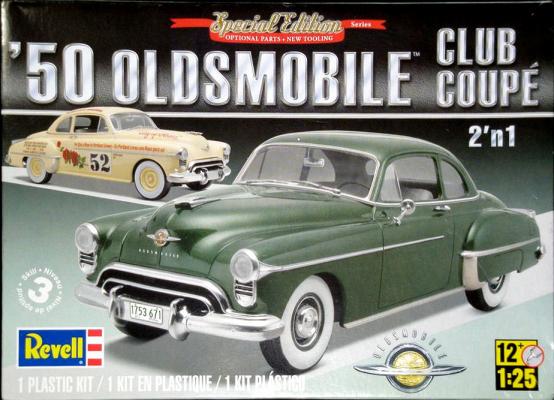
Rockets Away! Revell’s new kit of what was essentially the first factory muscle car is a welcome nod to us “longer-lived” modeler-folks who can recall the marriage of GM’s first OHV V-8 and Oldsmobile’s clean styling as being either our first cars or someone in our family’s. The phrase “Not your Father’s Oldsmobile” comes to mind and no…this one wasn’t…exactly…but my Dad did have a ’51 Eighty-Eight which – even as a ten-year old – I recognized would go like the proverbial scalded ape.
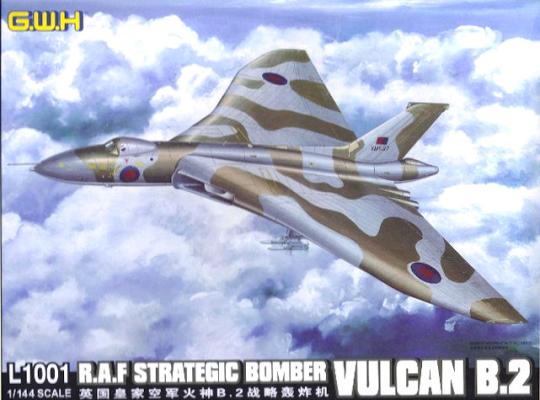
Great Wall is a company new to me. I have seen their wonderful P-61 in a much larger scale and was impressed. This kit of the Avro Vulcan B.2 is equally impressive, especially considering the small scale.
Upon opening the box, I was Impressed with the packaging. Everything was either wrapped in plastic or foam paper. The fuselage is broken in half horizontally. I really liked the one-piece intakes that fit perfectly. In fact, every piece on this kit fits beautifully. No filler was needed at all.
Due to locating pins in the wings, they snapped together perfectly. This was the best fitting kit I have ever built.
I didn’t forget to add a nose weight before closing the fuselage. The kit includes an instrument panel and two pilots which I didn’t put in, as they cannot be seen thru the tiny windscreen.
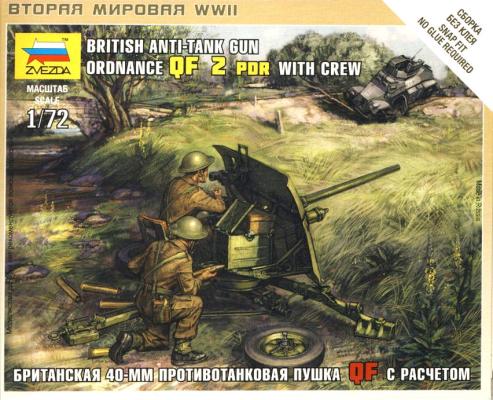
Zvezda has brought out another anti-tank gun for their war-game "Art of Tactic". This time it is the British version used by the BEF during the Battle for France.
The kit contains 22 parts for the gun, 9 parts for the 2 crewmen, a base, and a flag piece for the game, as well as a movement card. The kit has the same snap together construction as the other guns in this series and is made out of some type of softer plastic than regular injection kits, but not as soft as other figures. The plastic can be trimmed with a sharp knife. I did resort to Tamiya liquid glue for some parts to make sure nothing falls off later on. One of the parts for the gun is an optional carriage to display it in travel mode behind a vehicle.