all 2013

Review Author
Andrew Birkbeck
Published on
Company
Academy Models
Scale
1/35
MSRP
$39.00

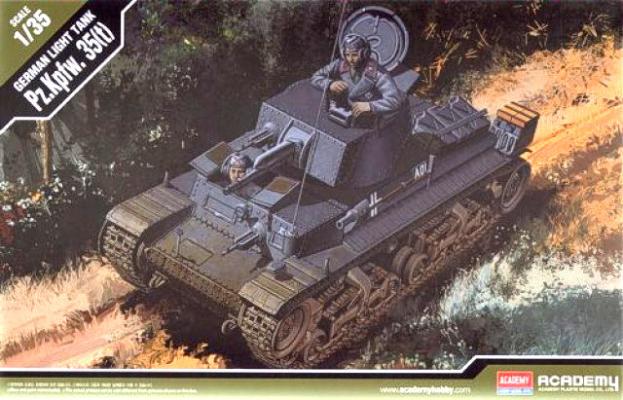
In the mid 1930’s, the nation of Czechoslovakia had one of the most sophisticated military arms manufacturing industries in Europe. Upon the German annexation of the Czech territories known as the Sudetenland in 1938, and the occupation of the entire country in 1939, the Czech armament factories fell into the hands of German forces. Two main tanks originated from these factories, known as the Panzer 35(t) and Panzer 38(t) to the Germans (“t” is short for the German word for Czechoslovakia, “Tschechoslowakei”). The Panzer 38(t) chassis soldiered on throughout World War Two as the basis for a number of tank destroyers and self propelled flak guns, while the Panzer 35(t) had a shorter career.
Review Author
Andrew Birkbeck
Published on
Company
Riich Models
Scale
1/35
MSRP
$66.95

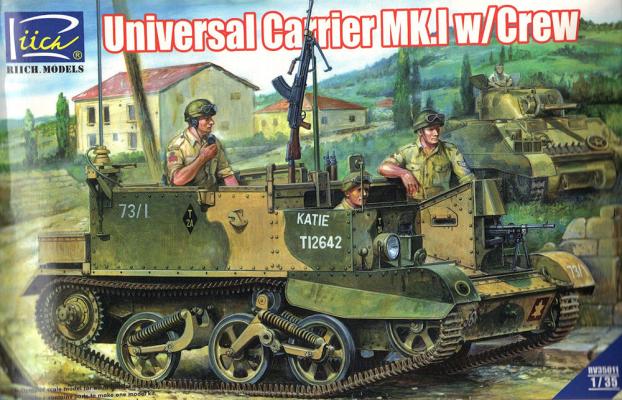
I will start this review with a simple statement: this is one of the most complex, highly detailed, and simply wonderful models I have ever had the pleasure to encounter. It has 13 sprues of plastic parts with exquisitely fine details. Additionally, there are three frets of photo etch brass parts, 32 metal springs, 8 tiny metal shafts, and a length of metal chain. The small set of decals covers 4 different vehicles from three different nations’ armed forces. And, despite all this complexity, the kit assembles, with a few notable exceptions, extremely well. So read on!

Review Author
Brian R. Baker
Published on
Company
Hobby Boss
Scale
1/72
MSRP
$17.99

History

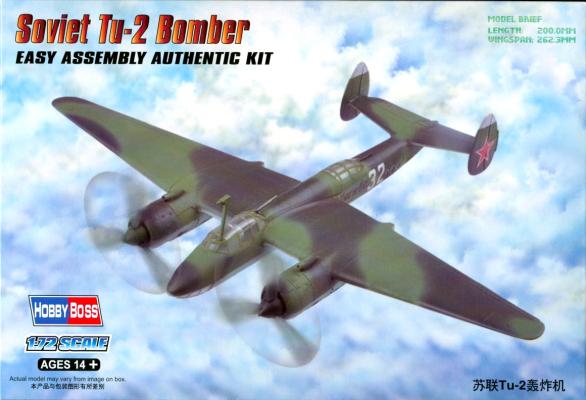
The Tupolev Tu-2 has a rather interesting origin, being designed by a team of engineers who had run afoul of Stalin’s paranoia. They had been placed in a political prison as “enemies of the state,” and the design work for this aircraft began while the designers were incarcerated. The airplane was designed as a high speed bomber, capable of both level and diving attacks. Originally powered by liquid cooled AM-37 engines, these were later required for the Ilyushin Il-2 Sturmovik program, so Shvetsov Ash-82 radials of 1,850 hp. were used, giving the plane a maximum speed of well over 300 mph. A crew of four was carried, including a pilot, navigator gunner, and two additional gunners. The first flight of the aircraft was in January, 1941, and the type entered service in 1942. Many variants of the Tu-2 appeared, and total numbers exceeded 3,000 before production ended in 1950.

Review Author
Keith Gervasi
Published on
Company
Hasegawa
Scale
1/48
MSRP
$57.00

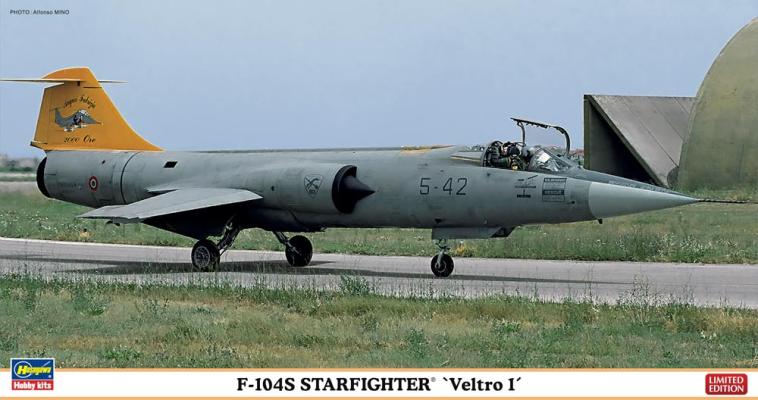
The maiden flight of the F-104 was in 1954, and its final variant was the S (first flown in 1966) model, which was a licensed-production Italian version of the 104. The Italian Air Force and Turkish Air force flew the S model, with the Italians using them until 2004! (Pretty good service, I’d say.)

The Kit

Upon opening the box, you will find 16 (some have just one part on them) light grey and 1 clear sprues of injected molded plastic, a nice decal sheet with markings for one aircraft (a 104S from the 5th Stormo, 23 Gruppo, in memorial paint scheme), and an 8-page instruction sheet. The plastic is cleanly molded with nice detail and is flash free, but there are a few pin marks throughout the parts.

Review Author
Ron Bell
Published on
Company
Dragon Models
Scale
1/72
MSRP
$23.50

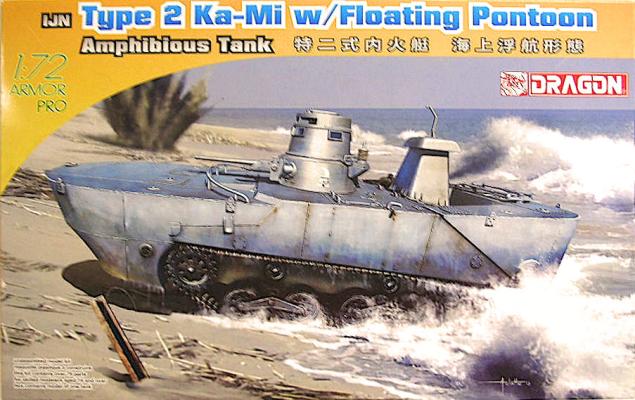
This one falls in the "that's an odd duck" category. This was a Japanese attempt – and a successful one, at that – to create a truly amphibious tank. The IJN developed the Type 2 Ka-Mi tank for invading Pacific islands that did not have adequate port facilities to handle regular tanks. The tank had removable pontoons fore and aft for flotation and to avoid shipping any water; they added a trunk for the air intake and a tower over the commander's turret hatch. It could do around 10 km/hr in the water, being driven by two propellers at the rear, and had a range of 150 km. These were probably test results in a bay or on a lake. I could find no information on its performance on the open seas, so I'd take that range and speed with a grain of salt. The vehicle was never used operationally in its amphibious mode, serving mostly as a dug-in pillbox on various Pacific islands.

Book Author(s)
David Doyle
Review Author
Mike Van Schoonhoven
Published on
Company
Squadron Signal Publications
MSRP
$59.95

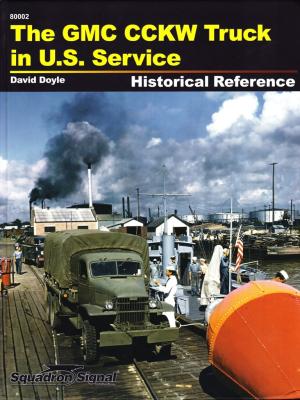
This is the second book to be released by Squadron Signal Publications under the "Historical Reference" series. As explained in the front of the book, this series is written by using in-depth research of primary documents, giving a very detailed look at the subject matter. It appears that there may other books in the works covering aircraft and vessels. As I have said before, in my opinion this book is like a Walk Around or In Action series book on steroids.

The book starts with the origins of the CCKW. This began in 1928 when the U.S. Army Quartermaster Corps started developing its standard fleet. What came from this were two 2-1/2 ton 6x6 vehicles. One of the interesting names involved in its development is a major player – John D. Hertz. Yes, of the rental car company, but he first owned Yellow Cab, and then Yellow Coach Manufacturing Company, which ended up merging with GM. They were instrumental in the development of the CCKW.

Review Author
Mike Van Schoonhoven
Published on
Company
Eduard
Scale
1/4
MSRP
$39.95

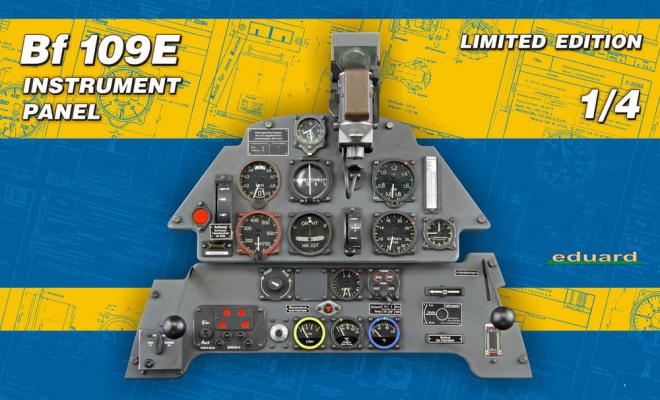
The Bf-109E instrument panel is the second instrument panel released by Eduard, the first being the Bf-110 panel. The kit consists of eighty five plastic parts on two grey-colored sprues, one clear sprue, two photo etch frets (one colored), and one decal sheet.

The construction sequence starts off with the Revi C/12D gunsight. Let me tell you, this is a kit in itself. The build is pretty straightforward. You just have to pay attention to the instructions. I put one PE piece on upside down and had to remove it and reattach it.

Review Author
Dave Morrissette
Published on
Company
Tamiya
Scale
1/32
MSRP
$199.99

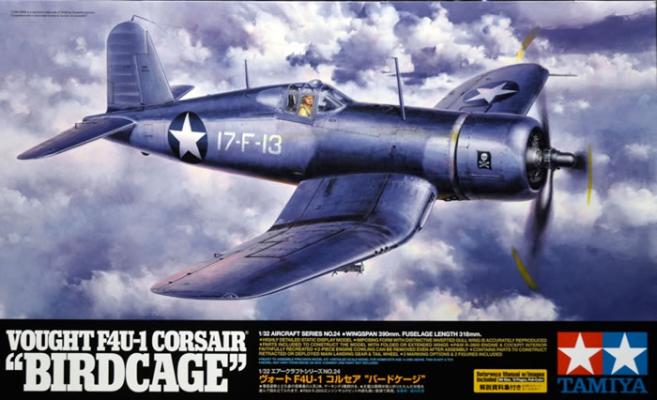
After the last segment, the kit was ready for paint. There are three marking options included in the kit. I chose a tri-color screen from VF-17 aboard the USS Bunker Hill in 1943. To start painting, I wanted the bottom white to be hard and take some weathering. For this, I used decanted Tamiya lacquer from a spray can. This is just one of the many tricks I learned from Ed Kinney. I masked off the exhausts with Silly Putty and used a little red brown (just a couple drops) to tint the white away from pure white. This was sprayed in three coats and left to dry. The lacquer dried very quickly and very hard. At this time, the landing gear and the gear doors, the main flaps, and a bunch of miscellaneous parts were sprayed.

Review Author
Phil Pignataro
Published on
Company
Quickboost
Scale
1/72
MSRP
$3.95

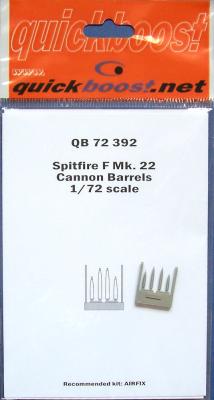
One of the criticisms I've read about the 1/72 scale Airfix Spitfire Mk.22 is the cannons are not quite the right shape or length. Apart from this deficiency, the Airfix Spitfire is an excellent kit and a great value for your money.

If you want to improve this model's looks and accuracy, however, Quickboost has a remedy. Their replacement resin cannons are drop-ins for the original kit pieces. Based on photos I saw, they capture the shape and size of the real thing. The kit's outboard cannons are too short, both barrels seem too bulbous, and both have an out of scale extension on the tip. Also, the resin replacements have no seam lines to eliminate – a definite plus, since the kit parts have large sprue gates. Smoothing out these sprue attachment points presents the possibility of deforming the circular barrels. Overall, the Quickboost cannon barrels look more refined and in scale. Check out the photos to see what I mean.

Review Author
Phil Pignataro
Published on
Company
Quickboost
Scale
1/72
MSRP
$3.95

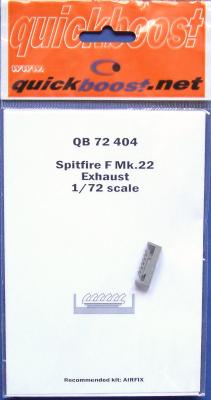
The newly released Spitfire F.Mk.22 by Airfix in 1/72 scale is an excellent kit right out of the box. Of course, there is always room for improvement. Quickboost has already given us replacement cannons, correcting the only real deficiency in the kit. Here they offer resin, drop-in replacements for the exhaust stacks. What's the advantage of these? These resin exhausts closely mimic the shape of the kit parts, which look accurate to me. However, the Quickboost replacement parts have the holes already in them, saving the modeler the task of trying to place a dozen symmetrical holes in very small rods. The thickness of the exhaust stack walls appears to be in scale. Also, there are no seam lines to deal with in the resin parts, but they are present on the kit parts. Basically, the Quickboost exhaust will save you time and present a more realistic appearance than the kit parts. Moreover, these benefits come at a very reasonable price.

Review Author
Rob Benson
Published on
Company
Zoukei-Mura
Scale
1/32
MSRP
$191.00

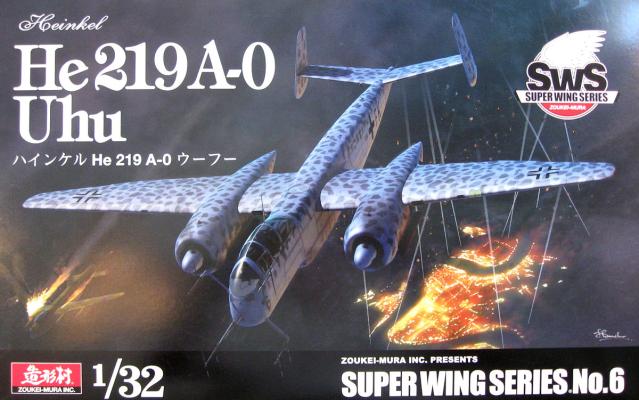
Many, many thanks to Mr. Hideyuki Shigeta for honoring me with the privilege of building the Super Wing Series He-219 Uhu (Eagle Owl) model kit for public review as an IPMS Reviewer Corps representative. I am deeply appreciative of the trust and confidence shown in me by both Mr. Shigeta and the IPMS Reviewer staff.

The Heinkel 219 Uhu was a highly effective but under-used Luftwaffe night fighter with a variety of innovations including obliquely firing guns and the first operational ejection seats. An excellent summary of the Uhu’s history may be found on the Smithsonian National Air and Space Museum’s webpage, along with restoration photographs of the Uhu in the Museum’s collection.

Review Author
Rod Lees
Published on
Company
Hasegawa
Scale
1/48
MSRP
$65.00

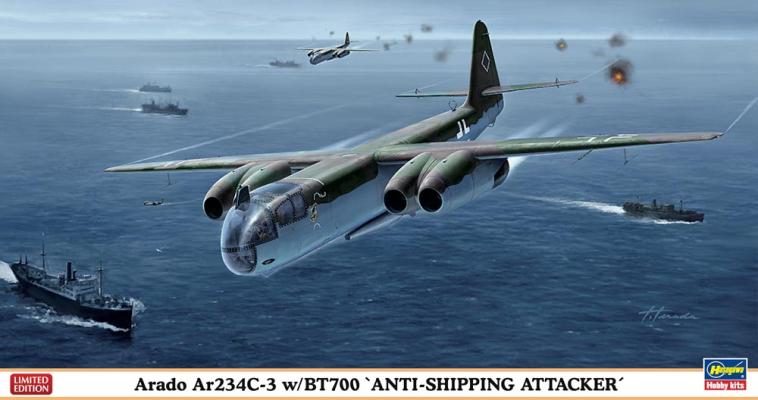
The usual sincere appreciation goes out to our friends at Hobbico (Hasegawa USA) for supplying IPMS USA yet another sample of their manufacturer’s prolific output. I am constantly amazed at what they deliver!

I really like the Arado series of aircraft, so when the opportunity to build this one came up, I raised my hand. Having built a few of these in the past, I must comment on the condition of the kit. I did NOT notice any creeping mold-failures, excess flash, or other blemishes that identify what used to be known as an “old” model (anything over 10 years). The kit looked as if it were a brand-new design. Fit and construction confirmed the same. The basic model from Hasegawa is now a decade old, and what is in the box hides its age well. Engineering at its finest, ‘tis true.

Review Author
Dick Montgomery
Published on
Company
Scale Aircraft Modelling
MSRP
$7.00

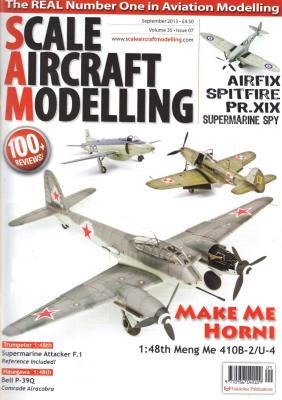
Each issue of SAM follows a basic design and format. There are usually two Feature Articles, an Aviation in Profile piece, and a series of Compact Build Reviews. In this issue, the first Feature Article is by Marco Preto, who builds and reviews Meng’s Me-410B-2/U4 in 1/48th scale. This article is a must-read for anyone who is going to tackle the Meng kit, a kit that Mr. Preto highly recommends. Along with an outstanding set of images showing Marco’s kit in progress (and completed), he also provides a list of paints and weathering supplies that he used to the outstanding results one sees in the article.

The second Feature Article, on the Supermarine Attacker, was written by Assistant Editor Karl Robinson. Karl’s article highlights the paint selections he made to produce this tail dragger. Karl also indicates that the incredible results he obtained on the panel lines and seams were accomplished with MIG Productions Neutral Wash.

Review Author
Paul Mahoney
Published on
Company
Eduard
Scale
1/32
MSRP
$14.95

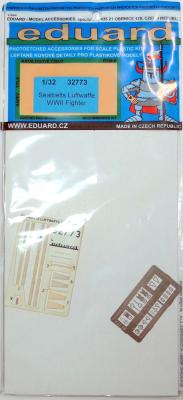
This is the second product in Eduard’s FABRIC line of seatbelts I have had the pleasure of reviewing. Earlier. I reviewed the 1/32 WWII USAAF fabric seatbelts at http://web.ipmsusa3.org/content/wwii-usaaf-fabric-seatbelts

This set is very similar to the USAAF one, with additional detail to reflect the higher complexity of Luftwaffe belts. As with the USAAF set, the belts themselves are made out of some sort of fine gauze-type material, and have only small attachment points keeping them on their fret. The material is pre-colored, with the belts in a light tan, pads for under the buckles in a slightly darker color, and one leather tab in a brown color. Very faint stitching lines and fabric weave details are evident as well. There is even stenciling and data plate info printed onto the fabric.

Review Author
Jim Coatney
Published on
Company
Albatros Productions, Ltd.
MSRP
$11.90

Albatros Productions publications, particularly their Winsdsock Worldwide and Datafiles, are indispensable reference materials for any serious modeler of World War One aircraft, and also for anyone with a deep interest in the history of aviation history.

The May/June 2013 (Vol.29, No.3) issue is their latest release of the Windsock Datafile line. The magazine consists of thirty-four pages (including covers) in medium thickness glossy paper. Other than the back cover and inside back cover, there is no advertising. The rest is all wonderful content. Production quality is excellent.

The cover shows pictures that hints towards the content inside; TVAL’s beautiful new Albatros D.II, a screen shot from the flight simulator Rise of Flight, an image of a 1/24 LVG C.VI, and a newly released resin figure.

Contents include:

Review Author
Greg Wise
Published on
Company
Hasegawa
Scale
1/48
MSRP
$75.00

History Brief

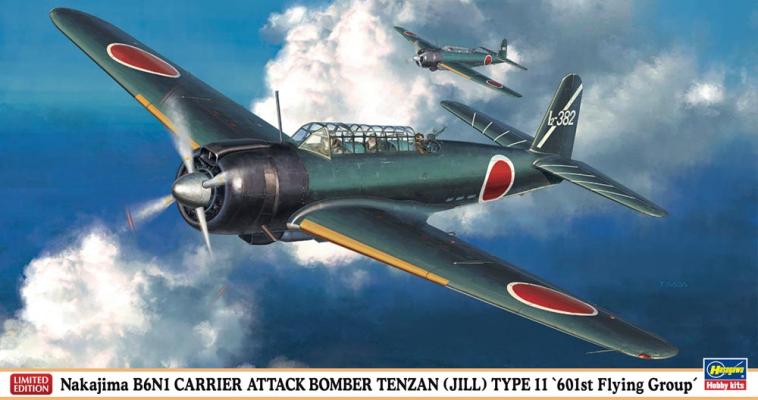
The Nakajima B6N1 Type 11 attack/torpedo bomber Tenzan, Allied code name “Jill”, was introduced in 1943 as a replacement for the B5N Kate. It was a big improvement over the Kate and, although faster and more maneuverable, it was still no match for the U.S. Navy’s carrier-based fighters. The losses were so great that only one Jill is known to be in existence today.

There were two main production variants of the Jill – the earlier Type 11 and the later Type 12. The Type 11 had the more powerful Mamori Model 11 power plant, a 14-cylinder radial (rated 1870 hp at takeoff), but it proved to be unreliable. The Mamori engine was dropped in favor of the more dependable but considerably weaker Kasei powerplant in the Tenzan Type 12 design.

Review Author
Sean Glaspell
Published on
Company
Quickboost
Scale
1/72
MSRP
$6.45

Background

The recent new release by Airfix of the North American P-51D Mustang is a great detail addition to the modeling community for this iconic aircraft.

The Product

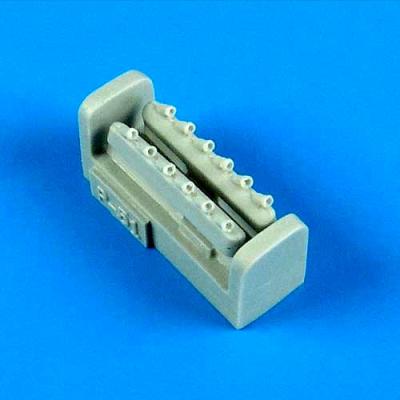
This latest release from Quickboost features a complete set of resin Exhaust-Type II exhausts for the P-51D Mustang from the Airfix new mold series of P-51D/K and Mustang Mk.VI kits. The quality of the resin casting is flawless and bubble-free. The tips of the exhaust pipes are hollowed out.

Assembly

These are simple drop-in parts that replace your kits parts. The locating stubs are replicated exactly where the kit’s parts are. Since these parts are made of resin, the modeler will need to use a cyanoacrylate adhesives (CA) super glue. If building with minors, exercise caution.

Review Author
Sean Glaspell
Published on
Company
Round 2 Models
Scale
1/9
MSRP
$19.95

Background

In 1979, Ridley Scott introduced moviegoers to a new genre of cinema, the Sci-Fi Horror film. Set on an isolated spaceship, the film’s spook value was enhanced by minimalist glimpses of the alien life form that picked off the crew one by one. In the final confrontation, it was the determination of the female action hero (and her cat) that enabled her to survive the ordeal and eliminate the threat.

MPC originally released a 1/9th scale model of the Alien creature. I bought my first one from the local Sears department store in Pembroke Mall in Virginia Beach, back in the day when they carried everything. The legs were immobile, with only head at the neck and the arms at the shoulders articulated. From that kit, I started to learn the skills of cutting, re-positioning, and posing figures.

Review Author
Sean Glaspell
Published on
Company
Scale Aircraft Conversions
Scale
1/72
MSRP
$12.95

Background

The recent new mold release by Airfix of the North American P-51D Mustang is a great addition of this iconic aircraft to the modeling community. It is a fine model that that is equal in detail and features to any Pacific Rim company equivalent. With that said, the level of detail is matched with the frailty of some of the parts, namely the landing gear, which poses the difficult situation of thick sprue gates with delicate kits parts for the modeler.

The Product

To the rescue comes mighty Scale Aircraft Conversions! This release from SAC features white metal landing gear for the P-51D Mustang from the Airfix new mold kits. Please note that this landing gear will work on the entire series of new mold Mustangs, both the P-51D/K and Mustang Mk.VI kits.

Review Author
Dave Morrissette
Published on
Company
Quickboost
Scale
1/32
MSRP
$12.00

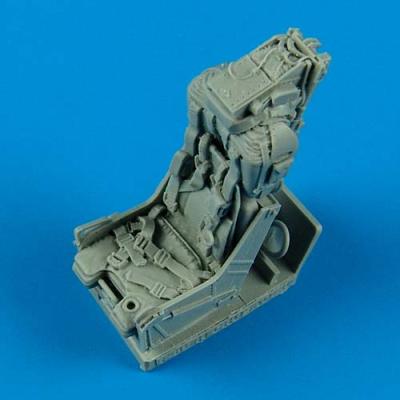
Adding to the Quickboost line of 1/32nd scale ejection seats is this latest offering for the Trumpeter F-8 Crusader. The seat, cast in their normal gray resin, comes in two pieces. The main body and the pull ring are both perfectly cast, and the pull ring has a resin protector cast in front of it. To assemble, cut the bottom plug off the seat, trim the pull ring and attach it, and paint it up. As with all Quickboost seats, the belts are molded in and have a nice draping effect to them. I included several shots of the seat plus a shot of the kit seat and the Aires seat. The kit seat is styrene and does have a set of PE belts, and for a kit seat is pretty nice. The Aires seat is, not surprisingly, very similar to Quickboost's, but the belts are multiple PE parts, as well as some seat detail. In looking at the seats, either the Aires or Quickboost are much better defined and accurate.

Review Author
Rob Booth
Published on
Company
Plusmodel
Scale
1/72
MSRP
$14.50

Plusmodel was established in 1990 in the Czech Republic. Their product range is primarily made up of 1/35th scale resin kits, conversion sets, and accessories which are vacuum cast from polyurethane resin. Their products may be purchased on line through https://www.modelchoice.net .

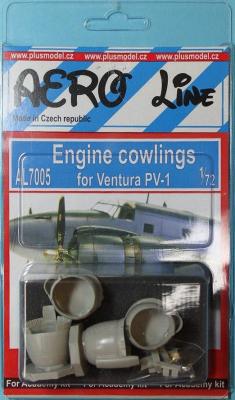
A new addition to their line is a set of replacement cowlings for the Academy 1/72 PV-1 Ventura kit. The resin cowlings are a two-piece, cut and glue in-place replacement of the kit’s plastic parts. The supplied items include a two-piece main cowling and engine nacelle, and tiny intake covers for each.

Review Author
Dave Morrissette
Published on
Company
Quickboost
Scale
1/48
MSRP
$12.00

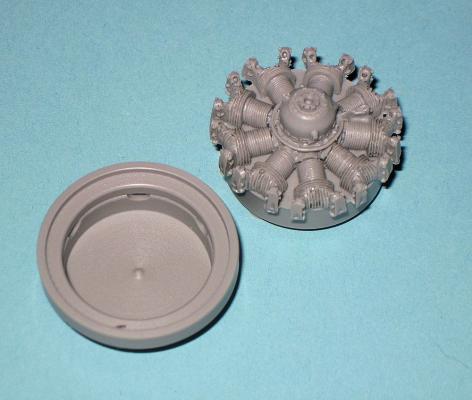
Another addition to the Quickboost line for the Kinetic S-2F Tracker is a replacement set of engines. The set comes with four parts – two engines and two holders. They are cast in familiar gray resin and are perfectly molded.

The installation is simple. Assemble the nacelle as per kit instructions. Sand down the backing ring so it slides into the opening, paint it up and glue the engine in place, and then the cowling, and you're done.

One thing noticeable in the comparison pictures is that the Quickboost engines are missing the rods connecting the valve covers and engines. They are easily made, and if you add ignition wires you have a superb upgrade.

In summary, this is a more detailed simple upgrade which is cast perfectly and fits very well and is very visible on the finished kit. A couple simple push rods and you're there. These are definitely recommended. My thanks to Quickboost and IPMS/USA for the chance to review them.

Review Author
Dave Morrissette
Published on
Company
Quickboost
Scale
1/48
MSRP
$6.50

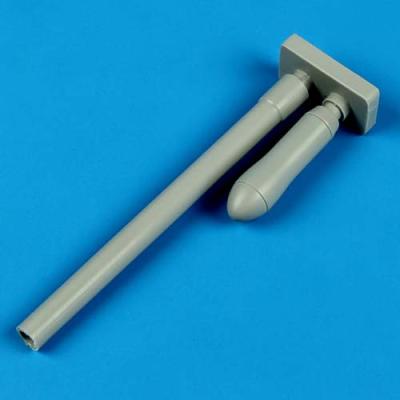
Quickboost continues its aftermarket parts for the 1/48 Kinetic S-2F Tracker family with a part labeled as the Tracker’s radar. First and foremost, this isn't part of the radar. It is really the MAD (Magnetic Anomaly Detector) boom which extends from the back of the plane as it looks for submarines. A good picture of the boom extended is: https://commons.wikimedia.org/wiki/File:S-3A_VS-32_1982.JPEG#/media/Fil….

In looking through internet pics, it looks like the boom was always retracted while on the ground.

Review Author
Dave Morrissette
Published on
Company
Quickboost
Scale
1/48
MSRP
$5.99

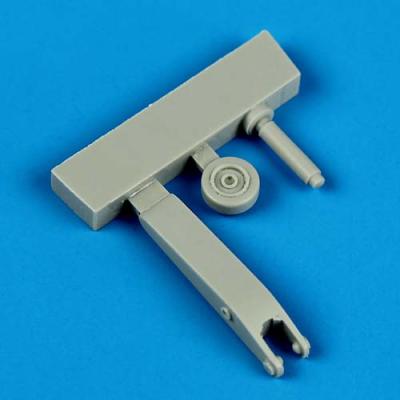
Quickboost has issued a replacement "tail wheel" for the Kinetic S-2 tracker. It really isn't a tail wheel, but rather a tail skid. The parts are three – a tail wheel, the skid, and the piston. It is well cast in Quickboost’s gray resin. You separate the parts from the casting blocks, sand the minimal attachment points, and assemble the wheel by adding the separate tire.

One thing to note in the comparison photos is how blob-like the kit parts are – almost no detail whatsoever. The kit part is molded as one piece, lacks any wheel hub detail, and will also need filling as there are definitely some sunken-in areas.

If you are building this kit, this part is a must-have! It is recommended, especially due to the low cost and improved detail. My thanks to Quickboost and IPMS/USA for the chance to review this excellent item.

Review Author
Rob Benson
Published on
Company
Zoukei-Mura
Scale
1/32
MSRP
$191.00

Many, many thanks to Mr. Hideyuki Shigeta for honoring me with the privilege of building the Super Wing Series He 219 Uhu (Eagle Owl) model kit for public review as an IPMS Reviewer Corps representative. I am deeply appreciative of the trust and confidence shown in me by both Mr. Shigeta and the IPMS Reviewer staff. I am delighted to report on the next stage of construction: the motors.

Motors

As described in my first review of the SWS Uhu, the construction is staged over 7 groups, or chapters. The first part of the instruction chapter concerns preparation of a pair of Daimler-Benz inverted V-12 motor look-alikes for later installation in the wings. As I expected, the part fit was excellent throughout. All parts runners were washed per modeling good practices, filling all my drying hangers, racks, and other available spaces in my laundry room. There was no perceptible mold release on the parts or on the plastic bags holding the part runners.