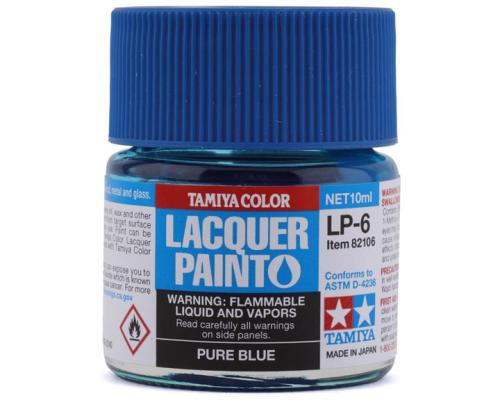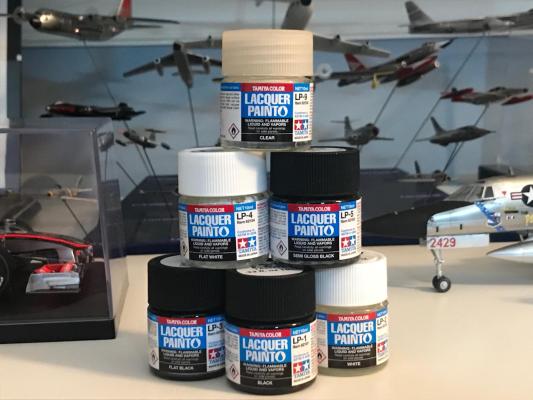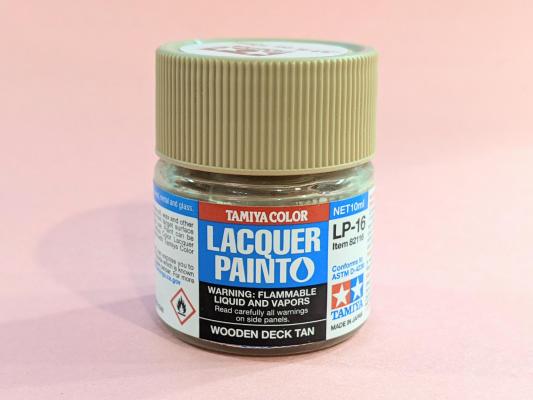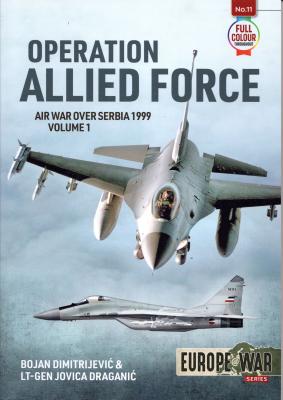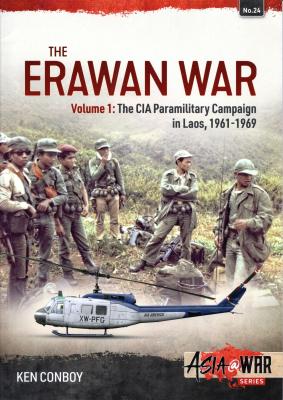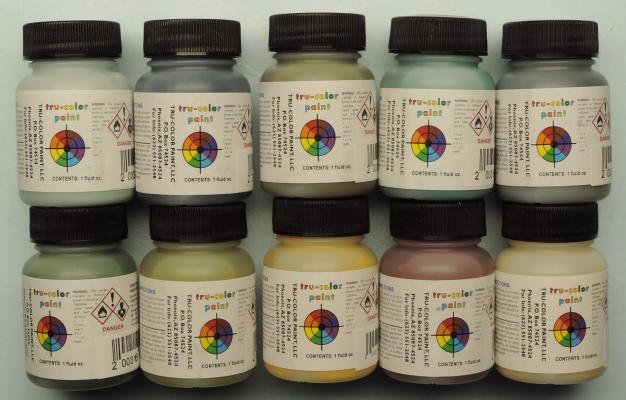
I can’t be the only one who has accidentally knocked over an open bottle of plastic cement while working on a model. The damage it does to your cutting matte can be pretty awful, but if it spills onto a sprue of parts or the model itself, it could downright ruin your day. Well, have no fear Tiger Werke has that issue solved, or at least has made it nearly impossible to happen again. Those fine folks have designed a resin bottle holder, for either a Tamiya or Mr. Cement bottle, to keep them upright and your cutting matts and model parts safe. The small resin block has two squares the perfect size for a variety of products, whether it’s glue or pigment or wash.
Prolific Ukraine-based ICM has apparently set its sights on the competitive acrylic paint market. First out of the gate is nicely packaged six-bottle paint set specifically catered to their new 1/35th scale release of a German Marder I based on the French FCM 36 chassis (see separate IPMS review here).
The box set comes with six bottles and a fold-out chart listing 77 colors and three varnishes, as well as a color swatch sheet. The chart compares the color range to the most popular current offerings, including AK Interactive, Tamiya, Humbrol, Vallejo, Gunze/Mr. Hobby, Testors/Model Master, RLM, RAL, FS, Revell, AKI Real Colors, and Citadel. The range being offered is broken into 60 basic colors, 6 clear colors, 11 metallics, plus 3 varnishes (gloss, matte, and satin).
Helion produces books on many aspects of Military History from the Late Medieval period through to the present day. Helion was established in 1996, and since then they have published almost 1,200 books, with 100 or more new titles coming out every year. The 'Africa@War' series covers African military history since 1945.
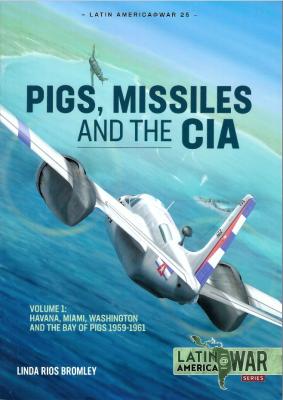
Stephen Edward Rookes is originally from Exeter in the UK, Dr. Stephen Rookes is a French writer and academic who earned his PhD from the University of Toulouse Jean-Jaurès, France. He specializes in the history of Cuban exiles and takes a particular interest in the CIA's covert operations in Central America and in Africa. This is his third instalment for Helion’s @War series.
Viewing the products and publications shown at the link provided below will be an aide to those reading this review.
https://www.migjimenez.com/en/308-the-weathering-aircraft
There are at least 50 publications listed. Some of the publications are available in various languages, the six publications below are in English. This website is a source for some of the AMMO products mentioned in the publications and well as the publications themselves.
This is a review of four of the new Acrylic Filters from AMMO by MIG Jimenez.
- A.MIG-0802 Night Black 15ml
- A.MIG-0816 Sand 15ml
- A.MIG-0821 Sand Grey 15ml
- A.MIG-0828 Rust 15ml
These filters are produced using a innovative formulation, the Acrylic Filters can be reworked or eliminated simply and easily with water during the extended dry time, each filter will dry completely in 24 hours. The filters can also be applied by airbrush. The range consists of 30 colors currently. The filters can even be mixed with each another or tinted with other AMMO acrylics. The acrylic filters can be diluted and cleaned with water.
I used all the filters on some finished and in-build kits and the effects and application were awesome. The effect once applied is subtle and is very easy to use. I can see me getting a lot more of these.
The AMMO by Mig Jimenez series of The Weathering Magazine issues address all modeling genres and focus on painting and weathering techniques for scale models and figures centered on their products. Including great photos accompanied by thorough step-by-step processes in each article, they give builders of any skill level the chance to recreate these effects and build their skills in doing so. Each issue focuses on a specific theme and this time around we look at the effects of fire and explosive forces on the pieces.
After an introduction by editor Sergiusz Pęczek , the articles open with "Ukrainian Rebel" by Kreangkrai Paoiinda. He takes the Trumpeter 1/72 T-72B Mod 1990 MBT and with some aftermarket parts and AMMO´s products recreates anti-tank explosive side hull damage. The descriptions are expansive as he modifies parts to show the damage and the extensive use of pigments and washes to show the ash and soot left over after the road wheels have burned off.
Introduction
Necessity is the mother of invention. Once the combatants in the Great War settled into the trenches, the Italians faced a desperate shortage of heavy artillery. To help fill this need, Demetrio Maggiora invented a short range 320mm (12.6 inch) mortar powered by acetylene gas. The acetylene was generated in canisters like a miner’s lamp. The gas was transferred into a spherical combustion chamber where it was ignited to launch the projectile. The mortar was muzzle loading and had a very short range – just enough to reach the enemy trenches. It was first used in the Second Battle of the Isonzo in 1915 and was only in service for a short time until more capable weapons became available.
Review
Vargas Scale Models from California USA specializes in interesting and unique subjects from World War One and the Interwar periods in 1:35th scale. All are CAD designed and 3D printed in resin. Sales are direct to the modeler on eBay.
Artillery has generally been known as the King of Battle for quite a long time and for good reason. The ability to reach out and touch your opponent on a battlefield is an obvious advantage. And if you can do that first, further, with more power than your opponent there’s a strong chance your forces are going to win the day. Battlefield artillery has come a long way since the United States has been in existence, and the US has found itself at the forefront of that development. This book gives that history a quick glance in both text and pictures.
Ravi Rikhye is an international affairs and military historian with a remarkable academic background. He holds seven master’s degrees and is currently working on his doctorate. His career has also included the completion of more than thirty books. For the first offering in the Helion and Company’s new Asia@War book series, Rikhye has authored a two-part history of the 1971 Indo-Pakistani War. This review looks at the first book about the Indian Military Intervention in East Pakistan (now known as Bangladesh). The second work addresses the contemporaneous Showdown in the West (along the current Indo-Pakistani border).
Thanks to Osprey Publishing & IPMSUSA for the review copy!
Michael (Mike) McNally, a native Londoner, has authored ten books for Osprey – this is his latest. Mike has written about the battles of Aughrim, Boyne and the Irish Brigade in French service. He is working on German colonial campaigns during WWI, Irish military history and the Marlborough campaign.
Sean O’Brogain is a well-worked artist and illustrator for a wide variety of clients, including the National Museum of Ireland. He resides in Donegal, Ireland.
You get a 9.75 X 7.25 inch size paperback book that follows the usual pattern of Osprey Campaign books – well illustrated in color, chock full of images and maps, easy to digest, and thorough enough to understand the conflict. Mike McNally follows this pattern perfectly. There are the usual eight sections plus Bibliography and Index: