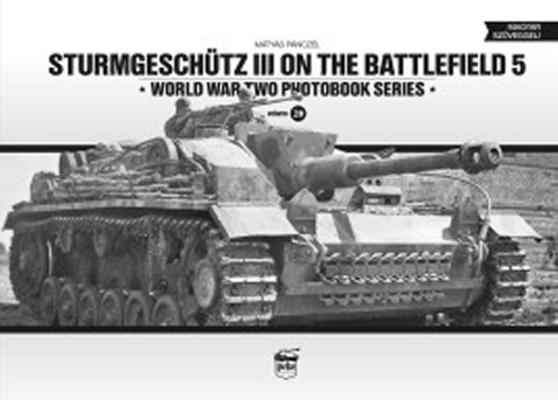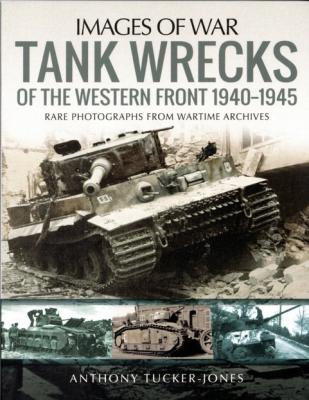
Given the massive interest surrounding the Nazi armed forces during World War 2, it isn’t surprising that publishers want to produce books that cover the entirety of the military vehicles used by the Germans, in one volume, at an affordable price. And for a reader interested in this topic, it might be very useful to have a handy guide to said vehicles all in one volume. Over the years, there have been a number of such tomes published. I myself have one from 1969 titled “German Tanks of World War II: The Complete Illustrated History of German Armored Fighting Vehicles 1926-1945” edited by Peter Chamberlain and Chris Ellis. However, to do it right, is surely a daunting challenge to any author? And what, exactly, is “doing it right”?
If you are a fan of the M1 Abrams, which has now been in service for over 30 years, David Doyle satisfies your visual needs with this book showing images of the XM-1, M1E1, M1A1, M1A2 SEP as well as some variants in between. For Abrams fans and modelers alike, the photographs provide a wealth of detail for the tank from the prototype through the M1A2 variant. The author provides many of the photos, but there are also plenty taken by the military that shows these tanks in action. Overall, this is a great visual history of the tank beginning with photographs of the XM1 in 1976 and concluding with the M1A1 and M1A2 in 2017.
Monowheel Background (from the instructions)
Lois & Co. was a British industrial combine, a group of businesses manufacturing military and sporting bicycles, motorcycles, iron castings, machine tools, and hard chrome process. It was founded by Spencer Lois, who had a passion for new innovative ideas, in the city of Birmingham.
Motor bicycles were added to bicycle products in 1910. The Lois & Co. Monowheel Mk.I was exhibited at the 1913 Olympia Show, London for the 1914 season. In November 1916 Lois & Co. launched their first military monowheel after a big contract with the British Ministry of Armaments.
When I was around 10-11 years old I got into a small scale armor kick. The local shop carried Airfix kits and I built a lot of their kits at the time. The first time I built the M3 Half Track it was a MPC release in their Battle of the Bulge Historama kit.
Fast forward 45, cough, years later and Airfix is re-releasing many of their kits under their Vintage Classics range. The kit appears to be the exact same plastic first released in 1966 including the 1 Ton Trailer. The kit includes 54 parts molded in an OD plastic. There is a bit of flash but what would you expect from a set of molds almost older than me. The kit includes some nice detail, a driver and one of the nicest small scale .50 caliber machine guns. Decals are included for an M3A1 during Operation Overlord. More about them later. The color scheme is shown in full color in the instructions. Other than that change the instructions look like they did when I first built it.
Meng exploded on the scene several years ago and continue to produce very high-quality kits of a variety of subjects. This kit focuses on the Israeli modified M-60 Battle Tank known as the Magach 6B. M-60s began service with the Israeli Army with the 1973 Yom Kippur War and most of the armored force was equipped with M-60 A1 and later models. The Israelis continued to upgrade their fleet to meet the changing threats on the battlefield. These vehicles have the low profile commander’s cupola, an upgraded engine, and armor package as well as an upgraded fire control system. Academy has provided kits of the Magach 6B and 7C, so it will be interesting to see which direction Meng takes with this kit.
The Vehicle
The T-72 series was the most produced post WW2 tank. It is designed to have a low silhouette and smaller hull than most modern tanks. The crew is only three soldiers, with ammunition loading being done automatically. Due to the cramped crew positions, the maximum height of a T-72 soldier is 5 feet 9 inches.
The T-72 gun is a 125 mm capable of firing HEAT and APFSDS rounds, as well as ATGMs.
There are 40 different countries who have significant numbers of T-72s. In spite of an arms embargo, Iraq had 1000 T-72s in 1990. In 1996, this number had reduced to 375
The Kit
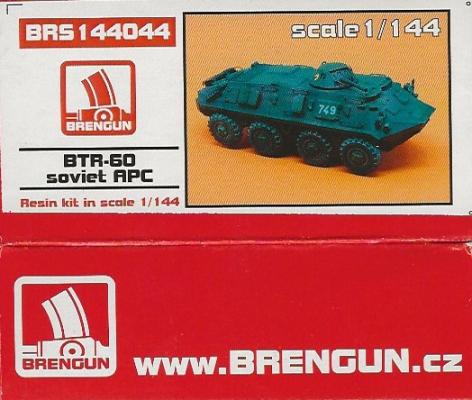
This kit is all resin, with no PE or other media parts. The markings schemes are for 4 different armies, Czech, Polish, North Vietnam and Soviet. The Soviet markings require no decals.
Here is another caricature tank from Meng Models. These models are obviously targeted at kids, but many of us “serious” modelers are finding them to be fantastic “breaks” from our usual in-depth subjects. I am seeing them on the contest tables as well.
The kit comes in a strong end opening box with a colorful painting of a British Matilda. All the sprues, instruction manual and tiny decal sheet are located within a single plastic bag.
The Vehicle
The Renault FT (the 17 was added after World War I) was the first modern tank to reach production. The big advance over previous armored vehicles was the armament in a fully rotating turret, which allowed the tank to shoot without maneuvering. There were over 3,000 FTs built in France during the war, and there were 950 M1917 light tanks built in the United States. None of the US built tanks were completed in time to see action in the war, but France lent 144 FTs to the US Army in mid-1918.
There were many users of the FT, including Afghanistan, where 4 were discovered by US Forces in 2003, Belgium, Brazil, China, Croatia, Czechoslovakia, and 19 others, including Nazi Germany.
The recent re-release of Airfix's catalogue of 1/76 AFVs has generated a bit of a buzz among Airfix fans, many of whom grew up building these little gems as lads. Now, as adults, these kits bring back memories of the simpler times with the re-boxing of these little beauties. I never had much of an opportunity to build Airfix kits in my youth, I don't remember them, or their many American boxings being available in my local hobby shop. However, coming back into the hobby as an adult, I've really taken a liken to many of Airfix's recent offerings, as well as a few of their golden oldies.
Overview
Panzer Rollen provides an insightful look into the workings of the Military Intelligence Service that was so invaluable in shaping both the strategy and tactics of the Allied forces during the Second World War.
Captured German field manuals translated and published by the US Military Intelligence Division are crucial in offering a perception of the intelligence provided to Allied fighters. The two volumes gathered together in this publication were originally published by the German War Office and therefore are particularly valuable, as they also provide a rare glimpse into the methodology underlying the operation of an armored division from the German perspective. Comprising of two supplementary field manuals, this book is essential reading for any military history enthusiast.