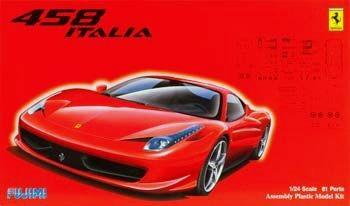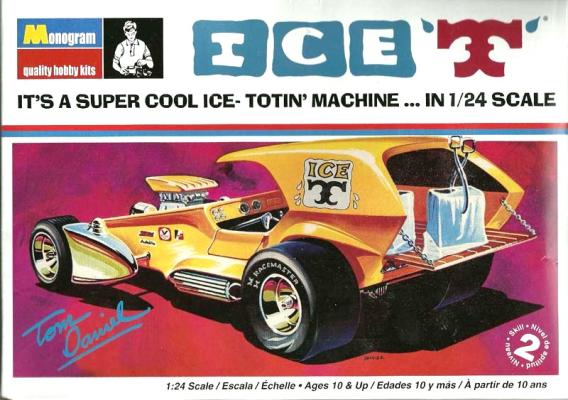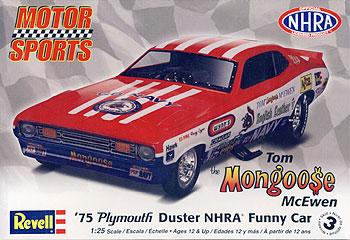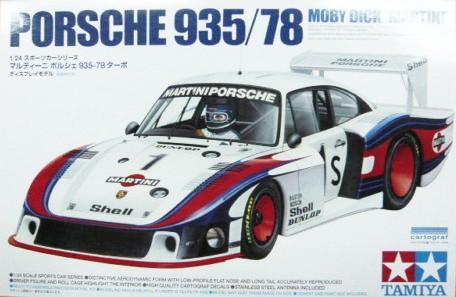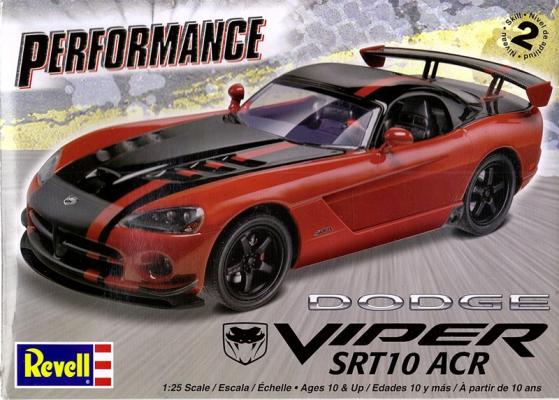
The Dodge Viper SRT10 ACR (which stands for American Club Racer) is the latest Viper from the Dodge Boys built for hard core street and race enthusiasts. The ACR comes equiped fron the factory with a built for racing aluminum 8.4 litre V10 rated at 600 horse power. Additionally it comes equipped with Brembo discs brakes all around the size of pizza pans; creature comforts include a 310 watt 7 speaker sound system and a 220 MPH speedometer…all for a MSRP of $110,055. This Viper ACR is no longer in production but it is certain to be a collector’s item in the future.
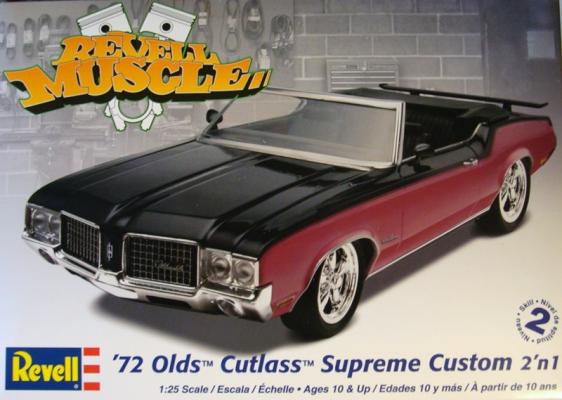
My latest kit for review is the new Revell’s '72 Oldsmobile Cutlass Supreme. Upon opening the box, the first thing I noticed was the very clean molds. The mold seams on the body were scarce and very easy to clean up. Moving on, the kit gives a few different options to build the car. First off is the choice of an automatic or manual transmission (I'll be building the manual version) which also includes an extra set of floor pedals, different center consoles and shifter options.
The Kit
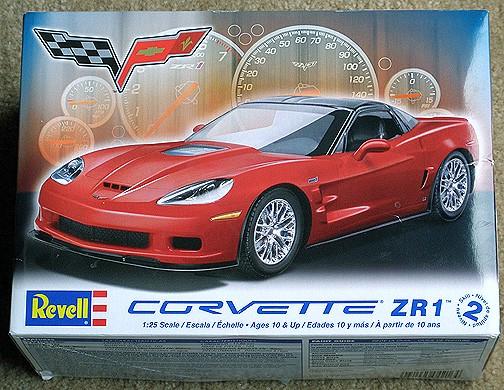
Revell's new release of Chevrolet's uber-Muscle Car is molded in white plastic, and is a modification of their basic Corvette mold, with extra parts included specific to the ZR1. A little reference to part numbers is needed because the regular Corvette C6 ones will fit on the ZR1, but I’m not sure things like the exhausts and headers would match up if they were interchanged.
The build is straightforward with no vices, though a little parts cleanup helps things fit together better. The four-lobe Eaton supercharger isn't a great fit to the engine block unless the top of the block is sanded flatter along its seam. On the plus side, the headers have real locating pins to fit into the block, not just nubs which sit in shallow depressions.
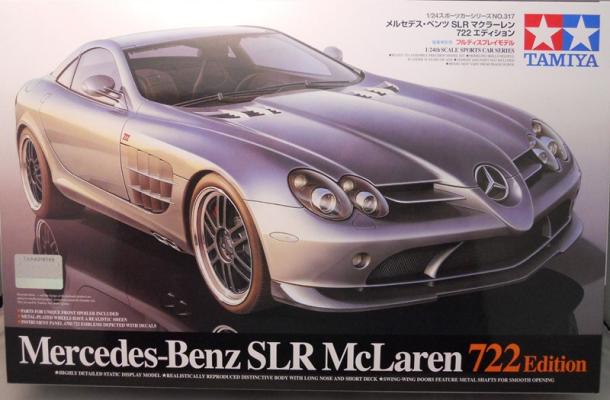
Subject:The Mercedes-Benz SLR McLaren was a supercar designed to compete with the world’s greatest sports cars, such as Ferrari and Porsche. The SLR series, which means "Sport, Leicht, Rennsport" (sport, light, racing) was first designed by M-B in the 1950’s. This modern version was a joint project between M-B and McLaren Automotive, the championship racing team who used M-B engines in their Formula One Grand Prix race cars. Like many other recent retro style cars, many design elements were classic vintage Mercedes trademarks, such as the long front hood and the gull-wing doors hinged at the top. The new SLR was launched in 2003. This 722 Special Edition, of which only 150 were to be built, was launched in 2006. The differences were a more powerful engine, new front splitter, different wheels and unique badging. Only 150 were produced, all silver. The name honors the famous M-B race victory in 1955, at the Mille-Miglia 1,000 mile open road race across Italy.
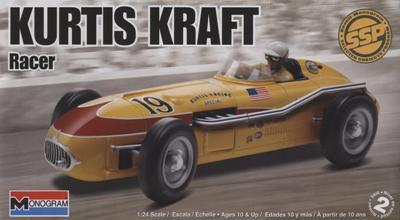
The Kurtis Kraft company built some of the first specialty race cars of the post war era. Started by Frank Kurtis in the 1930s, the company would go on to build race cars ranging from midget racers to the “big cars,” that raced the grand prix circuit which included The Indy 500. This model represents a 1955 Kurtis Kraft 500C model powered by a 255 ci Offenhauser engine producing 400hp. These cars could hit 170 mph. Nine of these cars were built. In fact, between 1950 and 1955 Kurtis Kraft cars won four of five Indy races.
Revell has been kind to auto modelers in re-releasing past Monogram car kits that have been out of production. This time the reissue is of the ’48 Ford Woody with Monogram’s name on the box top and on the instruction sheet. With 127 parts molded in white plastic, clear plastic and a sprue of chromed parts you can only assembly a stock Woody. You’ll use all the parts with none left over, except for a few decals.
The Toyota Prius has made its way from a government incentive driven experiment to a very successful mainstream product offering. As such it really deserves to be noticed for its place in history. The Prius body styling and the kit subject matter in general, however, may only appeal to the Prius enthusiast.
The Fujimi kit represents the 2009 model year of the 3rd generation Prius and is an all new kit. White, clear and chrome trees are all individually bagged. Also included are soft rubber tires, a small decal sheet and window masks. Part count is just over 80 pieces and the build up is fairly simple. The result is a curbside model with no open elements.
The Kit
The kit is molded in a white styrene and also has a generous sprue of chrome parts, and rubber wheels. There is also quite an arsenal of weapons included, (M-16, Thompson sub-machine gun, M1, shotgun, pistol, and a grenade launcher). I guess Sheriff Rosco always wanted to be on a SWAT team. This kit depicts the Dodge Monaco police car and is a very good representation of that vehicle. It also includes a nice engine that could be detailed if you wanted to. One problem is that the hood of the car has no hinges to open so you will have to just lay it next to the kit to show off the engine compartment.
The Build
I don’t normally build car models but my son does, and he especially likes vehicles from different movies and TV shows. When he saw this up for review he wanted it for his collection, so I agreed that we could build it together.
Upon opening the box you will find 9 baggies containing 182 parts, one tree of P.E. parts, a couple of small sheets of decals, a 10 page instruction booklet, and a decal placement flyer. Parts are molded in three colors; black, red, and chrome. The chrome parts have an aluminum tint to them, making them much more realistic and appealing to the eye than the typical “chrome” parts found in most car models.
Kit instructions
Before beginning this project it is important to study the instructions and illustrations, and become familiar with the part number and paint color codes. Having given that admonition, once these codes and the associated symbols become familiar to the builder the instructions become very clear and easy to follow. The illustrations are well drawn and precise, with a sense of perspective that aids the builder in part location and placement.
Background
In 1962 and 1963, Ferrari produced a small number of cars that were essentially racecars for the street. FIA rules at the time required that at least 100 examples of a car had to be built in order for it to qualify for racing in the GT class, but with a little sleight-of-hand and a few other tricks, Ferrari managed to get by with building only 39 vehicles in a couple of variations. These cars have gone on to become legendary and highly desirable, to the point where collectors today will pay several million dollars to get their hands on one. Over the years, several kits of this vehicle have been produced. I still have a 1/24 scale slot car that I can remember my Dad purchasing and building in the mid-1960's, and I also have a kit (still unbuilt) that I purchased over 20 years ago. Fujimi has recently brought out an all-new tooling of this car in 1/24 scale; let's take a look at it.