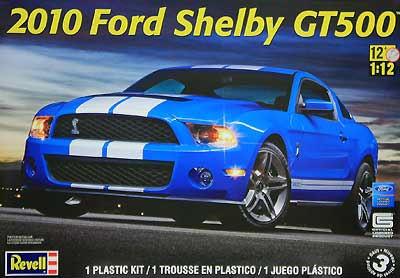
In 1979, my teenage dream came true when I bought my third car (or I should say my Dad did after I pestered him to death), a 1965 Mustang coupe. When I was growing up, my folks bought two of these beauties brand new, a 1965 convertible and 1968 California Special. The Mustang was firmly rooted in my mind as one the coolest cars I’d ever seen. I had to have one. A testament to my Dad’s wisdom, my Mustang wasn’t the hotrod my friends had with their 289 and 302 V-8s. Mine was a straight six 200 cid with diamond tuck interior and a cheesy baby blue paint job. In retrospect, he probably saved me from getting into a lot of trouble. Over the course of the next two years I restored the car to its original factory condition, down to its Philco AM radio. As nice as it turned out, I really always wanted a Shelby. Even then, Shelby’s were coveted collector cars well out of a high school kid’s budget.
History Brief
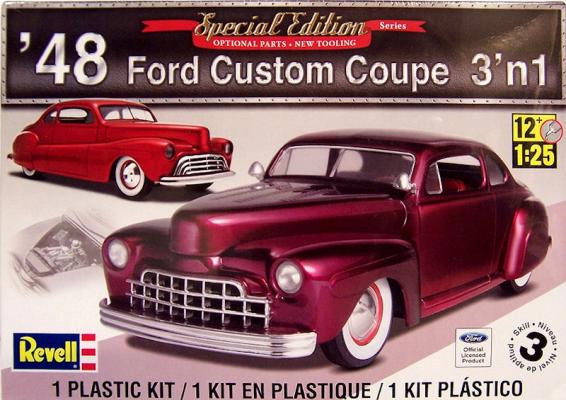
The 1948 Ford was the company’s last model to be produced using a pre-WWII design. Distinctive “fat” fenders helped make it an instant favorite with custom builders, who tended to chop the top and add fade-away fenders and tunneled headlights. A modified Ford flathead V-8, dual carburetors, and dual exhaust was the rage.
The Product:
Kit features newly tooled optional custom parts. These include four grills with separate surrounds, two bumpers, two hubcaps, three taillights, two hoods, fade-away side panels, spotlights, fender skirts, plated metal exhaust tips, printed whitewall tires, chrome plated parts, and decals with colorful custom graphics. Total parts 136, skill level 3.
The Build:
The Subject
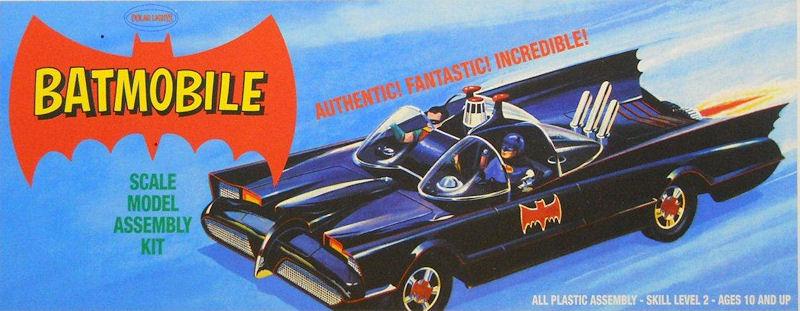
The Batmobile is the car of the fictional comic book superhero Batman, an iconic American character. The character of Batman first appeared in DC Comics’ Detective Comics #27 (May 1939). By 1940, Batman proved popular enough to spin off into his own dedicated comic, Batman. In the years since, there have been other comics, books, radio shows, television shows, and films featuring Batman and his related characters and equipment. The car used by Batman, called the Batmobile, appeared in the very first stories in 1939 and has evolved over the years. Perhaps the best known version is the vehicle that appeared in the 1960’s hit TV series Batman, which is the subject of this kit. Designed specifically for the TV show by famous customizer George Barris, the car was a heavily modified former Ford Corporation concept car called the Lincoln Futura.
Looking at the Box
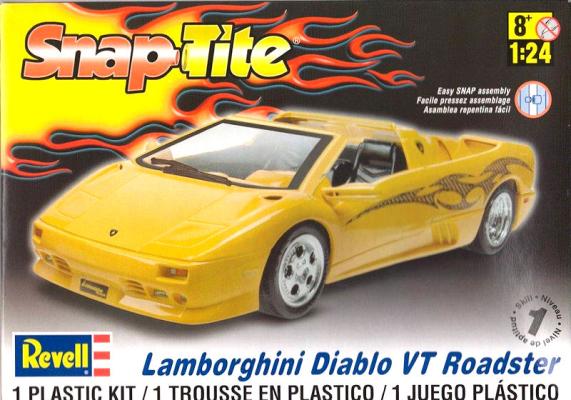
Austin (age 7): I think the kit looks pretty neat and stuff, awesome. I like the pictures on the sides. It was made in 2011 by Revell Snaptite.
Rob (actual age 53, behavioral age debatable) : The box is 9.5 x 6.75 x 4.5 inches and is lavishly illustrated. The Diablo is described as “a wild and fast mid-engine exotic sports car with four-wheel drive.” I wince at the thought of working on a 5.7 liter engine with 48 valves. I guess if you can afford one of these cars, you can afford a mechanic and the insurance.
Kit Description:
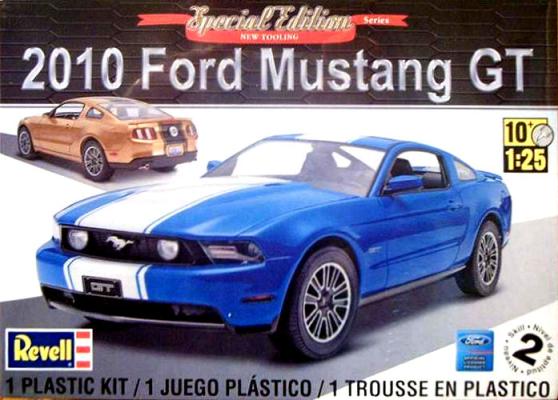
1/25th scale, 117 pieces, molded in white, clear and chrome; newly tooled 2010 body and wheels with retooled 2005 Mustang interior and chassis, decals for three racing stripe versions.
History and Research:
Who in this world is not familiar with Ford’s iconic Mustang? Ford’s 2010 Mustang is the first restyle of the 2005 retro-styled version of the brand. The 2010 restyle further enhances the car’s aerodynamics and aggressiveness. Today’s Mustang remains the oldest American pony car in continuous production, 47 years to date.
The Build:
What’s in the Bag?
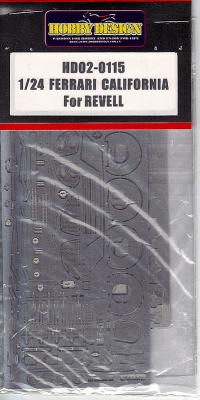
Hobby Design is a Chinese manufacturer with an extensive line of resin and metal photo-etch, window masks, and other up detailing add-ons for cars and motorcycles.
This review centers around Hobby Design’s set of PE parts for Revell’s Ferrari California. Included on the two seperately packaged and Mylar protected frets are detail parts for the engine bay, interior, and the car body itself. Some of the more intricate pieces include a 4-piece grill insert that replaces the as-molded center section of the grill. Only the outside portion of the Revell grill is used. Other exterior pieces, of course, include various Ferrari logos and scripts as well as the rear exhaust escutchions. Of note are the 3-piece windshield wiper arms and blade assemblies included in this set.
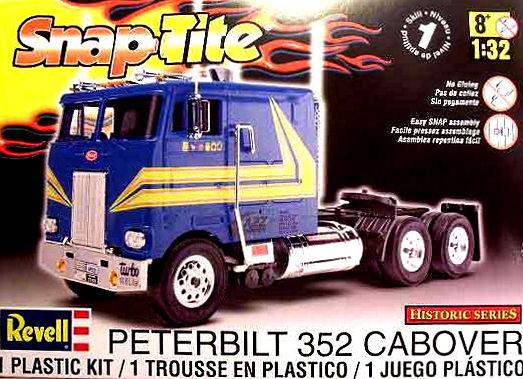
This kit is molded in light blue, black and chrome parts. It has 59 parts and is being marketed as “snap tite.” The kit has no engine, but the oil pan and the transmission are present.
The fit is good for the most part. I only had trouble with the chrome parts fits. I was not able to get them to snap, and some of the chrome parts (like the tanks) have sizable gaps.
I put together the chassis and wheels, then checked for misalignments. I only had to add a small shim to one of the suspension parts to get all the tires to touch the ground. I painted the chassis/wheels assembly flat black and the cab in “true blue.”
This is a good kit for a kid getting into the hobby, or a grown-up who just wants a break from more complex builds. I had fun putting this kit together and it was a great break from other projects. The only downside is that some of the chrome parts didn’t fit well, but it is nothing that some modeling skills couldn’t overcome.
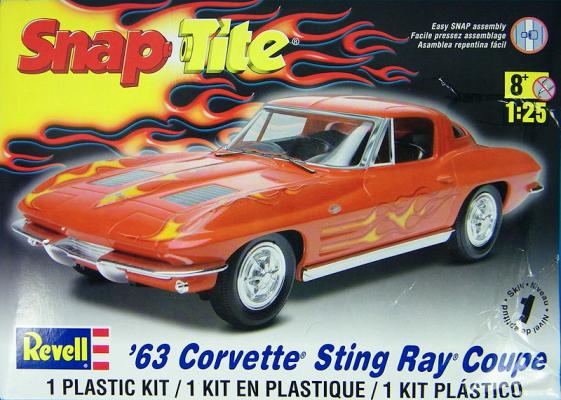
Chevy’s classic Corvette was first offered in a hard-top version in 1963, and that model-year’s radical shift in design style can still be seen in the generations of ‘Vettes which have since followed. The ’63 Sting Ray Coupe is Revell’s latest addition to its Snap-Tite Corvette collection, and this one surely does not disappoint young modeling hands. Camden (age 6) built this review sample in less than an hour during a visit to a local pediatric urgent care facility the night the kit arrived, and we can definitely say this was one of the best-behaved snap kits we’ve seen in a while.
The kit consists of 5 sprues of parts, the candy apple red body, the clear window insert, 4 vinyl tires, steel axles, a couple of self-tapping screws, and a sheet of peel-and-stick decals. Surface detail is both raised and recessed, as appropriate, and appears to lend itself well to those who actually wish to paint the finished product.
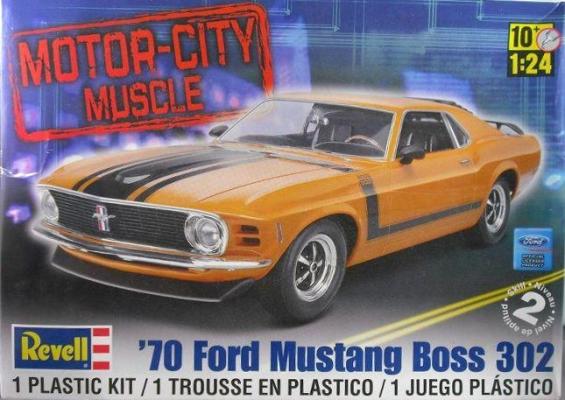
Recently Revell has been reissuing some of the older Monogram titles under the Revell name. This time around they have chosen to bring back the 1970 Ford Mustang Boss 302, under their Motor-City Muscle line. With this kit you have 2 choices of building it, stock, or a modified Trans Am car, with only 98 parts total. Parts are molded in white, clear, and chrome plated.
The instruction sheet is 10 steps, 9 of the actual assembly sequence and one for applying decals for either version the builder wishes to choose from.
The first step in the instructions deals with the stock engine construction, which is what I chose for the built up model.
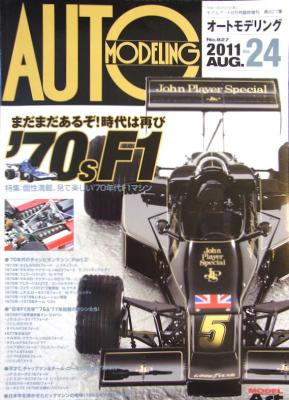
This is my first experience with Model Art publications. This issue is dated August 2011 and titled Model Art “Auto Modeling” No. 827, Vol. 24. Its main focus is on the spectacular race cars of the ’70’s Formula 1 series. The first few pages are an index of topics and noted cars of 1973-78 in succession. The first noted car is the ’73 Tyrrell Ford from that year’s championship, driven by Jackie Stewart. The kit supplied and meticulously reviewed is a Tameo Kits 1/43 white metal kit. It’s not a common scale for autos, as most are 1/24, 1/25, 1/20, or 1/12. This is the first offering I’ve ever seen in this scale for autos that is a complete white metal cast kit. The next 40 pages cover the same format of various kit offerings from Tamiya, Studio 27, Hasegawa, and E.Jan conversion kits. Each includes detailed pictures of kit components and steps in assembly. Pages 43-50 cover specs on the vehicles, including blueprint-type drawings.