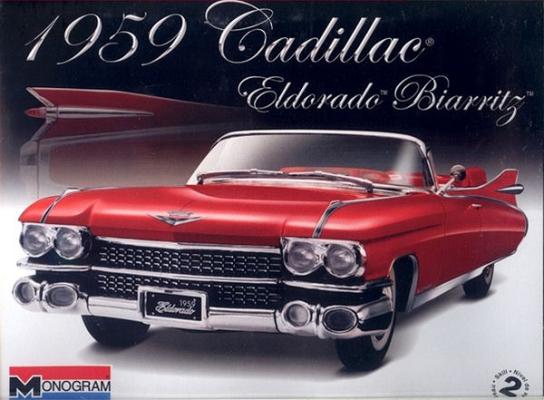
The 1950’s were a decade of joyous excess in automotive design. After the austerity of the Great Depression and the deprivations caused by World War II, Americans were excited and optimistic about the future and America’s position in the world, and our cars showed it with increasingly powerful engines, multi-tone paint jobs, acres of gleaming chrome, and space-age tailfins. The pinnacle of this expression came in 1959, when General Motors unleashed its latest automobile designs. Every model, from the lowliest Chevrolet to the poshest Cadillac, sported tailfins the likes of which would never be seen again. Of these, the Cadillac fins, reaching nearly as high as the roof of the car, have come to symbolize the best (or, to some, the worst) of what that era offered.
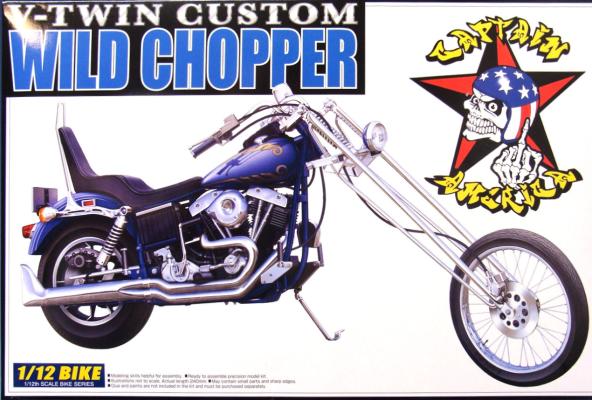
This is my second encounter with an Aoshima kit. The first was many years ago with a 1/24 Nissan Skyline. This latest offering from Aoshima is a nice change of pace, as it’s an American subject in the form of a traditional chopper motorcycle. Though MRC Academy is listed as the distributor, I was unable to find anything on their site regarding Aoshima products. I did, however, find two of the upcoming Aoshima motorcycle releases on the Dragon Models USA website, as they are listed as the US distributor on Aoshima’s site. (Review Administrator’s Note – distribution of Aoshima models changed from MRC/Academy to Dragon Models USA while Mike was building the model.)
History
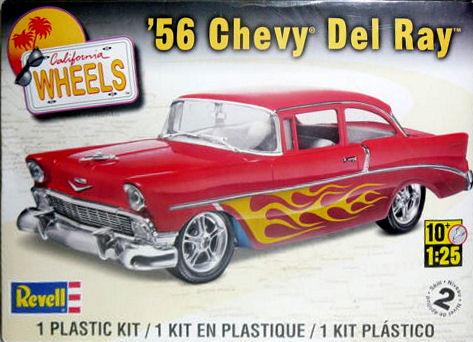
From 1953 to 1957, Chevrolet had three full-sized automobiles it was selling to the public – the bottom of the line 150, the mid-range 210, and the top of the line Bel Air. The 210 model was Chevrolet's bestseller up until 1955. It offered the widest choice of body styles in 1953, including a convertible, Sport Coupe hardtop, two- and four-door sedans, and a station wagon.
However, in 1954, the 210 convertible and hardtop were dropped and a deluxe model called the Del Ray Club Coupe was introduced. This model came factory-equipped with interior furnishings found on higher-end models like the Bel Air. Drivers could enjoy upgrades such as padded vinyl seats, a lighted glove compartment, two door armrests, and carpeted floorboards. The cost of the Del Ray was now within $100 of the Bel Air with its luxury and premium trim and it never achieved the sales Chevrolet had hoped for.
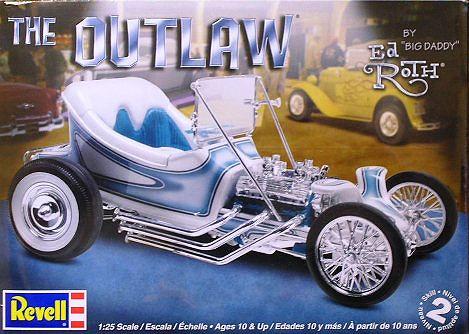
Ed “Big Daddy” Roth was one of the greatest hot rodders of all time. Starting in the early1950s, his customs and show cars have become the stuff of legend. The Outlaw was his first use of fiberglass and, when it hit the car show circuit in 1960, it became an instant sensation. Thanks to Roth’s deal with Revell, the Outlaw lives on along with many of his other creations. Revell has seen fit to release it once again; let’s take a look at it.
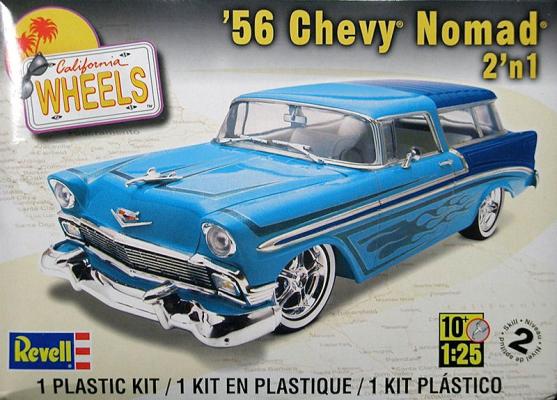
1955 was a milestone year for Chevrolet, with the introduction of an OHV V-8 and all-new styling, and a new wagon in the line – the Nomad 2-door hardtop. The follow-on 1956 Nomad had styling and trim more closely allied with the other cars in the Chevy line and had more pizzazz than the ’55, too.
Revell has re-issued the 1997 Monogram kit in its 2’n1 series, featuring additional customizing parts – wheels, chrome valve covers, alternator, low-profile tires, larger disc brakes, and chassis/suspension parts for the custom build, along with a nice decal sheet with lots of trim and flames.
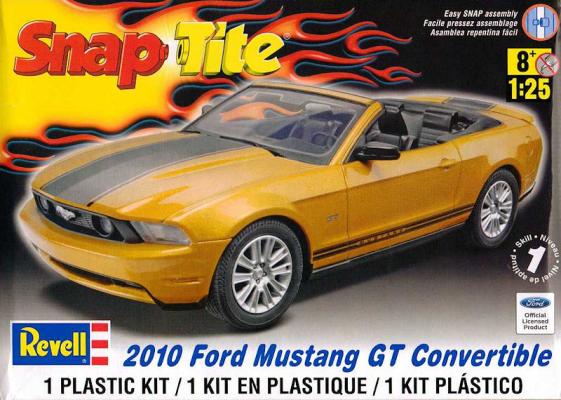
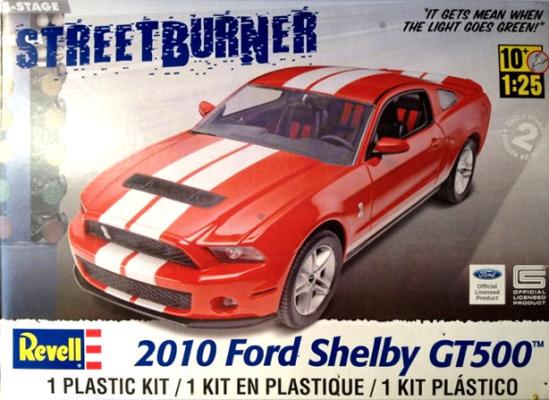
A throwback to the ’64 original design, the 2010 Mustang captures the classic lines of the original “pony car” in contemporary form and is the subject of Revell’s recent SnapTite series release. As with their ’63 Corvette (reviewed previously), the 2010 Mustang is a beautifully engineered kit for novice and veteran modelers, alike. Once again, at the hands of 6-year old Camden, this review sample went together flawlessly in exactly an hour shortly after being discovered on our doorstep.
The kit consists of 9 sprues (3 black, 2 goldenrod, 2 chrome, 1 clear, and 1 transparent red), the goldenrod-colored body, black interior tub and chassis, 4 vinyl tires, steel axles, 4 self-tapping screws, and a sheet of peel-and-stick decals. Surface detail is both raised and recessed, as appropriate, and appears to lend itself well to those who wish actually to paint the finished product.
Introduction
If this subject looks familiar to you, it should. This is the smaller brother of Revell’s 1/12 scale monster I reviewed a few months ago. If you want to know my history with the Mustang, please see that review. In short, I’ve been a Mustang fan since I was a kid, especially Shelby Mustangs. Yes, this is the car that, when it was introduced as a 1964½, started the “pony car” craze that’s been carried on since by the Mustang, Camaro, and Firebird. The Shelby name needs no introduction to car fans and most anyone else. Shelby Mustangs have established a race-proven record of performance. Combine that with basic good looks and the now traditional double racing stripes and you’ve got an unmistakable classic.
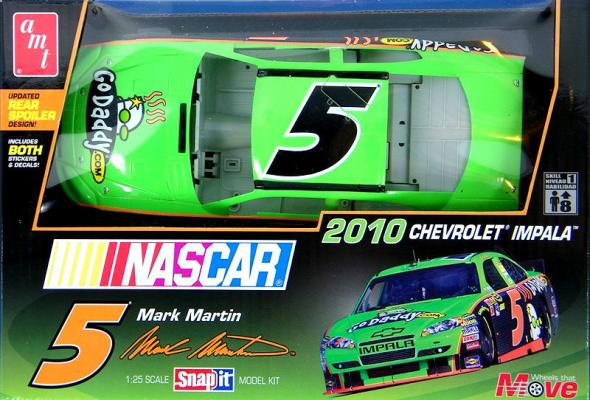
- Stock # AMT705 - #5 Mark Martin - $24.99
- Stock # AMT706 - #24 Jeff Gordon - $24.99
- Stock # AMT707 - #48 Jimmie Johnson - $24.99
Introduced mid-season 2007, NASCAR’s “Car of Tomorrow” (COT) hit the track in an effort to improve driver safety, decrease operating cost, and level the proverbial playing field between the monster multi-car teams and the smaller race teams competing in the Sprint Cup Series. Although received with skepticism and initial contempt by some drivers, the “wing thing” proved to be a more rugged, reliable, and measurable machine than its predecessor. With COT’s arrival, manufacturer’s body styles settled in around 4 core models: Chevy Impala, Ford Fusion, Dodge Charger, and Toyota Camry.
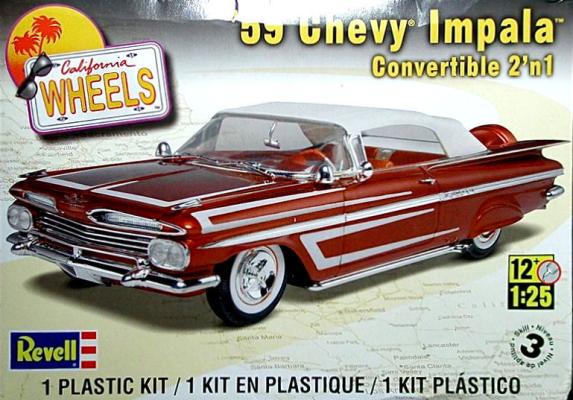
The final creation of the legendary designer Harley Earl, the ’59 Chevrolet caused a big “Wow!” reaction when it was introduced – the total redesign sported a long, low hood, and tail fins about as appropriate for an aircraft as a car. Automobile enthusiasts were impressed with this total metamorphosis, particularly since the predecessor ’58 Chevy had all softly-rounded corners and a jellybean look.
Revell’s kit is a re-issue of the 1993 Monogram offering, but the “2 ‘n 1” boxing means it now includes customizing parts such as lake pipes, a tubular grille, spinner hubcaps, fender spotlights, and decals. The continental kit and fender skirts are still included and can be used on either the custom or the stock version.
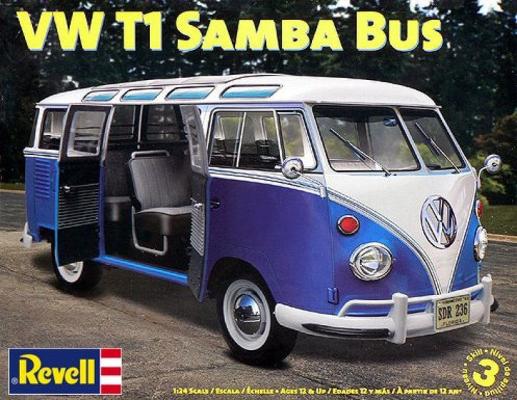
In 1950, Volkswagen brought out a vehicle that, like the Beetle before it, would become an icon of the 1960’s – what we now know as the Micro-Bus. It was available in many different versions over the years: panel vans, pop-up camper vans, and even as an open-bed pickup truck. But one of the most popular was the Samba Bus, also knows as the 23-window van due to the large number of windows. There have been a number of versions of this vehicle in kit form over the years; let’s take a look at the latest one from Revell.
The kit is molded in white, with chrome and clear trees as well. Four vinyl tires and a large decal sheet round out the list of parts. All engraving is crisp, and there is no flash to speak of. Seams are fairly light and easy to remove.
The instructions are a 12-page booklet of clearly-drawn line drawings. Parts are named and numbered, and there are numerous paint call-outs that appear to be fairly accurate.