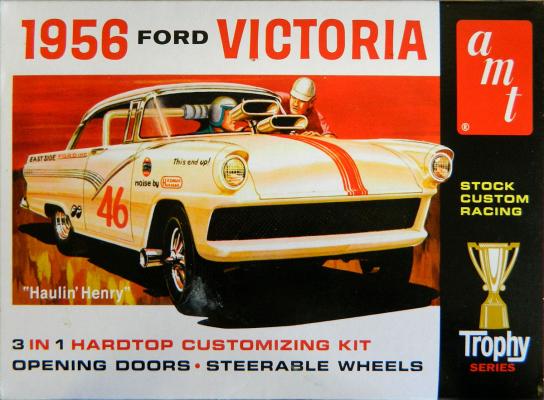
This ’56 Ford Victoria was originally issued by AMT in the 1960’s, then re-released several times after that. Even with Round 2’s mold clean-up process, I have never encountered so much flash on a model before. Literally, every piece had excessive flash that needed to be cleaned off prior to fitting and painting.
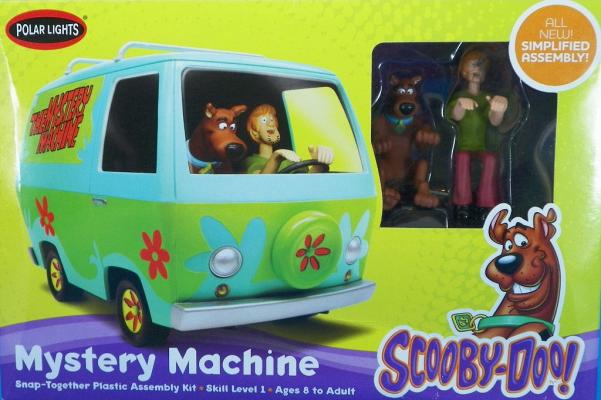
Once again, Round 2 Models’ Polar Lights brand brings modelers (young and old alike) another great classic TV subject – the Scooby-Doo Mystery Machine, complete with everyone’s favorite mystery-solving K-9 and his best friend.
Re-released and touting “All New! Simplified Assembly,” the Mystery Machine comes molded in black, turquoise, and clear plastic, and is accompanied by steel axles, a full-color sticker sheet, and pre-painted Scooby and Shaggy figures.
Assembled in under 30 minutes by 7-1/2 year-old Camden, the kit’s design is simple and fit is pretty good, although he did need an assist from large hands to snap in the clear windshield piece and a couple of drops of super glue to hold the wheels onto the axles.
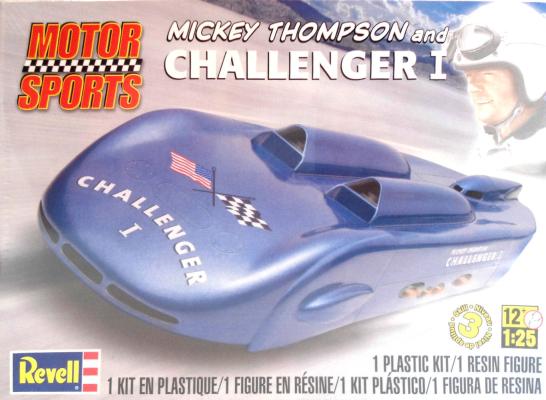
Back in 1960, I remember a guy named Mickey Thompson setting the land speed record of 406.6 mph at Bonneville Salt Flats. He did this feat with one of the most original cars ever seen. This was the Challenger 1. It was powered by four supercharged Pontiac engines, each powering a separate wheel. I remember at the time hoping that someone would make a model kit of this car. Well, Revell did back in 1962. They produced the kit from 1962 until 1966. I was busy with getting on with my life at that time, so I forgot about Challenger 1. Last year at the IPMS Nationals in Orlando, I saw that Revell was going to re-issue the kit. I couldn’t wait for it to come out and when it came up for grabs by the Reviewers corps, I jumped at the chance to build it.
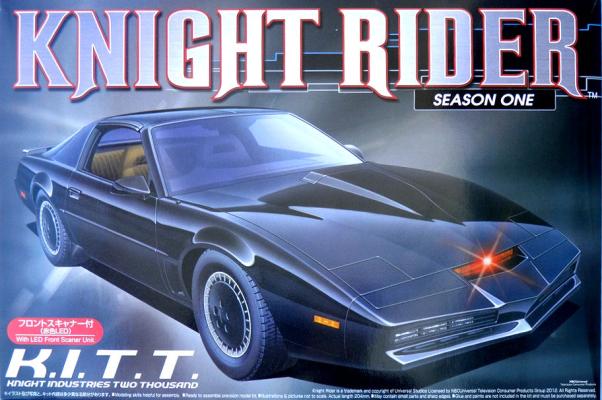
So what would be cooler than having your car talk to you, be bulletproof, and able to drive itself? Well, if you were Michael Knight, not much…and while he drove several different versions of KITT (Knight Industries Two Thousand), the original from the first season of the show was always my favorite.
I don’t build many car models, but when I do, they usually were involved in some movie or TV show. So when KITT came up for review, my hand also came up. I am not sure if this is a re-release by Aoshima of a previous kit as I remember KITT kits from years ago, but if it is a re-release, it is a good one.
The kit includes 95 plastic parts in black, tan, chrome, aluminum, clear, clear red, clear orange, and tinted black colors. There are also 4 rubber tires, 4 polyethylene caps for the wheels, and the scanning unit with 4 screws to mount it.
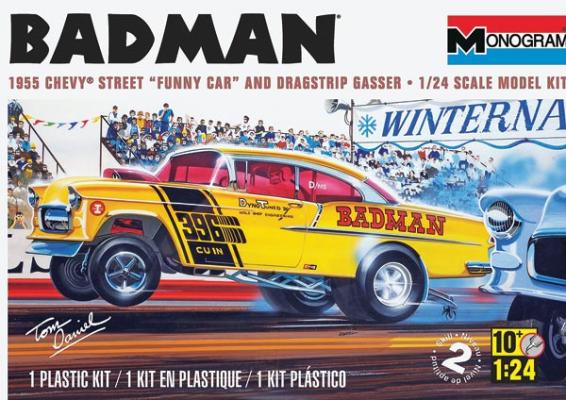
This 1/24th scale 1955 Chevrolet hardtop is another re-release of an older model designed by Tom Daniel for Monogram Models. As you may know, Tom Daniel designed 87 model cars for Monogram between 1967-1976. Most of his kits can be built in an evening or two, and this one is no exception. There are only 68 parts in this kit. It can be built straight from the box for an attractive model, or extra time can be spent in detailing the engine compartment if that is what floats your boat. The interior is decent with racing seats, a 2-piece roll bar, etc. However, once the red-tinted windows are in place, nothing of the interior can be seen, anyway. There is some compromising of detail – Monogram used the body and chassis from another release of the ’55 Chevy and, as a result, the molded exhaust pipes and muffler are still present on the chassis. This is in spite of the racer having header pipes attached that exit out the sides of the chassis.
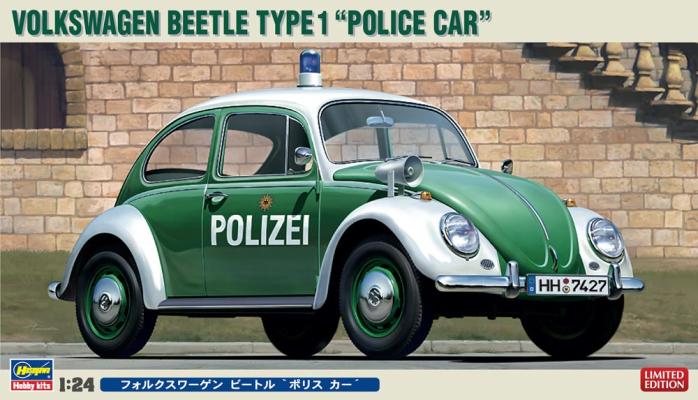
For this review, I built the Hasegawa Police version of the VW Beetle. This says Limited Edition on the box and, if that is true, I would pick one up ASAP. You get a really nice car kit here, and it includes three versions of the bug to build – a green and white German Polizei auto, a black and white Canadian bug, and the version I built: the white and blue Belgium Politie. The good news about that is if I am ever in Belgium and see a white bug with a blue stripe behind me, I won’t do anything stupid.
The Kit
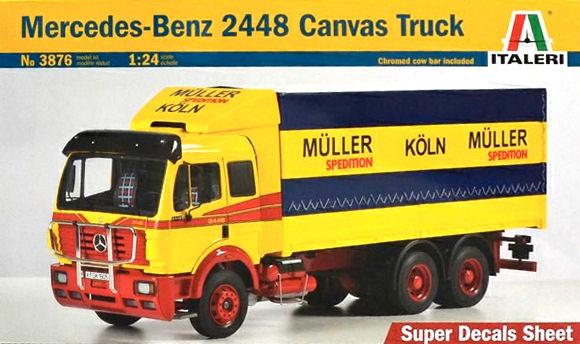
This is a review of the Italeri 1/24 scale Mercedes-Benz 2448 Canvas Truck. The box is large and features photos of the built-up model on the top. Along the sides are 360-degree views of the model that can be used for reference. Inside the box you will find three individual bags of yellow, black, and grey styrene; there is a tree of chrome parts and a tree of clear parts, each wrapped individually in plastic bags. There is a super decal sheet which contains markings for two separate trucks, twelve soft rubber tires, and a twelve-page, well laid out instruction booklet. All of the parts trees are clearly marked. The first two pages of the instruction booklet contain a drawing of all the parts trees, making the individual parts easy to find. The instruction guide also calls out painting suggestions.
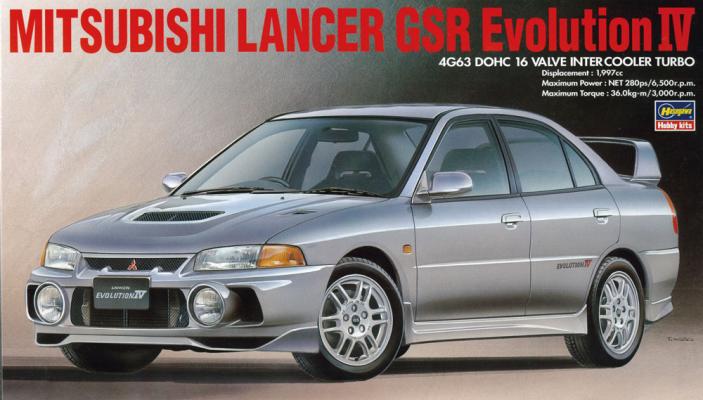
The Mitsubishi Lancer Evolution, or colloquially known as the Evo is a high-performance sports car manufactured by Mitsubishi Motors that is based on the Lancer. There have been ten official versions to date, our subject review kit is the forth generation of the series. All EVO’s use two litre, turbocharged and four wheel drive systems. EVO’s were not officially imported into the American market until 2003; therefore this model represents the “home-market” version of this car,
The Kit
Our subject kit comes from Hasagawa imported by Hobbico and is part of their extensive line of the Lancer GSR series. All of the kit parts are crisply molded; since this is an EVO, there are additional standard Lancer parts included in the kit that would not nessarily be used but are available. The kit comes with a complete set of decals, window painting masks and mesh material for the front intercooler intake.
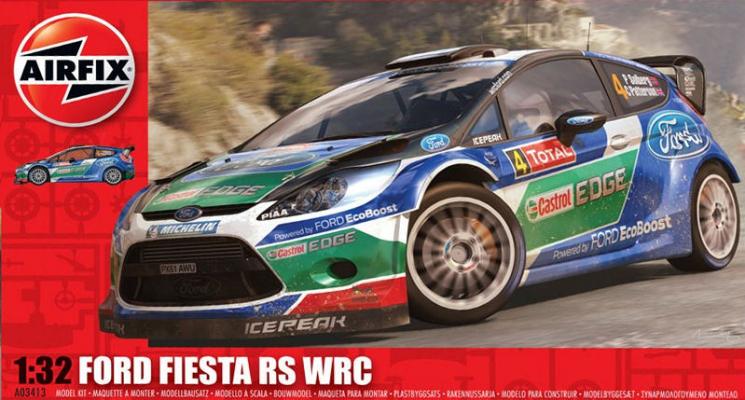
I must admit to being a huge WRC (World Rally Championship) fan. Like the Formula 1 World Series, the WRC races take place in different countries around the world each season. Races alternate between various surfaces: tarmac, gravel, dirt, snow/ice, and often multiple surfaces within the same race. The racers consist of two person crews, driver and navigator/co-driver, representing either a “works” team or being an “independent”. With the occasional exception, the top three finishers in each race come from the “works” teams, as due to the big money behind such teams, they are able to afford the most advanced cars, the top driver talent, and the highly trained and disciplined mechanics necessary to sustain a car over the course of an individual race and the entire season. For the past many years, the Big Guns have been Subaru, Citroen, and Ford.
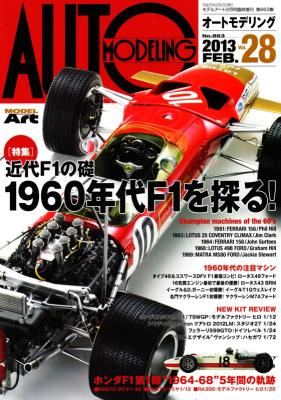
Auto Modeling is a quarterly release from Model Art Magazine. The magazine is chock full of pictures of builds in progress, line drawings, and photos of the actual cars themselves.
This issue focuses on F1 series racing from the 60’s. Included are several articles written about the champion machines of this time period. Also included is what appears to be an article about the drivers from this time period. Unfortunately for most of us, the article is in Japanese.
Included is a new kit review article. These show the actual model under construction to completion. As with the rest of the issue, this is accompanied with a multitude of photos. In this issue, they cover one motorcycle, two cars, and some type of racing spaceship.
Even though the majority of the text is in Japanese, I think that fans of F1 racing would still enjoy looking through the pages at the wonderful models illustrating the articles.