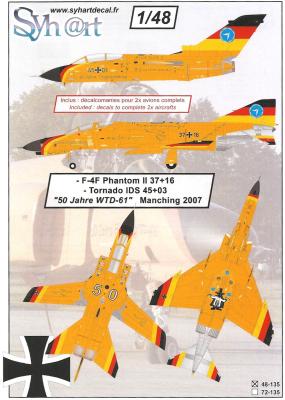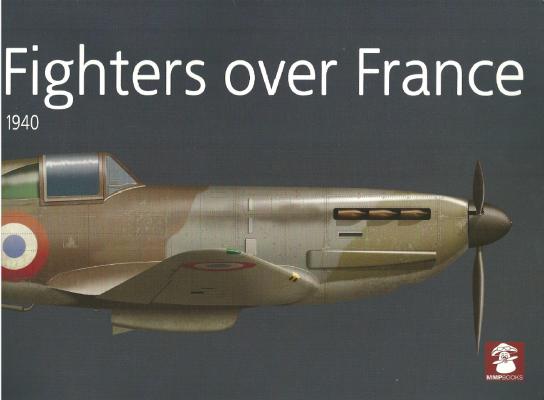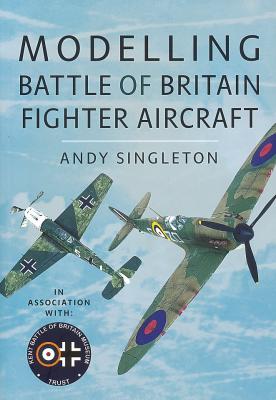
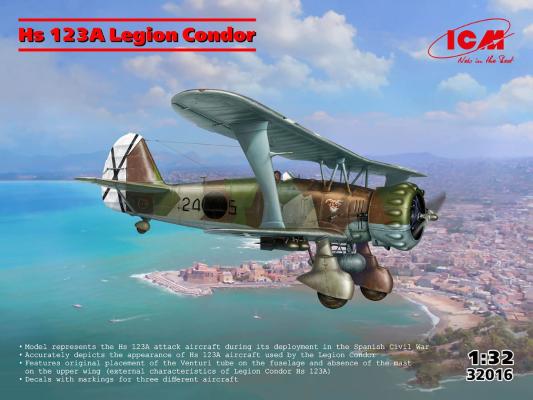
Guideline Publications Guideline Publications is the UK's leading publisher of modeling and hobby-related magazines. With a world-class portfolio of titles and an international Social Media presence, Guideline Publications has a dedicated readership that is constantly expanding into new areas. This English language book, Grumman A-6 Intruder & EA-6B Prowler, is authored by Andy Evans with scale drawings by Sam Pearson. The latest in Guideline’s Warpaint series, 146, was published in January 2025. A digital edition will soon be available. The latest on Guideline’s publications can be found on Facebook at: https://www.facebook.com/guidelinepub/
Yahu Models has provided the IPMS reviewer corps with a 1/72nd scale instrument panel for Amra Hobby’s P-39D/P-400 Airacobra. This set also includes photo-etch (PE) detail for the side doors.
In the Package
The instrument panel (IP) detail set is enclosed in a plastic bag with one (1) photoetched (PE) IP already assembled and two (2) PE etched sheets for other cockpit areas and the side doors. The parts come packaged in an individual Ziploc bag and cardboard.
Conclusion
Overall, this is a nice detail set to upgrade Arma Hobby’s P-39D/P-400 Airacobra instrument panel. The close-up picture shows off the minute detail printed on the PE parts and the fidelity at such a small size is amazing.
I want to thank Yahu Models for providing the P-39D/P-400 Airacobra instrument panel set and IPMS/USA for allowing me the opportunity to review.
Highly recommend!
The origin of Pen & Sword Books is closely linked with its sister company, the Barnsley Chronicle; one of the UK's oldest provincial newspapers, established in 1858, and one of the few weeklies still in private ownership. The first books published by the company were in response to public demand following a series of articles published in the newspaper: Dark Peak Aircraft Wrecks told the story of crash sites in the Dark Peak area of the Peak District National Park, and a further weekly feature on the history of two Kitchener battalions, known as the "Barnsley Pals", aroused a thirst for more information. Following on from the success of those books, several local history paperbacks were produced along with a series of battlefield guidebooks. Battleground Europe proved immediately successful, and the company made the decision to launch a book publishing arm of the group.
MMP Books continues to expand its Colour & Scale series, this time with an issue devoted to the Messerschmitt Bf 109G in Finnish Service. At 16 pages long, the book is brief (rather a booklet) but it is very useful and packed with information.
The first seven pages include line drawings of the Bf109G in 1/72 and 1/48 scale. I am not completely sure, but I would say that all the drawings are for the “G-6”, one of the most popular “109”s, which was used by several air forces, making the drawings of value beyond the Finnish Air Force
The next eight pages have ful- color profiles for selected airframes, including: MT-415, MT-435, MT-451, MT-445, MT-455, MT-423, MT-426, MT-456, MT-437, MT-458, MT-231 (the lone G-2 in the book), MT-449, MT-431 and MT-453.
All the G-6 airframes are in typical RLM 74/75/76 with Eastern Front markings while the G-2 has an unusual 74/76 camouflage. None of the aircraft feature the “Warpaint” Finnish scheme of Green/Black/Light Blue.
Tony Buttler was born in 1956 and joined High Duty Alloys in Redditch in 1974 as a metallurgist. For nearly 20 years he was closely involved in the testing of aluminum and titanium airframe and engine components for many of the world’s most important airplanes. It was during this timeframe that his interest in military aircraft grew into a passion. Since 1995, Tony has been a freelance aviation historian, with this book being his 44th major release. This includes hard cover books on British Secret Projects, American Secret Projects, Secret Soviet Projects, and X-Planes of Europe. He has also written many titles for the Warpaint series of monographs as well as many articles for most of the popular historical aviation magazines.
I enjoy taking older kits and finding ways to spruce them up – sand off the raised lines and engrave them, add rivets, make corrections or add missing parts, etc. When I saw these Yahu Models instrument panels, I had to give them a try!
I secured instrument panels for three different subjects – an F4F-4, a P-51 B/C, and a P-40 (N-20/N-40 Late). The F4F and P-51 panels were designed for Arma Hobby kits, and the P-40 for the Special Hobby kit. My experience with Arma Hobby kits led me to believe they probably wouldn’t be needed, especially if you are going to build with a closed canopy, and Special Hobby kits often include upgrades for items like this. My habit is to find items like these to spruce up older, less detailed kits. So, I pulled two Hasegawa kits (P-51 B and P-40 N) out of my stash, along with an Academy F4F. Both of the Hasegawa kits had a basic blank clump of styrene to lay a decal on, and the Academy kit had nothing.
Overview
Following their release of the F-35A in 2022 and the F-35B in 2023, Tamiya has completed the trident of 1/48 scale Lightning II model kits with their release of the F-35C late last year. I found the engineering of this kit to be phenomenal with all parts fitting just as one would want. The 78 steps for the construction are spread across the 34-page instruction manual, and steps typically contain no more than six individual parts, which keep the building process simplified. While the number of parts and number of decals required more time than some builds, the joy of the construction always made the time pass quickly. I would highly recommend this kit to any modeler with some experience looking to add the US Navy variant of the Lightning II to their collection.
The Mitsubishi Ki-21 “Sally” was designed in 1936 and first flew in 1938, it was used extensively in the war against China and was a trainer for bomber groups.
This subject has been neglected in the model world but ICM has brought out a nice representation in 1/48th scale.
Included in the kit is:
- Six grey sprues
- One clear sprue
- One grey sprue with figures
- One set of decals
- One instruction booklet
- One instruction page for the figures
The instructions are pretty straight forward and the kit seems well detailed with fine panel lines and some rivet detail.
Section 1-7 starts with the left fuselage half with detail items and a bulkhead going in. there are also oxygen bottles and some clear parts added. The left tail section is also added in this section. I decided to glue both halves of the tail together at this point and added the tail at a later point.
The non-profit UK based group known as the Great War Aviation Society publishes their journal, Cross & Cockade International, four times a year. Issues are available in English as printed [Softbound, A4 (8.27” x 11.69), 80 pages plus centerfold] as well as digital copies (or both). A new magazine, Contact!, is now available in both print and digital download. The Society also provides a free newsletter (sign up on their website) and occasionally publish WWI themed books like the Sopwith Dolphin monograph I reviewed earlier for IPMS USA. This Journal is the sister of the US Journal, Over The Front. The Great War Aviation Society also hosts a lecture series available through Zoom. If interested, you will need to register early as the call is limited in attendance.
Aires has provided the Reviewer Corps with Quickboost drop-in resin replacement exhaust tubes for Arma Hobby’s P-39Q/N Airacobra in 1/72nd scale.
In the Package and Product Notes
The sample review came in a plastic bag with a cardboard backing. There are no instructions for this set. For the Arma Hobby kit, they are replacements for part 52, quantity 2.
There are two (2) exhaust tubes from the traditional pour moldings for these resin replacements (not 3D generated). The quality is excellent, and the tube ends have holes molded in, so no drilling is required. Also, the base identifies which tube goes on the right and left side since there is a slight angle to the mounting surface when installed.
Review Process
I started by giving the resin part a warm soapy bath to remove any release agent.