
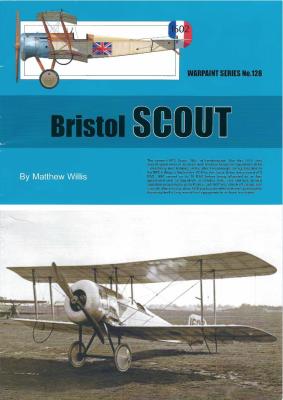
Matthew Willis is a writer of historical and speculative fiction, and non-fiction. Matthew studied Literature and History of Science at the University of Kent, where he wrote an MA thesis on Joseph Conrad and sailed for the University in national competitions. He subsequently worked as a journalist for Autosport and F1 Racing magazines, before switching to a career with the National Health Service. His first non-fiction book, a history of the Blackburn Skua WW2 naval dive bomber, was published in 2007 by MMP. He is the author of the 'Fortress of Malta' series of novellas from Sharpe Books (2019-21) and co-author of the 'Oath and Crown' novels of the Norman Conquest (2017). In 2015 his story Energy was shortlisted for the Bridport short story award. This is Matthew Willis’ second publication in the Warpaint series, following his previous publication on the Sopwith Pup.
Seldom does a military aircraft gain a reputation the way the MiG 25, NATO codename “Foxbat”, did. When it entered service in 1970, little was known in the west other than grainy satellite photos and radar tracks that showed impressive speeds at high altitude. It was originally developed as a counter to the American XB-70 Valkyrie bomber, Western analysts believed the MiG 25 was a highly maneuverable, high-tech fighter based on the limited intelligence they could gather. Fast forward to September 6, 1976 when Lieutenant Victor Belenko took a MiG 25 from Russia and navigated his way to Japan landing at the civilian airport in Hakodate. Belenko was granted US citizenship by then President Jimmie Carter and the MiG was dismantled and studied by US intelligence officials. Some of the speculation was quickly refuted. The MiG 25 was made primarily of steel and required powerful engines to push the airframe to its Mach 2 plus performance.
When Tamiya announced they were entering the Phantom market in 1/48 scale, the Internet buzzed. And now the kit is out, a 1/48th scale F-4B Phantom. Let’s start by taking a looking the box. For starters, there are 14 sprues of perfect Tamiya grey and clear plastic. There is also a set of instructions, a set of Tamiya Tech tips and a background information booklet about the plane. There are two large double-sided four-color pages with markings for the three planes and a drawing for stencil locations. Also included is a set of masks (not precut). Lastly, there are two decals sheets with markings for the weapons, planes and stencils.
Markings are included for the following:
- VF-51 “Screaming Eagles”, CAG Plane, May 6, 1972, USS Coral Sea
- VF-111 “Sundowners”, Squadron Leaders Aircraft, NAS Miramar, August 1972
- VF-161 “Chargers), CAG Plane, May 1972, USS Midway
Options included for the modeler to use are:
This review was originally published on May 4, 2021. Shortly thereafter IPMS/USA received some additional information from Alexander Pawlygin representing "Foxbot Decals". IPMS/USA is pleased to have received this additional information and thanks Mr. Pawlygin and Foxbot Decals for sharing it with IPMS/USA.
Mr. Pawlygin states......
1. The decal 72-004 contains numbers for (a) single seat Su-27S/P and for (a) twin seat Su-27UBM. Masks for Su-27 and Su-27UB are different. Therefore we cannot complete this decal with masks. But we have separate decals for Su-27 and Su-27UB in 1/48 scale and we have sets 48-047A for Digital Su-27 and 48-067A for Digital Su-27UB which contains decals with masks.
This is the 2nd volume in a revived series from Kagero. According to the editor the series was originally launched in 2001, but decal production issues caused the cessation of publication. They have now restarted this series, and so far, have issued 3 volumes (“Eastern Front” armor, “Japanese Fighters”, and the subject of this review).
“Messerschmitt Bf 109 A-F” jumps right in with color profiles on the very first page. This is followed by 38 more pages of profiles, and a final page with a table of RLM colors produced by various model paint manufacturers. The back cover has an additional two profiles.
This third volume of Claringbould’s aircraft profiles, the first of Allied aircraft, highlights the Douglas A-20 Havoc (Boston to the Commonwealth forces). The A-20, and its stablemate the B-25, were the two-workhorse low level attack aircraft of the US Fifth Air Force in the Southwest Pacific.
Kagero Publishing is widely known in scale modeling circles as producers of reference books that often come with a bonus decal sheet. That all started in 2001, with their immediately successful “Camouflage & Decals” series. Apparently, they had technical issues surrounding the decal sheets so the series was, unfortunately, short-lived.
“Japanese Fighters” brings the series back to us. Consisting of 40 pages, this A4-sized book starts on page one describing the history of the series, and where the company hopes to go with it. Also on the same page is a chart of colors the Japanese used in WWII, complete with the correct Japanese names for them. All text is in English and Polish.
Toward the end of World War 2, the Germans were coming up with more and more desperate attempts to halt the U.S. and British aerial juggernaut that was daily pummeling their cities and the remnants of their industrial capacity. Cheap, easily assembled point defense weapons became the order of the day, resulting in such oddities as the Me163 Komet rocket fighter and the He162 Salamander, both of which were as much a threat to their pilots as to any Allied airmen. The Junkers EF-126 and its rocket-powered alternative, the EF-127, were supposed to be the logical descendants of the Komet, and although none were built by German industry, the Soviets made prototypes of both aircraft after the war. Apparently the sole unpowered version of the craft crashed on its maiden flight. I couldn’t find where powered versions were ever run.
History
The BR 20 "Cicogna" low wing medium bomber was developed by the Italian aircraft manufacturer Fiat during the 1930’s. It entered service in 1936 and was characterized by its metal frame and retractable landing gear. Modern and fast for the period, it was deployed by the “Aviazione Legionaria” and had its baptism of fire in 1937 during the Spanish Civil War. In September 1940, the “Corpo Aereo Italiano”, consisting of the 13th and 43rd “Stormo da Bombardamento” were similarly equipped with the BR-20. The “Stormi” were stationed in Belgium and supported the Luftwaffe during the Battle of Britain. Despite operational comparisons with modern R.A.F. fighters that exposed the BR-20’s limits, it was used for the duration of WW2 on various fronts by several Regia Aeronautica bomber squadrons.
This book has personal significance to me. As a member of the 23Tactical Fighter Wing in the early 1980s, I got to see A-10s doing their thing including firing that incredible gun at the local gunnery range.
