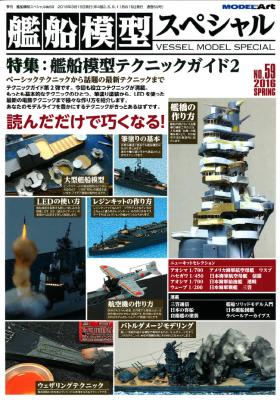
Model Art Issue 59 is typical of other Model Art magazines in that it is written entirely in Japanese, with occasional English words, usually in article titles or in captions. The Vessel Model Special is a quarterly issue that focuses on naval subjects. Advertising comprises the inside covers (and back cover) along with another four pages showing what is available and new, always useful for building up that wish list. I counted 596 photos (mostly in color) along with 17 side view or top view drawings. Additionally there are a lot of color scrap drawings highlighting details in the Ship Construction series.
all 2016
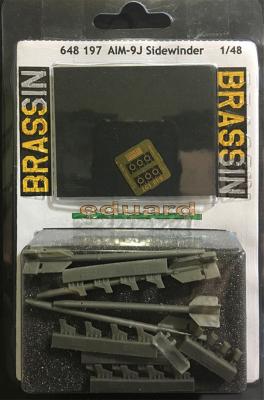
I am bringing you guys the AIM-9J Sidewinder in 1/48th scale from the Eduard Brassin line. I have not worked with Eduard’s resin line ever up to this point, and I can honestly say I'm impressed! The Sidewinder Missile does not need an introduction from me, seeing as they have been around for 60 long productive years, with the J model being used in the early 70’s as an Air Force production model.
These missiles come in a clear plastic package with multiple foam inserts to protect the product and keep them still.
There are a total of 28 resin pieces consisting of: 4 missile bodies, 1 resin block with the clear seeker heads, 4 blocks containing a set of fins per missile, and 1 block containing seeker head covers. There is one photo-etched fret and one decal sheet.
Interstellar came out in 2014 and was a decent movie about team of explorers who travel through a wormhole looking to find a new world to ensure humanity's survival. The ship the stars used was the Transgalactic Survey Craft, Ranger which was launched on top of a secret Saturn V rocket.
Moebius recently released a 72nd scale kit of the Ranger based on the full scale prop, miniatures and CGI files used in the movie. As 72nd is my preferred scale, I was interested. The kit has 42 parts molded in white plastic which include 38 for the 72nd scale ship and 4 bonus parts to make the top of the Saturn launch vehicle with 2 Rangers. The parts for this should fit either the Airfix or Revell 1/144th scale rockets.
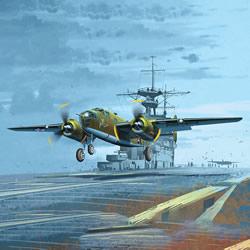
Academy has rereleased the Accurate Miniatures 1/48th scale B-25B in Doolittle Raid markings and it is a welcome sight as this kit was getting rarer as the days passed. Inside the box, you get all the plastic parts associated with the initial release as well as a decal sheet covering all 16 planes. The parts are well molded and even 12-15 years later, they are flash free and excellent. The clear parts are superb also.
I will forgo the history as most are well aware of the raid by Lt. Col. Doolittle and his pilots and there are many excellent references and even some fun movies referring to the raid. I have wanted to build this kit for a while ever since trading it off to a friend a while back and jumped at the opportunity to build it.
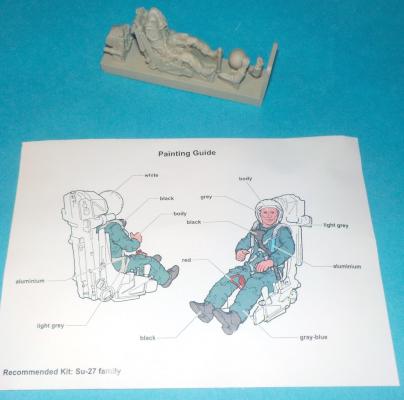
Aires and Aerobonus fill another gap with a Soviet pilot in a K-36 ejection seat meant to be added to Trumpeters very large 1/32nd Su-27. The set includes five well-cast resin pieces - two arms, the head/helmet, the top of the ejection seat and the seat/pilot figure.
Preparation is simple, remove the parts from the casting blocks and add the top of the seat and the two arms. There were small amounts of putty at the arms- I used Squadron white putty smooth with lacquer thinner. The head can be kept separate for painting if you like, or glued in place.
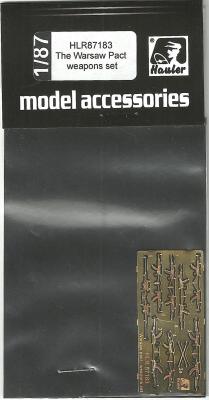
Hauler is an accessory company based in the Czech Republic that produces high quality photo-etched sets for AFVs, airplanes, cars, railway vehicles, and resin accessories for dioramas and resin kits.
The product I will be reviewing for you guys is the “Warsaw weapons”. For those of you who don’t know about the Warsaw pact, it was a Defense treaty and Mutual assistance regime created by the Soviet Union and 7 other nations that spanned close to 50 years. So as you would expect this photoetched set contains soviet era weaponry.
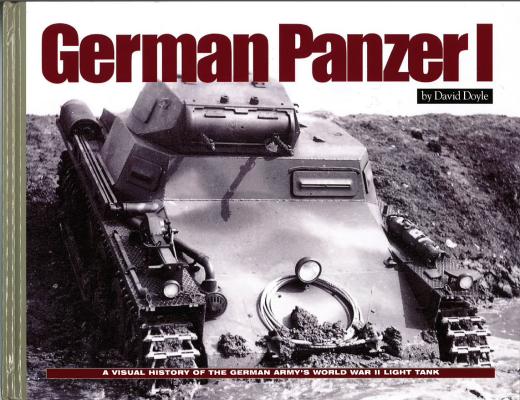
Ampersand’s latest book continues to expand on their Visual History format follows the same look as David Doyle’s “USS California”. Ampersand got their start in 1993 when Pat Stansell distributed a free issue of Military Miniatures in Review at the IPMS Nationals in Atlanta. Ampersand joined forces with HobbyLink Japan in 2008, and have continued to expand their military AFV publications ever since.
A word of caution up front, if you read my previous review on the 1/72 scale AIM-4D release by Eduard, this is going to seem very familiar. If you missed this review, then please enjoy what follows.
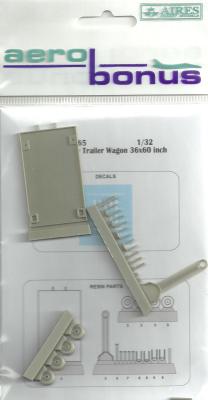
What I have here for you guys is a USAF trailer/flat wagon from Aerobonus its in 1/32nd scale and should add another level of realism to any flight line, hangar or aircraft diorama of your choosing. Aerobonus is produces resin/pe accessories and details sets for armor and aircraft.
The trailer comes in a cellophane wrapper with a printed single sheet instruction folded in half and 3 pour blocks for a total of 15 parts and 1 decal sheet. There are no spare parts at all but honestly it’s pretty straightforward and you shouldn’t get out of hand.
History
The Focke Wulf FW-190 series of fighters served as one of the two major single engine fighters used by the Luftwaffe during World War II. Introduced after the Messerschmitt Bf-109 fighter, the FW-190A powered by a radial engine was in many ways a better fighter, although it was inferior in performance to the Messerschmitt at high altitudes, a disadvantage solved by the introduction of the Jumo powered FW-190D later in the war. The radial engine FW-190 became standard not only in fighter units, but also in close support units, especially on the Eastern Front. It was more heavily armed and armored, and its wide track undercarriage made it easier to fly, cutting the accident rate dramatically, compared to the Bf-109.
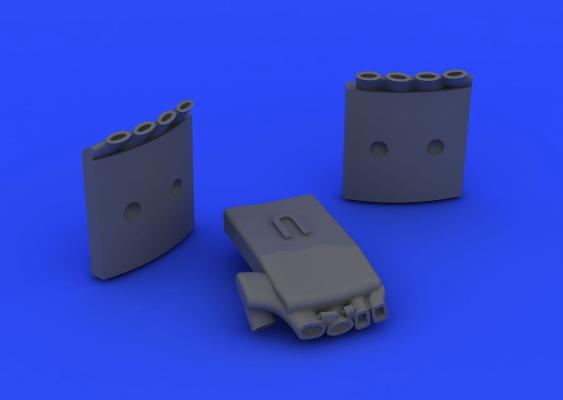
This kit provides three resin exhaust stack units for the FW-190A-8 kit. These snap into place just like the ones provided in the kit, and the only difference is that the Brassin units are drilled out, appearing to be exhaust stacks rather than solid tubes. Highly recommended.
My thanks to Eduard for the review set.
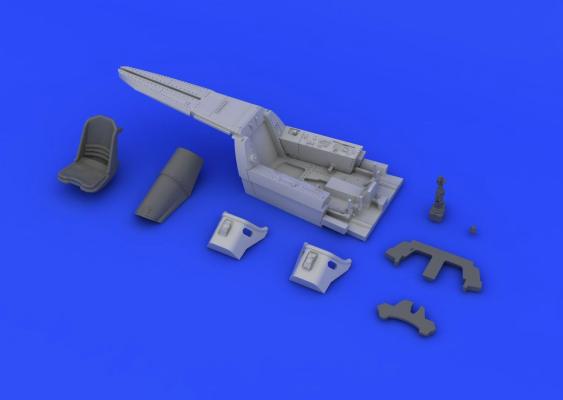
This resin and PE set includes the major cockpit interior, side panels, rear cockpit deck, 2 forward instrument panel covers for mounting the gunsight, rear headrest, two piece instrument panels, and a control stick. The PE sheet provides painted instrument panels, seat belts, rudder pedals, and misc. parts. Clear film for the gunsight is also included. Instructions are complete and highly detailed, providing location and color information. This has more detail than the one provided in the kit, and makes a useful addition to this kit. Some trimming inside the fuselage is required, but this is clearly explained in the instructions. Recommended.
My thanks go to Eduard for the chance to review this wonderful set.
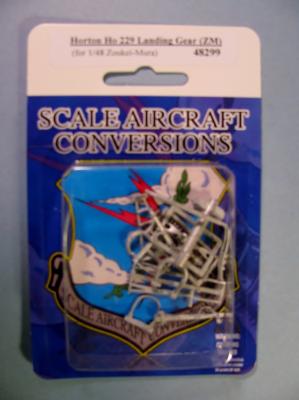
Scale Aircraft Conversions celebrated their Silver Anniversary last year, and now have over twenty-five years of supplying resin and white metal parts to model builders. This is the seventh landing gear set from SAC that I have reviewed, and once again, they have provided an excellent metal option for kit-supplied landing gear. This set is intended for the 1/48 scale Horton Ho 229 flying wing that was released by Zoukei-Mura last year (kit 3 of the 1/48 scale Super Wing Series). The purpose of this replacement set is to provide stronger landing gear that is adjustable if necessary to obtain proper angles. Even with no previous experience in using white metal parts, this set will provide an upgrade that most modelers will have no issue installing.
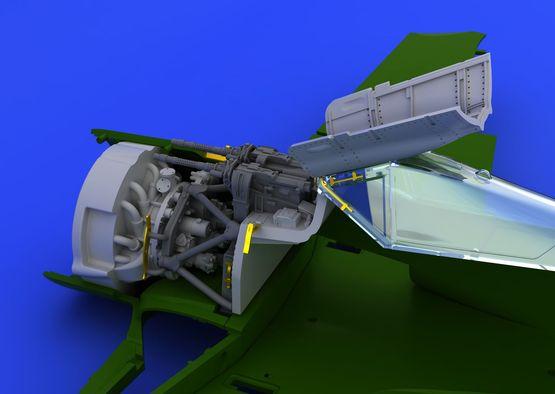
This resin and PE set provides the rear part of the radial engine, firewall, MG-131 machine guns, gun breech cover with detail inside and out, 2 ammunition containers, one engine mount, one engine mounting bracket, one cylindrical engine part of unknown function, and one PE sheet containing numerous detail parts for this unit. The instructions are very detailed and clear on how the whole thing is supposed to go together.
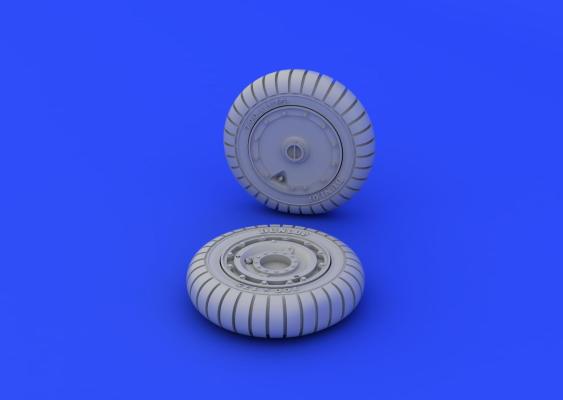
This set of one piece wheels replaces the more complicated 3 piece units provided in the kit. They are finely molded in resin, and can be easily trimmed off of the sprues. A mask set is also included, making it possible to mask either the tires or the hubs. Detailed instructions are also provided. Recommended.
My thanks to Eduard for the opportunity to review this set.
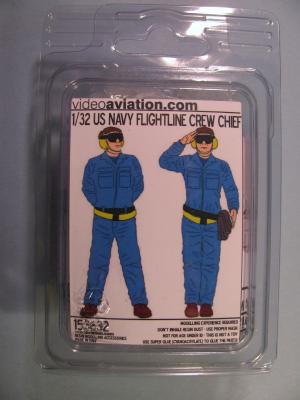
A relative newcomer to model accessories is the Italian company Videoaviation, which started producing items in 2012, and was recently picked up as a supplier of review items for the IPMS/USA Review Corps. The founder states that he was a former video producer of military aviation subjects, who has now turned to producing accessories for modelers. He mentions that development is performed using CAD (Computer Aided Design) and then printed with “rapid prototyping devices”, which allows for simultaneously producing an item in 1/72, 1/48, and 1/32 scale.
This is the latest Batmobile from the Batman vs. Superman Dawn of Justice movie. It is a nice looking vehicle! The instruction booklet is concise and gives great illustrations.
The kit contains
- 8 sprues molded in light grey styrene
- 1 clear sprue
- 4 Black Rubber tires
- 1 instruction booklet.
Construction
The kit is not too complex and can be built in a number of sub-assembles via 8 main steps. The use of sub-assemblies allows you to paint these as you progress through the build. I would recommend that you test fit each part before any glue is used as a few need a little adjusting to fix correctly.
Background
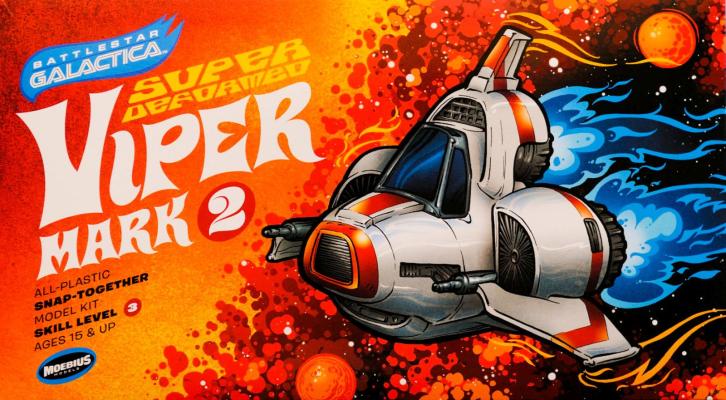
This is the latest release from Moebius Models based on the Battlestar Galactica series aired on SyFy. It is their first in the SD (Super-Deformed) series, sometimes referred to as an ‘egg plane’ version of the Viper Mark 2. Please keep in mind, that at roughly 1/32, this kit is much larger than your standard ‘egg plane’. The kit is designed as a snap together model and comes with both water slide decals and stickers.
Background
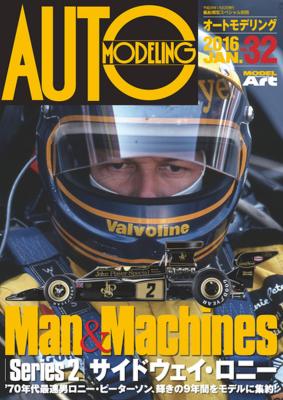
Auto Modeling is a high quality Japanese language magazine from publisher ModelArt. Each edition features models of cars, mostly racecars, from various race series and eras. Many of the previous editions focused on Formula One cars in different time periods.
The magazine has Japanese text, but some of the titles and headings are in English. The photographs are numerous and very high quality.
Contents
This issue, Volume 32, December 2015, has the following sections:
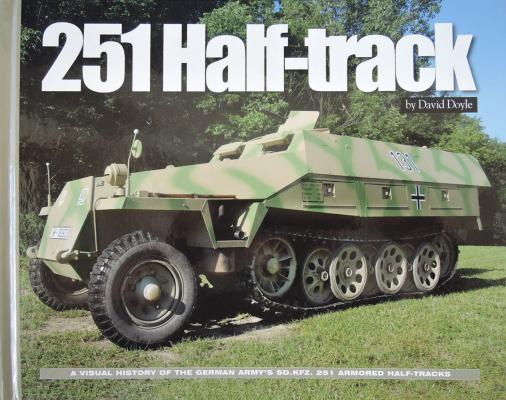
This is another great book in Ampersand’s Visual History Series by prolific author David Doyle. The hard cover book is almost entirely photographs, with a brief introduction and text captions on the photos.
The book’s introduction describes the development history of the Sd.Kfz. 251 half-track starting with the Sd. Kfz 11, which would form the basis for the later half-tracks. Production of the Sd.Kfz. 251 started in 1939 as the Ausf. A, followed by the Ausf. B in September 1939, and the Ausf. C in January 1940. A new body style was developed December 1942, designated the Ausf. D, that would become the most numerous of the variants.
Manny variations of the Sd. Kfz 251 were developed as modifications of the basic Sd. Kfz 251 vehicle. These variations are included in the book:
Model Art Issue 932 is typical of other Model Art magazines in that it is written entirely in Japanese, with occasional English words, usually in article titles or in captions.
This issue covers:
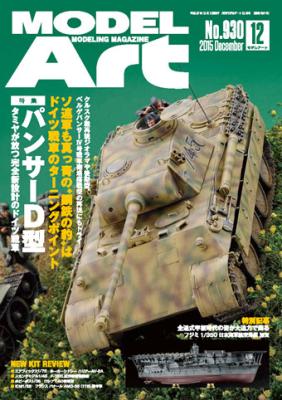
Model Art Issue 930 is typical of other Model Art magazines in that it is written entirely in Japanese, with occasional English words, usually in article titles or in captions.
This issue covers:
History
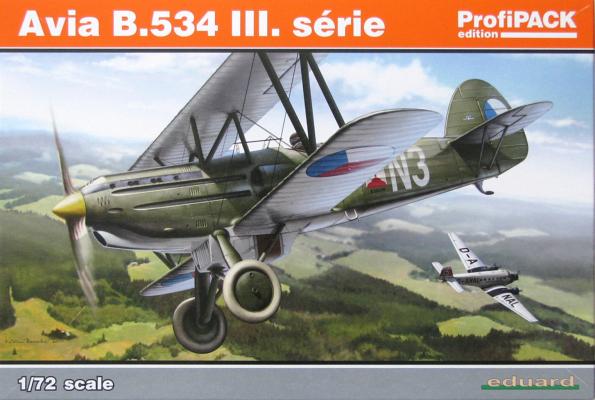
The Avia B.534 was developed in 1934 and although obsolete by the time WWII started it was used in combat as late as 1944! The 534 went through a few changes along the way most notably the cockpit and landing gear. A 534 is credited with having been the last biplane to record an aerial victory (A Hungarian Ju 52 on Sept. 2nd, 1944).
The Kit
Upon opening the box you will find a bag of 3 blue grey injected plastic sprue with a zip lock bag of clear parts inside, a zip lock bag of photo etch parts, a zip lock bag containing masks, a decal sheet and 12 page color instruction booklet. The injected plastic is molded very crisply and with no noticeable sink marks very little flash. The photo etch parts are small to say the least but look nice and the decal sheet is printed cleanly and in register.
History
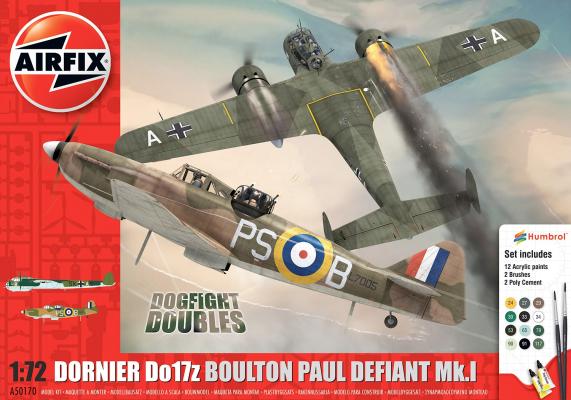
On 26th of August 1940 during the Battle of Britain, the two aircraft represented in this kit met over the English coast, during which the Do-17z would fall victim to the guns of the Defiant, and the Defiant itself would fall victim to escorting Me 109s moments later. Two of the four German crew were lost in the encounter. The Defiant’s crew survived a crash landing. Fast forward to 2013 when an underwater survey revealed this very Do-17 in shallow sand off the English coast. In an extraordinary effort the RAF museum sponsored an expedition to raise the wreckage from its watery grave. (Click here for the Recovery article). It will eventually be placed in the RAF museums “Battle of Britain” hall to complete a collection of aircraft that took part in that battle. You can follow this continuing effort on the RAF museums website.
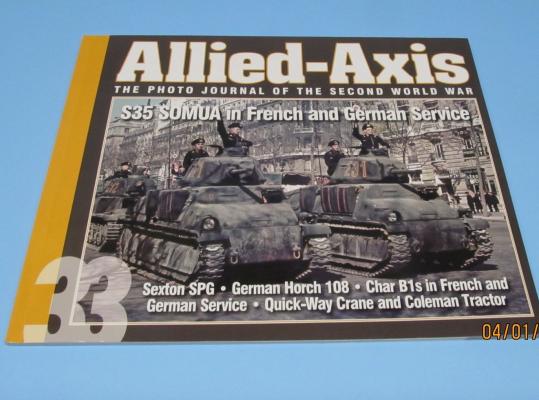
This is the publication's thirty-third issue and as the subtitle says, it is “the photo journal of the Second World War”. This issue deals with five subjects in 96 pages, the paper being glossy and reproducing the images well in black & white. The only color photos are on the covers (front and back). Two of the subjects are outright allies and one German. The final two started out as allies (French) but after 1940 their tanks were used by the Germans. At the beginning of each chapter there will be a short text on the history of that subject and most of the photos will also have a brief text about that photo. The photo sizes varies, but about 65% of them cover the full page and the remainder have anywhere from two to four pictures per page.