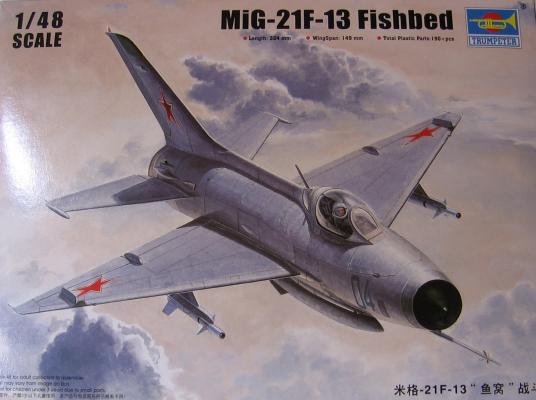
The MiG-21F-13 was one of the early variants of the MiG-21 series, and as far as I know this is the first injection-molded kit of the aircraft in 1/48 scale. The kit comes in an appropriately sized box with some nice artwork on the cover. Inside the box, there are 9 sprues of cleanly molded medium grey parts, four of which are dedicated to underwing and under fuselage stores. Most of the major parts have their sprue attachment points molded on the mating surface, rather than on the edge of the part, which means that you don’t have those ugly sprue attachment areas to deal with when cleaning up the seams. I thought that was a nice touch and I hope that other manufacturers will start molding their kits in the same way. The panel lines are recessed and nicely done, and the rivet detail is present but restrained. The surface seems to have a very slight roughness to it, but it disappears under a coat of primer.
all 2014
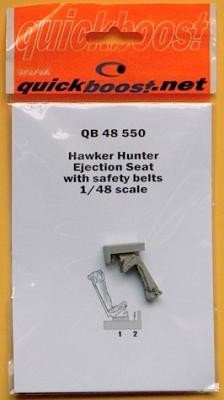
Quickboost has added a well-detailed Hawker Hunter Martin Baker Mk.2H ejection seat to their growing line of detail parts. It is a replacement for the one found in the Academy (and Italeri) 1/48 scale kits and will greatly enhance the cockpit of a model built from either of those kits. It is reported that RAF Hunters were manufactured with either Mk.2H or Mk.3H seats (and some Hunters manufactured with Mk.3H seats were retrofitted with Mk.2H seats), so Quickboost has chosen to offer the MB Mk.2H. The Quickboost seat captures the look of the prototype very nicely with crisp and enhanced details and molded-in safety belts that will greatly improve the cockpit of any Hunter.
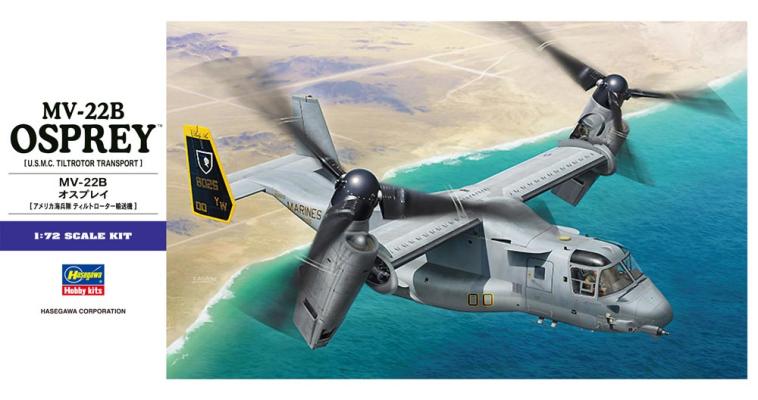
Hasegawa has produced the first production model of the Osprey VTOL transport in 1/72 scale, the MV-22B. In 1988, Italeri came out with a kit (# 175) of the preproduction version, which was designated at that time the V-22A (later to be changed to MV-22A). It would be very difficult to modify the MV-22A into the "B" model. Thankfully, modelers do not have that problem now due to Hasegawa's latest release. This article will not go into the long history of VTOL aircraft or into the difficult development of the Osprey that can be found in other sources. (such as The Dream Machine: the untold history of the notorious V-22 Osprey by Richard Whittle, 2010).
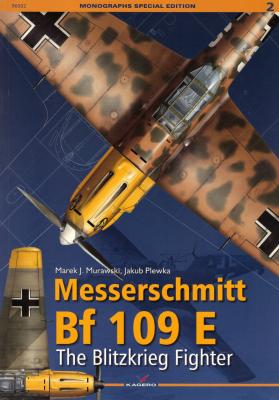
Bf-109E is the most recent addition in Kagero’s Monographs Special series. The Casemate information sheet that accompanied the book states that, “This new book gives not only a thorough insight in the development, variants, technical features and camouflage of the “Emil”, but also an excellent overview of the aircraft’s service with the Luftwaffe.” True words!
Modelers vary in their focus for information regarding a subject being modeled, and this publication addresses most, if not all, of those areas of interest.
The text begins with comprehensive coverage of the Bf-109E variants. Detailed black and white images show the characteristics and design differences which separate one “Emil” variant from the next. In these 34 pages, the modeler will find much useful and detailed information that will significantly impact the authenticity of the “E” variant being modeled.
Next step in our long review of Eduard PE parts for the HK B-17 kit. Ongoing thanks to Eduard for providing us these sets… !
Having opened one other B-17 many years ago in 1/48th, using the Paragon resin flap and bomb bay sets, I vowed not to do that ever again, not due to the fault of the parts, but because it made it extremely difficult to move the model around. Here I am again, with an even LARGER model… But it’s worth it in the end!
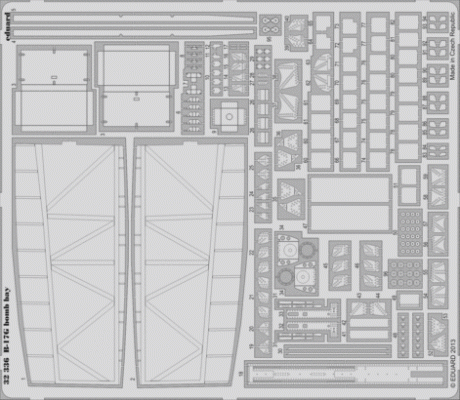
This upgrade seriously improves the appearance of the kit parts by having you replace the sidewalls with PE sheet, and styrene truss bracing. Added afterwards are Gussets with excellent rivet detail. What that does is brings the detail level over the top… it just looks a lot better in this scale. The catwalk has improved rails and sides as well. Additional placards and bulkhead details are added, and in the end (it does take a while) everything comes together.
… MORE on of our long review of Eduard PE parts for the HK B-17 kit… thanks to Eduard for providing us these sets…!!!!!!!!!!!!!
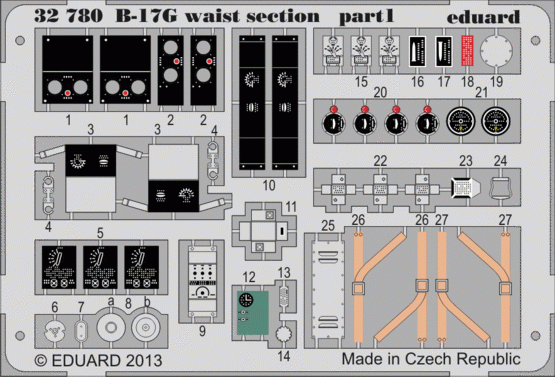
The waist section on this set contains several similar panels and gauges for the crew oxygen and intercom system. Ammunition feed chutes are provided for both waist weapons, as are crosshair gunsights, and an unusual modification in the form of spent ammo casing bags for the waist guns. These, by the way, are supposed to be installed with the CURVED section toward the fuselage sides… I must have been distracted.
The Auxiliary power unit is detailed up with placards, and various bits and pieces. You will have to work to see this on the completed model, unless you open the crew access door on the right side of the aircraft.
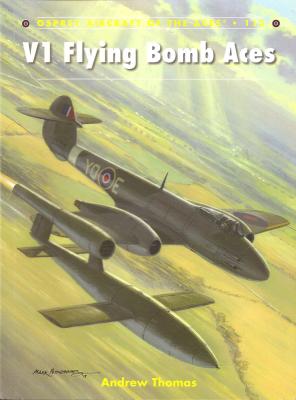
One of Osprey’s latest in the “Aircraft of the Aces” series is number 113, covering Allied pilots that shot down 5 or more V1 Flying Bombs.
This book opens with the words of the first pilot to shoot down a V1 (Flt Lt John Musgrove, in a night-fighter Mosquito) on June 16, 1944. Within minutes, 3 more V1s would be shot down that evening by other members of the same Mosquito squadron. After this exciting opening page, the reader is then guided chronologically through the story of the V1 campaign, starting with the development of the “Buzz Bomb” itself and culminating with the last V1 shot down on 28 March 1945.
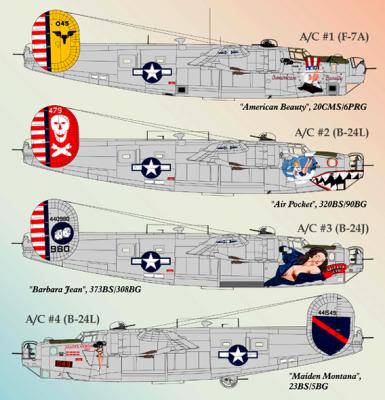
Thanks very much to Lifelike decals for providing IPMS USA these review sets. We appreciate your support and look forward to your future efforts!
I had heard of Lifelike decals, but normally don’t work in 1/72nd scale. However, when these showed up, I had to throw my name in the hat… and am very pleased I did.
The first set, 72-029, covers four B-24’s with four different groups in the pacific region. All have very colorful tail markings, and the nose art is particularly striking. The fact I have not seen these before made them a better value.
Markings are included for the following:
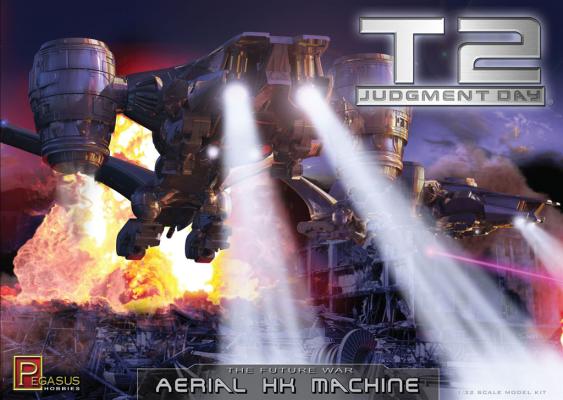
The Terminator series of movies is iconic especially considering that 2014 is the 30th anniversary of the first movie. There haven't been many mainstream kits of the movies. Pegasus has started their releases with the Aerial Hunter killer tank from the 2nd Terminator movie. At the beginning of the movie, the rebels are being chased by Terminators, tanks and Aerial Hunter killers. Previously, this was only released in vinyl as far as I know.
Let me say up front that the challenge to this kit will be the painting. Looking at shots of the movie on the Internet, the Aerial Hunter Killer is colored somewhere between chrome and polished aluminum. For those with the funds, one of the original props is up for auctions (starting at a mere $47,000) but it gives a great view of the actual prop and can be found here and shows the colors well.
The Aircraft
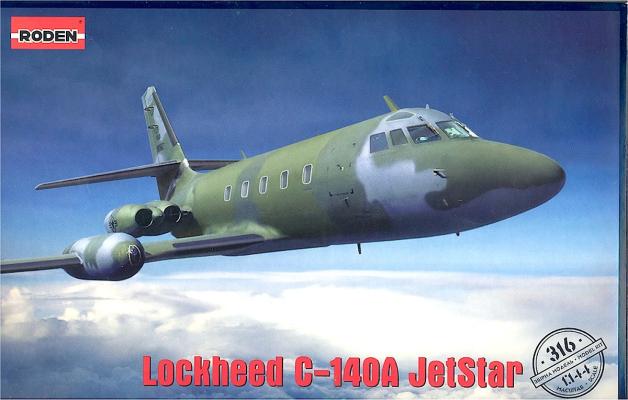
The Lockheed JetStar was originally developed in the late 1950s by Lockheed as a prototype for a US Air Force light transport. The project was not bought by the Air Force, but the prototype was used by Kelly Johnson of the “Skunk Works” as his personal transport. It was the first dedicated “biz’jet” to enter service.
Later the project was resumed, and the Air Force bought 5 C-140As for Air Force Communications Service to test airport navigational aids. Another 5 were bought as VIP transports, as the JetStar could carry 10 passengers and 2 crew, more than any other jet powered business aircraft of the period. The JetStar was also noted for having four engines in pods in the rear, much like the DC-9 or VC-10 airliners.
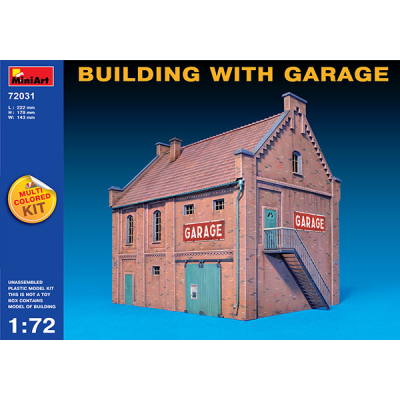
MiniArt continues to dazzle and amaze us with another in their series of building and ruin kits. This time, in 1:72 scale, we have “Building w/Garage”, kit #72031. This a typical mid-century European automotive service garage building with the residence located up on the top floor. The kit represents a complete, undamaged building and not a ruin. It is also all injection molded styrene with none of the vacuum-formed parts found in some of their 1:35 scale releases in the same genre.
The Box
The 13.5’” by 10.5” by 2.25” box is the preferred top and bottom (lid) type. There is a nice artist’s rendition of the building on the box top which can serve as a helpful painting guide, although colors can ultimately be left to the imagination of the individual modeler. However, considering the weight and quantity of the box contents, I felt that the box was a bit flimsy (mine is coming apart already!).
Background
U.S. Air Force Fact Sheet
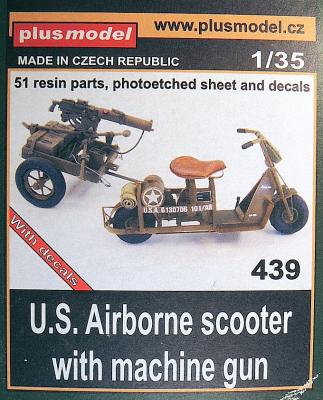
Cushman Airborne Scooter - In the late stages of the war in Europe, Allied paratroopers used scooters like this one to maintain contact between units, increase their mobility and haul small loads. The Cushman Motor Works designed the Model 53 Airborne Scooter to be airdropped by parachute or carried by glider, and it had a hitch to pull a model M3A4 general-purpose utility cart. By adding certain equipment, the cart could be converted to carry a .30-cal. or .50-cal. machine gun or an 81mm mortar, though the scooter often could not pull a heavy load. Cushman made nearly 5,000 airborne scooters for the military beginning in 1944. The rugged, simple Model 53 could travel through a foot of water, climb a 25 percent grade and had a range of about 100 miles.
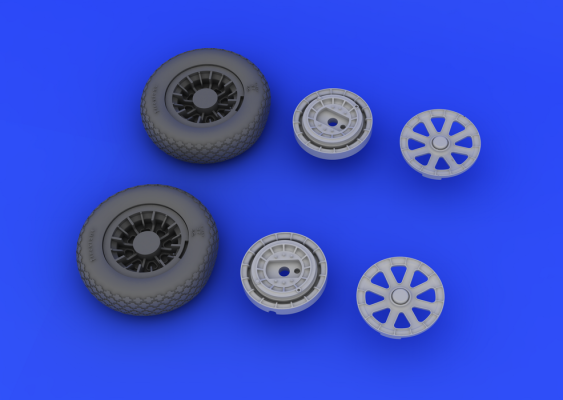
One of the latest releases from Eduard in their still relatively new Brassin line are a pair of wheels meant to replace the kit provided ones in the Tamiya 1/32 scale F4U-1 Corsair. Consisting of six resin parts and a set of masks to aid in airbrushing the wheels and tires, the set can be used to dress up the appearance of the Tamiya kit, especially for modelers that do not like using rubber tires on their kits.
History
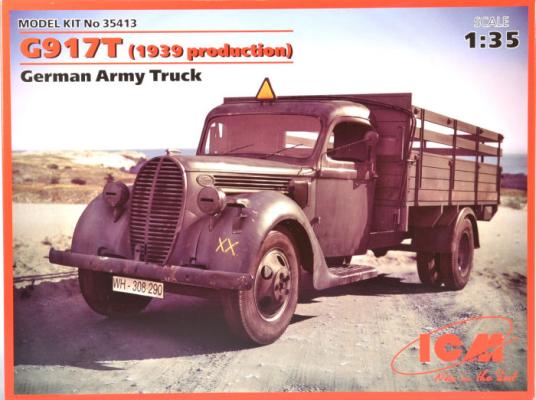
The main part of the German Wehrmacht autopark during WWII formed 3t cargo trucks. One of the most numerous was the model G917T, which was produced since 1939 in German Ford plants in Cologne. This truck was equipped with a V8 engine and had rear drive only. G917T trucks were widely used in all German arms of service in all theatres up to the end of the war. Roughly 25,000 were produced in German plants from 1939 to 1941.
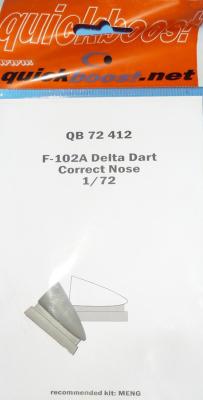
Quickboost has added the correct nose for the F-102A to their line of resin aircraft accessories. This latest addition is molded in a gray resin, it’s smooth, seamless and bubble free. One thing of note is that the package says that it is for the Delta Dart, but it should read for the Delta Dagger.
Comparing the Quickboost parts to the Meng parts is a little hard to see. Once I took a photo I could really see the difference. The kit part looks narrower to the Quickboost part and closer to photos that I looked at. Replacing the nose is actually an easy process because Meng molded their nose as a separate piece. Just remove the Quickboost nose from the mold block and use CA glue to put it into place.
I very highly recommend this product if you want a nice and detailed F-102A. I would like to thank Quickboost and IPMS USA for the chance to do this review.
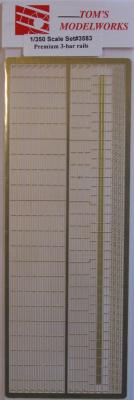
Many, many thanks to Mr. Richard Harden of Tom’s Modelworks for providing this beautiful ship model enhancement set for review. I am also deeply appreciative of the IPMS Reviewer staff who tirelessly support a very large group of reviewers. I am delighted to report on my experience with this neat product.
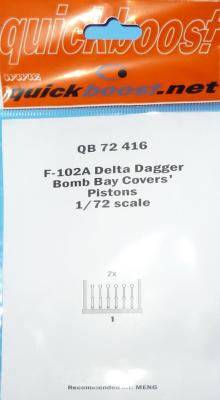
Quickboost has added the bomb bay pistons for the F-102A to their line of resin aircraft accessories. This latest addition is molded in a gray resin, it’s smooth, seamless and bubble free. The package label says that it is for a bomb bay but it is actually called a missile bay because the F-102 was an interceptor not a bomber.
Comparing the Quickboost parts to the Meng parts you will see that the Meng pistons are molded to the missile bay doors and that the Quickboost pistons have a more 3D look to them because they are separate parts. To use the Quickboost parts you will have to shave off the molded on pistons and replace them with the new Quickboost parts. Removal of the Quickboost parts is very easy because they have a little bit of a perforation and can be removed from the mold block with a hobby knife.
I very highly recommend this product if you want a nice and detailed F-102A. I would like to thank Quickboost and IPMS USA for the chance to do this review.
Background
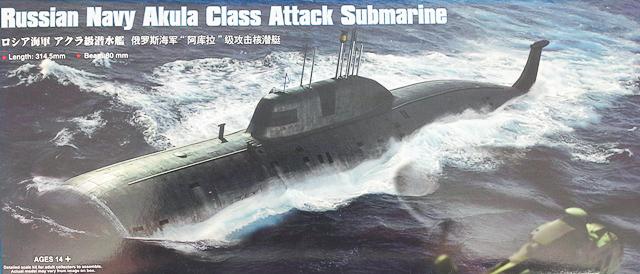
Code-named “Akula” by NATO and Project 971 Щука-Б (Shchuka-B, 'Shchuka' meaning pike) by the Russian Navy, this nuclear-powered attack submarine was first deployed by the Soviet Navy in 1986. In all, 15 Akula class attack boats have been built, spanning 4 distinct subclasses, with the original 7 commissioned between 1984 and 1990, six upgraded boats between 1991 and 2009, and one-each offshoots in 1995 and 2001 respectively.
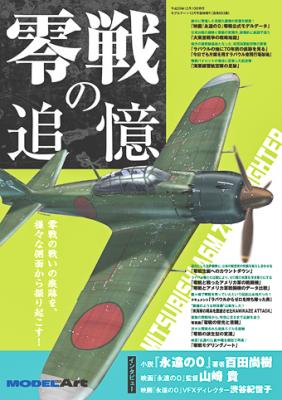
Model Art is known for high quality magazines, with excellent photographs that guide the modeler through some impressive builds. This publication continues that tradition.
This publication focuses on one of Japan’s best known aircraft from World War II, the Mitsubishi A6M Zero. It is important to note that the publication is presented in Japanese. English-speakers will have no trouble relying upon the excellent maps and images in order to enjoy the book.
And, enjoy you will! The book begins with an outstanding illustration of a Zero, banking into a turn, by artist Y. Sakaida. He successfully captures the beauty and power of the Zero in this effort, and this illustration sets the tone for the publication.
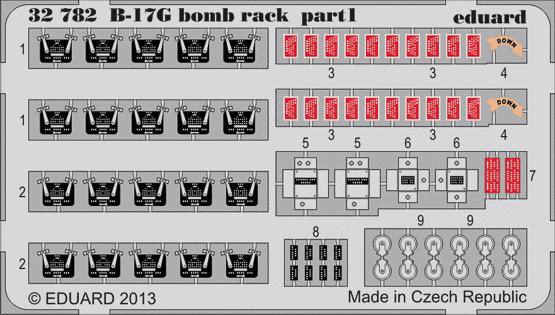
This set covers what is not included in the bomb bay set: the racks themselves, latches and placards in color etch, bomb carry racks, tail section cover plates for the bombs, fuse propellers (front and back), and some cats and dogs for the lift mechanisms.
This was one of the more difficult sets to review, in that you must remove plastic side rails on the racks without destroying the racks themselves, and then fit the cover sheet metal plates over the bomb release shackles, (which also require modification before the PE will work). It took a while, but I got there, just no magnifiers when viewing, please.
I will be installing the bombs toward the end of the build, but it’s pretty self-evident these parts will make a difference in the appearance of the bombs themselves.
As noted in the other reviews, more high marks for Eduard for this series of PE upgrades; 10 of 10. Thanks again for the review items!
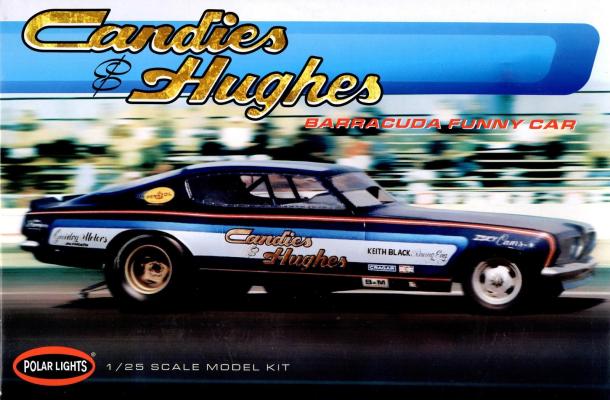
Round 2 / Polar Lights have recently been reissuing many of the drag racing kits of cars that were campaigned in the early and mid seventies calling them the Legends of the Quarter Mile. By today’s standards, these kits are rather dated with many pluses and many more minuses.
Kit includes:
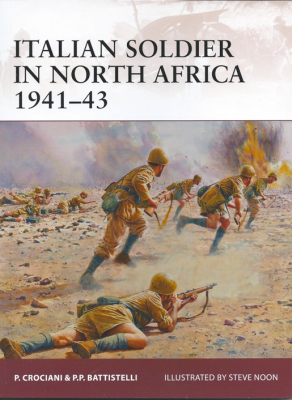
The history of the Italian Army in World War 2 is an often misunderstood one, colored by many unflattering rumors, generalizations and misconceptions. This latest issue in Osprey’s Warrior Series, “Italian Soldier in North Africa 1941-43”, tries to set the record straight and in doing so, paints a harrowing and desperate account of the hell experienced by the Italian soldier during the North African campaign. Not only did they battle opposing forces, but also their own incompetent command staff. Severe shortages of food, water, equipment and adequate medical care would plague the Italians for the entire campaign.
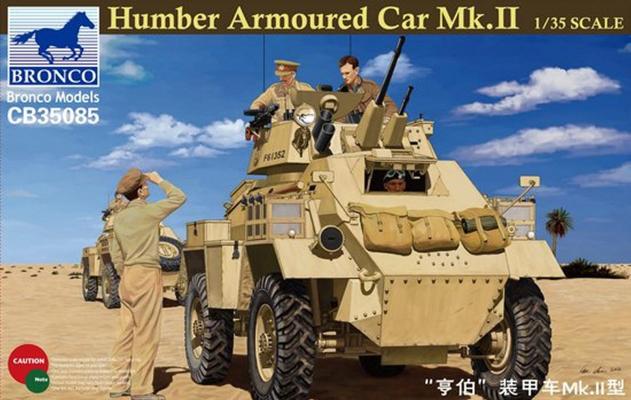
This kit is a representation of the British Army’s Armoured Car that was developed in 1941 after revisions to make the production easier. It served till replaced by the Humber Mk III or the Daimler Mk I.
This is a multimedia kit but the use of the Photo-Etch is required, there are no optional plastic parts. Please be aware that some of the plastic parts are very, very small and will take a steady hand to get them off of the sprue without damage. And when they are off the sprue these minuscule parts do their very best to hide or get lost in the carpet or even on the work table.
This model has a complete interior for the engine, driving and fighting compartment. The kit has over 500 individual pieces and this gives the model great detail at the expense of time consuming miniscule parts.
This is the final part in the long review of Eduard’s PE for the HK B-17G. We are sincerely and eternally grateful for their support; it’s been a long, rewarding couple of months doing these reviews!
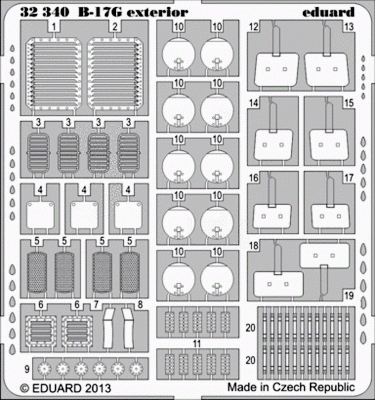
This final set is also a simple one; exterior details that make a noticeable difference in the appearance of the surface sections. Included are oil cooler intake screens, panels, and overwing fuel doors and hinges for the aircraft. Certainly you can modify and open all the refueling doors (remember to keep the cigarettes 50 feet away) to add a lot of life to the model, particularly in a diorama setting.
Small point; the square latch always is toward the tail of the aircraft, in case the door latch failed or was not fully closed. This prevented the door ripping off in the slipstream or allowing a full siphon of fuel from the door in flight.
This is the final stretch reviewing Eduard PE parts for the HK B-17 kit. Even more thanks to Eduard for providing us these sets!
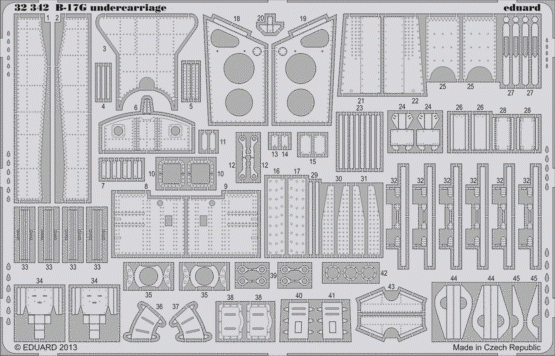
The landing gear set addresses an area frequently neglected by many modelers; the landing gear and wheel wells. Intended for the kit plastic gear, there are numerous straps, tow eyelets, and panels to apply to bring the struts to life. I Purchased and am using a set of SAC gear for strength. The review copy of this gear is to be reviewed by another IPMS member, so I’ll refrain from comment on these other than to say it is a drop fit for strength. In the interim, the kit gear will benefit greatly from Eduard’s efforts.
The tail wheel well gets full treatment, adding brace, side and top panel and rivet detail where none existed on the kit. The same treatment is applied in the main wheel well area; duct braces, additional detail sheets, some boxes, and air flow straighteners. The detail added makes quite a difference.