Reviews of products for scale military vehicle models.

Review Author
Michael Novosad
Published on
Company
AFV Modeller
MSRP
$14.95

Format

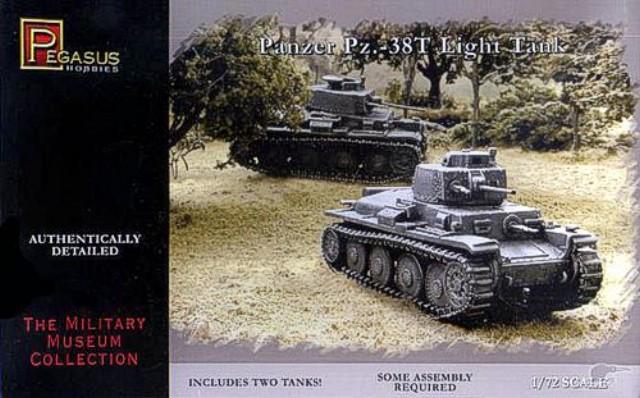
The cover for this issue has a stunning image of Jose‘ Dusquesne‘s Pz. Kpfw. 38 (t). The publication is printed on medium-weight glossy paper, with color images on every page. In some article there are several images numbered and keyed to the text. This issue contain 64 pages.

Contents

The first article is by James Bond, and features The ICM kit of the Russian B-35, “Land Battleship”. The author put a great deal of effort into this model, and several in-progress images are included. The Fruil tracks used in this build were 24” long, and when wound about the suspension should be a model over 10” long. A land battleship for sure. Informative building techniques offered to the reader.

Review Author
John Lyons
Published on
Company
Bronco Models
Scale
1/35
MSRP
$39.95

Short History

The YW-531a was the first APC manufactured by Norinco for the PLA. It was designed in the early 1960’s and first appeared in 1964. It can carry a crew of 4 to 10 troops. The YW-531 was first used in the Vietnam War by the North Vietnamese Army (PAVN) and was in action again in the Iran-Iraq War.

APCs are usually armed with only a machine gun although variants carry recoilless rifles, anti-tank guided missiles (ATGMs), or mortars. They are not usually designed to take part in a direct-fire battle, but to carry troops to the battlefield safe from shrapnel and ambush. Amor on APCs is usually composed of simple steel or aluminum, sufficient for protection against small fire arms and most shell fragments. Just about any type of anti-tank weapon can defeat the armor of an APC. Some APCs also come with NBC protection, which would protect its crew from radioactive fallout or the like.

Review Author
Michael Novosad
Published on
Company
Dragon Models
Scale
1/35
MSRP
$49.99

History and Performance

The references I used for this review include Panzer Tracts No 20-1, Paper Panzers, and Germany’s Tiger Tanks VK 45.02 to Tiger II.

The production contract to build these vehicles had been awarded in February 1942. The subject vehicle for this review never made it to full production. Several turrets and hulls were completed, but because of significant problems with the Porsche designed and built engines and suspension the contracts for the production series were terminated in November 1942. The fifty turrets manufactured for this vehicle eventually were used on the first 50 Tiger II tanks, and were known as the “Porsche“turrets...

Review Author
Andrew Birkbeck
Published on
Company
Dragon Models
Scale
1/35
MSRP
$56.95

Editor's note: This review contains an embedded review of: Bronco Models 1/35th scale Sherman T51 Workable Track Set Kit: AB3542 MSRP: $19.95.

Dragon Models Ltd. has blessed the Allied WW2 armor modeler with yet another version of the Sherman tank. This time around the modeler is presented with the 105mm howitzer version of the M4. This vehicle consisted of a 105mm gun, mounted in the so called “high bustle” turret, atop a “large hatch” (47 degree) M4 hull. The kit consists of 11 sprues of injection molded parts, slightly more than 450 parts, together with a fret of photo etched brass parts, a pair of DS 100 rubber tracks, and a short length of metal cable, and decals for three vehicles. Perhaps 100 parts are “surplus to needs”, and care needs to be taken when figuring out which parts go with which variant.

Book Author(s)
Steven J. Zaloga
Review Author
Andrew Birkbeck
Published on
Company
Osprey Publishing
MSRP
$17.95

Despite the use of “tanks” in the First World War, and their use in the opening stages of the Second World War in Poland, September 1939, it was in the Battle of France in May 1940 that these weapons were used for the first time on any large scale. The battles around the French towns of Stonne, Hannant, and Gembloux for the first time in history saw massive clashes, involving hundreds of tanks on both the French and German sides. And it was during these battles that actual “armored divisions” from both sides were involved. This book covers the two major armored vehicles of the Battle of France, the Wehrmacht’s Panzer IV, and the French Army’s massive Char B1 Bis. The author, Steven Zaloga, is a well known military historian of the Second World War, and also a keen modeler. He is also a very good writer, and the prose of this book flows very well.

Review Author
Mark Aldrich
Published on
Company
Bronco Models
Scale
1/35
MSRP
$39.95

The YW-531C has a history dating back to the early sixties. The Chinese firm Norinco produced the first indigenous vehicle and rolled it off the assembly lines as the Type 63 in 1963. It was fraught with mechanical and technical issues that were quickly overcome. As with all base vehicles, many variants and ideas were applied to and tested on the design. In 1982 the Type 63C started rolling off the assembly lines and the export version was designated YW-531C. The vehicle has a German air cooled diesel power pack, weighs in at 12.8 tons, carries a 12.7mm machinegun for self defense and anti-aircraft and holds a 15 man crew (13 soldiers and 2 crew members). The Iraqi Army received at least 150 of these vehicles. They saw extensive use in the Gulf War. Photographic evidence is very limited and there are several in museums but I have not uncovered any interior shots as of yet.

Book Author(s)
Author: Richard Doherty, Illustrator: Henry Morshead
Review Author
Gary Telecsan
Published on
Company
Osprey Publishing
MSRP
$17.95

“This is #177 in the New Vanguard Series which explores the design, development, operation and history of the machinery of warfare through the ages.”

So says the tag line of Osprey’s advertising copy, and it is a fair description of the contents of this volume. The author, Richard Doherty, has a number of books to his credit, the most notable of which are about the reconnaissance corps which used the Humber car during the Second World War.

Book Author(s)
David Doyle
Review Author
Ed Harm
Published on
Company
Squadron Signal Publications
MSRP
$18.95

From Vietnam to the present day, and many conflicts in between, the M108/M109 and its many variants have been the backbone of the Field Artillery’s axiom, “Shoot, Move, and Communicate.” It’s presence on any field of battle has provided the ground commander with unparalleled, timely fire support throughout many years, and continues to this day.

Review Author
Scott Hollingshead
Published on
Company
Tamiya
Scale
1/35
MSRP
$31.00

First released in 1974, the Tamiya M8 Howitzer Motor Carriage still holds up reasonably well to more modern offerings by this company, as well as some of the new folks on the block. This is one of several 1/35 scale kits that Tamiya has decided to re-release this year, and I for one certainly enjoy having another opportunity to build some of the kits that I missed out on back when they were originally released, as I had not yet picked up the armor modeling bug. A few years ago, I recall seeing a photograph of an M8 built by another modeler, and I started a search that took me a little over a year to fulfill in finding one of the original kits. That one is still on a shelf (along with a Verlinden update set), but this was a great opportunity to build what is a very well designed kit, even by today’s standards.

Review Author
Michael Novosad
Published on
Company
Dragon Models
Scale
1/35
MSRP
$57.95

History and Performance

In the summer of 1943 a proposal was offered by Steyr Werke to the Ordnance Department for the mounting of a PaK 40/4 on a RSO chassis as a small self-propelled anti-tank weapon. 60 machines we converted for testing. Combat trials on the East Front began in early January 1944.

The Kit

The kit is packaged in Dragon current sturdy box, with a color image on the front and a montage of features on the box bottom and sides. The box top shows that over 460 Parts are included. There are eleven sprues, molded in the familiar grey plastic with crisp detail. The hull and chassis front are molded separately.

Instructions - The instructions are typical Dragon, with eight fold-out pages. There are a total of 21 construction Steps, with numerous subassemblies noted. Very busy for such a small kit, but it gets one’s attention. There are no unused Parts indicated.