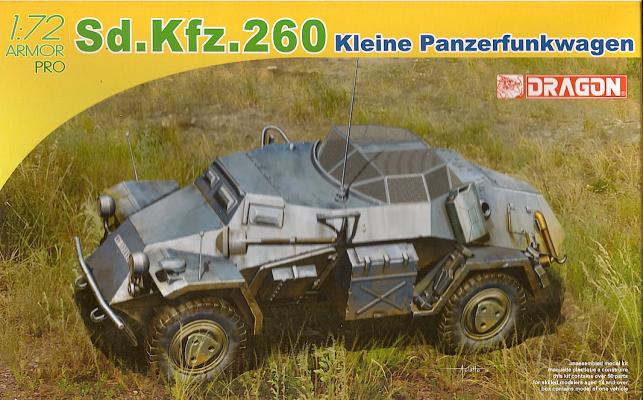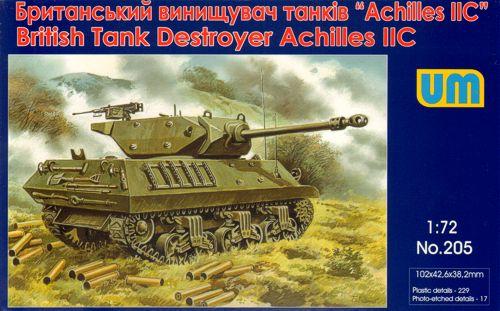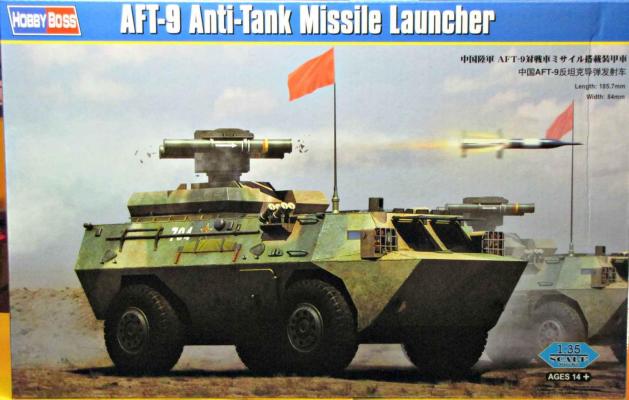
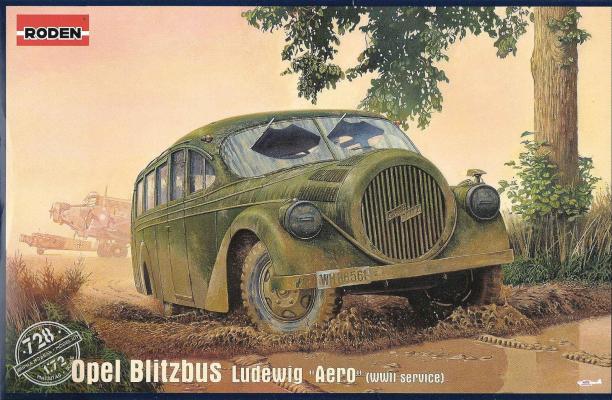
I will start this review with a simple statement: this is one of the most complex, highly detailed, and simply wonderful models I have ever had the pleasure to encounter. It has 13 sprues of plastic parts with exquisitely fine details. Additionally, there are three frets of photo etch brass parts, 32 metal springs, 8 tiny metal shafts, and a length of metal chain. The small set of decals covers 4 different vehicles from three different nations’ armed forces. And, despite all this complexity, the kit assembles, with a few notable exceptions, extremely well. So read on!
In the mid 1930’s, the nation of Czechoslovakia had one of the most sophisticated military arms manufacturing industries in Europe. Upon the German annexation of the Czech territories known as the Sudetenland in 1938, and the occupation of the entire country in 1939, the Czech armament factories fell into the hands of German forces. Two main tanks originated from these factories, known as the Panzer 35(t) and Panzer 38(t) to the Germans (“t” is short for the German word for Czechoslovakia, “Tschechoslowakei”). The Panzer 38(t) chassis soldiered on throughout World War Two as the basis for a number of tank destroyers and self propelled flak guns, while the Panzer 35(t) had a shorter career.
This was another item that had been on the review list for some time before I volunteered for it. As this vehicle comes with almost no external markings, Steve said I could do it as a Middle East Vehicle. I am thinking Syrian Militia based on a picture I came cross surfing the web. However, I do need to include some information about this particular kit as it might actually be a “What If”.
The Kit
Nearly 100 injection molded parts in tan plastic plus 2 black plastic treads. All parts exhibit crisp detail and are flash free. The muzzle of the main gun is not slide-molded so will need to be drilled out. Being a snap kit, all parts had a number of locating pins. All of them fit together without modification.
The JGSDF Type 60 APC
The Japan Ground Self Defense Force (JGSDF) is the main branch of the Japan Self-Defense Forces responsible for land-based military operations. It is the de facto army of Japan.
Development of the Type 60 armored personnel carrier (APC) began in 1957. Mitsubishi Heavy Industries and Komatsu Ltd. were tasked by the Ministry of Defense to develop prototypes for an APC that would see use exclusively in Japan by the JGSDF and could keep up with their main battle tanks. From 1958-60, several prototypes were evaluated. In 1960, the Type 60 was selected and production began. There was no amphibious capability, nor was the vehicle protected from biological, chemical, or nuclear contaminants. It was capable of a top speed of 28 mph and weighed 11.8 tons. The armor was welded rolled plate steel, good enough to protect against most rifle calibers and shrapnel.
The recent release of the Meng AMX-30 B was quickly followed up by the AUF 1. It uses virtually the same hull as the AMX, so it’s an obvious follow-on to the AMX. In the 1970s, the French Army explored a new self-propelled howitzer to replace the MK F3 155 mm. Development of the AUF 1 was completed in 1972 and production began in 1977 with a run of 440 vehicles. Vehicles were also exported to Saudi Arabia and Iraq. It’s armed with a 155 mm gun with an auto loader and a crew of four.
The kit is composed of eleven sprues molded in green and five sprues of track links and pads molded in brown, a small sprue of clear parts, a small fret of photo etch, and a lower hull and turret. There are decals for two vehicles, though the color profiles only feature one.
Assembly
I wrote the review for the AMX 30, so the assembly of the chassis and tracks is nearly identical to the AMX 30.
Background
The Merkava Mark III was originally introduced into the IDF in December, 1989. Sporting upgrades to all major systems, the Merkava was the most modern main battle tank in the world for its time. The Mark III was given a 1,200 horsepower engine, a 120mm Israeli-designed main gun, and new laser designation and fire control systems. The development of the BAZ system in 1995 further increased this vehicle’s survivability and lethality. Some features of the BAZ system are air conditioning, NBC systems, and removable modular armor on the chassis and turret.
Italian armored equipment has never received the level of coverage than armored equipment from other countries has gotten. This book is part of recent efforts to correct that historical trend.
The book has 3 main sections: the walk-around of three preserved self-propelled units (two M 41 and one M 42), a section with line drawings, and a brief historical summary, with period photos.
The walk-around is clearly the most important part of the book. It covers three surviving Semoventi, the M 41 da 75/18 at Rome, the M 41 da 75/18 at La Spezia (this one is a full running Semoventi), and the M42 da 75/18 located in Rimini. The last one is in German markings and built to German specs, after the Italian surrender.
The pictures are in full color (for a total of 171 pictures among the three Semoventi), including interior pictures. They show every detail from the running gear to the weaponry, armor plates, external brackets, etc.
If you are looking for a fun, easy to assemble kit to fill some of your time during the dog-days of summer, I would suggest that you consider looking towards the folks at Dragon and one of their latest releases, a 1/72 scale Flakpanzer that is based on a Panther chassis. Aside from the road wheels, there are a minimal number of parts for this kit, which allows for quick assembly. The fit of the parts presented no issues, and the builder ends up with a nice-looking late-war paper-Panzer. A person with relatively little modeling experience can have very good results with this kit.
I enjoy 72nd scale armor kits; they're usually easy to build without a zillion parts. Also, I've built mainly aircraft and cars over the last 15 years, so a fresh subject helps to get the modeling juices flowing again. This kit fits the bill. It's well cast with crisp moldings and excellent details for the scale, and the finished model certainly looks like the real-life subject (though I'm not counting the rivets).