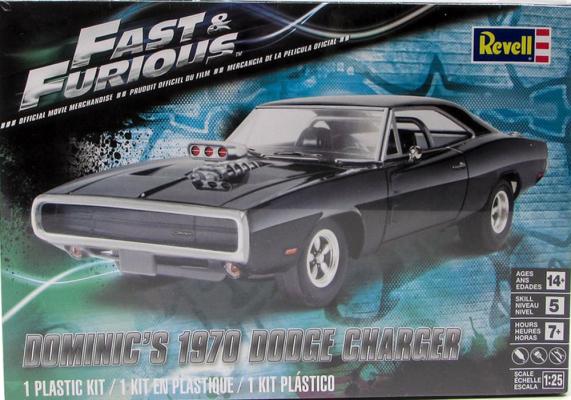
Finally, a proportionally accurate ’70 Dodge Charger is available for MOPAR enthusiast in 1:25th scale. This model does the immensely popular Fast & Furious muscle car justice and it’s sure to be a standout on your display shelf.
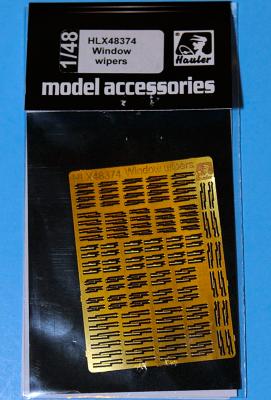
A feature that you can quickly notice on almost any 1/48 soft-skin AFV are the windshield wipers. Often they are either molded into the clear windshield, or they are absent all together. Hauler has come to the rescue with eight different sized windshield wipers. The photoetch sheet provided gives you a total of 120 individual windshield wipers along with simple instructions on folding them to set on the windshield.
Hauler uses an open plastic pouch that is stapled to the header card. You will want to be careful handling the photo-etch windshield wipers as their small size makes them an easy sacrifice to the carpet monster.
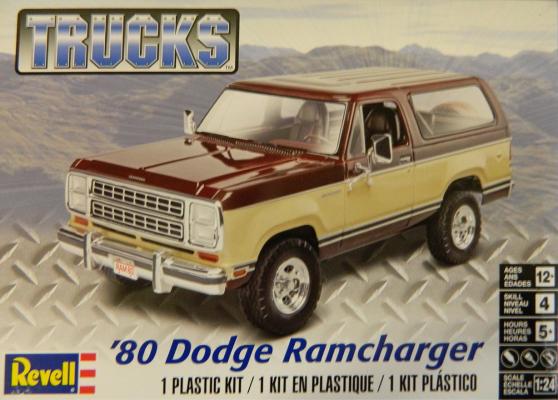
Revell has re-released a fine kit that’s sure to be a hit. It is the 1980 Dodge Ramcharger. A person can go really wild with this kit if they’re willing to change things around a bit.
Engine
The engine is pretty basic and the kit offers no options and no chrome. I installed ignition wires, throttle linkage, and a fuel line with filter.
Interior
The interior is just a simple tub design with molded side panel engraving is really lacking in detail. The kit does have a rear seat that I decided to leave out to carry the spare tire.
Body
The body was straight although the bumpers and grill didn’t fit perfectly into final assembly so it was necessary to do a bit of tweaking. The sunroof is molded into the kit body part. To change things up a bit, on the side and rear kit glass, I used some peach tinted acetate. HOK cinnamon pearl and cocoa pearl adorn the boyd.
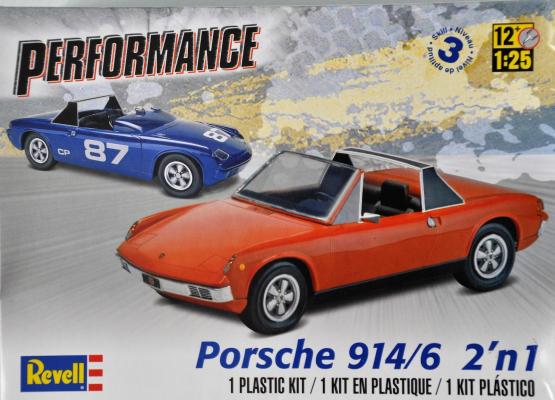
Created as a joint project between corporate partners Porsche and Volkswagen, the 914-6 hit the US market badged as a Porsche. It could have been called a Volkswagen, and in Europe, it was!!!! Produced in two mid-engine versions; a woefully underpowered four cylinder (-4) and six cylinder (-6). Each manufacturer had reservations about both versions. Designed to replace the entry level 912, it became the leading seller in the Porsche stable, the -6 version costing nearly as much as the 911!! The 914 was highly visible both on the road and on the track. I chose to build my sample as the stock version.
Molded in White Plastic, with one sprue of chrome plated parts, some clear parts and four vinyl tires the kit consists of 70 parts. Parts for both the street stock and racing version are included. Instructions and a sheet of decals complete the kit.
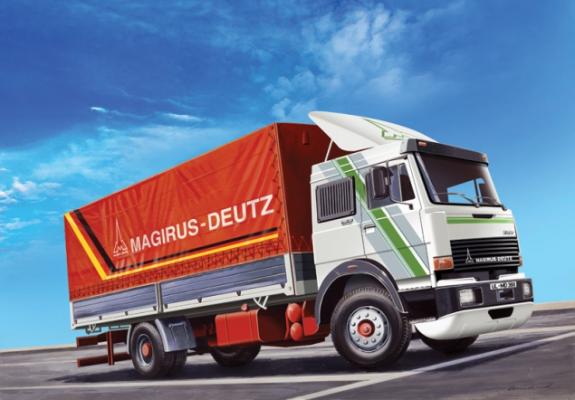
After WWII Germany’s auto/truck industry was desperate for customers. The famous Deutz motors were mated to the Magirus haulers and they filled the Autobahn with their workhorse trucks. Magirus even found buyers in their former enemy; and sold thousands of units to the Russians.
This is a nice kit, with good detail and nice fitting parts. There is some cleanup for seams and flash, but it’s a fun kit to assemble.
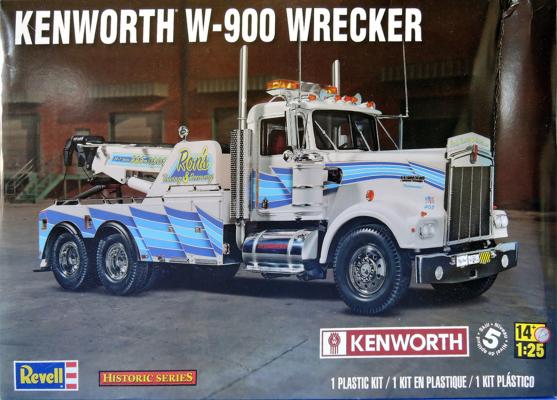
The Revell Kenworth has been around since 1996 and has been reissued in several configurations. It has included different sleepers, a previous wrecker, and even a dump truck. It appears that the only difference in this version of the wrecker are the decals.
This behemoth of a kit comes in a huge box that is 14 x 20 x 5" tall. The kit is part of Revell's Historic Series and is listed a skill level five for ages 14+. The kit is 14 inches long and includes 411 parts, many of them very large.
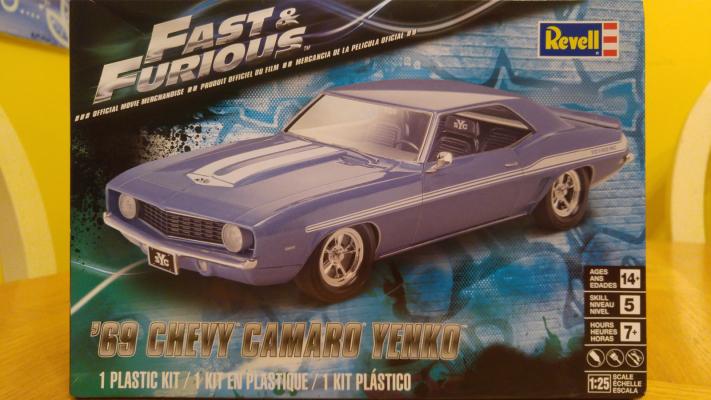
The model I am reviewing here is one of the cars out of the second movie in the Fast & Furious endeavors.
The story began back in 1967 when Chevy introduced its new pony car for the first time, the Camaro. Finally, in 1969, after Don Yenko had tried to convince them to let him build his idea of the ultimate muscle car those first couple of years, Yenko was able to convince the powers that be at Chevrolet to let him produce a special series of cars with enhanced performance characteristics under the GM COPO order program. He was able to purchase 201 of these vehicles. They were built in a factory in Pennsylvania. These specially built performance machines came equipped with a L- 72 427 C.I. big block Chevy powerplant combined with a four speed transmission, along with other performance parts and a deluxe interior unique for the Yenko design. Hence the Yenko SC Camaro was born.
History Brief
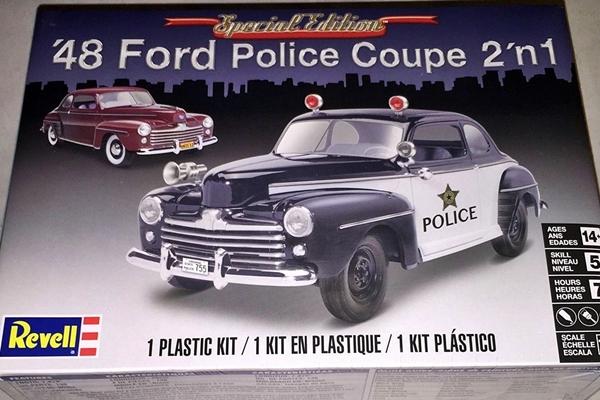
The 1948 Ford was the final year for a new design that began in 1941 with a completely updated, wider and more modern looking car. Shortly after the new car was introduced in 1941 however, Ford had to convert its factories to war production. It wasn't until 1946 that car production resumed. The Coupe came in 3 trim levels, this '48 model being the Super De Luxe version powered by a 239ci Flathead V-8 engine.
Terms for police cars include (police) cruiser, squad car, area car and patrol car. In some places, a police car may also be informally known as a cop car, a black and white, a cherry top, a gumball machine. Depending on the configuration of the emergency lights and livery, a police car may be considered a marked or unmarked unit. Whatever you call them, since the first incarnation the police car has been one of the most valuable pieces of equipment our law enforcement agencies have at their disposal.
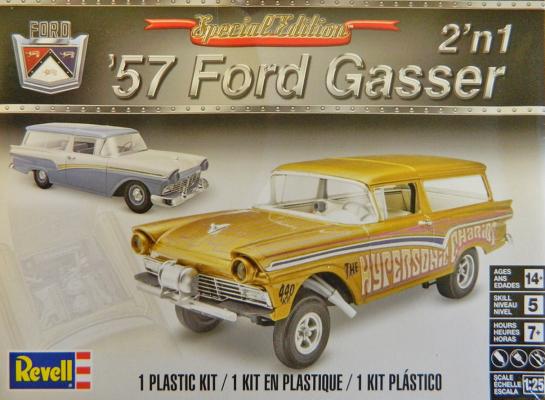
Oh man, did Revell to a number on this kit. WOW!! You build a stock ’57 Ford Del Rio or build a gasser with the parts contained in the kit. This appears to be a follow up kit to ’57 Ford Del Rio kit that builds stock or as a police vehicle.
The engine comes with the parts for a single or dual quad intake manifold, fender well headers and 3 different air filters. All the engine parts fit together very well.
Revell did an interior platform with separate side panels and seats that feature wonderful engraving. I departed from the kit and installed 4 bucket seats and a console.
The Ford long roof body Revell made is magnificent! Door handles, rear lift gate, hood ornament, mirror, and windshield wipers are all separate parts. I choose to leave some of those pieces off in my desire to make build a mild custom car. I also modified side trim by removing the top portion. I used HOK planet green paint to finish off the kit.
"It’s Back!"
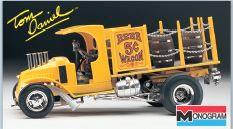
I was quite caught off-guard when I discovered that the Tom Daniels “Beer Wagon” was to be reissued by Monogram/Revell this summer. There had been nothing noted on any recent publications from Revell that this kit was to coming back out, but I am so happy it has resurfaced. Now, how many different variations to this kit can I build?
Historically this is the single kit that launched my interest in scale modeling. Not the first kit I ever built, but the first kit release from Monogram in 1967 under the Tom Daniel’s banner. Many more would follow of which I have built nearly 50 of the various Tom Daniels designs and have a collection of over 80 of the 80+ he is given credit for drafting.