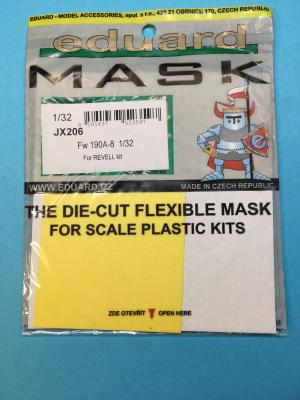
Thank you to the Eduard Company for sending this masking set for review, it is always a pleasure to see what your new products bring to the scale-modeling world. Thank you also to the IPMS Reviewer Corps staff members who do the hard work in getting us modeling products to review, the reviews posted, and the news spread to the world.
Introduction
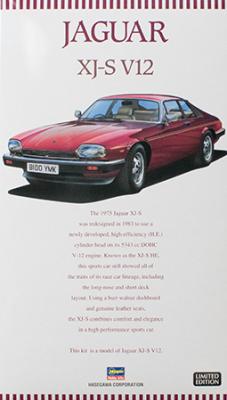
This kit was initially issued in 1983. I first bought a copy from the BX at Sheppard AFB, TX in 1988, mine was the TWR Sports edition and is still in my stash!! I was always a bit nervous about the chrome trim on the body and getting it right, but it turns out I didn’t need to worry, Hasegawa did a great job molding this kit and it was not difficult to get a good result. This kit has held up exceptionally well for being 35 years old. The plastic is crisp and flash free and the fit is what you would expect from this company…..excellent!
Introduction
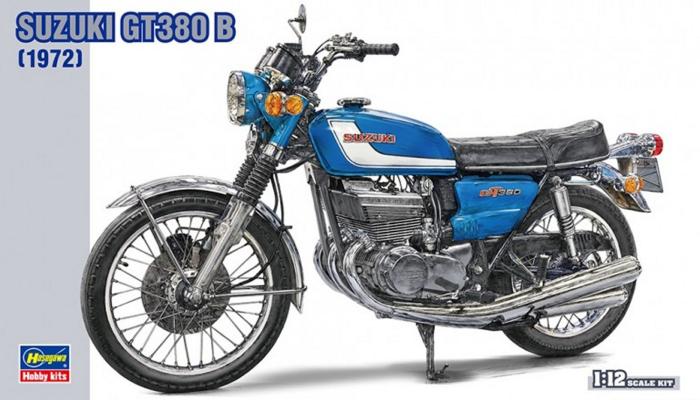
The Suzuki GT380 B went on sale in 1972. It had a 3-cylinder motor and exceptional handling. The kit was initially released in 2017 and is a new mold. It looks like it’s the first of a series of 1970s bike kits and that is great news because these kits are very well detailed and a lot of fun to build.
Construction
The kit comes on five sprues and has rubber tires and vinyl hoses. The chrome is super bright and even though the exhaust is made up of two pieces, the seam will not be an issue because of a raised lip on one half. The overall level of detail is amazing and the model looks great out of the box.
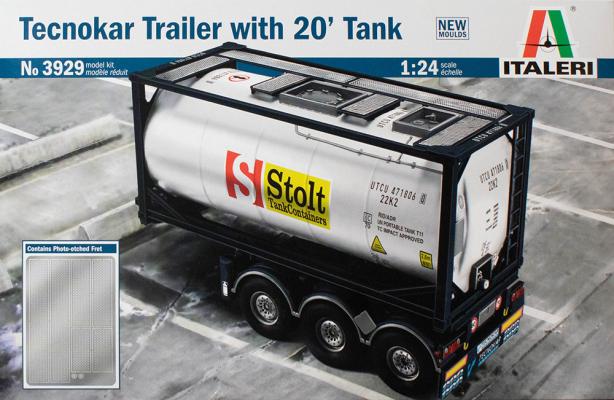
From Italeri's assembly instructions: The 20' Tecnokar Tank trailer is designed to ensure the highest level of efficiency in the liquid and fluid transport. The sturdy steel frame, on a three-axle system, made by the Italian Company, is able to load a 20' tank ideal to be used in the container intermodal logistic. It can well satisfy the need of complex and integrated logistic companies that adopting intermodal transport solution of liquid goods. That’s more and more important taking in consideration that, in the recent years, the intermodal transport solution of liquids, especially the liquids destined to the food industry, is a “must have” to guarantee reliability and respect of the delivery time.
Wait! What?
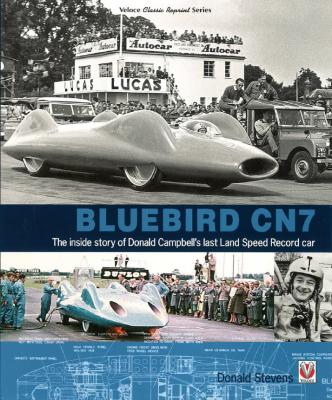
This is a reprint of the original edition first published in 2010 in Veloce’s Classic Reprint Series. The author’s biography is available on the Veloce website above and is as follows: “Donald Stevens was born in the East End of London, but grew up in Haywards Heath, the Sussex market town to which he was evacuated in 1939. In his early teenage years he became fascinated by aeroplanes and other machines, and on leaving school began training as a mechanical engineer. At 19, he joined the newly-formed design consultancy Norris Brothers Ltd as its first employee and became a member of the design team for Donald Campbell’s Bluebird hydroplane (K7). Following National Service in the RAF, Donald became project coordinator for the design and construction of the Bluebird car. This is his first book.” I was unable to locate if Donald Stevens has written any subsequent books, but you can see Donald on youtube.com discussing this book.
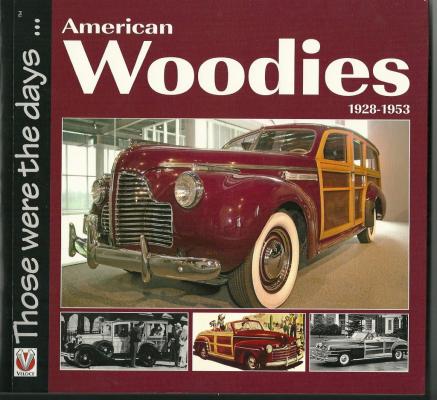
Veloce Publishing continues expanding its line “Those were the days…” this time with a book devoted to the American Woodies. While the book title says “1928-1953”, it does provide some history prior to those years, going all the way back to 1886.
The first chapter describes the origin of the woodies or “station wagon”, a sort of railway station shuttle to your vacation hotel. The second chapter describes how Ford led the way on making the Woodies popular and the last two chapters covers the immediate pre-WWII years and the immediate post-WWII years.
The book is not meant to be a detailed recount of every “Woodie” out there, nor a source of detailed information for a restorer. It is more of a gallery of pictures, some details and stories leading to how the Woodies became an icon of the ’40 and’50s. You will find Fords, Hudson, Chryslers, Studebaker, Crosley and more.
Engine
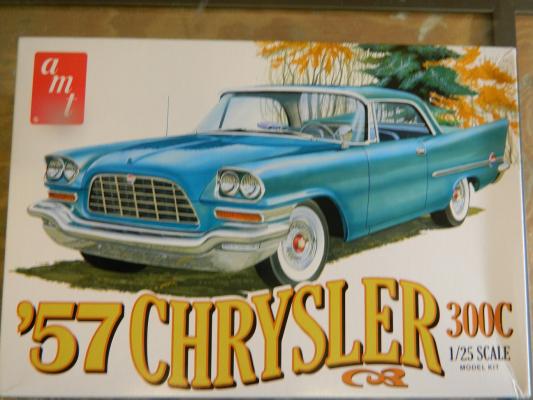
There was little flash on the engine parts with excellent details. You get just a basic Hemi engine.
Interior
Deep engraving can be seen on the door panels making it easy to detail paint. Seats and side panels are separate pieces from the floor. I used a Testors flat tan and flat black as called for on the detailed instruction sheet.
Body
The body went together very well with no adjustments necessary. My choice was to go with the Tru-Color artic white paint to maintain the factory stock look.
Chassis
The frame rails are separate from the chassis pan. Front, rear suspension, and exhaust are all separate pieces. All together, they make for a very pleasing assembly.
Instructions
The instructions are several pages long with suggested paint color for specific parts and a numbered list to tell you what part is what .
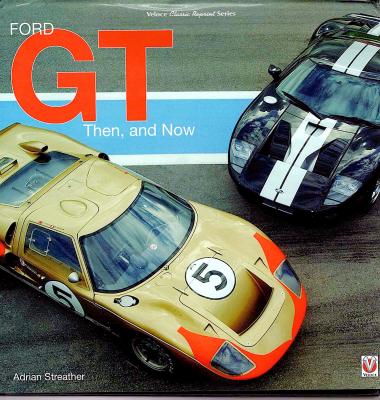
Veloce Publishing’s mission is to “provide books of the highest quality in terms of content, accuracy, presentation, subject range and reader satisfaction to discerning automotive enthusiasts around the world.” Ford GT: Then and Now fulfills this mission with a book full of large, clear, high quality photos printed on nice, semi-gloss paper.
Ford GT: Then and Now is a photographic history of the Ford GT, starting with the Lola forerunners to the original Ford GT MK I race car in 1964, and continues with the Ford MK II, through the MK IV and J car. The book was first published in June 2006 and this edition is a reprint from June 2017. Unfortunately, the book does not cover the third generation Ford GT currently raced by the Ford racing team in the IMSA GT Le Mans series.
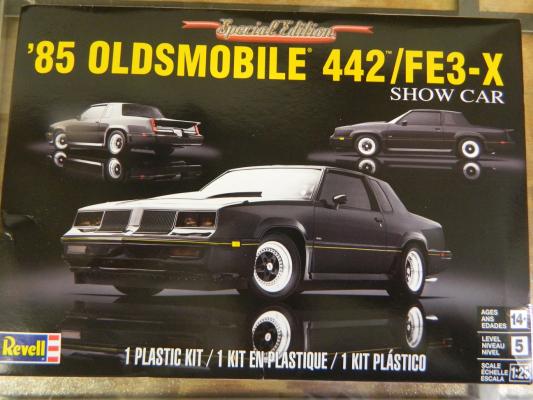
This is a review of the Revell ’85 Oldsmobile 442/FE3-X show car. I built it as a factory stock 442.
Engine
Zero to very little flash was on the engine components. Two items I disliked were the valve covers and oil pan molded to the block. Should have been separate pieces.
Interior
Extremely distinct engraving on the interior pan. Door panels are separate pieces as are the front seats. The rear seat is molded to the interior pan. Dashboard allows two different decals for the gauge cluster and there’s two steering wheels.
Body
The body offers several variations. If you want to build the FE3-X version, additional body panels are available as well as three different front clips. Fortunately the front & rear bumper assemblies also attach to the frame when installing – makes for easier glue points.
I painted the car with Tru-Color metallic cameo white covered with a 2 part urethane clear.