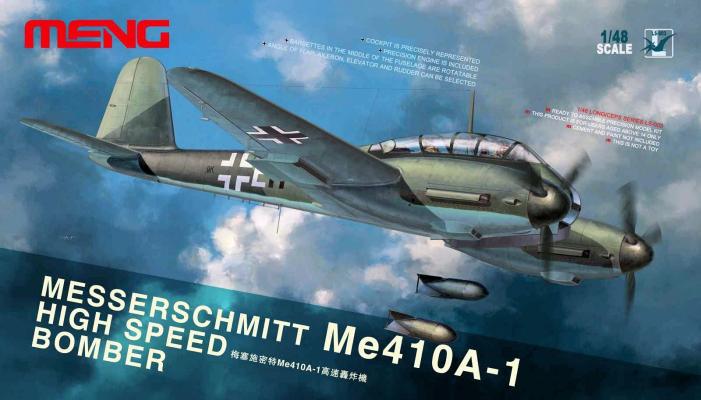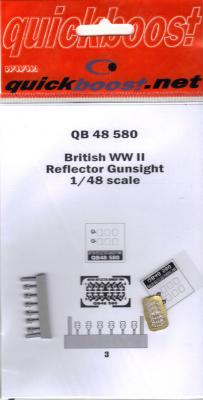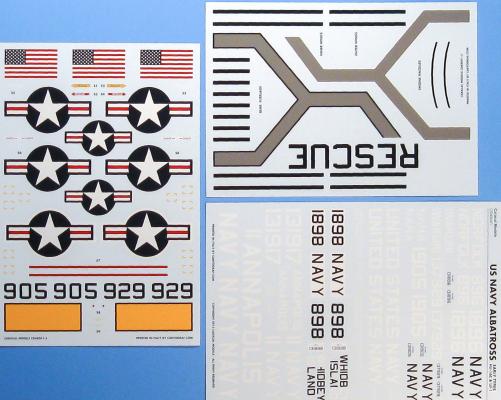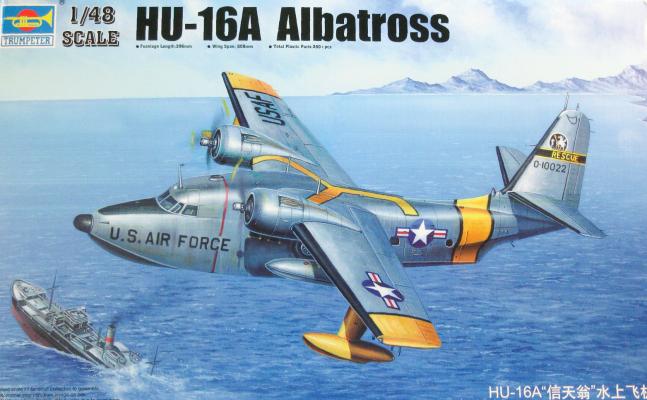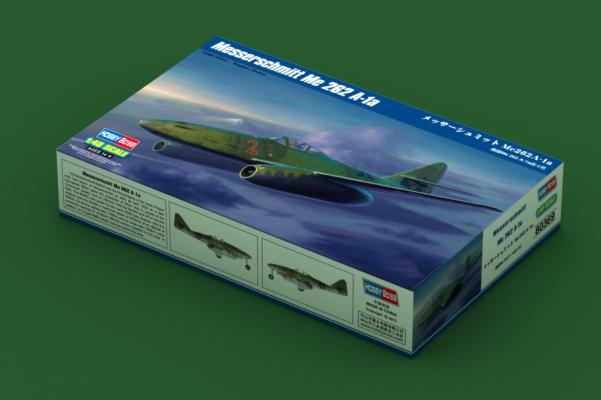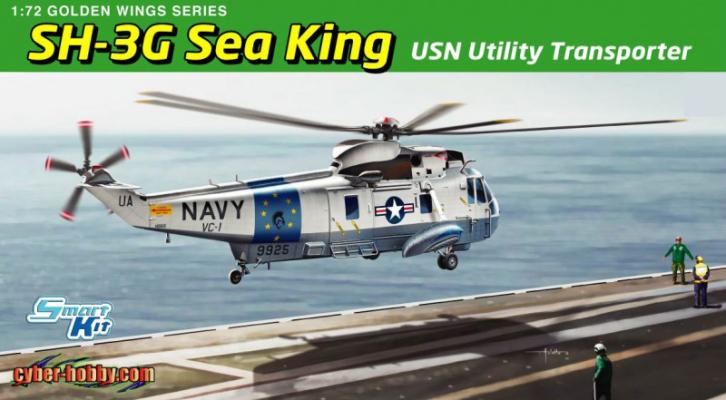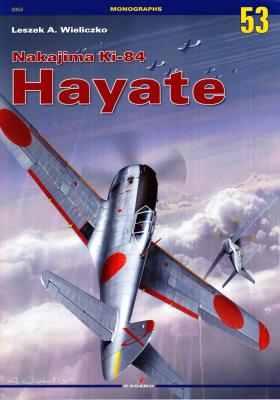
In the Novembers issue of Model Art they start as usual with the special feature. This months special feature is on weathering techniques and painting of aircraft. The article starts of with Tamiya's beautiful 1/32 F4U-1 Corsair. With this model they incorporate post shading, exhaust staining and fuel stains. The next model is the Hasegawa 1/48th A6M2b Type 21 "Junyo Fighter group". This aircraft was originally finished in IJN gray but then was over sprayed with one of the greens that Japan used during the war leaving a blotchy finish. They show you how to achieve this in this section. Next up is the Tamiya 1/48 Spitfire Mk.1. This section covers chipping, masking and some general weathering. Zvezda Yak-3 1/48th is used next. This section deals with general weathering and details of the kit. The next section covers dust. They use the Eduard 1/48th Bf-109E-7 Trop for this demonstration. The last next article uses the Hasegawa 1/48 Henchel 129B-2 "Winter Camouflage".
These resin parts are designed to replace the exhaust nozzles in any of the first-generation Harrier kits from a number of manufacturers. They are advertised to fit the Italeri and Hasegawa Sea Harrier FRS.1 and the Italeri and Hasegawa Harrier GR.3. Since the Italeri kits are reissues of the ESCI AV-8A/GR.3 and FRS.1 kits, these parts will fit those kits as well. They will also work on the Fujimi AV-8A kit, as that is a copy (not a reissue) of the ESCI kit. These are first after market nozzles available for the first-generation Harriers, although similar items have been available for the second-generation Harriers (AV-8B, AV-8B+, GR.5/7/9) for some time by a variety of manufacturers. They are not the same.
Vought’s Vindicator was designed in 1934 in response to the U.S. Navy’s requirement for a new all-in-one bomber, torpedo bomber, and reconnaissance platform, and was first produced in 1937. Ultimately, the SB2U was more successful as a movie star than a weapon of war, being featured in the motion picture “Dive Bomber”. Vindicators were used by the Marines of VMSB-241 at the battle of Midway, but were mostly ineffective and outclassed.
Special Hobby’s kit represents the SB2U-3 version and comes with markings for for USMC aircraft - three in camouflage, and one representing the first SB2U-3 to roll off the production line, in its pre-war yellow-wing scheme. The kit’s gray plastic parts have really nice recessed panel lines, and I liked the treatment of the fabric areas of the wings, tail, and fuselage. According to photos I have, I think the contour of the rear cockpit sill should be more curved, but it doesn’t detract from the overall appearance.
The Harrier is one of the most easily recognized modern jet fighters and has been so since its introduction into the RAF in 1969. It certainly is one of the noisiest, particularly when in VTOL mode. This excellent book is another of the ongoing AIRfile publications covering British aircraft. As in their other books, this volume is full of relevant information and color profiles, this time focusing on early versions of the Harrier. The chapter titles speak for themselves:
When Eduard released the Bf109E Instrument they also released a mask to go along with it. Unfortunately the only way to purchase this mask is through Eduard's store and you have to be a member of the Bunny Fighter Club.
Now when it comes to masking a model you could take and make your own mask with one of the many medias available, or you can purchase a ready to use mask for that specific model and cut your masking time in about half. The mask for the Instrument panel helps in several difficult areas. One of the areas that the really comes in handy is for some of the raised details on the instrument panel that have to be painted. Another very helpful part of the mask is for molded on bolt heads. It makes painting these a breeze. You can follow the link above for a better idea of what is included or Eduard has a great article on building the instrument panel which includes a breakdown of the mask. The article can be found by following this link:
The Aircraft
The Boeing 720 was a direct development of the highly successful 707. The 720 had a shorter fuselage and was narrower, making it more cost effective for airlines on the shorter runs. 720s were profitable for Boeing because the development work had all been done with the 707. There were two basic versions of the 720, 720A and 720B. The A had P & W JT-3C turbojet engines, the B had JT-3D turbofans. Many As were upgraded to Bs through changing the engines. 720s were built from 1958 to 1967.
The 720 in this kit was a 720B N7224U, owned by Caesar’s Palace in Las Vegas Nevada. The aircraft was called “Caesar’s Chariot”. It was leased to the rock group Led Zeppelin for their 1977 North American concert tour. The plane had a special paint job, with Zeppelin’s “Swan Song” album logo on the tail.
Lifelike has produced this set of decals for he recent RS Models Ki-100 kit. They can also be used for the FineMolds kit but the producer does not that there might need to be some modification.
In the package, there is one decal sheet which covers the five aircraft. The decals are printed by Cartograf and beautiful, in register and colorful. Also included is the sheet with five full color profiles of the aircraft and their histories and information which is wonderfully researched. Last is a page indicating the paint colors and also the stencil placement and reference sources.
The planes covered are:
Lifelike Decals continues its superb line of 1/72 decals with 5 options for the Hasegawa kit. The decals are perfectly in register and are printed by Cartograf. The instruction sheets are superb being full color and having side profiles of all five aircraft. There is also a very thoroughly research paint scheme and stencil instructions.
The five aircraft represent the following:
History
The Fiat G.50 was Italy’s first single-seat, all-metal monoplane with an enclosed cockpit and retractable landing gear. The prototype of the G.50 was first flown in 1937 and introduced into service in 1938. The G.50 served Italy in the Regia Aeronautica (Italian Air force) in the Battle of Britain, in Africa, and in the Aegean theatre, and helped to defend against the invasion of Sicily. They also served in the Aviazione Legionaria (Italian Expeditionary Force) in Spain. 35 were flown to Finland and served in the two Finnish wars against the Soviets. Although fairly quick (max speed was 292mph) and maneuverable, it was lightly armed with just two 12.7mm Breda-SAFAT machine guns in the cowl.
Superscale Decals is now owned by the excellent people at Squadron Products, and their latest release is this sheet containing four different sets of walkways for 1/48th scale Phantoms. Both the wing and top of fuselage walkways are included. The set is printed by Cartograf and is beautifully in register and glossy.
The sets included are:
- Black outlines with the walkway language
- FS36231 Gull Gray with black outline and stenciling
- FS36231 Gull Gray with no outline and with stenciling
- FS36118 Gunship Gray with no outline and with stenciling
The instructions are well done, in color, and show the needed location of the decals.
This set is highly recommended and will go really well with older Phantom kits or the newer Academy kit. My thanks to Gary Newman and Squadron Products for the chance to review these great decals, and to IPMS USA for the opportunity to do so.