

Damon Blair
Reviews By Author
|
Japan Air Self Defense Force T-1A TrainerPublished:
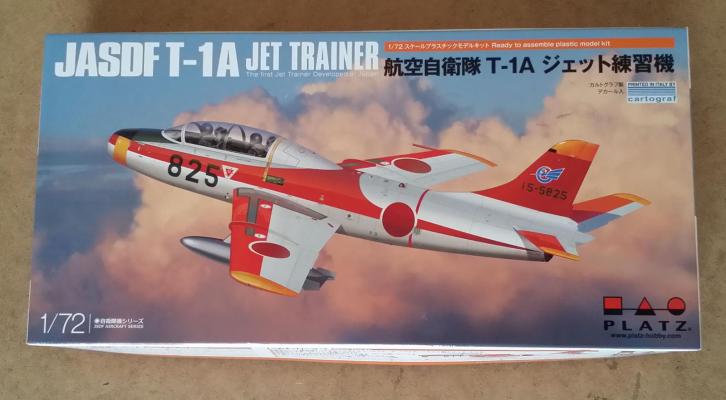
The Fuji T-1A was the first Japanese-designed aircraft produced after World War II. Designed by Fuji Heavy Industries and powered by a Bristol Siddeley Orpheus turbojet engine, the prototype took to the air for the first time on January 1, 1958. 46 T-1As were built before the T-1B superseded it on the assembly line. They served as training aircraft until they were retired, with the final flight occurring on March 3, 2006. This finely molded kit comes with 62 parts on three sprues, and two clear parts on a separate sprue. All the panel lines are engraved, and the fit is excellent. The kit comes with a photoetched (PE) painted fret for detailing the cockpit and the landing gear. While the instructions are in Japanese with only a descriptive paragraph in English, they are easy to… more |
|
Refueling Pod KC-130JPublished:
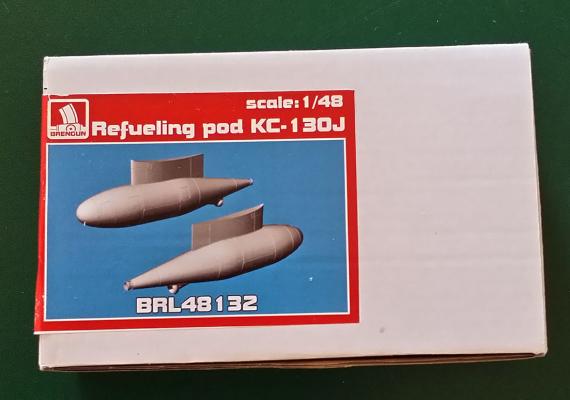
Used for air-to-air refueling, Lockheed’s KC-130 and HC-130N, HC-130P series of aircraft came with two air-to-air inflight refuel (IFR for short) pods, one on each outer wing just outboard of the flaps. Later, the HC-130H, MC-130E and MC-130H aircraft were modified with these refuel pods. This conversion set replicates those later modified aircraft and the current KC-130J and HC-130J IFR pods. This resin modification kit comes with 6 parts, three for each IFR pod, including a small phot-etched fret for the tail end of each pod. My sample came with the sprue runner broken off the nose of one pod, the break being at the sprue-to-pod joint, requiring some sanding and putty to smooth it out. The hardest part on this resin kit is the IFR pod tail to main body attachment.… more |
|
Spitfire Mk IX "High-Back"Published:
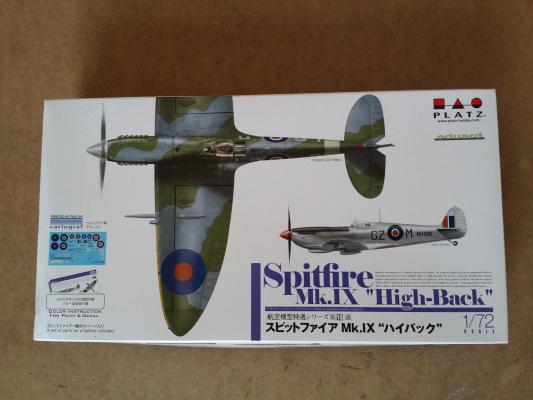
Supermarine’s Spitfire was one of the classic fighters of World War II. Produced in different Marks (the British name for versions), the Spitfire served from the beginning of the war until the end. The Mark IX was originally developed as a stop-gap measure in response to the German introduction of the Focke-Wulf FW-190, but later grew into it’s own as a fighter aircraft. Platz’s Mark IX kit is nice, with finely engraved panel lines and no visible flash. There are 152 parts molded on 5 grey plastic sprues and one clear sprue, of which approximately 57 are used in various Mk IX versions and possibly other Spitfire versions as well. There are 2 Mark IX versions with 4 paint schemes that can be built using this kit. The instructions are not set up in a step-by-step… more |
|
C-130 Props and Engine NacellesPublished:
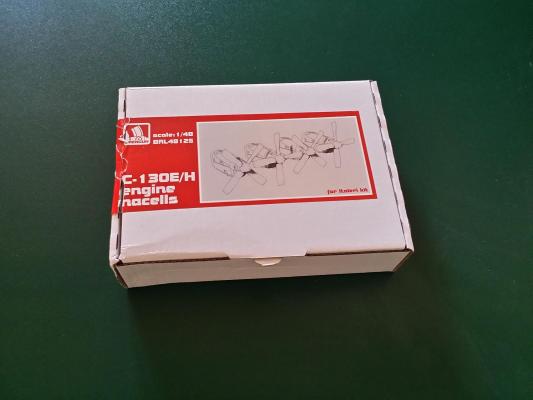
The Lockheed C-130A through H model aircraft are powered by a series of Allison T-56 engines driving a set of Hamilton-Standard 4-bladed props. The 4-bladed Hamilton-Standard props were original equipment on the C-130B through the C-130H models, and the props were later retrofitted to C-130A aircraft. Each C-130B through C-130H engine is housed in a nacelle that is slightly longer than the nacelles on the C-130A aircraft. The difference can be seen in a side-by-side comparison of the Italeri kit nacelles (designed for the C-130A) and this aftermarket kit. This aftermarket kit comes with a total of 36 pieces to replace the kit parts. Each propeller has 5 individual parts – 4 prop blades and the spinner. Each nacelle comes as two pieces, the main nacelle and the front intake/… more |
|
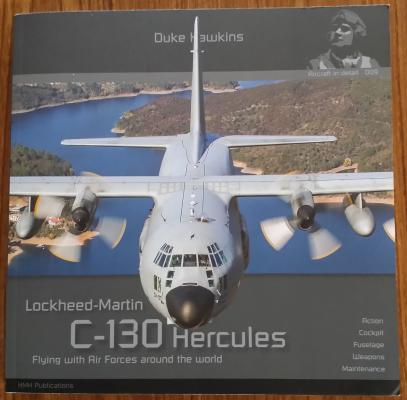
Lockheed-Martin C-130 Hercules, Flying with Air Forces Around the WorldPublished:
The first flight of the famous C-130 “Hercules” turboprop aircraft was on August 23, 1954, with the first production C-130 making its maiden flight on April 7, 1955. The aircraft has been in continuous production since, with over 2500 manufactured to date. Written by Robert Pied and Nicolas Deboeck, this incredible book is an invaluable resource for modelers. Its 196 pages with over 550 photos show the C-130 in incredible detail. Photos of the interiors of the wheel wells, many open panels, and interior photos that show parts of the “Herk” that, until now, mostly maintainers saw. I was a maintainer (also known as a “Crew Chief”) who worked on C-130 “Herks” for over 25 years, and this book brought back many memories. The flight deck is photographed in detail, with photos… more |
|
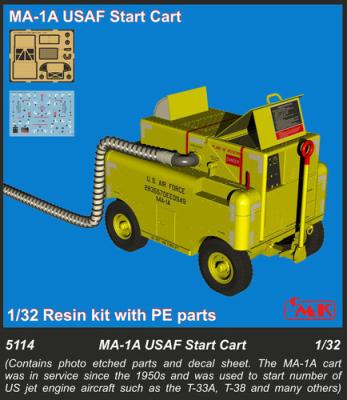
MA-1A Start CartPublished:
The MA-1A Start Cart (also referred to as a “Huffer”) was used by the United States Air Force as an auxiliary jet engine providing a source of high pressure, high volume air (called bleed air) to start aircraft without starters, and to start aircraft that have inoperative starters. The F-4, A-4, T-38, F-104, and A-7, just to name a few, had to be started using this cart. I have used the MA-1A many times to both start the above aircraft, and to troubleshoot/operationally check the bleed air system on the C-130 aircraft. The kit comes with 17 resin parts and 10 photoetched parts, with molding in crisp detail. I found no fit problems with the parts, and the kit went together fairly quickly. Be careful with part number 2 with its long “tongue” at the top - I accidentally broke mine… more |
|
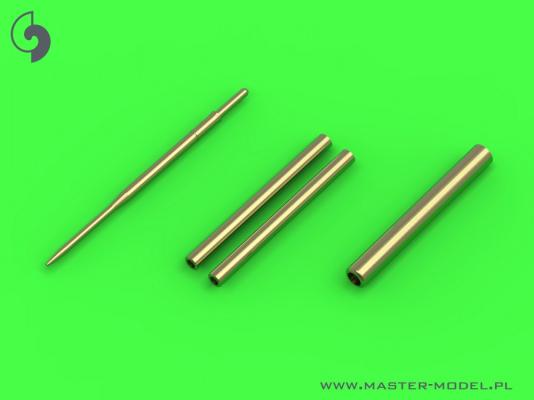
F-5 Cannon and Pitot Probe (Standard Nose Version)Published:
The F-5 series of aircraft comes armed with two 20mm, M-39 cannons, each with 280 rounds of ammunition. The U.S. Air Force and U.S. Navy both used the F-5 in a training role, with different paint jobs and tactics to simulate enemy aircraft in air-to-air combat training. Master Models has come up with brass replacement gun barrels and a turned brass pitot probe for the nose. Four parts are included, two gun barrels, one gun fairing, and a pitot probe. Each of the gun barrels has a realistic barrel shape, open at one end and faired closed at the other. The gun fairing is slightly larger than the two gun barrels and gives you the option of having just one gun in the nose. Installation is straightforward and simple I painted both gun barrels gunmetal prior to installation,… more |
|
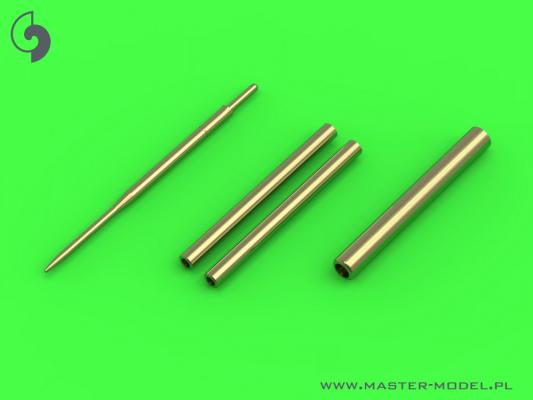
F-5 Cannon and Pitot Probe (Standard Nose Version)Published:
The F-5 series of aircraft comes armed with two 20mm, M-39 cannons, each with 280 rounds of ammunition. The U.S. Air Force and U.S. Navy both used the F-5 in a training role, with different paint jobs and tactics to simulate enemy aircraft in air-to-air combat training. Master Models has come up with brass replacement gun barrels and a turned brass pitot probe for the nose. Four parts are included, two gun barrels, one gun fairing, and a pitot probe. Each of the gun barrels has a realistic barrel shape, open at one end and faired closed at the other. The gun fairing is slightly larger than the two gun barrels, and gives you the option of having just one gun in the nose. Installation is straightforward and simple I painted both gun barrels gunmetal prior to installation… more |
|
JASDF T-1B TrainerPublished:
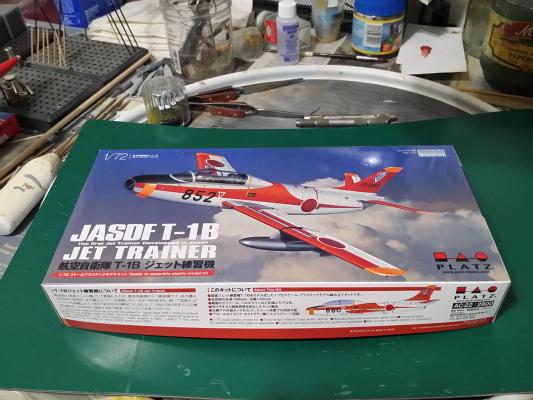
The Fuji Heavy Industries T-1 series of aircraft was the first aircraft entirely designed and built in Japan following World War II. The T-1B has a Japanese-designed and built engine, which is the only change from its predecessor, the T-1A. Externally, there is no difference between the two models. The T-1A first flew on January 19th, 1958. A total of 66 aircraft (of both types) were produced, and the type was retired in March of 2006. Platz’s T-1B kit faithfully reproduces Fuji’s T-1B and is molded in light grey plastic. There was no flash on my sample, and the panel lines are crisp and recessed into the plastic. One downfall of the kit is the instructions, which are in Japanese save for the aircraft information and step titles. However, you can easily follow them with the… more |
|
Rescue Wings UH-60J & U-125A Combination KitPublished:
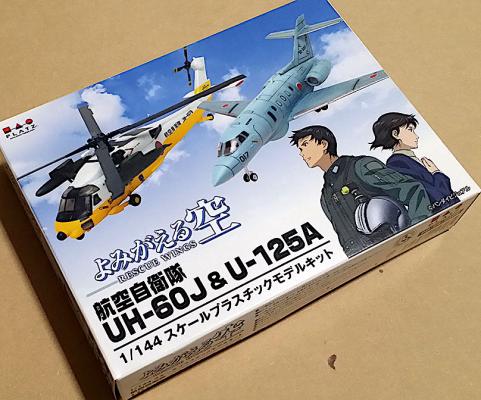
Rescue Wings is a Japanese anime cartoon known for its realistic portrayal of the Japan Air Self Defense Force’s (JASDF) Air Rescue Wing, in particular the Komatsu Rescue Squadron. The basic plot involves a helicopter pilot’s (2nd Lieutenant Uchida Kazuhiro) assignment to the JASDF Komatsu Air Base. This initial series ran for 12 episodes (an additional episode added to the DVD release) and was followed by two manga series and a live-action film. They were created with the full cooperation of the Air Rescue Wing. U-125AThis fixed wing aircraft is based on the British Aerospace’s twin-engine Bae 125-800 private jet. These aircraft are modified for the search-and-rescue with large observation windows, a marker flare ejection system, a droppable liferaft, and… more |