

Damon Blair
Reviews By Author
|
C-130 Tires and BrakesPublished:
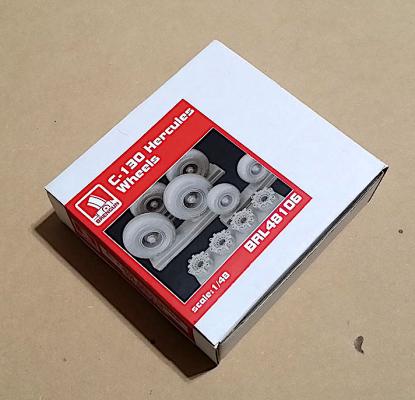
The Lockheed C-130 is a versatile aircraft. In production since 1954, the C-130J is the latest in a long line of models. The landing gear was designed for rough field operations, with large, low pressure main landing gear tires and a pair of low-pressure nose wheel tires. The original brake design was for a single disk (like in a modern car) and has been upgraded to a multi-disk unit. The brakes look the same once mounted onto the gear’s axle. The kit comes with 10 pieces molded in grey resin, and is meant for the 1/48 Testors/Italeri C-130 kit. There are many fine details with the castings. A nice touch is the “Goodyear” emblems and the valve stems and groove lines molded into the tires to represent the spaces between the treads. The only disappointment I found was with the… more |
|
Academy F/A-18CPublished:
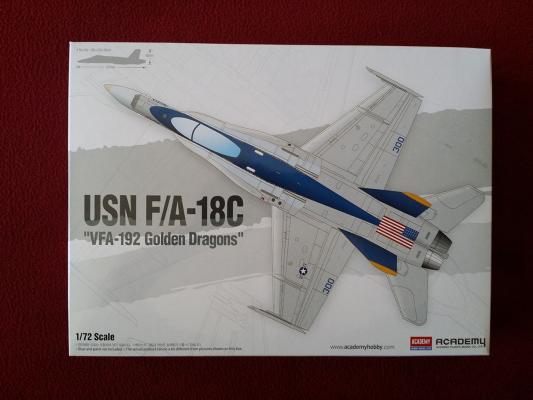
The Boeing (formerly McDonnel-Douglas) F/A-18C is an improved version of McDonnel-Douglas’ F/A-18A, which in itself was developed from the Northrop YF-17 lightweight fighter prototype. Academy’s 1/72 F/A-18C is a faithful reproduction of the actual aircraft, although the details in the cockpit and the gear wells is sparse. The fit is generally excellent, with several seams, notably around the intakes (parts B16 and B17). Be careful when assembling the sides of the fuselage (parts B1 and B2), as it is very easy to misalign these parts. One other tricky assembly is the main landing gears, as each main gear leg has a smaller actuating cylinder that needs to be installed at the same time, and the best way to do this is to dry fit both pieces and once the alignment is correct, apply… more |
|
USAF Crew Chief - MarshallingPublished:
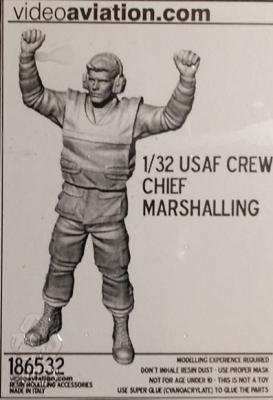
VideoAviation.com has come up with another wonderful diorama accessory with this new kit. One of the most important jobs that a crew chief has on the flight line is the safe taxying of aircraft from or to their parking spots. Modern United States Air Force (USAF) crew chiefs wear reflective vests to highlight their visibility to the aircraft’s pilot. This is a four-piece resin kit, with both arms and the head molded separately. The figure comes molded in the “This Marshaller” pose, which is the very first signal that a pilot will get before any taxying or other aircraft movement happens. Molding is fantastic, with just a minimum of seam lines to clean up. Most of these lines are cleverly hidden in the folds of the uniform, but there are a few that do stand out a bit –… more |
|
USAF Crew Chief - VietnamPublished:
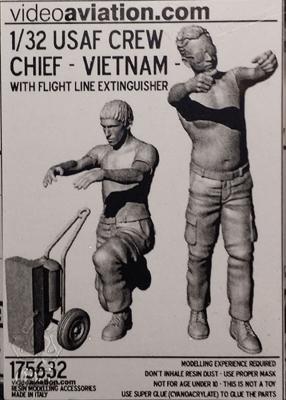
United States Air Force (USAF) crew chiefs work tirelessly around -the clock to ensure aircraft are available for missions, especially in combat zones. VideoAviation.com has captured this spirit of “Can – do” with their latest offering. The kit contains 12 parts for two figures and a Vietnam-era flight line fire bottle. The standing figure has doffed his shirt, something that would be quite understandable in the hot tropics combined with constant combat sorties, and aircraft that needed around-the-clock maintenance. The fit of the parts is excellent, and seams clean up quickly and easily with files. My only problem with fit is with the standing figure, whose arms didn’t quite fit properly into place, and required just a touch of putty. My recommendation would be to dry-… more |
|
Shinmeiwa SS-2 'Rescue Seaplane'Published:
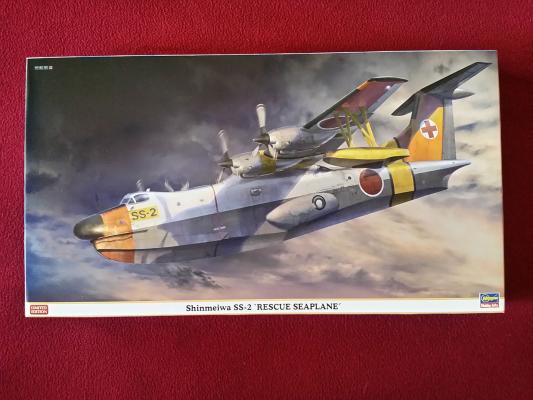
The Shinmeiwa SS-2 Rescue Seaplane is a development of the Shinmeiwa PS-1 anti-submarine aircraft. The aircraft was used in a Search-And-Rescue (SAR) role, acting as an “Emergency Ambulance” for residents of Japan’s isolated islands. Hasegawa’s kit of the SS-2 is an older kit that has been updated to represent the SAR version of this aircraft. Overall, the fit of the kit is fair, and there are some problem areas with parts fitting together. The detail on the flight deck is sparse for a kit of this size with a lot of windows to look in. It is a tail sitter, and you will need to add weight into the nose. The major fit issues I had with this kit center around the fuselage. Hasegawa tooled the fuselage in three pieces, two side pieces (Parts 1 and 2) and a forward lower bow… more |
|
A-1J Skyraider TailwheelPublished:
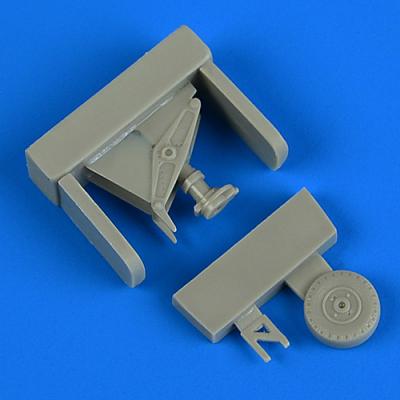
The Douglas A-1 series of aircraft (known as the AD prior to 1962) was designed as an attack aircraft that could carry a heavy load of ordinance. Quickboost’s A-1J Tailwheel brings an improvement to the Hasegawa A-1 kit. This part replaces only the bottom part of the strut, and not the entire strut. The wheel itself is separate from the strut. I cut the bottom portion of the tailwheel strut where indicated in this kit’s instructions, and then glued the replacement strut piece into place using cyanoacrylate glue. Once the glue was dry, I painted the strut, installed the wheel onto the strut, and installed the strut onto the model. I highly recommend this detail set for the Hasegawa kit. My thanks to Quickboost for the review sample. |
|
A-1H Skyraider TailwheelPublished:
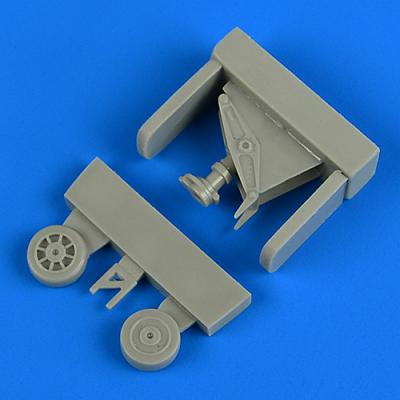
The Douglas A-1 series of aircraft (known as the AD prior to 1962) was designed as an attack aircraft that could carry a heavy load of ordinance. Quickboost’s A-1H Tailwheel brings an improvement to the Hasegawa A-1H kit. This part replaces only the bottom part of the strut, and not the entire strut. The wheel itself is separate from the strut, and you have a choice of two wheel designs, one being spoked and the other is a solid wheel design. I cut the bottom portion of the tailwheel strut where indicated in this kit’s instructions, and then glued the replacement strut piece into place using cyanoacrylate glue. Once the glue was dry, I painted the strut, installed the wheel onto the strut, and installed the strut onto the model. I highly recommend this detail… more |
|
A-1H Skyraider 'USS TICONDEROGA' with 2 kitsPublished:
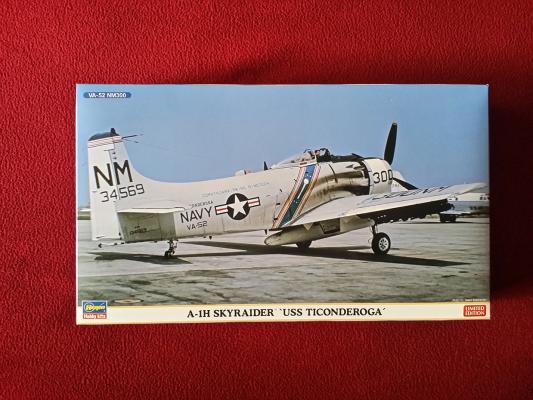
The Douglas A-1 series of aircraft (known as the AD prior to 1962) was designed as an attack aircraft that could carry a heavy load of ordinance. Both the U.S. Navy and U.S. Air Force flew the A-1H in the Vietnam War. The kit represents two aircraft flown off of the U.S.S. Ticonderoga aircraft carrier during that war. Hasegawa’s A-1H kit has petite, engraved panel lines. The fit of most parts is excellent, except for the bottom aft wing-to-fuselage joint. That joint requires careful fitting, along with some putty to smooth it out. Most of the other seams required little more than sanding. The cockpit is sparse in detail, consisting of a seat, an instrument panel, and a control column. Instruments and consoles are represented by decals. With the engine, you have the… more |
|
A-37 Cockpit Detail SetPublished:
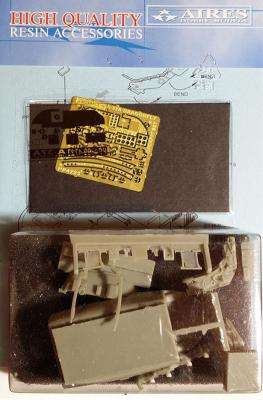
The A-37A/B (sometimes referred to as an OA-37A/B) was developed from Cessna’s T-37B trainer. With upgraded engines and eight hardpoints for ordinance, the original concept for the A-37A was ground support of troops. The A-37B had provisions for air-to-air refueling, and the ability to carry slightly more ordinance. Aires has come up with an excellent replacement for Monogram’s kit cockpit. This kit has resin, printed film, and photo-etched (PE) parts The details in the Aires kit’s ejection seats alone make this kit worth it, but when you add in the instrument panel, Aires’ aftermarket kit really makes the Monogram kit come alive. One nice feature of the Aires kit is that four control sticks are provided when only two are required. This nice touch gives you some spares… more |
|
Mitsubishi A6M7 Zero Fighter Type 62 "302nd Flying Group"Published:
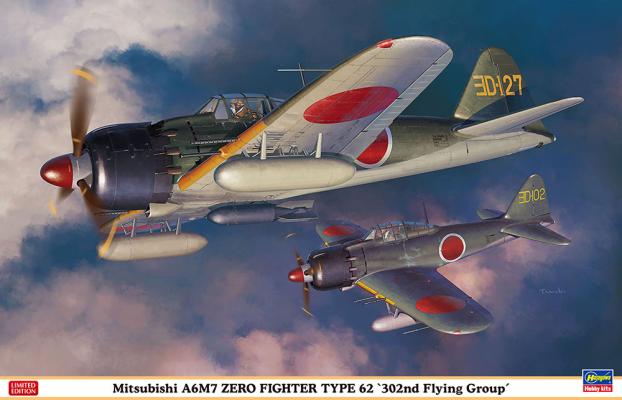
The Mitsubishi ‘Zero’ fighter was Japan’s premiere fighter at the beginning of World War II. By the time the A6M7 Type 62 appeared, the airplane had been outclassed by American fighters and in the waning months of the war, they were used in Kamikaze attacks primarily against U.S. Navy ships. Hasegawa has done an excellent job of reproducing this aircraft. There are plenty of details provided, and nice touches such as the tape over the rivets on the fabric flight controls are there. The kit comes with a total of 147 pieces molded in a light grey and clear plastic. The fit of the parts is excellent, and I needed just a minimum of filler putty on several joints. Starting with the cockpit, there is an abundance of details, and the cockpit would take super detailing well.… more |