

Chris Smith
Reviews By Author

|
Bigfoot 4x4x4 Ford F-150Published:
HistoryFirst introduced in 1979, “Bigfoot” started the monster truck craze that is still going strong today. Created and owned by Bob Chandler as a promotional billboard for his 4X4 truck accessory business, Bigfoot #1 was based on a Ford F-250 4X4. The real innovation came when Chandler built the first 4X4X4, which is a four wheel vehicle with four-wheel-drive and four-wheel-steering. Bigfoot pioneered the art of car crushing, now a common part of any monster truck event. While fans might take pride in the particular brand of their favorite monster truck, the only thing these trucks have in common with the brands they represent are the body shells cast to look like a Ford, Chevy or Dodge/Ram. These are in fact specially designed and built race trucks. Think funny car (a… more |
|
Hot Rod Ford Mustang Funny CarPublished:
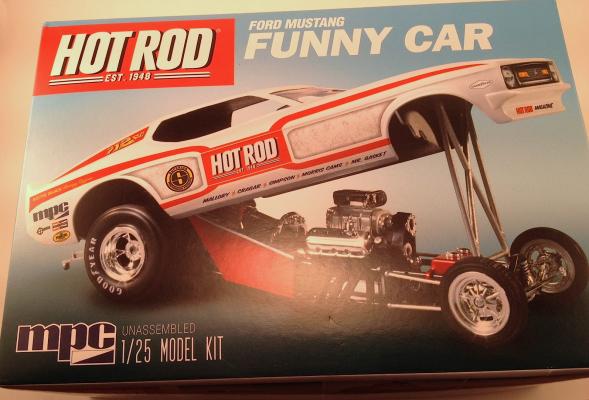
IntroductionRound 2 continues to re-release some of those oldies some of us loved way back when. For builders like me this truly is a second chance. I was not a car builder when these kits were initially released. This time we get a release with a twist. A Hot Rod Magazine inspired, Hemi powered 1972 Mustang. The twist is a coupon good for a year of Hot Rod Magazine when sent it in with a purchase receipt for the model. As for the model, you get about 60 parts molded in white, black, clear and chrome. There are two deployed drag chutes you can wire to the back of the car. I don’t see how that works since there is no driver included in the kit. The rear slicks are pre printer with a Goodyear logo. The instructions do not include any color callouts but the box top photos show… more |
|
Fokker E.IVPublished:
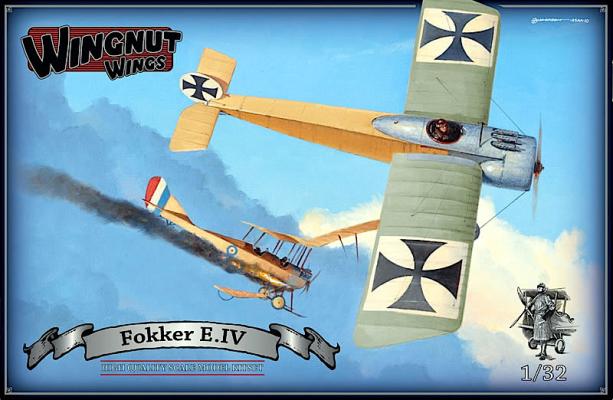
Built on the principle of more is better, the Fokker E. IV was an attempt to improve on the legendary aircraft responsible for the “Fokker scourge” of 1915. First was the addition of a twin row 14 cylinder Oberursel engine which developed 160 hp. Then, at least in the prototype, three IMG machine guns were installed on the upper cowl firing through the propeller arc via an interrupter gear (which didn’t always work). These improvements seemed better in theory but combat revealed some shortcomings. The guns were reduced to two Spandaus since three machine guns which were prone to failures overloaded pilots. In addition, the weight of guns/ammo combined with a spinning mass of engine up front proved a handful. The allies by this time were producing very maneuverable aircraft that a wing… more |

|
Cessna 150Published:
HistoryFor those of us who've learned to fly, there's nothing like the first time you line up with the runway and apply full take off power. You race down the runway till you feel the wing start to do its magic. With a slight backward pull of the wheel, your flying! Likewise, the aircraft you learn to fly in stays with you the rest of your life. The Cessna 150 has filled that place for thousands of fledgling pilots since its introduction in 1959. When production ended in 1985, 23,948 Cessna 150s had been built. A simple two place design that includes a small back seat (for very small children) the 150 can haul a useful load of 500 pounds at 108 Kts with the Continental O-200s, 100 HP pulling it along. Design changes over the years included a redesigned rear fuselage… more |
|
SH-3D Sea KingPublished:
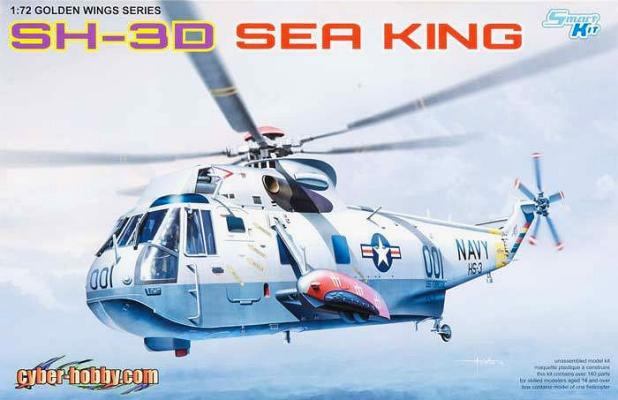
IntroductionThe Sikorsky Sea King first flew in 1959 and entered service in 1961. It served in many roles, including SAR, troop transport, and perhaps most memorably as the helos that recovered the Apollo missions after splashdown. These were not the missions the S-61 (company designation) was originally designed for. As the cold war developed after WWII, the US Navy was concerned about the expansion of the Soviet submarine fleet. They needed helicopters capable of pinpointing subs with a mobile sonar unit. This kit represents that version of this highly useful aircraft. Twin turbine engines gave the Sea King the ability to carry impressive payloads (including a sonar unit) over practical distances. Cyber-Hobby has graced us with no less than four versions of this great… more |
|
Mig 29 Fulcrum w/ SAC Landing GearPublished:
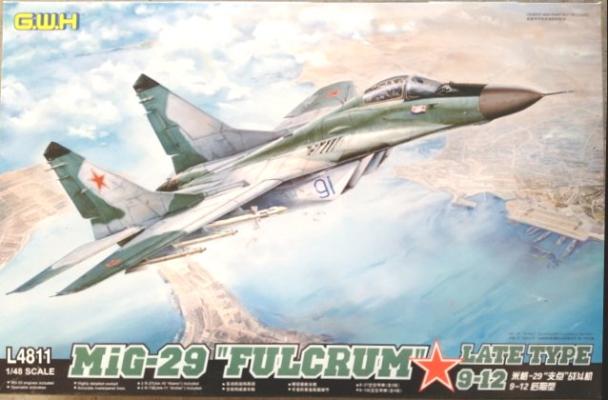
Products in this review are: Great Wall Hobby Mig-29 and Scale Aircraft Conversions (SAC) Landing gear for the GWH Mig-29. IntroductionThe Mig 29A NATO, code name “Fulcrum”, was first flown in 1977. Designed to directly answer the newest American fighters that placed an emphasis on energy maneuvering via high thrust to weight ratios, the Mig 29 followed suite with two Klimov RD 33 engines that produce an average thrust to weight ratio of 1:1. Like its American counterparts the Mig 29 is designed to get in close and is armed with a gun and the ability to carry six AAMs as well as extra fuel in outboard mounted tanks or a centrally mounted ferry tank. Although the Mig 29’s record against U.S. fighters is not good (many were shot down in the 1991 Gulf war), it was… more |

|
1988 Honda NSR 250R MotorcyclePublished:
HistoryIntroduced in November of 1987, the NSR 250R was the second generation of the NSR line. In what many would call the best year for the NSR line, that model year introduced many innovations that made it a race winning performer. The most significant advance was the PGM module that controlled the carburetor performance, based on input from the throttle and speedometer to adjust the carbs in real time. This was the first computer control of its kind on a Honda motorcycle. This was in conjunction with the Honda RC, or” revolution control” system, an adjustable exhaust valve that constricted outflow at low RPM and opened at high RPM to produce optimum power at any throttle setting. Added to coated pistons to reduce friction wear were larger tires to keep the bike on the… more |

|
Jian Ji-2 and Ji-5Published:
HistoryOn November 1, 1950, a new jet fighter appeared in the skies over Korea to counter the B-29 bombing raids which, up until then, had gone unopposed. This was the MiG-15’s debut and the beginning of a long and distinguished career for the entire MiG jet-powered series. Although the MiG was effectively countered by the F-86 Sabre, it wasn’t because it was lacking in performance. In fact, it had a better rate of climb, service ceiling, and heavier armament. The difference came down to the training and attitude of the UN forces. A number of Soviet “volunteers” managed to make ace in their MiG-15s. The MiG-15 had some issues with maneuvering at high speed that limited its Mach number. Then entered the MiG-17 which wrapped a redesigned airframe around the same engine. With a… more |
|
A Storm of Spears - Understanding the Greek Hoplite at WarPublished:
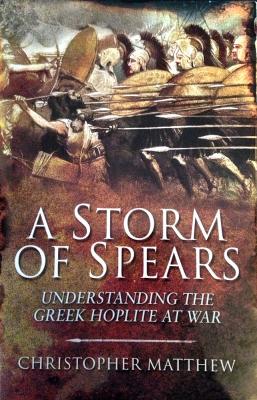
Have you ever struggled over a problem or edited your own writing, only to have someone look at it and see the thing that you couldn’t find or solve in seconds? That’s how I felt reading this book. The Greeks dominated the fourth and fifth century BC battlefields with the Phalanx form of warfare, which combined the use of specially armed and armored soldiers (or Hoplites) in specialized formations. As the title implies, the author has taken a fresh look at old evidence of ancient Greek writers and artists and coupled that with modern research, primarily in the form of re-enactors who put on the Panopy, (or armor) and the weapons – in this case, the thrusting spear of the Greek solders – and tests his theories of methods and tactics. In the process, some interesting and groundbreaking… more |
|
E-2C Hawkeye - VAW 126 SeahawksPublished:
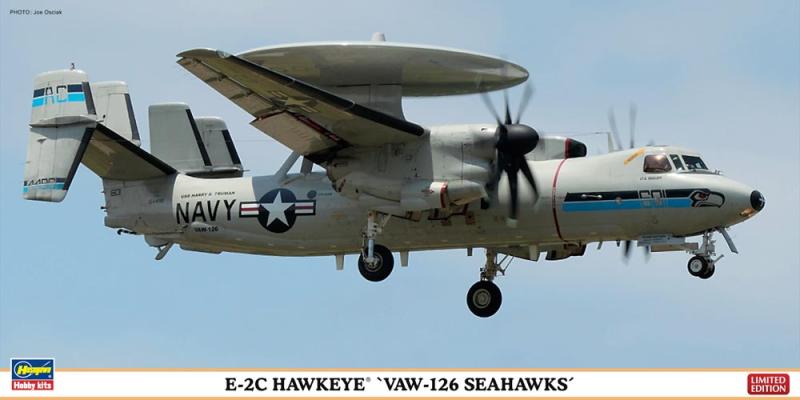
Overview Since its entry into Navy service in January of 1969, the Hawkeye has been the carrier-borne “eye in the sky” of the fleet. First flown October 21, 1969, the E-2 series has participated in every US combat action since Vietnam. After a rough start due to some teething problems with the electronics on board, the E-2 series is ready to serve into the foreseeable future in the form of the E-2D Advanced Hawkeye. This model represents the E-2C series serving with VAW 126, The Seahawks. The Seahawks began operations with the Hawkeye back in April, 1969. The squadron has served around the world aboard 8 different carriers. Sporting an upgraded electronics suite and the wicked looking scimitar propellers, the E-2C has a utilitarian look that matches its mission… more |