

Chris Smith
Reviews By Author
|
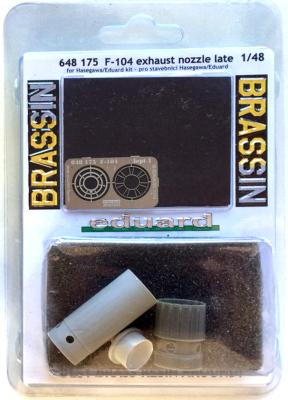
F-104 Exhaust Nozzle LatePublished:
This set is part of the Brassin line and provides an impressive upgrade for the exhaust can, burner ring and nozzle of the J79-GE-19 powered F-104G. The set is intended for the Hasegawa/Eduard kit. I used it on the Hasegawa F-104 Starfighter “Nato Fighter” stock # PT20 boxing. This set replaces parts U6, R26, R27 and L8 in the original kit. Photo etch parts are included to represent the burner ring(s). The exhaust tube is a seamless part which has very well done interior detail. In fact, every part in this set is a refined replacement of the plastic parts in the base kit. The exhaust nozzle is much thinner and has more surface detail than the kit part. The resin used is easy to remove from the parts where that is needed. As for mounting I had a small glitch to resolve… more |
|
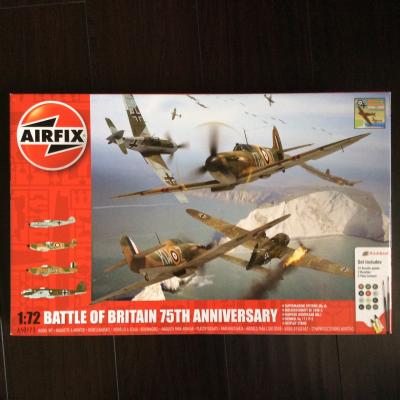
Battle of Britain 75th AnniversaryPublished:
“Let us therefore brace ourselves to our duty, and so bear ourselves that, if the British Empire and its Commonwealth lasts for a thousand years, men will still say, this was their finest hour”. These words, spoken by Winston Churchill on June 18, 1940, braced his island nation for the German aerial onslaught awaiting them just a few short miles across the English Channel. The outcome is, of course, well known as the Royal Air Force repelled the Luftwaffe, but at a terrible cost in lives, mainly from the German bombing campaign that the battle turned into. This same island would become the launching point for the allied bombing raids and the D-day invasion across that same channel four years later. 2015 marks the 75th anniversary of this epic battle and Airfix has… more |
|
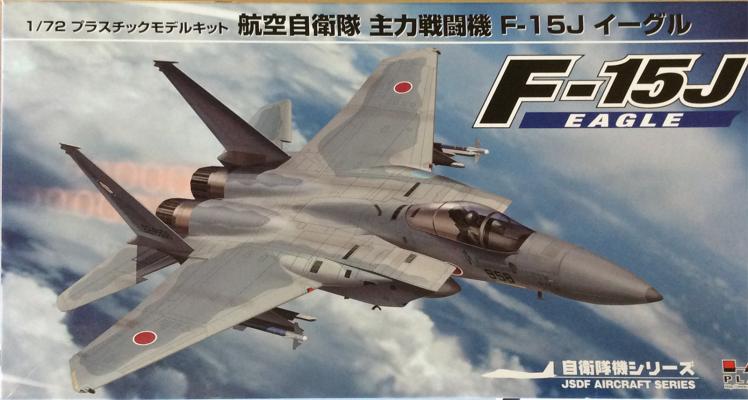
JASDF F-15JPublished:
BackgroundThe F-15 emerged from a design study started in the early 1960s called the FX program. When the missile centered American designs of the late 1940s and 50s proved vulnerable to seemingly less advanced Soviet Migs over Vietnam, and after the unveiling of the Mig 25, the U.S. started a concentrated effort to build the next generation of fighters. Centered around the energy maneuverability theory the new designs would have very high thrust to weight ratios. That’s what the F-15 (and F-14, F-16 and F-18) would eventually achieve. Built around two Pratt and Whitney F-100 engines that allow the aircraft to accelerate in the vertical, the F-15 and associated new generation U.S. fighters outclassed any opposition at the time. In 1976 a specially prepared F-15 called the… more |
|
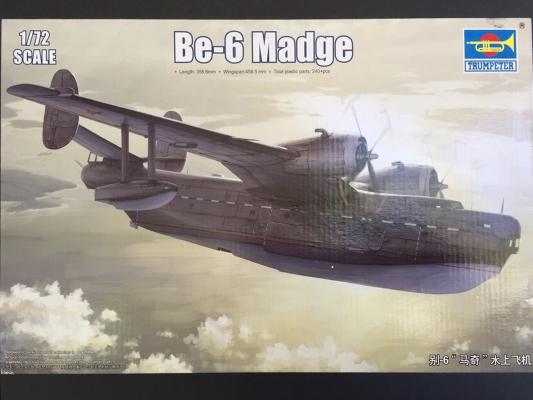
Be-6 MadgePublished:
BackgroundDeveloped from a prototype first flown in 1947, the Beriev Be-6, NATO code name “Madge”, was an amphibious, twin-engine, maritime patrol-aircraft. Its most prominent feature was the graceful gull wing design. Powered by two Shvetsov radials rated at 2,300 hp each, the Be-6 was capable of carrying a variety of weapons such as mines, depth charges, and torpedoes, in addition to its 5X23mm cannon armament in the tail, topside turret, and nose positions. The early version had a retractable radar pod behind the rear step. Later versions replaced the stinger guns with a magnetic anomaly detector (MAD) boom. The Be-6 served with both the Soviet and Chinese navies. A few soldiered on into the 1970s before the type was finally retired from service. The Kit… more |
|
SAAB 91 Safir B/C/DPublished:
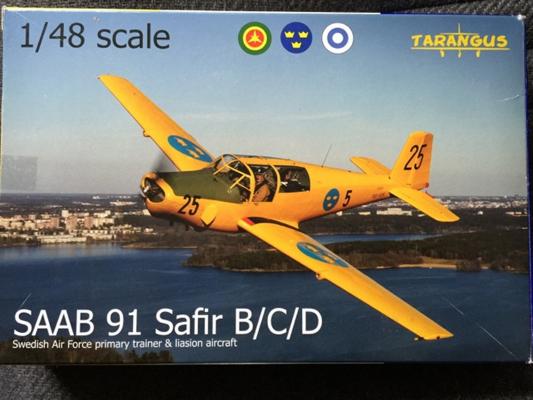
IntroductionSeeing the end of WWII in sight SAAB decided to design an aircraft for the civilian market. That design, the Safir (Saphire), started as a three seater with a 147 HP Gipsy Major X inline engine. Subsequent versions had horizontally opposed four cylinder engines of 190 HP (B/C version) and 180 HP in the D model. The chief designer A.J. Anderson had previously worked for Bucker hence this aircrafts strong resemblance to the Bestmann trainer. The Safir was purchased by several air forces. The subject of this build is a SAAB 91D model operated by the Finnish Air Force, one of ten D models purchased by Finland. Several were purchased for the civilian market. A total of 323 Safirs were built. The KitSpecializing in short run kits of Swedish aircraft… more |
|
Lamborghini VenenoPublished:
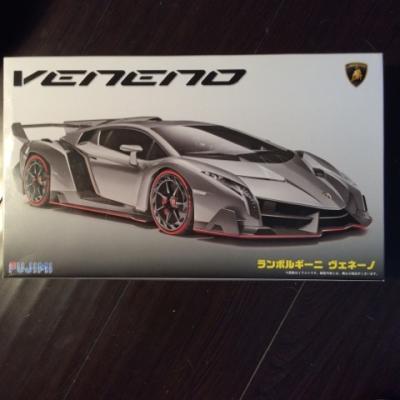
Introduction2013 marked the 50th anniversary of the Lamborghini automotive company. An anniversary as significant as this could not pass without Lamborghini celebrating it with what else but a new version of the magnificent cars they have produced for 50 years. The Veneno (named after a famous fighting bull as all Lambos are) is that car. Based on the Aventador LP700-4, this car has a redesigned body and increased horsepower from its L535 6.5 liter V-12 engine. This engine makes 740 hp and can propel this car to 220 mph. The body is constructed largely of carbon fiber with aluminum sub-frames in the front and back. Suspension is provided by pushrods with horizontal springs like a formula car that is essentially what the Veneno is. Only three production models were built,… more |
|
P-51B "Bluenose"Published:
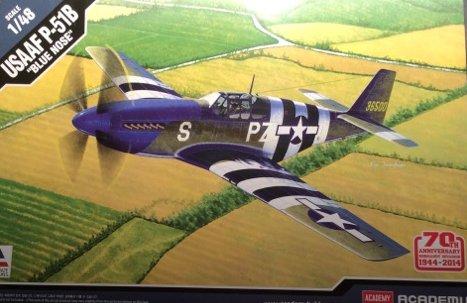
IntroductionJune 6, 1944 “D” Day was the day when the allied armies crossed the English Channel en mass and landed on the beaches of Normandy to begin the slow march across Western Europe This battle was the start of the allies invasion which ended in Berlin with Hitler’s surrender. 2014 marked the 70th anniversary of this monumental event. Each day, we lose more of those who participated or lived through this battle. Kits, like this one, help us (and especially the younger builders out there) remember what happened on that day and why it was so important to the course of WWII. The P-51 has been covered by many other sources, as has the “Bluenose” 352nd Fighter Group based in Bodney Norfolk, UK. The KitThis is a re-boxing of the Accurate Miniatures P-51B… more |
|
Avro Biplane 1911Published:
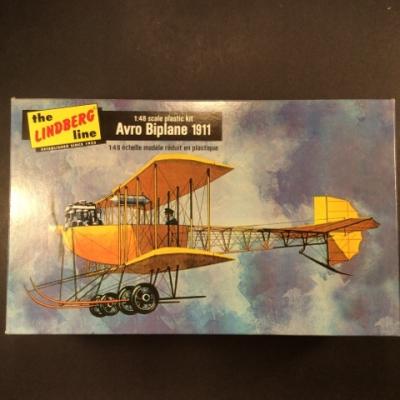
BackgroundThe Avro Biplane was the first biplane design built by A. V. Roe. It was a further development of his previous designs, which featured tri-plane layouts. I remember an Avro tri-plane in this series but its not been reissued. The design shared some common features with the other aircraft of the day. A triangular shaped fuselage was large enough for a pilot and passenger. The increased surface area of two wing surfaces handled the extra weight. Wing warping was used to turn the aircraft. What set this design apart was the 35 HP water-cooled engine built by the Green company. A cooling system helped provide reliable power over long durations, something that plagued other aircraft engines. The KitAs promised, I’ve wrapped up this series by building… more |
|
Air National Guard F-106A/B Part 1Published:
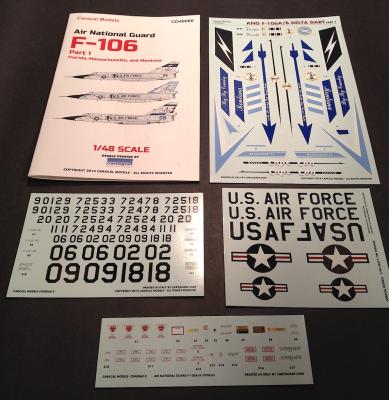
The F-106 served active duty Air Force squadrons from 1959 to 1981. As the aircraft were replaced with the new F-15A, those Darts were relegated to six Air National Guard, Fighter Interceptor Squadrons (FIS). Those squadrons used the F-106 until their final retirement in 1988. Three of those units are the subjects of this release from Caracal Models. The zip lock bag contains four sheets of decals that include every marking needed to finish your F-106 with the exception of the weapon stencils and instrument panels. For that you’ll need to use the kit decals. You get decals for a single seat and a two-seat version from each of the following units.
|
|
F-106A Delta DartPublished:
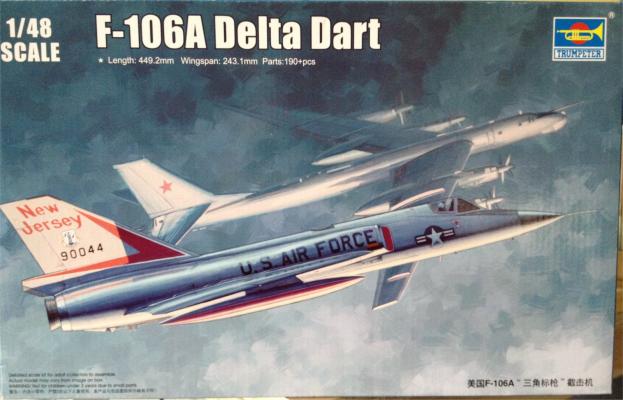
IntroductionThe F-106 was a direct development of the F-102 first conceived of in 1951. This supersonic all weather interceptor had a number of advanced features for its time including fully enclosed weapons bay and a delta wing platform. The F-106 further developed the concept with a more powerful Pratt and Whiney J75 engine and the unique area rule or coke bottle fuselage that enabled the F-106 to reach twice the speed of sound. The F-106 was equipped with the first guided missiles used by the USAF. The Aim 4E was semi radar guided and the Aim 4G was a heat seeker. The aircraft could also carry nuclear weapons. The F-106 never saw combat but did intercept countless Soviet bombers over the course of its career. They served over 20 years with the USAF and 16 years with… more |