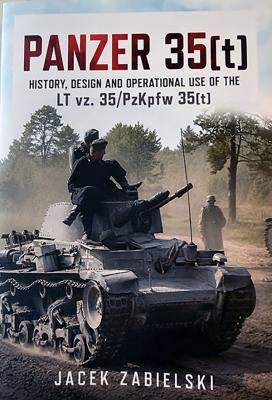






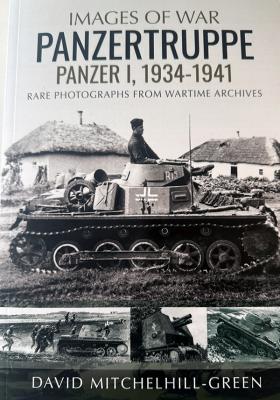
The book examines the early development of German armored forces in defiance of the Treaty of Versailles. It traces the evolution from experimental prototypes in the interwar period to the Panzer I (Panzerkampfwagen I / Sd.Kfz. 101), Hitler’s first mass-produced tank.
Although small, lightly armed, and limited in combat performance, the Panzer I played a key role in training Panzer crews and enabling the early Blitzkrieg campaigns. It saw action in the invasions of Poland, Denmark and Norway, the Low Countries, France, and the early stages of the campaign in the Soviet Union. The volume covers design innovations across models and variants, combat history, operational performance, pre-war training, and its contribution to later, more powerful German tanks.
The book is organized around the development, technical features, training role, and combat employment of the Panzer I (and related early Panzertruppe equipment) from the mid-1930s through 1941: